Legal threat from large NC convenience store operator pauses Durham rezoning plan
A law firm representing the president of a large North Carolina convenience store operator threatened legal action if Durham adopted certain city and county zoning rules, a warning Durham leaders say forced them to pause their multiyear effort to update development codes.
In a Feb. 13 letter to Durham attorneys, lawyer Robin Tatum wrote on behalf of Marvin Lee Barnes Jr., whose company M.M. Fowler oversees Family Fare franchises across Central and Eastern North Carolina, including more than 30 locations in Durham County.
Barnes, best known as Lee, has a high profile outside of business. He recently served on the UNC System Board of Governors, and his family foundation has donated to Durham institutions like the Carolina Theatre, Duke Gardens and the Durham Literacy Center.
In her letter, Tatum asserted Durham’s proposed rules “blatantly ignore” a 2024 state law that restricts local governments from downzoning properties without obtaining written consent from all affected property owners. Downzoning includes lowering the density or number of uses allowed on land.
The law, which was inserted at the very end of a sweeping political and disaster relief bill, also requires owner approval if new rules create zoning nonconformities — such as limiting future convenience stores in an area where convenience stores already existed.
Municipal leaders statewide have criticized the change for limiting their power to manage growth. In May, the North Carolina Senate unanimously passed a bill that would return more downzoning authority to local governments, but the House has not voted on it, and owner approval remains required.
Tatum, an attorney with the Raleigh law firm Smith Anderson, wrote that the four entities represented in her letter “have not and will not consent to any down-zonings.”
Barnes manages the two other Durham-based businesses mentioned in the Smith Anderson letter, BFP and Forest Hills Shopping Center. A fourth entity, “ML Barnes”, was also among the property owners that Tatum claimed “will suffer significant damages” under a Durham zoning plan she said violates the state law.
Lawsuit threat stalls new development rules
Durham posted its new Land Development Code draft in late January. This 633-page proposal details what uses are allowed on property and how they can be developed and redeveloped.
Before working on the new LDC, the city’s planning department coordinated with residents on a Comprehensive Plan that expressed the community’s goals for managing growth in the fast-growing Triangle city.
“There does not appear to have been any attempt to comply with the statute in drafting the Proposed LDC,” Tatum’s letter states. She informed them that Smith Anderson had compiled a list of around 100 local parcels that have been downzoned under the joint plan.
“We would propose a meeting to discuss changes that would remedy the offending amendments without further controversy,” she wrote at the end of the letter.

Durham says state law puts it in a bind
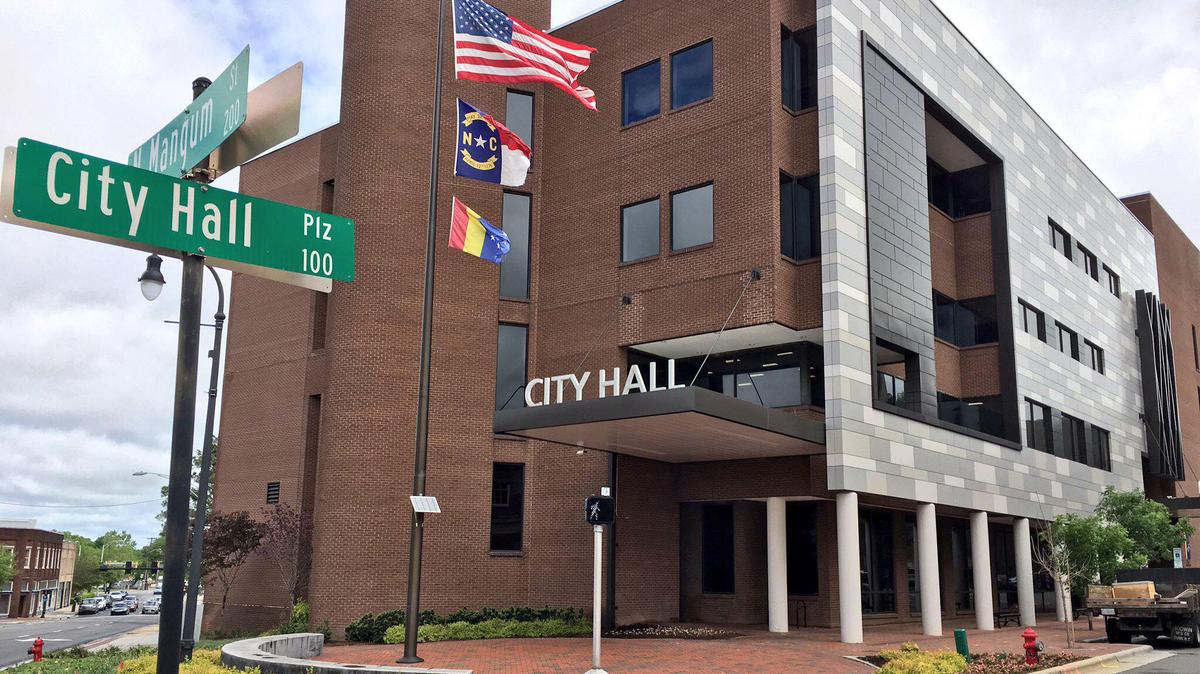
On Friday, Durham canceled a Feb. 24 public hearing, citing the threat of litigation. Instead of a formal hearing, the city and council invited residents to an open house to discuss the LDC on Tuesday at 5:30 p.m. at city hall.
“Durham remains committed to transparency and to ensuring that the new LDC reflects the goals and values of our community,” a city statement read. “We will continue to keep the public informed as we navigate this challenge.”
City officials said they tried to comply with the downzoning law while attempting to follow other laws that require municipalities to adopt zoning that aligns with their comprehensive plans. In a statement Friday, Durham leaders said they attempted to “avoid this conflict” in the LDC draft by having any downzoned property excluded from the new ordinance. “Unfortunately, property owners have challenged this carve-out approach and threatened litigation within the past week,” the city wrote.
Tatum, in her letter, said the new law doesn’t support this approach to downzoning. “They can not be passed in the first instance,” she wrote. “End of story.”
This story was originally published February 24, 2026 at 5:30 AM with the headline "Legal threat from large NC convenience store operator pauses Durham rezoning plan."