
Millions of gallons of sewage flowed into the Eno River. Is it harmful?
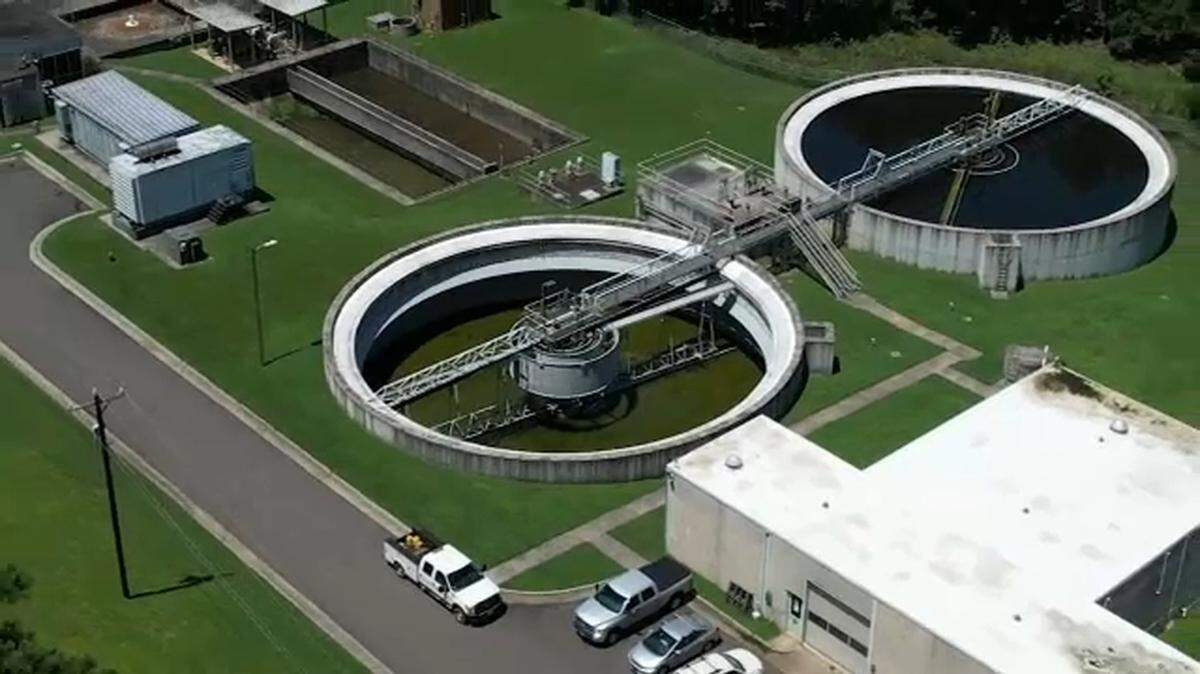
Flooding from Tropical Depression Chantal damaged wastewater systems in Durham and Hillsborough last week, sending millions of gallons of sewage into the Eno River.
Durham reported 6.8 million gallons of untreated wastewater spilled into the Eno River, while Hillsborough reported 188,000 gallons, according to the N.C. Department of Environmental Quality’s Division of Water Resources (DWR).
“DWR reminds the public to exercise caution near floodwaters, and to not swim in floodwaters,” the agency said. “Floodwaters may contain sewage, hazards and unknown substances and should be avoided.”
DWR is still awaiting sewage amounts from a third spill in Hillsborough. Utilities Director Marie Strandwitz said the town is working on a total overflow estimate but that the town’s plant processes roughly 1.4 million gallons on a dry day. About 75% of that goes through the River Pump Station.
The Eno River is the source of drinking water in the Hillsborough area. It flows into Falls Lake, the source of drinking water for Raleigh, which then flows into the Neuse River.
Is the river polluted?
A Durham city spokesperson told CBS 17 that the sewage was likely diluted by several billion gallons of rainwater. Strandwitz said Hillsborough does not expect the sewage to pollute the Eno River, nor did it observe any fish kills.
UNC Institute for the Environment director Michael Piehler agreed with the two municipalities’ assessments.
“That is a very old maxim in environmental science that the solution to pollution is [dilution],” Piehler said.
Sewage may still hurt the river’s ecosystem, he continued, because more nitrogen and phosphorus in the water can cause algal blooms.
A spike in algae can be bad for three reasons, Piehler said. For one, some algae won’t be eaten by animals higher up the food chain. It will then settle in sediment and draw oxygen away from other aquatic life. Second, some algae can be toxic, Piehler said, which can sicken dogs and livestock that drink the polluted water. Finally, algal blooms just smell bad.
Filtration systems for towns and cities that draw from reservoirs like Falls Lake can usually handle events like these, Piehler said, so the sewage spills likely pose no risk to those who get drinking water from Falls Lake.
Could this happen again?
Durham and Hillsborough have made the repairs to stop the recent overflows, according to DWR. But as climate change makes storms more frequent and more intense, how might municipalities work to prevent this in the future?
At Hillsborough’s River Pump Station, flooding submerged the pump, control panels and sensors to take the station offline.
Durham’s lift station, which saw flooding two feet higher than during Hurricane Floyd in September 1999, sustained similar damage, according to Joe Lunne, a spokesperson for Durham’s Department of Water Management. Flooding caused a power outage which shut down motors and pumps.
Hillsborough had planned to move the station — which lifts wastewater from lower to higher elevation so gravity can take the wastewater downhill — to higher ground using $7 million from a Building Resilient Infrastructure and Communities (BRIC) grant.
But in April, FEMA announced it would cancel any BRIC grants it had not already paid out. While the station would not have been relocated in time for Chantal, Hillsborough Mayor Mark Bell said at a news conference that the station must eventually be relocated to ensure the health of the town.
“To be clear, the impact of Tropical Storm Chantal on the River Pump Station is exactly the type of scenario that BRIC grants were intended to protect the public against,” Bell said.
On Thursday, Attorney General Jeff Jackson announced he and 19 other states have sued FEMA over canceling the BRIC program. Jackson’s news release mentioned the grant Hillsborough lost.
Durham had no immediate plans to move its lift station, Lunne wrote in an email.
“This type of flooding has never happened,” Lunne wrote. “What we are doing is looking at what we need to do to secure the site for possible future storms.”
Most sanitary sewer lines use gravity to transport wastewater from, say, a toilet downhill to a treatment plant, Lunne wrote. Cities and towns use lift stations to pump wastewater when gravity can’t take it downhill anymore. The lift station takes the wastewater to higher ground where it continues flowing downhill.
Building the stations downhill helps ensure that if the pump fails, wastewater doesn’t flow back to residents’ houses, said Michael Burchell, a professor of biological and agricultural engineering at N.C. State University. And downhill is closer to bodies of water where the plants discharge treated wastewater, or effluent.
“The rules have kind of changed,” Burchell said. “We’ve learned more about how we’re getting these more frequent, intense rainfalls that are causing flooding that are putting these vulnerable areas more and more into harm’s way.”
Moving stations to higher ground would require electricity to take gravity’s place, Burchell said. Add in the cost of acquiring land, rerouting pipes and installing feeder pumps to lift sewage higher, and the trade-off is quite high.
“Now I’m not saying that those trade offs aren’t worth considering that expense,” Burchell said. “But a lot of these towns don’t currently have the funding for that.”
This story was originally published July 17, 2025 at 8:00 AM with the headline "Millions of gallons of sewage flowed into the Eno River. Is it harmful?."
.jpg)