
They save lives every day, but staff say Durham’s animal shelter needs a new life
AI-generated summary reviewed by our newsroom.
- Durham County’s shelter operates from a 1970s facility deemed inadequate in 2019.
- Crowded conditions and aging infrastructure increase disease and strain resources.
- Despite funding support and planning, delays stall construction of a new shelter.
As Durham County’s population rises to nearly 337,000 residents, there is one community organization that advocates have been trying to keep in conversations about growth: the animal shelter.
Five years ago, a Colorado-based architectural firm specializing in animal-care facilities recommended Durham County invest $28.2 million in a new animal shelter at a different location, replacing the current aging building.
The shelter on East Club Boulevard, operated by the Animal Protection Society of Durham (APS), was built in the 1970s to house abused, abandoned, and surrendered animals and to help pet owners care for and keep their animals. While repairs have kept it operational, the shelter struggles to meet the needs of the thousands of dogs, cats and other small animals it sees each year.
Shafonda Allen, the APS’s executive director, says a new shelter is no longer an option — it’s essential.
“Our mission is to help maintain and build the human and animal bond, so for us, we are part of this community, we understand the hardships that our community is currently facing,” Allen said. “We have all been pushing, begging, asking for a new facility, and we have just been sort of waiting our turn patiently and trying to keep it at the forefront of people’s minds that we are doing good work here. But it’s really hard to do great work in an aging facility.”
In 2019, the county approved plans for a new shelter and hired a design contractor to develop a plan. A site was also selected on Junction Road in East Durham.
But despite the clear need and early momentum, progress has stalled.
‘More than we can provide for’
Allen has worked in animal welfare for 27 years and became executive director in 2008. For now, she says the staff is doing all it can to “work with what we’ve got.”
Visitors to the shelter step into a narrow entryway before reaching the front desk. All surrendered animals, owners with sick or injured pets, as well as potential adopters, volunteers and staff, pass through the same front entrance.
To reach the dog and cat areas, visitors pull open a heavy door and enter a dimly lit space that wears the marks of age, visible in the worn doors and walls with peeling paint.
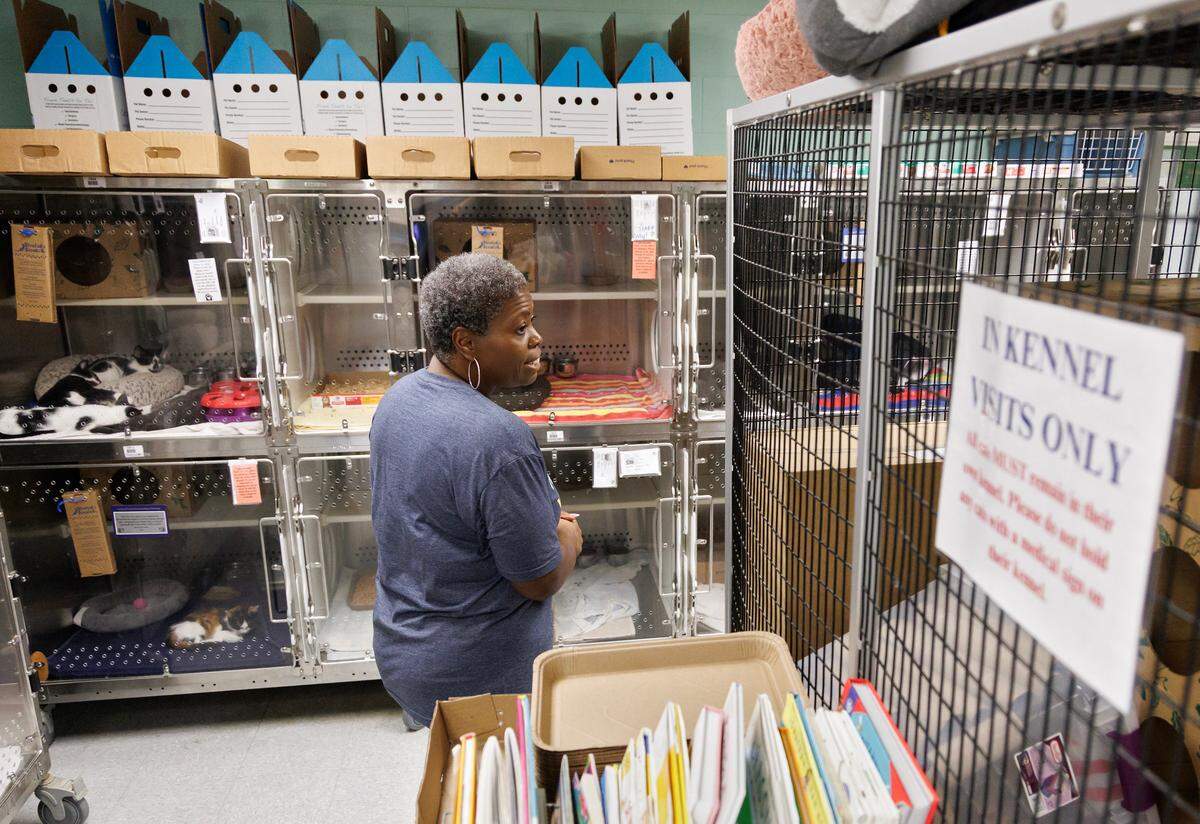
There are two main cat rooms, along with smaller spaces where cats can be taken out of their crates to play and have donated books read to them. Just outside one of these rooms is a cluttered area filled with dirty laundry and trash.
Each part of the shelter reflects the strain. The laundry and storage rooms are so full that staff can barely move. Walls and shelves are covered with dozens of printed signs to help workers locate supplies quickly in the chaos.
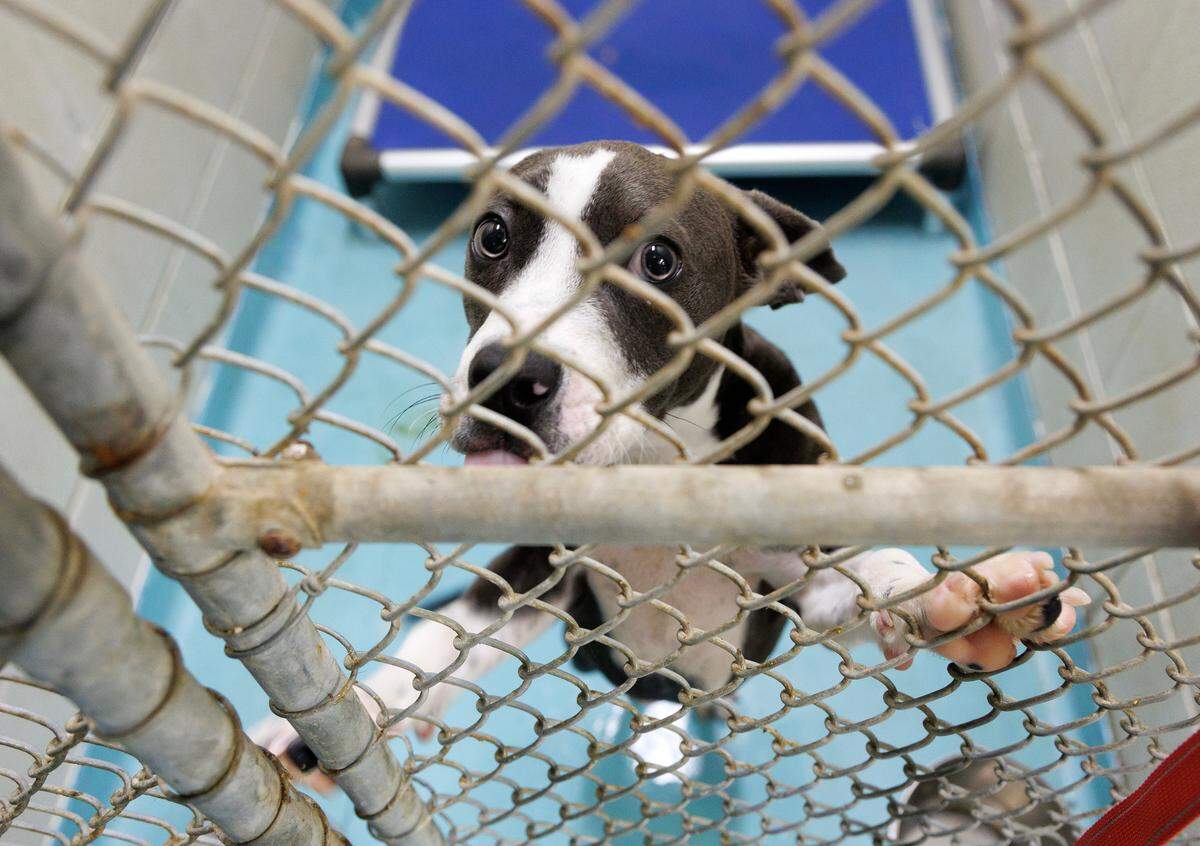
The dog kennels are damp and dim. Makeshift curtains hang over metal kennel doors to block dogs from seeing each other and reduce their stress. Volunteers move through the narrow aisle, refilling water and food bowls or comforting dogs and taking them for walks.
Passing each kennel, every dog has a different energy and personality. Some lie or sleep quietly on worn blankets and beds; others sit alert and curious, wagging their tail. A few bark for attention and put their paws on the doors.
Last week, the shelter had 112 cats and 106 dogs in the building and 227 cats and 67 dogs in foster homes. Most of the dogs have been in APS care for months and are pitbull mixes that have a stigma of being difficult, violent and hard to train.
Last year, the shelter saw 4,667 animals. So far this year, the shelter has already provided 1,000 spay and neuter surgeries and over 400 identifying microchips.
Allen said all animals in APS care get their spay or neuter surgery, shots and, deworming, and supplies if they’re in foster care.
But with crowding comes disease.
“When you have an older shelter without properly sealed floors and things, it’s much harder to sanitize and keep those diseases at bay,” Allen explained. “Then in a community situation when you have few low-cost options for preventable diseases, you see diseases coming into the shelter.”
Parvo, a highly contagious virus that attacks the intestines, is common in shelters and has a 91% mortality rate if left untreated. A new air ventilation system is one of the most pressing needs for a new shelter.
Euthanasia is a last resort, but as an open shelter, never completely out of the question when animals are sick or staff must make room for new animals coming in, Allen said.
“When it comes to capacity of care — what we can ideally care for — we have more than we can provide for,” she said.
Animals reflecting a community
Because the shelter provides several low-cost services for the community and often reduces adoption fees, it relies on fundraising and donations to maintain daily operations and purchase supplies.
The APS contributes over $1 million a year through fundraising and donations to the shelter. In June, the Durham County commissioners approved its budget request of $1.2 million to support operations. In each budget cycle, the shelter is included in the county’s capital improvement budget.
“It’s a never-ending cycle of trying to get supplies and resources to care for the animals that we have,” Allen said, adding that the needs of the community are also considered. When the shelter has extra things they can’t use, they donate them to the local Salvation Army and there are free pet supplies at the front of the shelter for anyone.
The shelter has a goal to keep pets with their owners, but half of the animals it gets are surrendered, Allen said.
“Animals often reflect what the community is going through,” she said. “If children don’t have food in school, then, of course, the pets are not going to have food at home. If the owners are not doing well, then the pets are not going to be doing well. But we believe that pets contribute so much to people, to their lives, to their health, that it shouldn’t be a disparity in who can have a pet.”
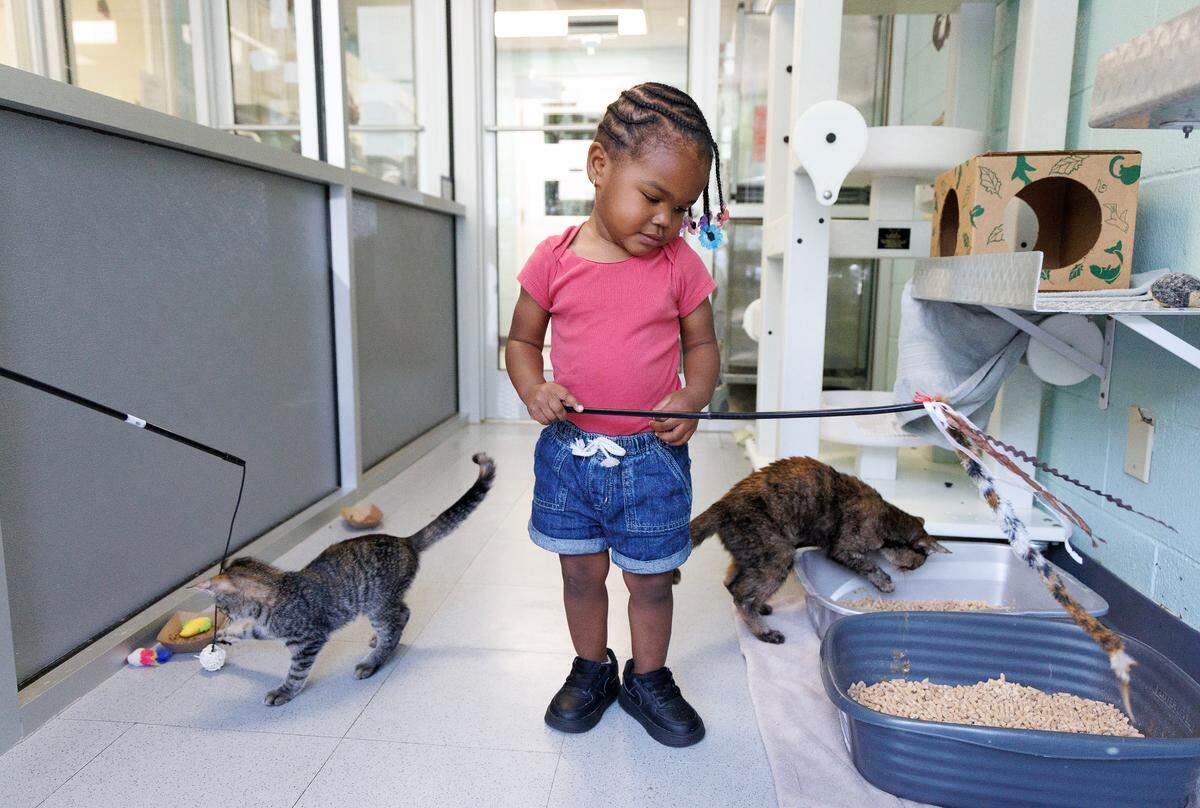
On Tuesday, Jasmine Thorpe brought her young children, J-Anthony and Ka’Mora to the shelter to play with the cats. They flashed feather sticks back and forth, laughing as the kittens pounced.
“I started bringing them here to get them out of the house,” she said. “It’s a good outlet and helps with something to do in the summer too.”
As a young mother, Thorpe said she was thinking of adopting a large dog, like a mastiff, to help her children cope with the effects of her previous traumatic relationship.
The shelter has been a place of unity for the community, Allen said. A new facility should help humans, too.
“You visit some of the newer facilities, and they’re definitely more of a community park-like feel where people can go, maybe have education rooms, and bring children in and adults in to be a part of the solution,” she said.
Patiently waiting
Cathy Williams, a former veterinarian for the Duke Lemur Center, performs surgery with a team of technicians on the animals at the shelter. Each day, there can be up to 20 procedures.
Supplies, desk space, medical instruments and animals crowd the single room. A new room would have better lighting and ventilation; surfaces free from dirt, dust and bacteria; doors that close and separate the operating tables; and areas to clean and sterilize tools, she said.
“I expected there to be a limited budget, since that’s what shelter medicine is,” Williams said. “But we need a new shelter immediately, or at least as soon as possible.”
Durham County Commissioner Wendy Jacobs visited the animal shelter last month to see the current conditions. She agrees more funding should be allocated to move forward on the new facility.
“I believe the Durham County Animal Shelter really represents the best of Durham in terms of collaboration and partnership between Durham County government, the sheriff’s staff, the APS that runs the shelter, and just the community that supports the shelter,” she said.
But Jacobs expects there won’t be any progress for another few years, citing increases in building costs, potential tariffs on supplies and strained budgets.
“Our staff tries to maintain the building — general services staff does the best they can — but the new facility is going to create a safe and healthy space for the animals, the staff, and for the public to volunteer and adopt animals,” she said.
This story was originally published July 7, 2025 at 7:00 AM with the headline "They save lives every day, but staff say Durham’s animal shelter needs a new life."