ShotSpotter will go dark in Durham, for now, as city doesn’t extend temporary contract
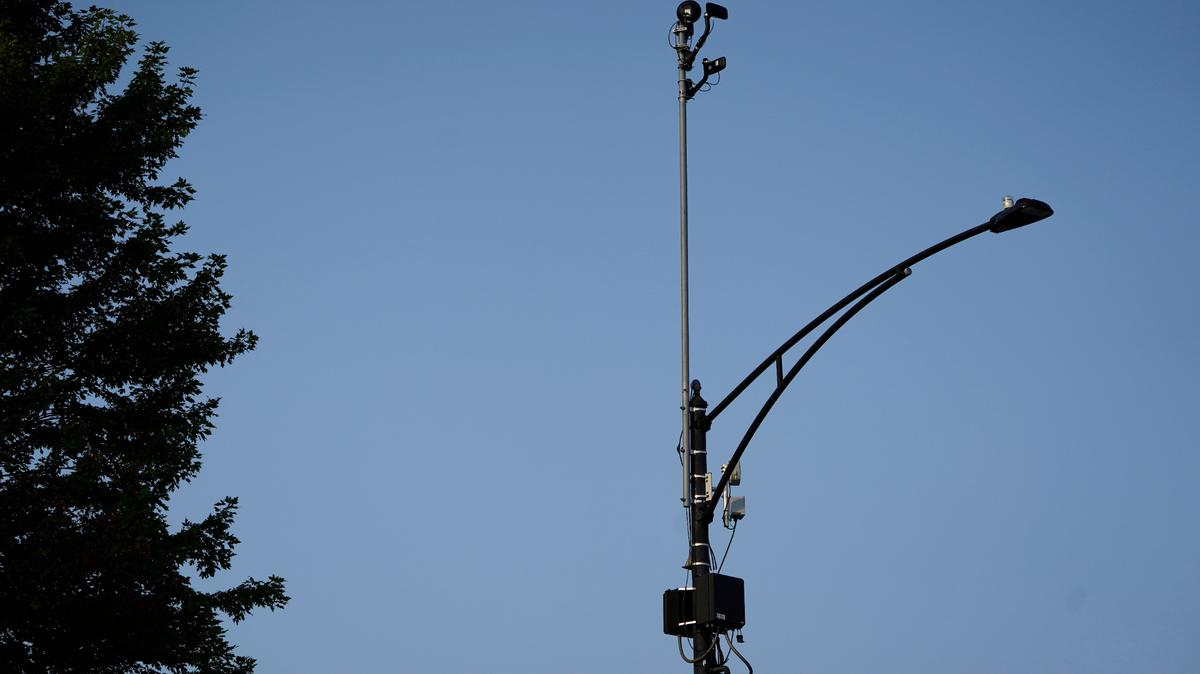
Durham declined to extend ShotSpotter’s contract Monday night, heeding residents’ calls to discontinue the gunshot surveillance program — at least for now.
A longer-term decision will be made in March after Duke Law School’s Wilson Center for Science and Justice completes an analysis of data collected during the one-year pilot.
It was a 4-2 split decision, and one of the first votes by the newly elected City Council since taking office earlier this month:
- For: Mayor Leonardo Williams and Mayor Pro Tem Mark-Anthony Middleton
- Against: Nate Baker, Javiera Caballero, DeDreana Freeman and Carl Rist
ShotSpotter notifies 911 operators of gunfire detected by audio surveillance sensors in 3 square miles in east and southeast Durham, where the city says a third of all gunshot wounds occur.
The one-year pilot has been a source of controversy, and more than a dozen residents spoke about it Monday night, expressing concerns about over-policing and surveillance.
“We already know what ends gun violence. It’s about meeting human needs,” said Manju Rajendran, an activist who served on the Community Safety and Wellness Task Force. “ShotSpotter has been sold to Black and brown community members as a false solution.”
It would have cost $52,356 to use ShotSpotter for three more months while Duke Law School completes its review, on top of the $225,500 paid to the California company for the first year.
‘I only pray that someone calls 911’
Those who voted against a temporary three-month extension said they wanted to see the Duke analysis first.
“Initially my support for ShotSpotter was reluctant,” Freeman said. “We do need the evaluated data.”
Williams said it pained him to let ShotSpotter go dark, recalling an incident in which an alert helped save a child’s life.
“If someone does shoot in another household, if another 12-year-old girl gets shot, I only pray that someone calls 911, unlike they did the first time,” Williams said.
Middleton, who has long championed the technology, noted that 73% of ShotSpotter alerts had no corresponding 911 call.
“There are thousands of people who live in our city who have resigned themselves to the proposition that nightly gunfire is just the way it is,” Middleton said.
Gun violence is on the rise in the city in 2023, with 824 shootings — 42 fatal — reported as of Dec. 9, according to the most recent data from the Durham Police Department.
ShotSpotter collected alerts for 1,127 shooting incidents in the same time frame.
No citizen complaints have been registered about the behavior of officers responding to ShotSpotter alerts, according to police, who credit the technology with assisting in 23 arrests.
Many of those opposing ShotSpotter on Monday night also asked the council to adopt a $25 minimum hourly wage for city workers and pass a resolution calling for cease-fire in the Israel-Hamas war. Police escorted one person outside of City Hall for shouting during the debate.
This story was originally published December 18, 2023 at 8:56 PM with the headline "ShotSpotter will go dark in Durham, for now, as city doesn’t extend temporary contract."