How Durham is tightening its tree and erosion standards after environmental concerns
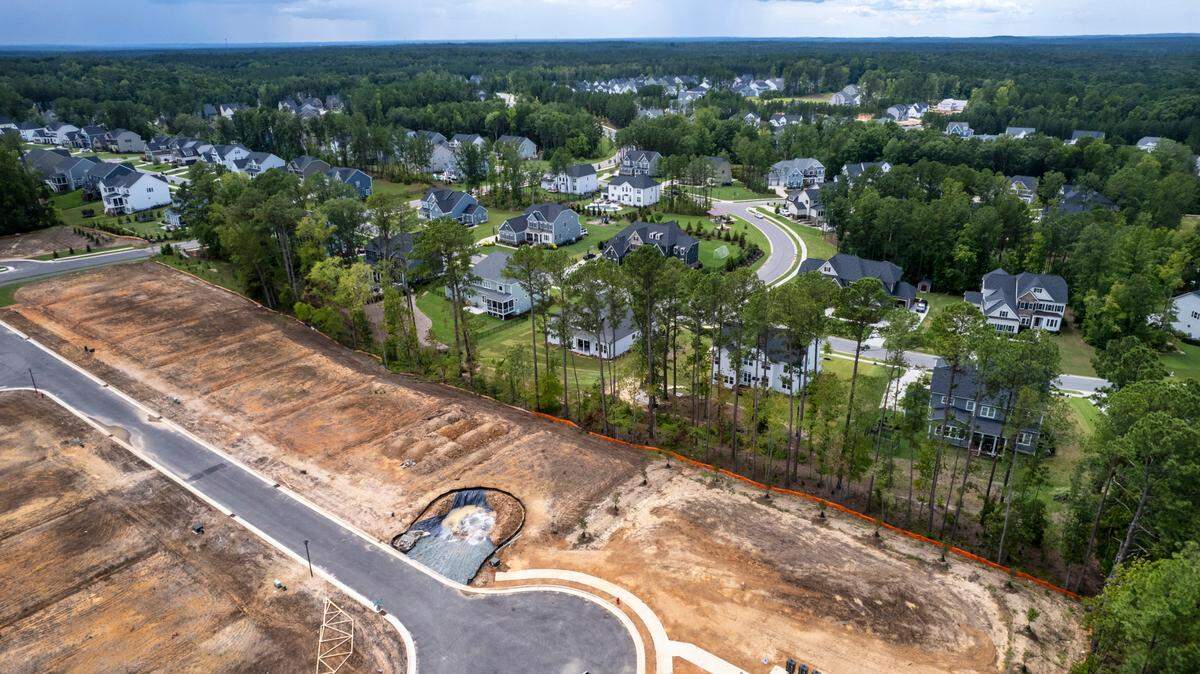
Durham got one step closer this week to tightening regulations on how land can be cleared when building neighborhoods.
The Planning Department crafted a city code amendment they hope will address environmental concerns tied to residential development, especially on the city’s outskirts.
- Issues with controlling erosion and runoff on construction sites, especially the largest tracts of land;
- Developers choosing to replace trees rather than preserve them; and
- Builders creating large residential developments with poor soil health and little variation in elevation.
“It is very, very needed to address some of the issues on the ground we’re seeing in southeast Durham,” county commissioner Wendy Jacobs said.
Mayor Pro Tem Mark-Anthony Middleton called it “ a real first step” that doesn’t place the city in the same legal jeopardy as putting a moratorium on development.
“It honors our values; it muscularizes our position; it gives teeth to our concerns; and it’s what so many people asked for,” Middleton said.
The City Council unanimously approved it Tuesday night — despite some opposition from the very people who called for the changes.
County commissioners received a presentation the same day and are expected to give it the final vote it needs to pass next week.
What is mass grading?
The practice of clearing and leveling a large tract of land — 4 acres or more — is referred to as mass grading. The amendment, which focuses on residential developments, sets a 50-acre cap on the amount of land that may be graded at once.
It also weaves in incentives for tree preservation and promotes clearing and leveling smaller amounts of land in phases, rather than doing the whole site at once.
The amendment was sparked by concerns over southeast Durham. Residential development there has spiked in the past three years, sparking water quality concerns for Lick Creek, which runs into Falls Lake.

“I support the initiative. I just have some issues with the numbers,” said Donna Stainback, a member of the grassroots organization Preserve Rural Durham, which called for limits to mass grading.
The group proposed lowering the cap for each individual phase from 50 to 20 acres.
Opposition also came from those who support homebuilding in the region.
Durham land-use attorney Keenan Conder argued that smaller phases would drive up the cost of housing — larger projects have lower costs of construction, which lowers eventual sales prices, he said.
“What benefits do we get as a city for this hit in housing affordability? Unfortunately, it’s not much,” Conder said. “The city does not ultimately save more trees. It just delays their removal.”
Council member Leonardo Williams pressed planning staff on this point.
“It’s difficult to get into the sort of cat-and-mouse game of lowering regulation with the hope of lowering house prices. It’s sort of hard to draw that direct correlation,” Schultze responded.
The Durham County Board of Commissioners is holding the final public hearing on the amendment at 7 p.m. Monday.
Not the first change this year for planning department
Earlier this year, in response to the same concerns about Lick Creek and southeast Durham, the planning department ushered through a broadly supported amendment that changes erosion control standards. It gave the county the power to issue “stop work orders” when erosion violates standards.
With that amendment, the county became the first in North Carolina to require — not simply recommend — the use of flocculants, materials that help particles clump together for easier removal from water, according to Ryan Eaves, manager of the county’s Stormwater & Erosion Control Division.
“I know from the state sedimentation specialist that we’re opening a door and she’s kind of waiting to see what we do and expecting others to follow,” Eaves said in February.
Rezoning requests for new developments
In the same meeting Tuesday night, the City Council considered two rezoning requests tied to residential developments.
- Yes to 350 apartments: This development by the D.C.-area investment firm Bonaventure sets aside 10% of the units as affordable. It’s located on 27 acres at 1102 S. Miami Blvd., in the Little Lick Creek watershed. The southeast Durham property will be annexed into the city limits. New turn lanes on U.S. 70 will be required.
- No to 99 townhomes: This was a mixed-use infill proposal that would have included a small office building. None of the housing would have been marked as affordable and residents raised traffic concerns. The property is 18 acres at 301 Infinity Road, in northern Durham near the Eno River.
The apartments were approved 5-1, with council member Monique Holsey-Hyman voting against them.
The townhomes were rejected 3-3 with Holsey-Hyman, Mayor Elaine O’Neal and council member DeDreana Freeman voting against them.
Council member Jillian Johnson, who could have broken the tie, was absent.
This story was originally published September 7, 2023 at 2:21 PM with the headline "How Durham is tightening its tree and erosion standards after environmental concerns."