
Durham residents speak out on gun violence and gentrification at budget hearing
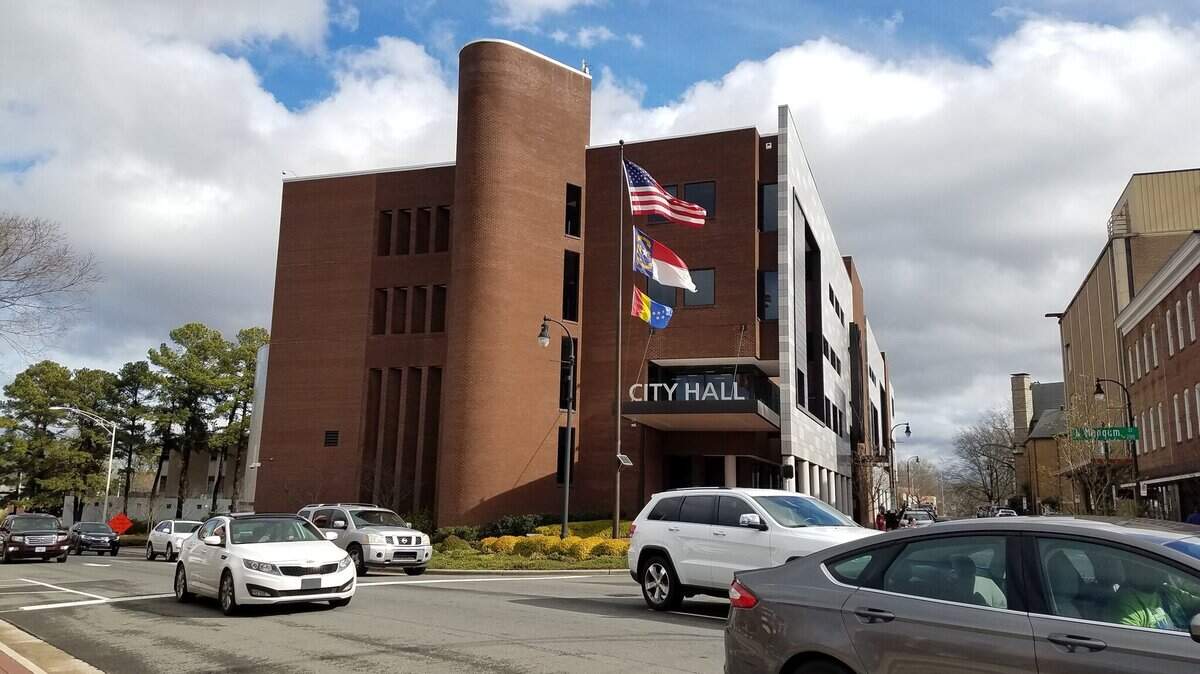
Concerns about affordability and public safety dominated a public hearing on Durham’s proposed budget this week.
The Durham City Council held a public hearing on the 2021-22 fiscal year budget, with 40 people calling in. Over a dozen addressed rising gun violence or suggested how the city should keep its residents safe.
Some backed a plan to transfer up to 20 police vacancies to a new department for community safety. A nearly equal number called for full police staffing. Some questioned a new plan to send unarmed mental health clinicians on emergency calls.
Just as many speakers expressed alarm about rising taxes in historically Black neighborhoods, including Braggtown, Merrick-Moore, Walltown, and the Southside.
The City Council is reviewing a proposed $524.6 million budget, which includes a 2-cent property tax-rate increase, for the fiscal year that starts July 1. Council members may amend the budget in the next two weeks and could adopt it June 21.
Gun violence and public safety
The council is considering moving five police positions at the start of the fiscal year and up to 15 more at mid-year.
Shanise Hamilton told council members gunfire outside her window has made her jump on her child, terrified a bullet would fly through her bedroom wall. Police don’t help prevent crime or shootings, she said.
“I was more afraid to call the police than deal with the situation as is, and yet I still believe that we need to divest from policing and invest in care in our community, and so do so many of our residents,” said Hamilton, an organizer with Durham For All.
A majority of council members first supported transferring 20 vacant police positions during a meeting last month with Durham For All, which Mayor Pro Tem Jillian Johnson co-founded, and Durham Beyond Policing, The News & Observer reported.
Nina Plocek, a clinical social worker living in Northgate Park, said she saw how mental health care workers can respond to emergency crises while working at a community center.
“It shaped me in ways I didn’t know were possible at the time,” said Plocek. “The individual experiencing distress may have been characterized as unsafe or unpredictable through a different lens or in another setting.”
“What I do know is that they were profoundly scared, disconnected, and in need of support,” she added, urging council members to reallocate more police vacancies to the new community safety department.
Bonita Green, who lives in the Merrick-Moore neighborhood, said Durham is growing and should not divest from the police.
“We need to retrain the officers from their current practices, and I think we need to go back to a community policing system,” she said. “You know, with the crime rising, we need our police force.”
Charlitta Burruss said gunshots hit her building at Edgemont Elms, a Durham Housing Authority community, early Saturday morning.
“Now as far as you’re concerned, Jillian Johnson, of cutting police, really? And you got social workers, you’re talking about [Crisis Intervention Team] workers, and I am a social worker,” she said. “I would not go to a door by myself, not knowing what’s on the other side of that door, that somebody could kill me.”
As of May 29, the latest statistics available, 103 people had been shot in Durham this year, up from 98 by the same time last year, according to the Durham Police Department.
Seventeen people had been fatally shot, up from 10 by that time last year, according to the department.
Affordability and property tax relief
The proposed 2-cent increase would take the city’s property tax rate from 53.17 to 55.17 cents per $100 of assessed value.
The owner of a home valued at $233,927 — the city’s median house value — would get a city property tax bill of about $1,291 a year. The county has a separate property tax.
Several community members asked the City Council to expand tax relief to low-income residents.
The city currently offers a Longtime Homeowner Grant Program, which provides financial assistance to homeowners who make 80% or below the area median income. The program is available to homeowners in three target areas in the Southside, Northeast Central Durham and Southwest Central Durham.
Speakers called for council members to expand the program’s reach into additional, historically Black neighborhoods.
Brandon Williams, a member of the Walltown Community Association, asked to bring the program into his neighborhood to help homeowners hold onto their properties. He estimated, with DataWorks NC, that $100,000 in assistance would help preserve $12.2 million in Black-owned wealth in Walltown.
“Many other neighborhoods are duly deserving of the same kind of assistance and treatment,” he said.
If the city is going to raise property taxes, then more money should go toward street paving, new sidewalks, and bus shelters in her neighborhood, said Constance Wright, a Braggtown resident.
“Although I do not want to see a tax increase, and I’m struggling with the tax increase from the past two years, if one is granted, the increase should go to the communities like Braggtown, Merrick-Moore, Walltown and other underserved legacy communities,” she said. “Our communities should be prioritized over communities that have consistently benefited from tax dollars.”
Half a cent of the proposed tax increase in the recommended budget would help pay for green and equitable infrastructure projects, Page told council members in May.
What’s next?
The City Council will discuss planning for the Longtime Homeowner Grant Program and several other issues raised by speakers at a budget meeting on Thursday.
This story was originally published June 9, 2021 at 11:57 AM with the headline "Durham residents speak out on gun violence and gentrification at budget hearing."