Floodprone housing remains vacant, families still in hotels a year after Chantal
AI-generated summary reviewed by our newsroom.
- Tropical Storm Chantal dropped 10 inches of rain on July 6, 2025, flooding the area.
- The storm displaced 190 residents countywide; 7 public housing families remain in hotels.
- Local governments reported $24.5 million in public assistance spending after the storm.
Mu La Pur was working at the Carolina Inn in Chapel Hill last July when her son called, saying the rain was bad in their South Estes public housing community.
Pur, an ethnic Karen housekeeper from Myanmar, tried to drive home, but the downpour from Tropical Storm Chantal blocked the roads. She parked at a co-worker’s house and got dropped off near the South Estes Drive complex, she said through an interpreter.
Pur, 35, waded through waist-deep water to reach her family’s townhome, finding the water knee-deep inside. She and her children — ages 10, 13 and 15 — stayed on the second floor until the water receded, declining a rescue boat that floated by around 5 a.m.
A few days later, Pur agreed to a six-week stay in a hotel. A year later, she and her children still squeeze into a room with a bed, a pullout sofa and a kitchenette, but there’s no place for the kids to play, she said.
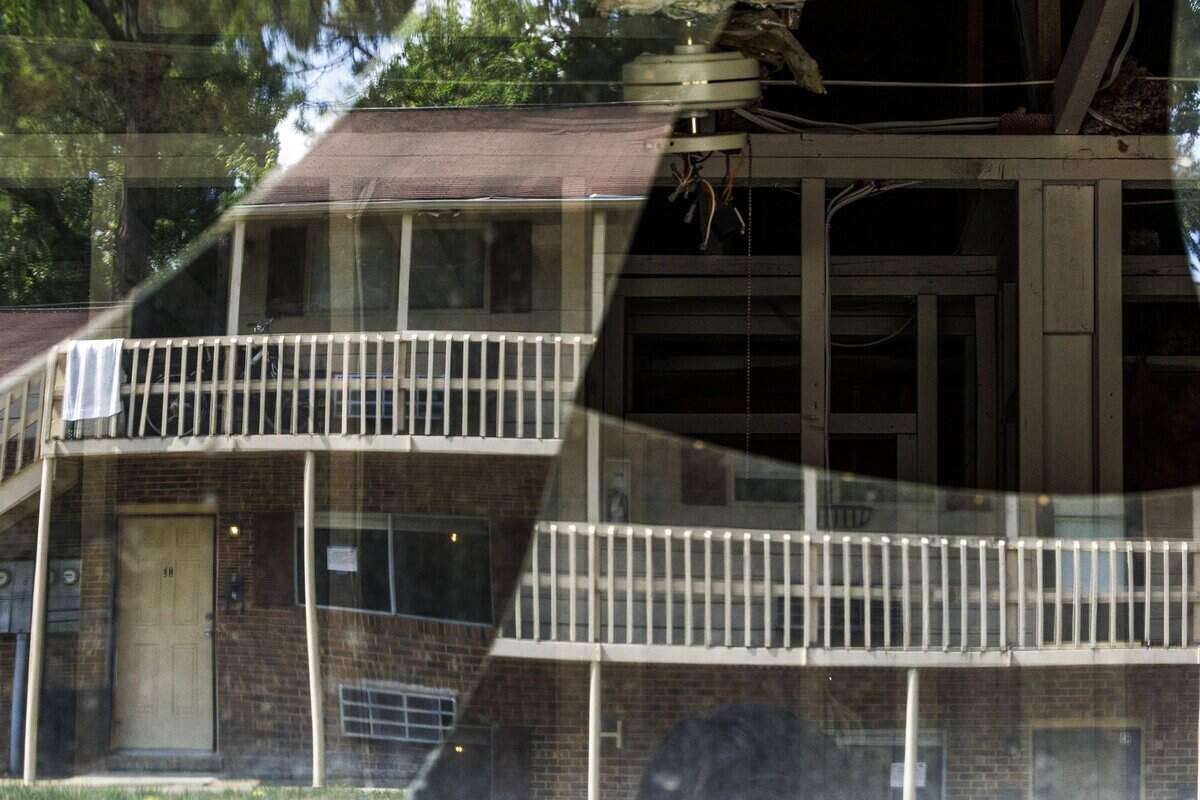
Seven other public housing families displaced by the storm also live in hotel rooms or with friends or family, the town reported. A town spokesperson did not say when they could move to new housing, but some residents expect to hear news by August, they said. The town has paid over $700,000 since Chantal to put them and other public housing families in hotels.
Residents also haven’t returned to over 60 ground-floor units at the privately owned Camelot Village Condominiums across from University Place and about a mile from South Estes. The units appeared largely unfinished last week, many with broken windows, raising concerns for owners about trespassing and squatters, “due to the presence of so many vacant units,” according to HOA board minutes.

County, Chapel Hill look back at Chantal
Tropical Storm Chantal was a surprise when it dropped 10 inches of rain on Orange County in just a few hours on July 6, 2025.
Chapel Hill diners and movie-goers fled on foot to higher ground at University Place and Eastgate, leaving their cars in the shopping centers’ muddy water, which reached 5 feet deep in some places. The force of the flooding twisted metal door frames and flushed retail goods, shopping carts and Dumpsters down nearby creeks.
Orange County’s 911 center received 7,953 calls and sent crews to 2,054 incidents. Boats helped rescue 50 people in Chapel Hill, the town reported.
Fourteen people were injured, the county reported. An Orange County woman who died when floodwaters swept her car from the road was among six killed in North Carolina. The storm was later blamed for a heart attack that killed a displaced Camelot Village resident in late August.
Other recent updates:
- Nearly $25 million was spent countywide on storm recovery, and 190 residents were displaced. Local governments are asking the Federal Emergency Management Agency to reimburse the recovery costs.
- The storm destroyed two homes and damaged over 360 homes and apartments, including 19 units at South Estes and 22 units in the Airport Gardens public housing community.
- Almost $27 million in damages was reported to 116 businesses countywide, including about $17 million in combined damages to Eastgate Crossing, Mariakakis Plaza and University Place.
- Chapel Hill is still repairing $8 million in damages to greenways, sidewalks and public housing.
Businesses reopen, and others moving in
The extent of the economic hit to Chapel Hill is still not clear, but many Eastgate Crossing stores were closed for the better part of the past year as merchants waited for the property owner and town inspectors to sign off on structural repairs before finishing renovations.
Nine of 33 businesses closed their doors for good, including Starbucks and Talbots, a longtime women’s clothing store.
But Kite Realty spokesman Bryan McCarthy said last week that new tenants are coming, including Einstein Bros. Bagels, which erected a sign on the former Bruegger’s Bagels building at Eastgate last weekend. Kite Realty is also spending millions to prepare for the next storm, he said, including taller flood barriers and relocating electrical boxes damaged by the storm.
At nearby University Place and Mariakakis Plaza, 24 damaged businesses have reopened or moved, either to a new location or an online storefront, the town reported.
While climate change could make such storms more common, meteorologists called Chantal a rare, 500- or 1,000-year storm event. The town may never be equipped for that amount of rain, Chapel Hill Mayor Jess Anderson has said.
But emergency responders are learning from Chantal, Orange County Emergency Services Director Kirby Saunders said. Meanwhile, county and Chapel Hill staff are collecting more data about weather conditions and how fast the water can rise, two factors that delayed the emergency response during Chantal, he said.
Why are residents still not home?
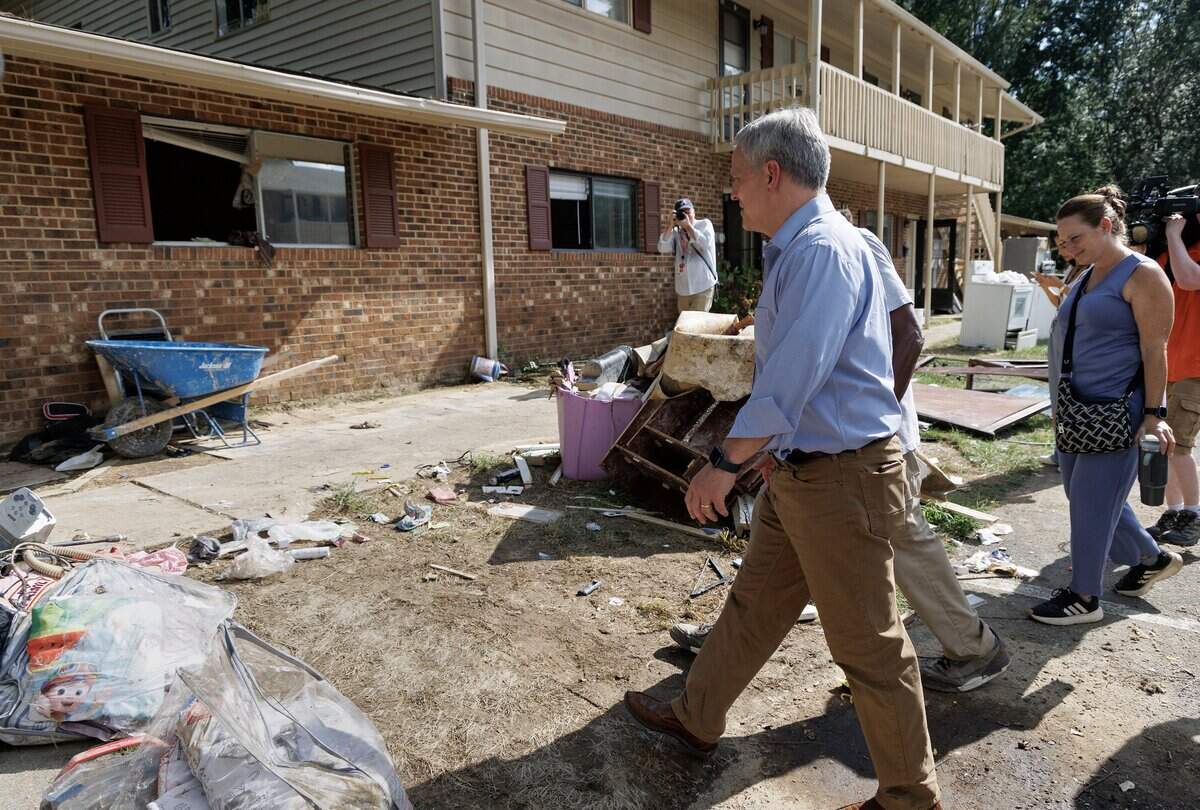
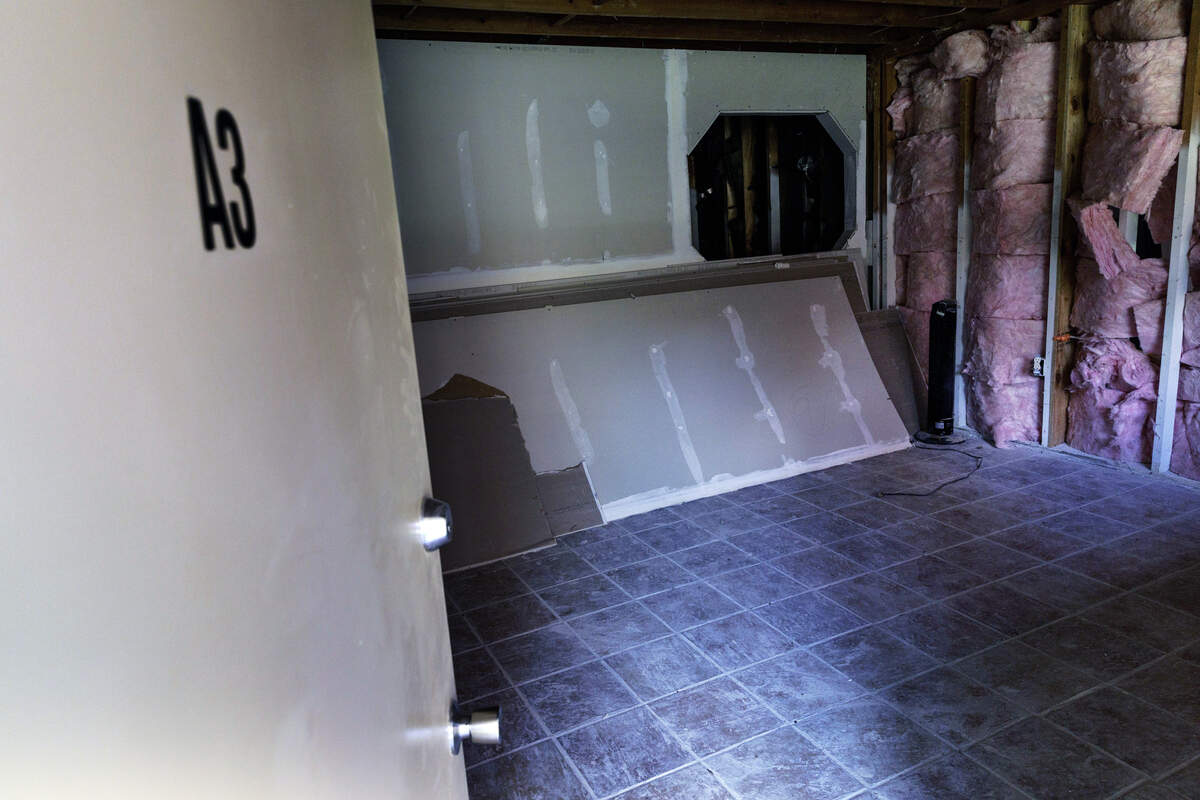
Work is underway at the South Estes community and at Camelot Village after a delay of several months due to extensive damage, a contractor shortage, and the overwhelming demand for town permits and inspections, officials said. Town staff is also working with federal housing officials to plan for the last damaged building at Airport Gardens on Martin Luther King Jr. Boulevard.

Town records show only three of 77 work permits pulled for Camelot Village have been completed. That’s partly due to a delay in FEMA’s decision to pay $3.8 million of the roughly $4 million cost, HOA property manager Barbara Duffy said. Most Camelot owners and residents do not have flood insurance, which can be expensive, she said.
Duffy recalled watching firefighters as they pulled residents from the floodwaters on July 6 and seeing an uprooted tree land on top of a pile of cars. She arranged for 37 overnight hotel rooms, giving a resident and his dog a ride to the hotel in her hatchback, she said.
The next morning, she joined over 50 volunteers from her church to help residents retrieve their belongings. Triangle Mutual Aid, Refugee Support Center, and other local groups brought food and more help, highlighting the needs for months after the storm.
The complex sits in a low-lying bowl between two floodways and a creek that regularly floods. The town has tried to work with the owners but failed to get agreement on a solution, forcing the town in 2009 to return a $2.3 million FEMA buyout grant. Buying the complex through eminent domain is possible, but the town doesn’t have the money, officials have said.
Duffy advocated last year for more extensive repairs or rebuilding the complex to reduce the flood risk, but also failed to get owners to agree, she said. Board minutes from this year show a growing rift over contract approvals and what management can pay without board input. An auditor is being hired to review management records.
“We’ve done our best, but it’s been beyond frustrating,” Duffy said. Redeveloping the property with “some level of rent control” could be a win-win for owners and residents, she added.
“It’s really a centralized location for subsidized housing, and with that being gone, [residents are] dispersing. A new set of folks will be in there, but it’s a lot of trauma,” Duffy said.
Homeowner frustrated with Chapel Hill response
The town has wrestled for years with how to ease the flooding risk, launching a plan in 2017 to build more culverts and stormwater basins along Booker Creek, upstream from Eastgate. But the plan was sidelined in 2020 while a citizens work group explored green infrastructure as an alternative to replacing trees and wildlife habitat with ponds.
The council started the conversation again this year by challenging the 2017 plan’s focus on flooding at the shopping center, rather than residents downstream. They have asked staff to bring more options and are getting a second opinion about the 2017 plan.
It’s “lip service,” said Brigham Drive homeowner Dan Cefalo, who lives near the Little Creek confluence.
“Sometimes even a gesture is something,” he said. “If they would just say, ‘Look, we can’t fix all of this, but we can do X,’ and then at least all of us can go, ‘OK, they’re aware, they’re paying attention, and they are trying to fix something,’ but it doesn’t feel like the case.”
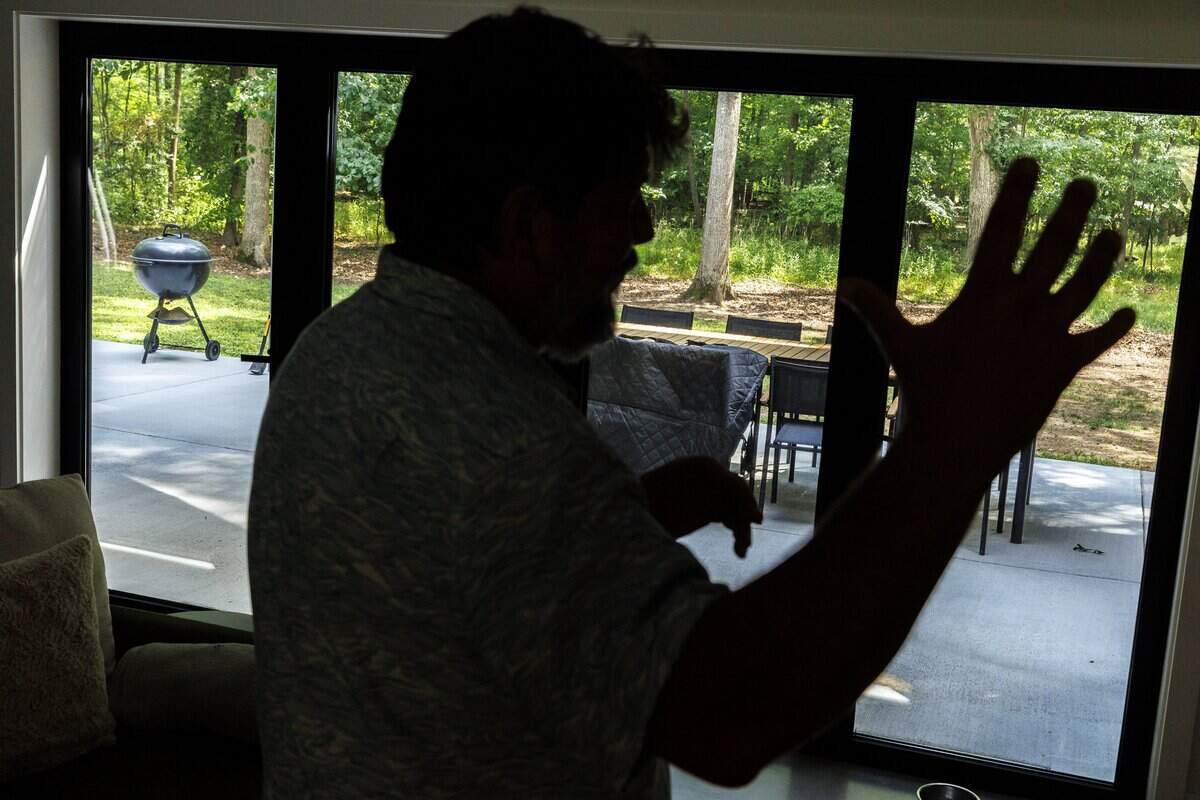
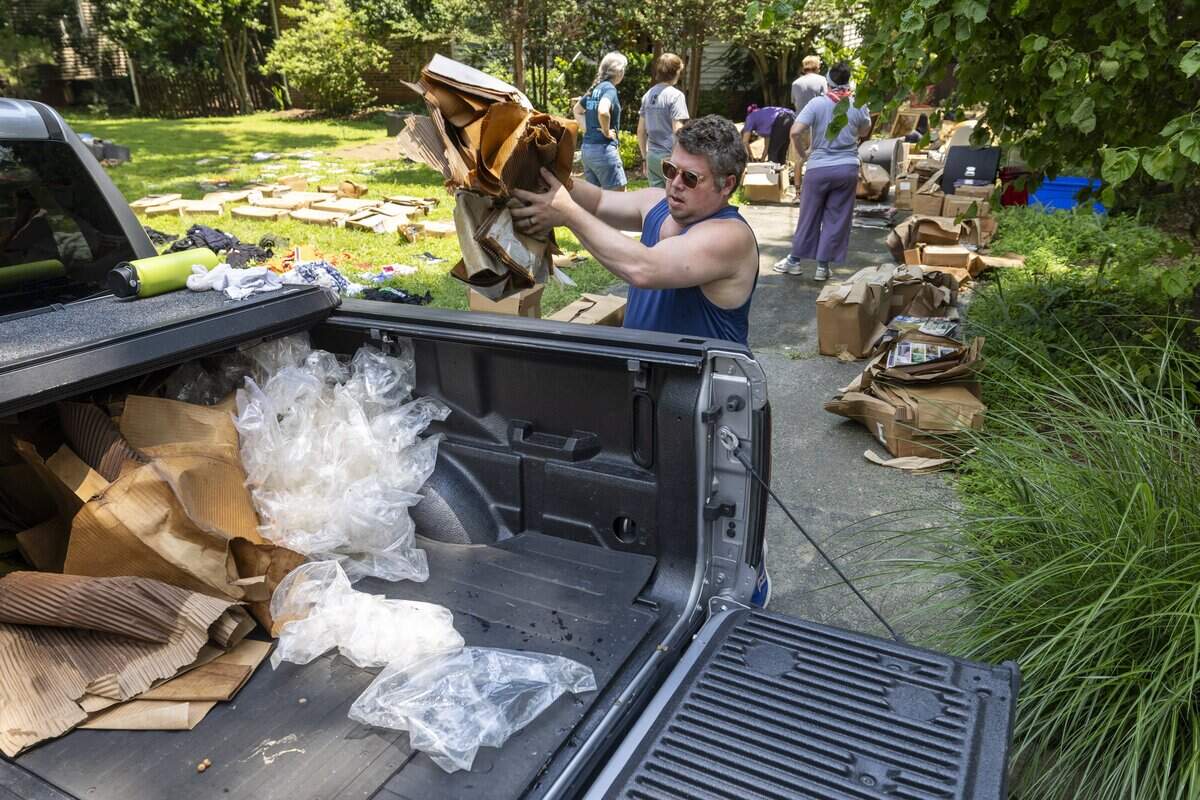
Cefalo was watching “F1: The Movie” with his son at Silverspot Cinema on July 6 when the water started rising. They waded out of the theater, leaving their car behind, and got a ride home, where they found over 4 feet of water on the home’s first level. Several inches also reached the main floor, causing major damage, Cefalo said.
He spent over $50,000 cleaning up, sealing the concrete floors and rebuilding wood floors and cabinets on the main level. He added water-resistant, cement-board walls and four sump pumps outfitted with battery backup and shut-off alarms.
He hopes to avoid major damage in the next flood, but he’s also working with neighbors to clean up area creeks and push town staff and the council to action, he said, whether that’s removing homes from the floodplain, adding more retention ponds and culverts, or assigning more staff to clear debris from creeks.
“I don’t think we live in a town that has that luxury” of not doing anything, Cefalo said. “This town has had enough bad flooding that they can’t look at it this way ever again. They’ve got to do something, and just throwing your hands up and saying, ‘global warming,’ that is not doing something.”

This story was originally published July 8, 2026 at 5:30 AM with the headline "Floodprone housing remains vacant, families still in hotels a year after Chantal."