
Durham has $12M plan to fix its lead-tainted parks. So why are the fences still up?
AI-generated summary reviewed by our newsroom.
- Five parks in Durham are previous sites of garbage incinerators.
- Years later, lead was found in the soil at the parks.
- The parks remain closed after 2 years without a clear reopening date.
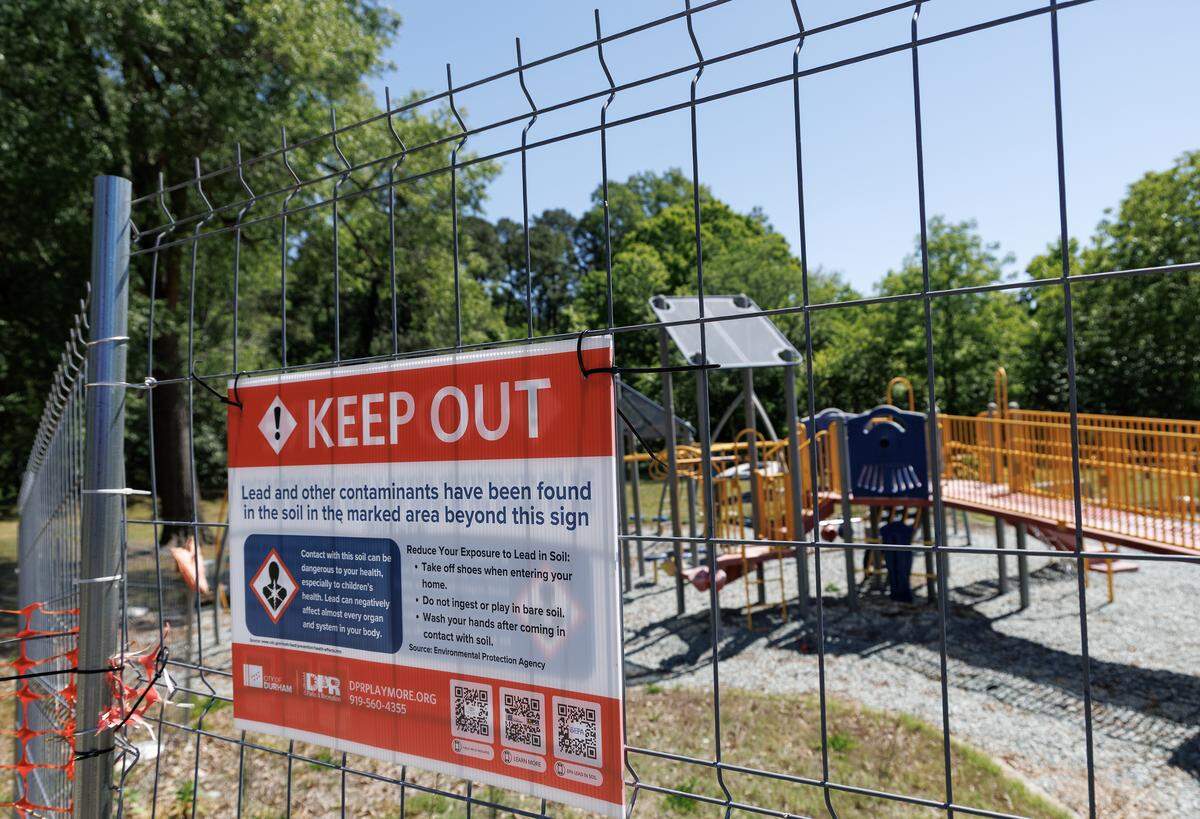
For two years, the orange mesh and metal, chain-link fences surrounding five Durham parks have kept children and families out of public space they used to enjoy.
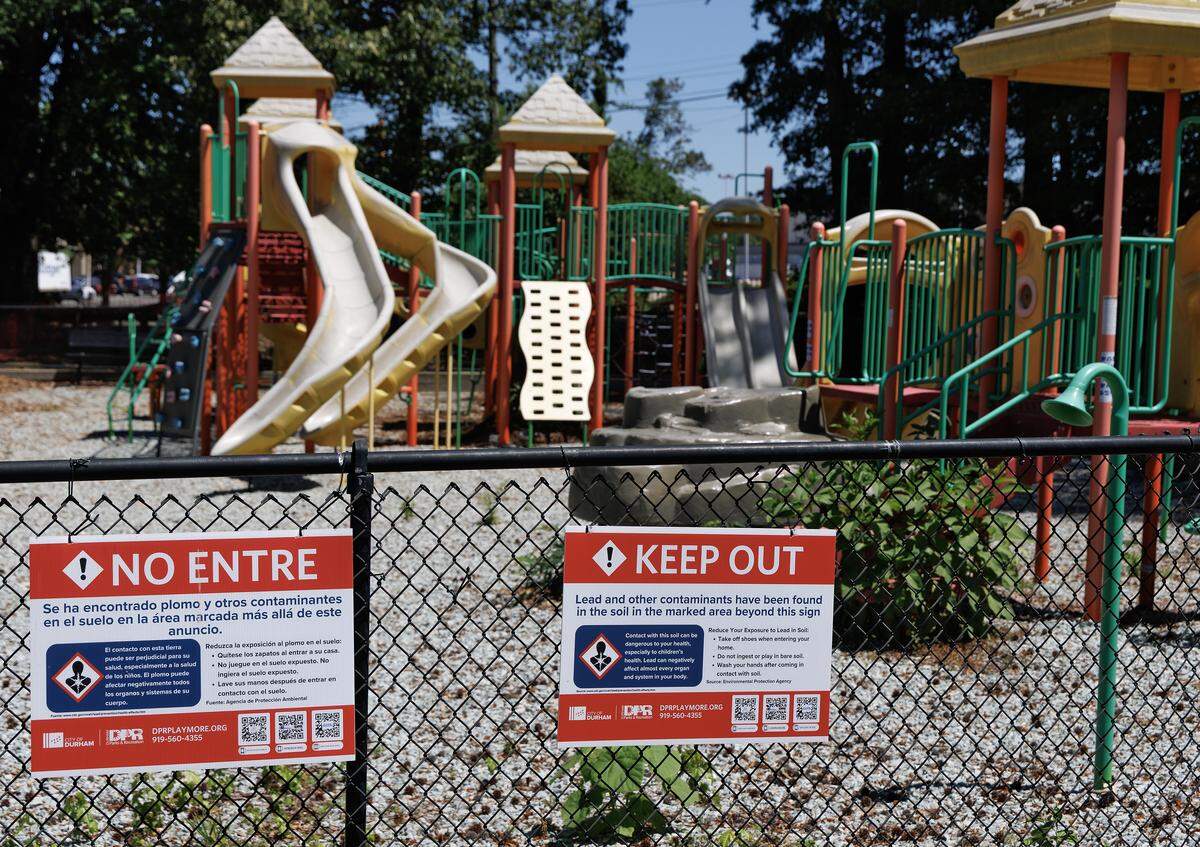
Once vibrant hubs remain padlocked “Keep Out” zones, warning people about toxins found in the soil beneath the playgrounds, basketball courts and swing sets.
As of this month, the city remains in a holding pattern. While internal documents reveal a $12 million strategy to reclaim East Durham, East End, Lyon, Northgate and Walltown parks from their history as former landfills, the final green light from state regulators is late.
Waiting for an answer
The city expected final Remedial Investigation Summary reports from the N.C. Department of Environmental Quality (DEQ) by March or April. Those deadlines have passed, and the gates remain shut because the state will not allow partial reopenings until a full risk assessment is complete.
The parks were all closed in late 2023 after a Duke University researcher found the areas once housed waste disposals. The parks were later found to have high levels of lead in the soil. A 1937 map of Durham showed four city-run waste incinerator sites that were later turned into parks, according to the DEQ.
Children under 6 are at the greatest risk from lead exposure, according to the Centers for Disease Control and Prevention. Lead can be found in soil, paint, drinking water and toys. Even low levels can cause permanent brain damage, behavioral issues, learning disabilities and speech problems. High levels can lead to death.
The final report from the state has been a frustrating waiting game for Durham parkgoers and elected officials. City Councilwoman Chelsea Cook said the state doesn’t fast-track the process for public land and the DEQ has been overwhelmed by the number of contaminated sites across the state.
“We’re having to wait in line for the results from the public spaces for the same amount of time as you would any other space,” Cook said in an interview. “That’s feeling really frustrating in this moment.”
A 2025 study ranked Durham 97th out of 100 major U.S. cities with major challenges in park access, equity and investment. Cook said the closures highlight a deeper historical wound as the parks were opened in majority-minority, under-invested neighborhoods years ago.
“We can’t have a healthy community without having public space for gathering, for exercise, for being in nature,” she said.
The cost estimate
The lead levels found at the parks are over 200 milligrams per kilogram, according to a memo from S&ME Inc., the engineering consultant firm involved in the testing. While the Environmental Protection Agency says 400 milligrams per kilogram is hazardous for soil in kid’s play areas, the 200 level is considered dangerous to children who might ingest soil if it’s dry or dusty, according to the CDC.
An early estimate shows that it will cost $10.47 million to remediate the soil in all five park. That projected cost also includes a 30% contingency to account for unforeseen construction costs.
Walltown Park, 1700 Guess Road
- 3.5 acres of remediation
- $4.5 million projected cost
- Requires excavating about 17,000 cubic yards (about five Olympic-size pools) of waste and waste-impacted soil from stream banks
Northgate Park, 300 W. Club Blvd.
- 1.9 to 4.5 acres of remediation
- $2.19 million projected cost
- Needs extensive clearing and soil cover over the area (nearly double that of most parks)
East Durham Park, 9.01 acres, 2500 E. Main St.
- 2.5 acres of remediation
- $1.8 million projected cost
- Requires landscaping replacement and disposal of waste like tires
Lyon Park, 12.23 acres, 1200 W. Lakewood Ave.
- 1.5 acres of remediation
- $1.2 million projected cost
East End Park, 9.46 acres, 1200 N. Alston Ave.
- 1 acre of remediation
- $724,000 projected cost
- Targeted remediation on one area that has lead
Will $12 million be enough?
There is a concern that the current funding may only be a down payment. Some sites may require more, expensive remedies.
The city might need to explore increasing the dedicated park tax, which is currently half-penny to a full penny on the tax rate, to ensure park spaces continue to thrive, Cook said.
In memo to the city manager, Parks and Recreation Director Wade Walcutt said proactive financial planning is important to the parks’ survival.
“Securing City funding now allows needed improvements, such as amenity replacement, demolition or construction of new amenities, and soil modification, to move forward without relying solely on State timelines and priorities,” Walcutt wrote.
For now, the $12 million remains untouched. Once the state finally delivers its summary reports, the city will still face a four- to 12-month period to develop formal Remedial Action Plans for each site. The process will also involve community input.
This story was originally published May 14, 2026 at 5:30 AM with the headline "Durham has $12M plan to fix its lead-tainted parks. So why are the fences still up?."