
At 90, man gets an artifact from a sunken ship — a treasure from long-lost father
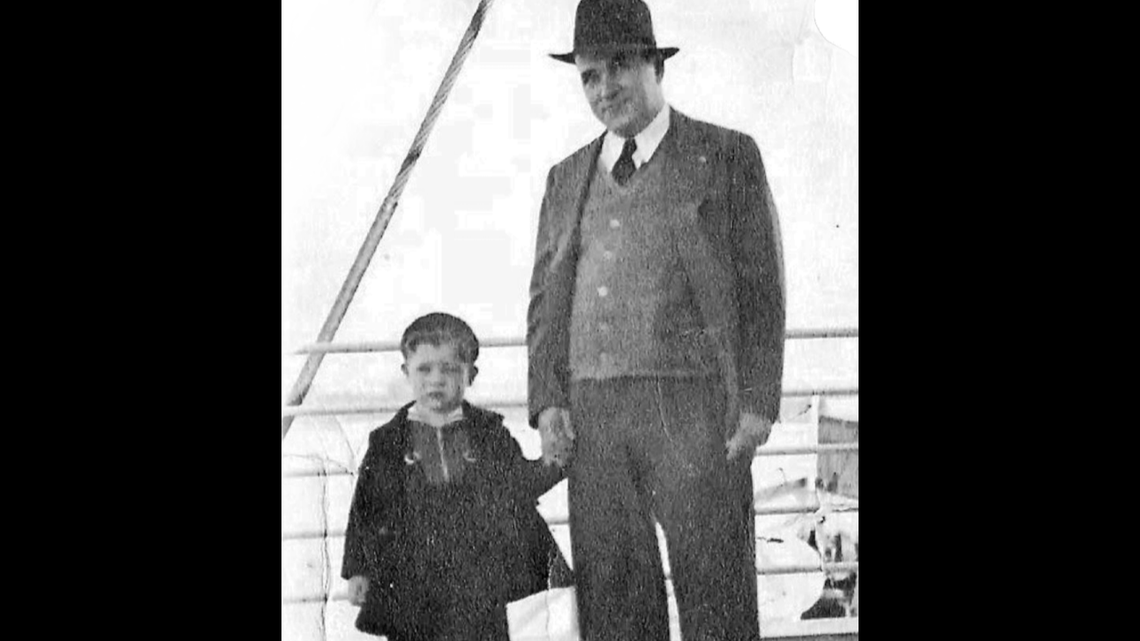
Even at 90, Ted Haviland thinks of the last time he saw his father: a merchant seaman shipping out from Savannah, smiling to his boy on the riverbank, waving his hat goodbye until his freighter disappeared around a bend.
He was only 6 on that day in 1942, and a few days later, Haviland got the crushing news that a Nazi submarine had sunk his father’s boat off the coast of North Carolina, killing 43 civilian sailors, including his dad the radioman.
Haviland grew old with little more than that memory, until a package arrived last week.
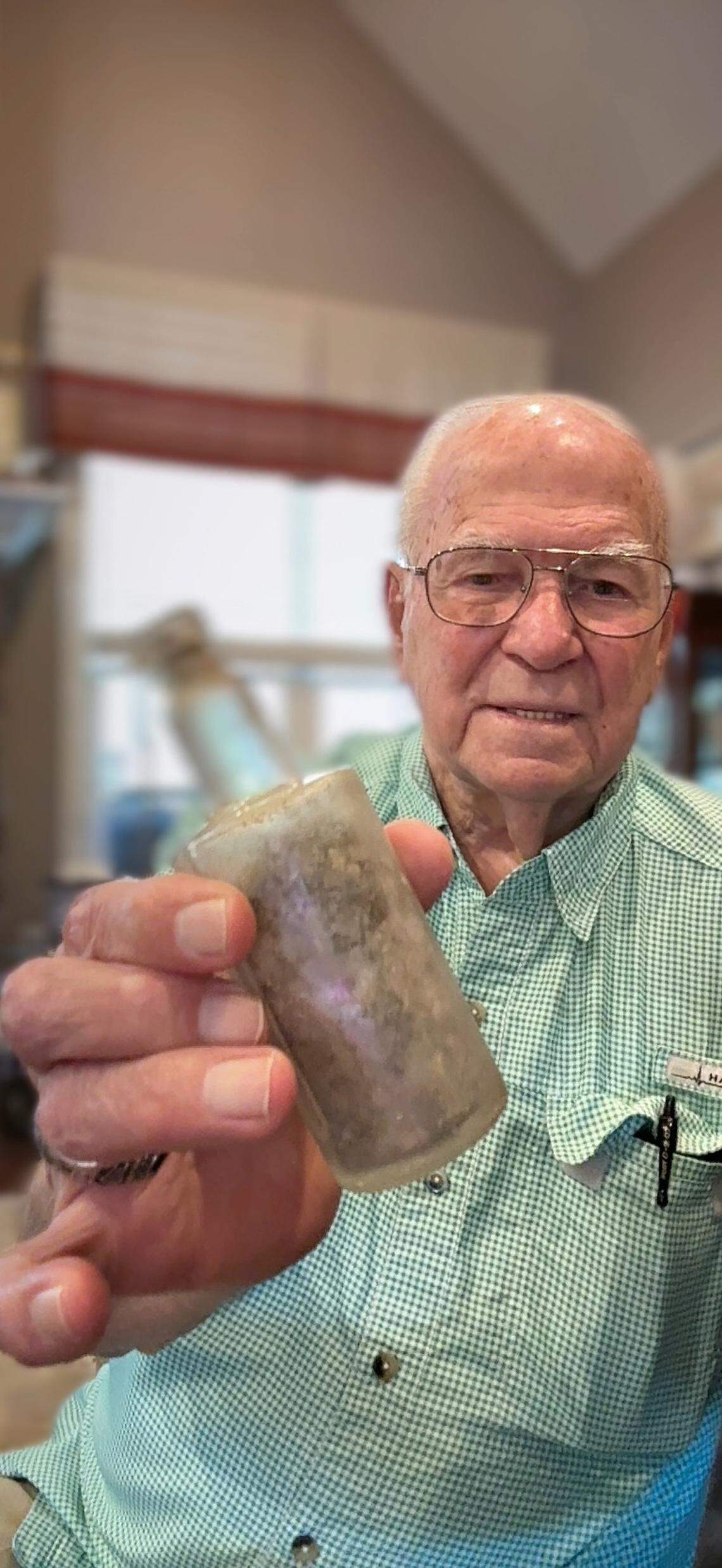
Inside, he found an artifact plucked from the bottom of the Atlantic Ocean, a medicine bottle recovered from the wreckage of his father’s ship and brought to light after 80 years.
Touching the smooth glass, he felt a hand reach out from that day on the riverbank — a connection at last.
“It’s quite an experience,” said Haviland, now 90, hours after opening the mail. “It’s a bit emotional to realize that it’s been underwater since 1942 and was a part of my father’s life. I’m sort of flabbergasted.”
‘Heartbreak of their loved ones’
The bottle found its way to Haviland through the research and writing of Kevin Duffus, a “real-life history detective” with a shelf full of books penned about NC martime history.
In 2012, he published “War Zone,” which traced the marks World War II left on the Outer Banks, adding to the thousands of ships already resting in the “Graveyard of the Atlantic.”
He dedicates a chapter to the City of Atlanta, a 337-foot steam freighter that made regular runs between Savannah, Boston and New York, carrying 47 men on a January night in 1942 — one of them Theo Haviland.
Hardly a month had passed since Pearl Harbor, and the crew expected little danger close to shore, keeping to waters shallower than 60 feet where U-boats can’t dive.
But as it passed 7 miles off the coast of Avon, close enough to see the village lights, the Germans inside U-123 fired a 23-foot torpedo into the City of Atlanta’s hull. Besides its human cargo, all the ship carried was cake mix, chicken feed, leather goods and Scotch.
“No consideration was made of the impending fate of the innocent civilian sailors aboard,” Duffus wrote, “nor of the future heartbreak of their loved ones, families and sweethearts at home — all the U-boat captain could see as an Allied ship to kill.”
The City of Atlanta was among the first of 86 ships sunk along the Outer Banks in the first six months of 1942, at a cost of 1,200 lives.
A ‘dastardly’ attack
The blast instantly killed three men in the engine room, and the coal-passers died seconds later when the room filled with water.
The explosion rattled windows from Buxton to Rodanthe, and people in the village of Avon could see the flames when they rushed to their windows.
Survivors clung to whatever they could in 47-degree water, slipping off one at a time. Hypothermia claimed all but three by the time rescue arrived.
In his research, Duffus found Ted Haviland interviewed decades later, describing the assault on civilians as “dastardly.”
“It had a devastating impact on my life,” he told a reporter in 1992. “It touched me very deeply and I’ve never forgotten it.”
Then years later, Duffus got a Facebook message from the 6-year-old boy he quoted, who was then well into his 80s and had just learned about “War Zone.” The book connected dots that Haviland could never connect on his own, and he wanted to know more.
“I would never imagine that a 6 year-old boy in 1942 who waved at his father’s ship as it departed would end up contacting me,” Duffus told The N&O.
Clinging to wreckage
In years that followed, Duffus learned more about the City of Atlanta, which he plans to reveal in an upcoming book.
For decades, Haviland had assumed his father died instantly, mainly because reports described the ship’s radio room as completely destroyed.
But Duffus unearthed a forgotten interview with a survivor, printed in two newspapers, in which he described Theo Haviland among the men clinging to wreckage in the nighttime ocean, finally slipping into the water.
“That was a revelation for Ted,” he said.
But more important, divers who comb the many wrecks off the Outer Banks learned of the connection between Duffus and Haviland via their Facebook posts.
The City of Atlanta does not get many divers because although one could reach it in 15 minutes from the shore, riding on a jet-ski, a dive boat from Oregon Inlet makes for an 10-hour round trip.
Still, those divers had been down there, and they promised to send Haviland a keepsake they found. Duffus drove down to his home in South Carolina to watch it happen.
.jpeg "lp_image (1).jpeg")
‘It’s thrilling’
The bottle felt smooth and iridescent, about 6 inches tall, probably something from the ship’s infirmary.
Haviland held it to the light.
“My dad took me aboard that ship and showed me the radio shack, and I remembered that all these years,” he said. “But to actually come in contact with an actual artifact, it’s thrilling. I’ll have to build a proper display for it and have something I can leave my sons.”
As he watched, Duffus recalled his first meeting with Haviland, who accidentally became a live character in his story.
When he left that first day, after they had talked, he remembered that Haviland came out on the porch and waved goodbye as he drove away.
He kept waving until the car vanished from sight.
This story was originally published April 27, 2026 at 5:00 AM with the headline "At 90, man gets an artifact from a sunken ship — a treasure from long-lost father."