
Dump trucks rolled into a Durham park. By evening, the homeless camp was back
AI-generated summary reviewed by our newsroom.
- City crews used dump trucks to clear Oakwood Park and HEART was on site.
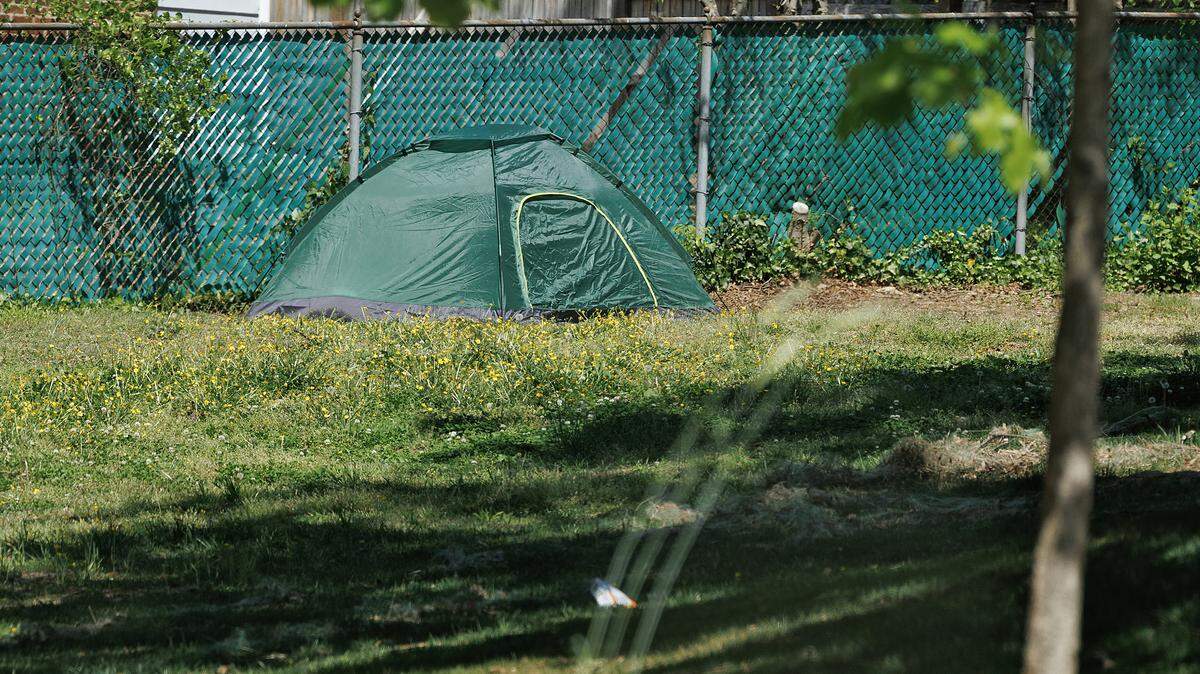
- By evening the same day, tents and residents had returned to the Oakwood Park site.
- As of March 31, the city reported 1,430 people experiencing homelessness.
On Monday morning, the fragile peace at Oakwood Park was broken by the sound of dump trucks and heavy machinery.
In a coordinated effort to reclaim the public space, the city of Durham moved to clear a long-standing homeless encampment that has become a flashpoint for a city struggling to balance public health with an ongoing housing crisis.
But by that evening, the tents were back.
The quick return underscored the community tension: neighbors want to safely use the small park near downtown, while advocates argue that without viable housing options, a city crackdown amounts to more displacement, not a solution.
‘What gave you the right to touch my things?’
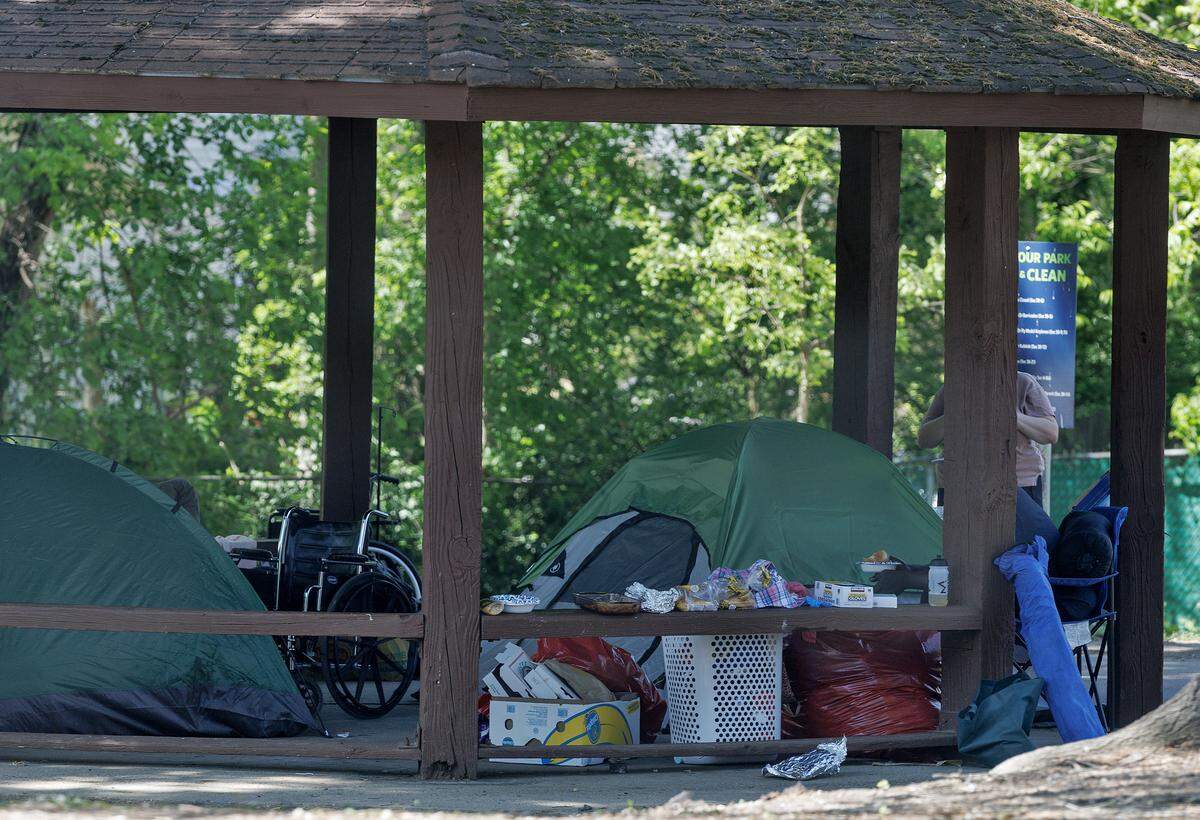
For Stephanie Wortham, Oakwood Park has been her only refuge for months. Sleeping in a tent under the gazebo, she’s navigated the daily physical toll of homelessness, from the concrete that pains her back to the struggle of keeping her life contained in a few bags.
“You cannot just come because you feel like it,” Wortham said Tuesday afternoon. “You can’t take anybody’s belonging and throw it away. Nobody asked me nothing. They just took my [expletive] when I wasn’t here and put it in the dump. What gave you the right to touch my things?”
Wortham returned from a hospital visit Monday morning to see city workers dumping her blankets, clothes, pictures, and critical medical supplies, like her EKG machine, into a trash truck.
“I'm homeless, I don’t have that much,” she said. “I do know how to go to the library and into certain places and give myself a bath, but do I also have to lose my belongings, the things I do have? I don’t. I don’t have to. That’s bullcrap.”
Wortham began crying and pleading with workers to release her belongings. They used a crane to retrieve her tent and clothes from the dumpster, dropping them onto the pavement. She salvaged what she could.
“The city doesn’t own people’s clothes,” she said. “To me, that’s theft. You took someone’s belongings and threw it away — that’s theft.”
The city’s response
City officials said the encampment posed “significant safety, access and public health concerns,” including fire and ongoing health risks. A sustained encampment of a half dozen or more tents has been present at Oakwood Park since early December 2025
“Encampments are not permitted in Durham’s parks because they limit access and can create safety and sanitation challenges,” said city spokesperson Amy Blalock.
The goal is “to keep people safe, preserve access to public spaces, and approach every situation with care,” she said. “Staff on site focused on completing the work in a calm, orderly manner.”
In an email Thursday, Blalock said when the city removes an encampment, police provide initial notice and maintain safety, and General Services handles “debris removal. “
The HEART street outreach team can collect and store people’s items if the individuals are on site and give them permission. On Monday, only one person’s items were stored. For everyone else who wasn’t on site, their items were removed and disposed of following safety protocols.
“For additional context, the City provided eight days’ notice prior to the first attempt to remove the Oakwood Park encampment,” Blalock said in the email. “Once that notice was delivered by police, Street Outreach staff visited the site every day — multiple times per day — to meet with residents, offer support, help connect them to services, ensure they were aware of the planned removal date, and assist with moving or storing belongings.”
Wortham said many people at Oakwood, located at the corner of Holloway and Roxboro streets, were eating breakfast at nearby shelters when city workers made the sweep.
Blalock also said HEART’s team connected people to the Entry Point Durham waitlist for shelter beds, but officials acknowledged the core issue: there are more people than beds. As of April 2026, the city is still working to establish an operational relocation site.
As of March 31, some 1,430 people in Durham were experiencing homelessness, according to a data snapshot by the city. Of that number, 279 people are experiencing chronic homelessness. The majority of them are Black men and women.
“Because available shelter space is limited, not everyone can be placed immediately,” the statement read. Beginning this summer, officials plan to move individuals into non-congregate shelters like hotels and modular-type, permanent housing. To fund this, the Community Safety Department has requested a $13 million community-wide investment this budget season.
A clash of perspectives
Erin Gasch, who lives near Oakwood Park, said the encampment has changed the way families use the space and left nearby residents feeling unheard. For years, she said, neighbors worked with Durham Parks and Recreation to improve the park, including securing a KABOOM! grant to replace an aging play structure.
In the last two years, however, Gasch said the encampments have become more permanent. Neighbors’ frustration peaked after a recent fire at the park during a burn ban. She said the goal isn’t to push people out of sight, but not accepting that a tent is a substitute for housing. She said the park, which sits next to a preschool and a family shelter, had become unusable for children.
“The public safety piece somehow got lost in the regulation,” she said. “We are not treating people with dignity and humanity. You cannot expect for somebody to live without sanitation and running water, and consider the tent is an appropriate place.”
On the other side, advocates called the sweep an act of state-sanctioned violence against the city’s most vulnerable. Amanda Wallace, an organizer who was on-site during the clearing, described a scene of chaos and loss.
“This is a place that people have called their home,” Wallace said. “This is a place that people have their shelter, their belongings, their life. [The city] just did not have anywhere else for people to go. They just wanted them to go set up somewhere else.”
She said that the resources spent on the sweep — involving police, Parks and Rec staff and the HEART team — would have been better spent on actual housing.
“I think it shows what the community, what the city truly cares about,” she said. “It’s not complicated. People need housing, and the city needs invest in that.”
The fear of a repeated removal
Bam Free, a community member who provides direct support to the unhoused community, said the “clearing” gave the unsheltered people living there no viable alternatives.
“They were already in the park, so if there was somewhere else they wanted to be, they would probably be there,” he said, adding that while residents are aware of local shelters, those facilities are often not helpful or accessible.
A fundraiser has been set up by Free with a goal of $5,000 to help with items like shoes, hygiene kits and transportation.
As the community waits to see what budget season brings to address homelessness, Free said the “violent situation” remains dire.
“If the lives of people who are living outside were actually prioritized, these things would have been done a long time ago,” he said.
This story was originally published April 15, 2026 at 4:44 PM with the headline "Dump trucks rolled into a Durham park. By evening, the homeless camp was back."
CORRECTION: This story was corrected April 16, 2026, to clarify the role of the city’s HEART team when homeless encampments are removed. HEART does not direct, lead, or carry out the removal itself, a city spokesperson said. Its street outreach team provides support: connecting with individuals in advance, sharing information, offering resources, and, when individuals are present and give permission, storing personal items.