Local

The flamboyant forensic scientist who testified for Michael Peterson has died
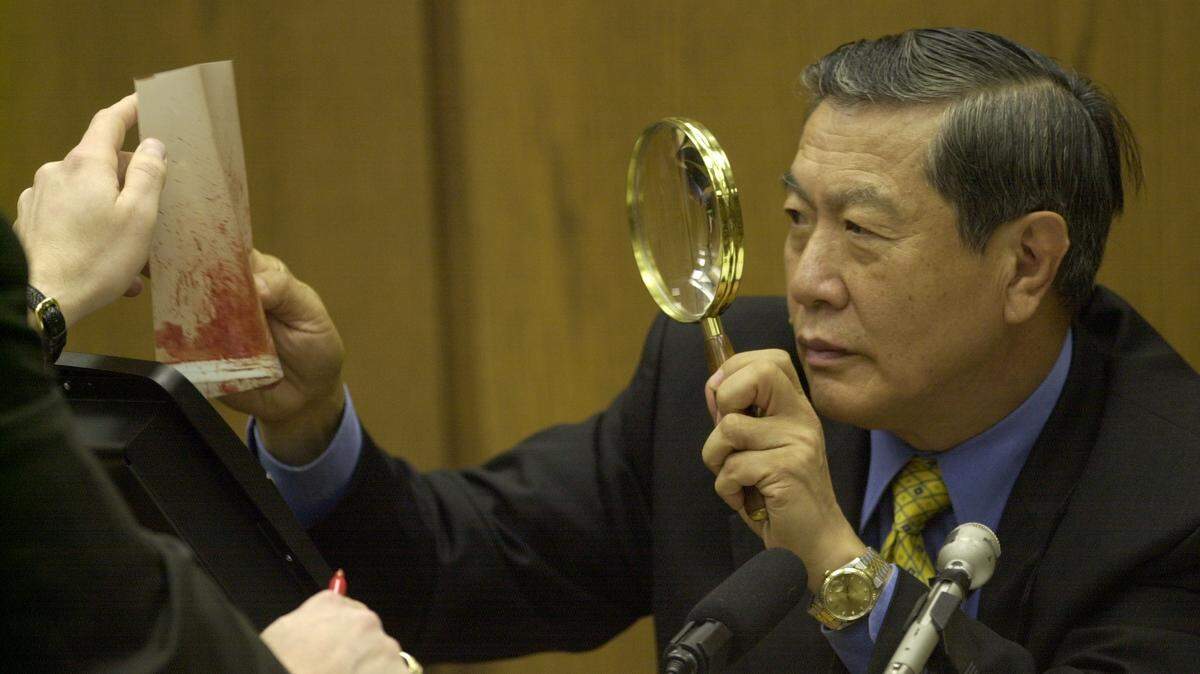
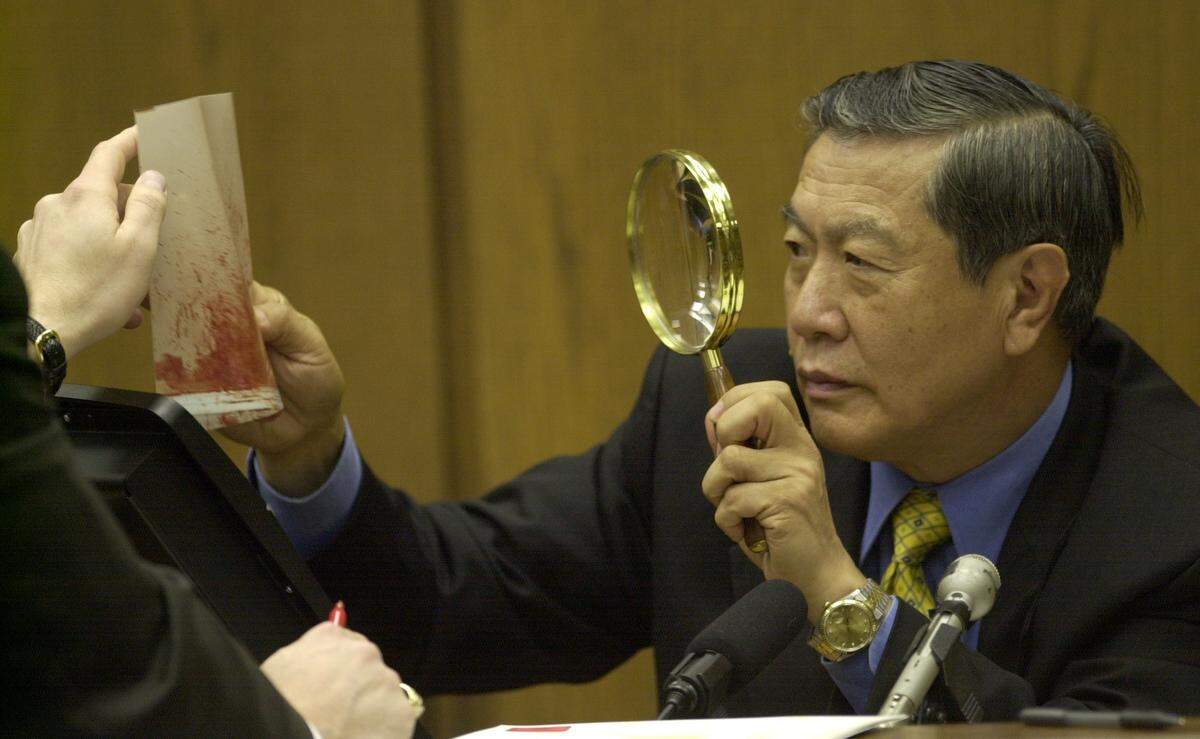
Henry C. Lee, prominent forensics expert takes a closer look at a blood spatter evidence photo during the prosecution's cross-examination of Lee as to his interpretation of the evidence during Monday afternoon at the Michael Peterson murder trial in November 2003.
Henry C. Lee, prominent forensics expert takes a closer look at a blood spatter evidence photo during the prosecution's cross-examination of Lee as to his interpretation of the evidence during Monday afternoon at the Michael Peterson murder trial in November 2003. Harry Lynch

Dr. Henry Lee, the famed crime-scene expert who enlivened the gruesome murder trial of Durham author Michael Peterson by spitting ketchup on a poster board to demonstrate blood spatter, has died at 87.

Lee had already built a celebrity’s reputation in forensic science long before Peterson’s defense team hired him in 2003, having appeared on the witness stand in O.J. Simpson’s murder trial and aiding police in the slaying of 6-year-old beauty queen JonBenet Ramsey.

Born in China, a former police officer in Taiwan, Lee came to the United States with $50 in his pocket, starting his renowned Connecticut lab with a single microscope in a converted bathroom. He died on Friday, March 27 at his home in Henderson, Nevada, the University of New Haven reported.

In 2003, he brought a buzz to the Durham case that already sizzled with tabloid quality, hired to counter the prosecutor’s evidence that popular author of thrillers Peterson had beaten his wife to death in the staircase of their home.

“I think the jury is going to love him,” Durham defense attorney Mark Edwards told The News & Observer at the time.

And from the moment Lee heard his name called, he took to his job with a showman’s panache:

“Unlike most witnesses in a murder trial, who approach the stand as if it were the dentist’s chair, Lee leapt to his feet and jauntily stepped to the front of the courtroom,” wrote former N&O reporter Anne Saker, covering the trial. “As he passed the jury box, he called out, ‘Good morning!’ and the panel returned the greeting with equal enthusiasm.”
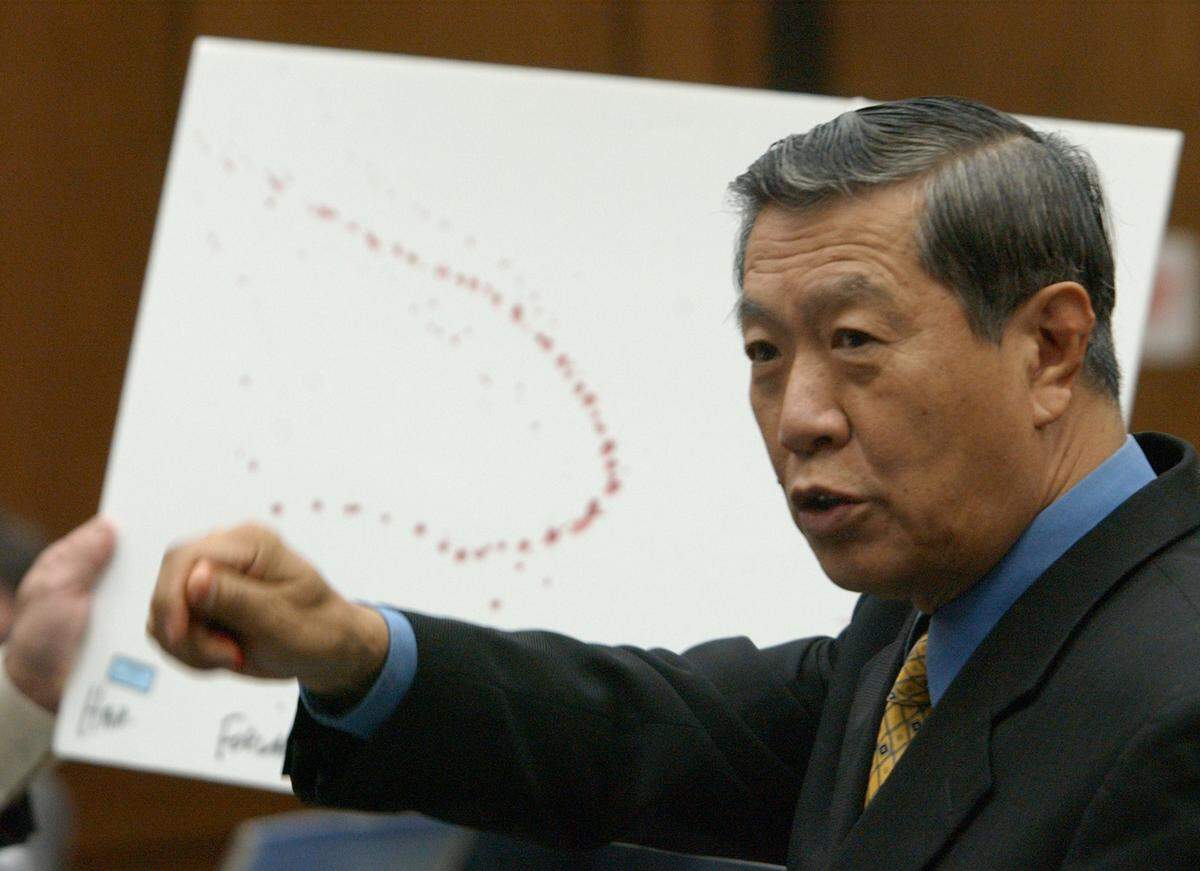
Henry C. Lee, retired head of the Connecticut Public Safety Dept. and prominent forensic science expert, illustrated to the Michael Peterson jury Monday morning different types of blood spatter patterns (background) using red ink during his opening day of testimony, September 2003.
Henry C. Lee, retired head of the Connecticut Public Safety Dept. and prominent forensic science expert, illustrated to the Michael Peterson jury Monday morning different types of blood spatter patterns (background) using red ink during his opening day of testimony, September 2003. Harry Lynch News & Observer staff photo

Red ink and ketchup

To start his testimony, Lee squeezed a blot of red ink through an eye-dropper onto a white poster board.

Then he dropped another blot onto a tilted piece of board, showing how its shape differed by hitting at an angle.

He smacked another drop with his hand, and sprayed more ink through an atomizer, showing how it looked on impact at different speeds.

Then came the kicker:

“He lifted a small bottle of ketchup to his lips,” Saker wrote. “He took a mouthful. He inhaled through his nose. Then he spat the ketchup on the board. Thus introduced to Dr. Henry Lee, the jury stared at him, then sat back for the rest of the testimony.”
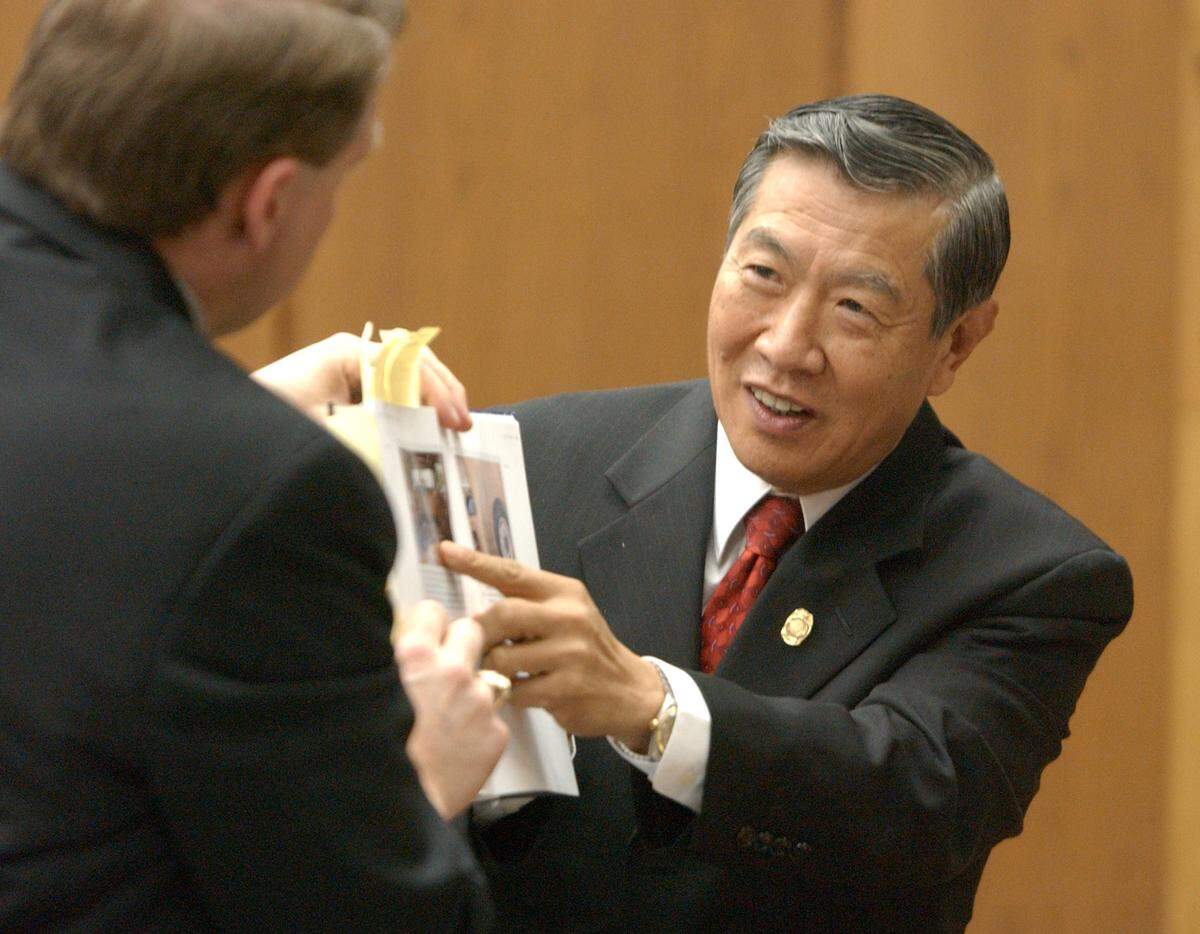
Forensic scientist and blood spatter expert Henry C. Lee right, indicates to the jury, at right out of photograph, an instance of when Lee used the stringing method in his crime scene studies. At left is prosecutor Jim Hardin, holding Lee's forensics book for the jury during the second day of cross-examination for Lee at the Michael Peterson murder trial in September 2003.
Forensic scientist and blood spatter expert Henry C. Lee right, indicates to the jury, at right out of photograph, an instance of when Lee used the stringing method in his crime scene studies. At left is prosecutor Jim Hardin, holding Lee's forensics book for the jury during the second day of cross-examination for Lee at the Michael Peterson murder trial in September 2003. Harry Lynch News & Observer staff photo

Chinese courtesy

Lee testified that the evidence in Kathleen Peterson’s death was more consistent with a fall down the stairs than with a beating, though under cross-examination from prosecutor Jim Hardin, he allowed, “Nobody can exclude everything.”

He kept jurors laughing throughout, despite being in Durham to offer his expertise about large quantities of crime-scene blood.

At one point, Hardin pointed out that Lee had signed a copy of his book for SBI agent Duane Deaver, who provided most of the state’s forensic evidence. As an inscription, Lee wrote, “To Duane Deaver, one of the best. Keep up the good work. With warm regards. Henry Lee.”

“You wouldn’t have written that,” Hardin asked, “unless you felt that way?”

“No, no, no. I give everyone courtesy, Chinese courtesy,” said Lee. “I went to his place, he extend the courtesy, let me see what he has. It’s my, uh, upbringing. You can’t write in there something like, ‘You are totally wrong.’ “
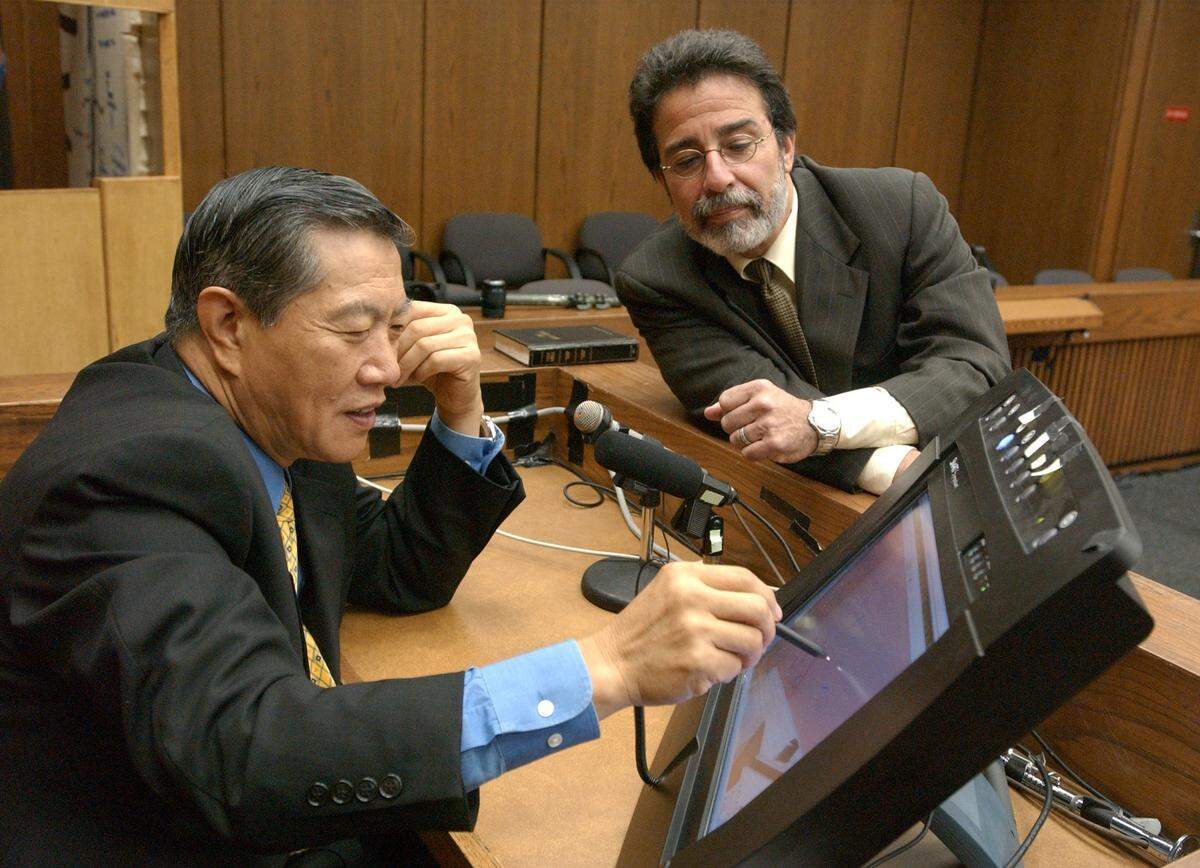
Henry C. Lee, retired head of the Connecticut Public Safety Dept. and prominent forensic scientist, left, with defense attorney David Rudolf, reviews some of the loaded evidence photos on the witness stand computer screen shortly before court began Monday morning in the Michael Peterson murder trial, September 2003.
Henry C. Lee, retired head of the Connecticut Public Safety Dept. and prominent forensic scientist, left, with defense attorney David Rudolf, reviews some of the loaded evidence photos on the witness stand computer screen shortly before court began Monday morning in the Michael Peterson murder trial, September 2003. Harry Lynch News & Observer staff photo

Jurors would convict Peterson despite Lee’s testimony, his conviction would later be vacated over problems with Deaver’s lab work, and he would plead guilty to manslaughter in 2017 — walking free.

But Lee would leave life with the same jauntiness he brought to Durham, when he waved to jurors declaring, “Good bye! Thank you!”
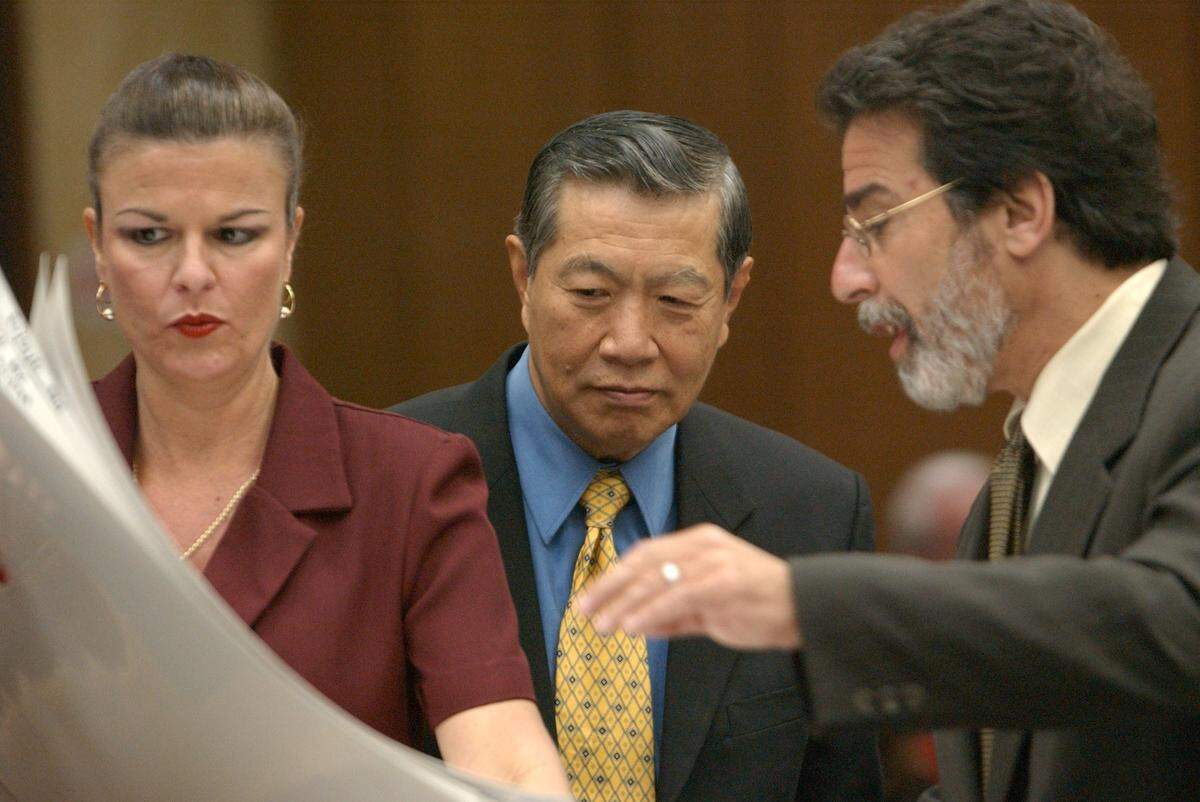
Henry C. Lee, prominent forensic scientist, center, looks over the shoulders of Durham prosecutor Freda Black, left, and defense attorney David Rudolf, right, Monday noontime as Rudolf borrowed some of the state's evidence in the 46th day of the Michael Peterson murder trial.
Henry C. Lee, prominent forensic scientist, center, looks over the shoulders of Durham prosecutor Freda Black, left, and defense attorney David Rudolf, right, Monday noontime as Rudolf borrowed some of the state's evidence in the 46th day of the Michael Peterson murder trial. Harry Lynch News & Observer staff photo
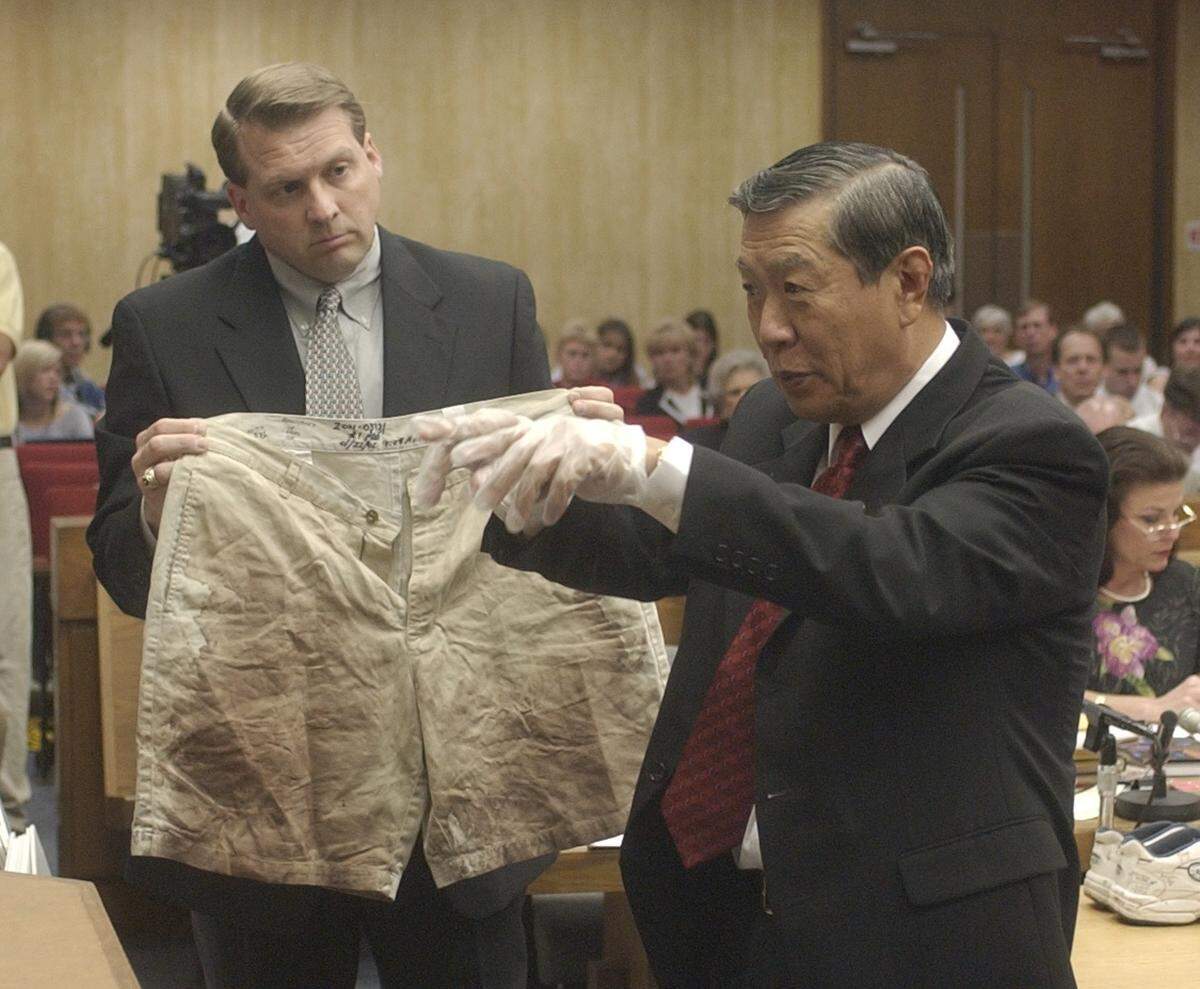
Forensic scientist and blood spatter expert Henry C. Lee, right, dons his latex gloves in front of the jury, he says because he does not want his DNA on the evidence while handling the blood stained shorts of Michael Peterson, left, held by prosecutor Jim Hardin during the cross-examination of the defense witness at Michael Peterson’s murder trial.
Forensic scientist and blood spatter expert Henry C. Lee, right, dons his latex gloves in front of the jury, he says because he does not want his DNA on the evidence while handling the blood stained shorts of Michael Peterson, left, held by prosecutor Jim Hardin during the cross-examination of the defense witness at Michael Peterson’s murder trial. BILL WILCOX News & Observer / Durham Herald Sun staff photo
Henry C. Lee, prominent forensics expert takes a closer look at a blood spatter evidence photo during the prosecution's cross-examination of Lee as to his interpretation of the evidence during Monday afternoon at the Michael Peterson murder trial in November 2003.
Henry C. Lee, prominent forensics expert takes a closer look at a blood spatter evidence photo during the prosecution's cross-examination of Lee as to his interpretation of the evidence during Monday afternoon at the Michael Peterson murder trial in November 2003. Harry Lynch Harry Lynch
Read Next
Read Next

This story was originally published March 30, 2026 at 2:25 PM with the headline "The flamboyant forensic scientist who testified for Michael Peterson has died."

Josh Shaffer
The News & Observer
Josh Shaffer is a general assignment reporter on the watch for “talkers,” which are stories you might discuss around a water cooler. He has worked for The News & Observer since 2004 and writes a column about unusual people and places.
Get unlimited digital access
#ReadLocal

Try 1 month for $1

CLAIM OFFER