
Christmas joy aboard the USS North Carolina: a holiday memory from World War II
AI-generated summary reviewed by our newsroom.
- Crew aboard USS North Carolina staged a boisterous Christmas Eve 'smoker' in 1943.
- Chaplain Wuebbens raised funds and arranged Macy’s gifts and filmed messages.
- Sailors shared moments of home, then returned to combat; four more died.
On Christmas Eve in 1943, the USS North Carolina sat anchored off a tiny volcanic island in the South Pacific, where crewmen tried to make merry in shoebox bunks stacked four high, half a globe away from sweethearts and wives, staring at yellowing snapshots of home.
With its coconut trees and blue lagoons, the island of Efate offered little home-style holiday spirit, and the men onboard made do with carols played over the PA system — most likely Bing Crosby’s “I’ll Be Home For Christmas,” whose lyrics must have stung.
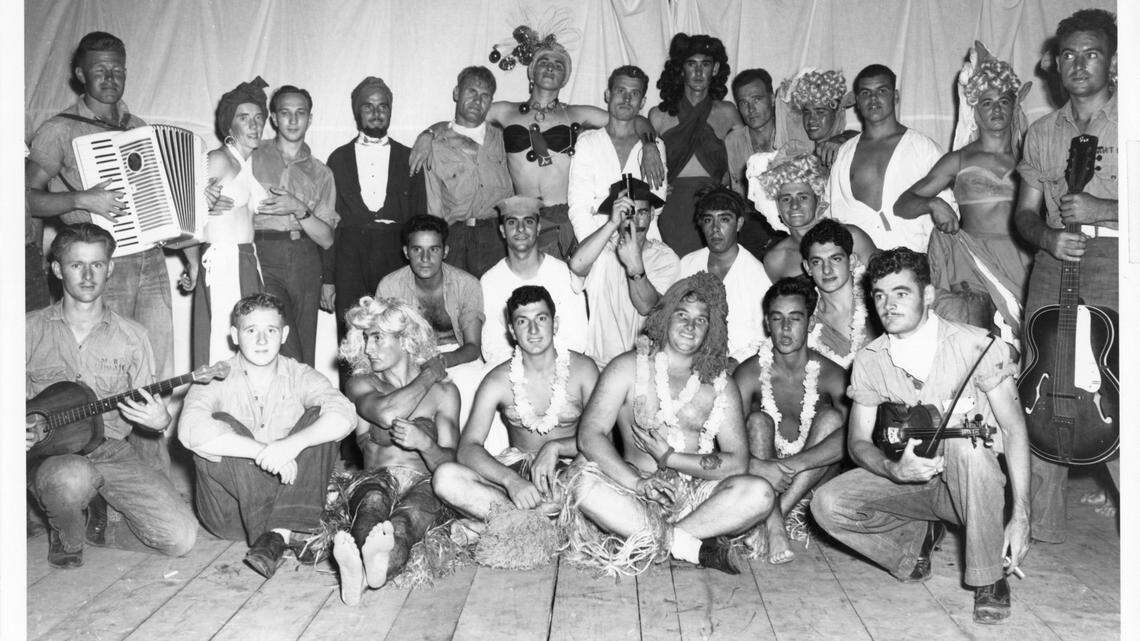
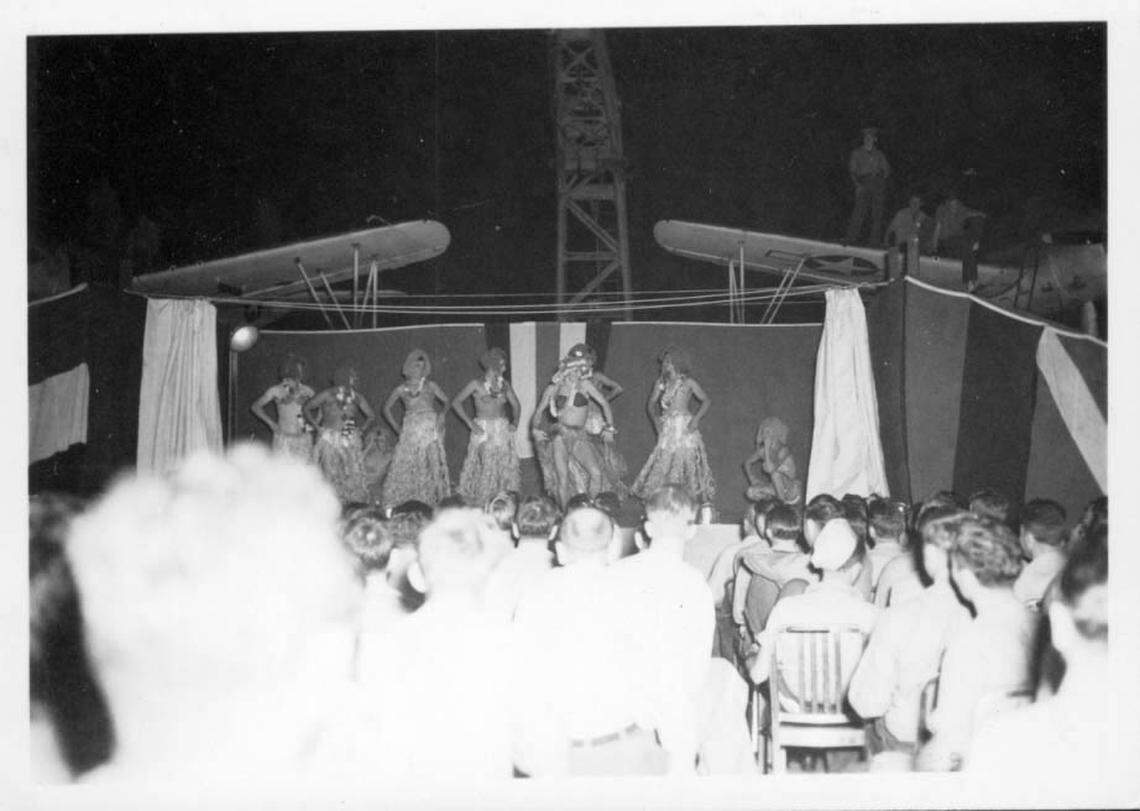
Still, the sailors gave it their yuletide best during their brief break from war, staging a Christmas Eve variety show they called a “smoker,” which included the fighting men performing a strip-tease in grass skirts and coconut-shell brassieres over howls of approval.
“Crewmen in drag,” wrote boatswain’s mate Bill Taylor in a letter home. “Wigs made from manila line, dancers, strippers, comedians — the whole bit.”
.JPG "Xmas drag 1943 (1).JPG")
Surprise Visit
The North Carolina saw remarkably few casualties for a battleship in the Pacific, but the crew of 2,300 had already seen six of their fellow sailors die by the night of the Christmas party: one in a strafing attack and five in a torpedo strike.
The crew had spent 30 days at sea before their resupply in Efate, and they would ship out again on Christmas morning to support an aircraft carrier.
But for a few hours, they could laugh and smoke cigars, elbowing each other and wolf-whistling at the sailors in wigs, their voices a mixture of Brooklyn bombast and farm boy twang.
Then came the surprise.
Back in August of 1943, Chaplain E.P. Wuebbens wrote to Macy’s Department store in New York, enclosing $2,404.25 he had collected from the men, most of it in $5 bills.
He asked that Macy’s buy gifts and a Christmas card for the provided list of 729 children, all of them sons, daughters, little brothers or sisters of the North Carolina crew. He asked that they be marked “from your dad and his shipmates,” with a warning not to open until Dec. 25.
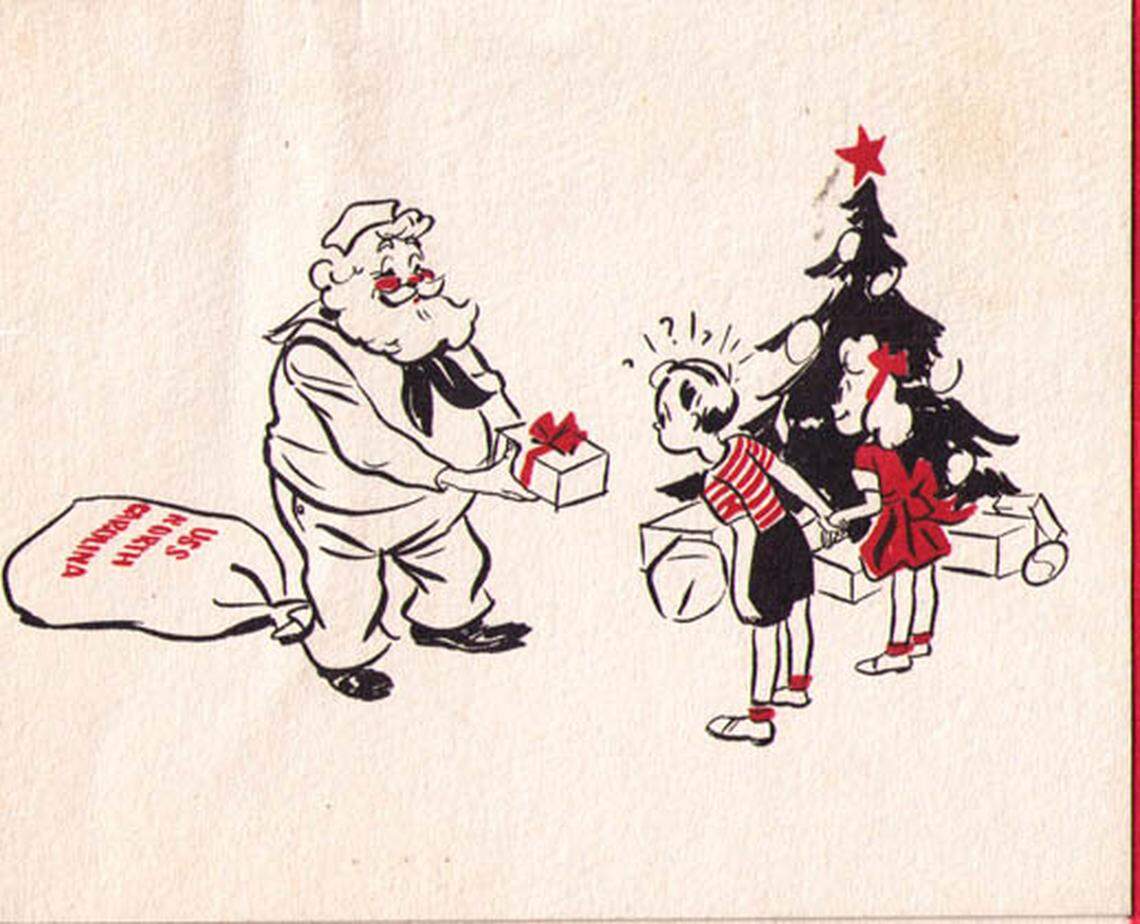
Four months, he thought, would allow ample time.
“We are so far removed from home in both time and distance that we have little idea of what kind of gifts may be available this year,” wrote Wuebbens. “We shall, therefore, not limit you in choice.”
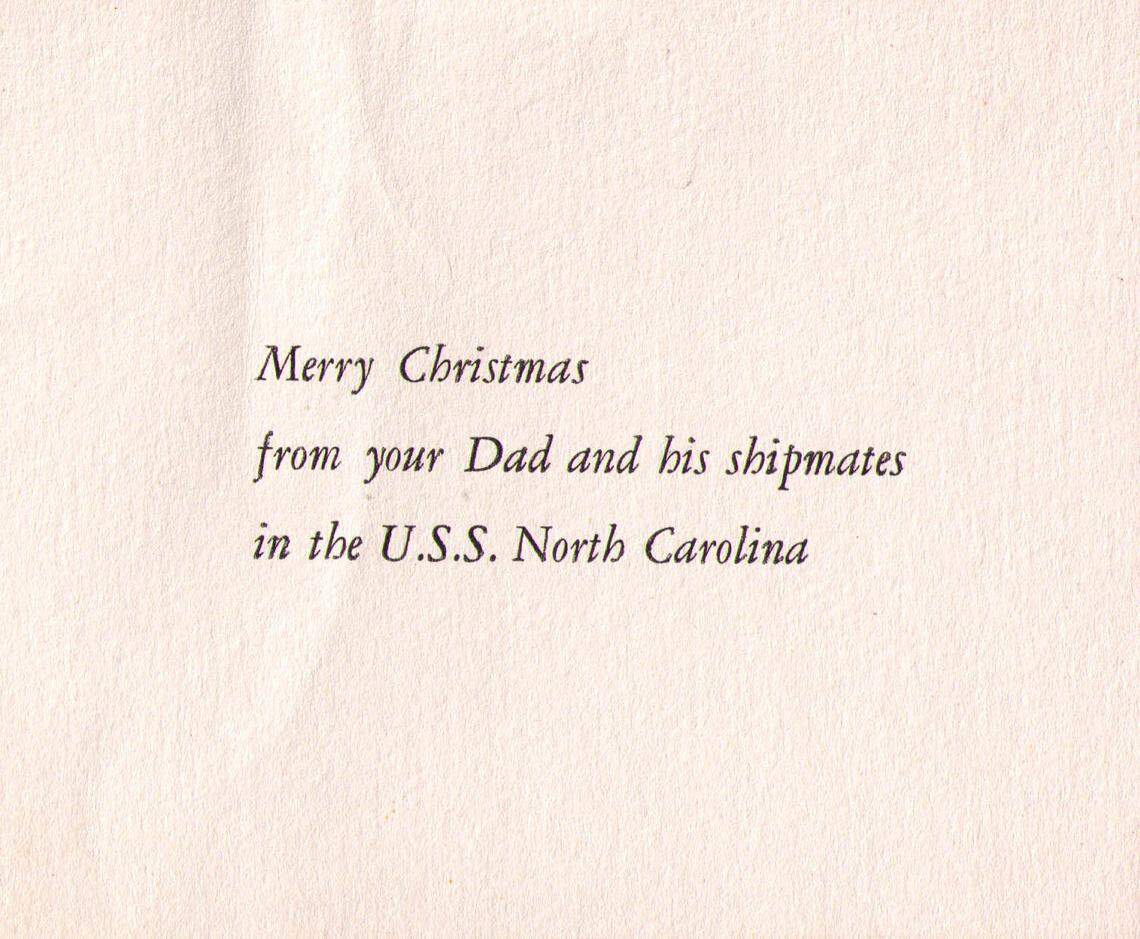
Macy’s honored the deal, and then some.
As they gathered up the gifts, the store’s staff called in the families who lived in or around New York and filmed a few seconds of footage from each of the wives, sons and daughters, splicing them together into a holiday film.
After the show, Wuebbens played the film onto a sheet of canvas, where the crew heard voices they had dreamed about in their bunks, saw faces they had taped to the wall below-deck.
When Christmas morning dawned, the North Carolina left its holiday respite and joined a carrier attack. The men enjoyed a dinner of pea soup, olives, pickles, young tom turkey, baked ham, giblet gravy, pineapple sauce, oyster dressing, buttered asparagus, candy, cigarettes, cigars and nuts — all while steaming toward combat.
Four more of its men would die before the war’s end.
Chaplain Wuebbens would become senior pastor at the U.S. Naval Academy, where he delivered a sermon in 1948 with President Harry S Truman in the congregation. A year later, Wuebbens died of a heart attack at only 46.
But the crew of the North Carolina kept that Christmas Eve close far beyond war’s end.
The ship’s veterans kept a newsletter going for decades, and in 1997, as an old man, Taylor the boatswain’s mate would see a segment on the History Channel describing the Christmas of 1943 — an account that pulled him back over half a century and 10,000 miles.
“It was the only time,” he wrote, “I can remember seeing old sailors cry.”
This story was originally published December 22, 2025 at 5:30 AM with the headline "Christmas joy aboard the USS North Carolina: a holiday memory from World War II."