NC State researchers dumped plastic bottles into Marsh Creek. They’re not litter.
AI-generated summary reviewed by our newsroom.
- NC State researchers deploy GPS-tagged bottles to study litter flow in Marsh Creek
- Plastic comprises 95% of trash collected from traps along Neuse River tributaries
- Project aims to track plastic litter, engage public and recommend pollution solutions
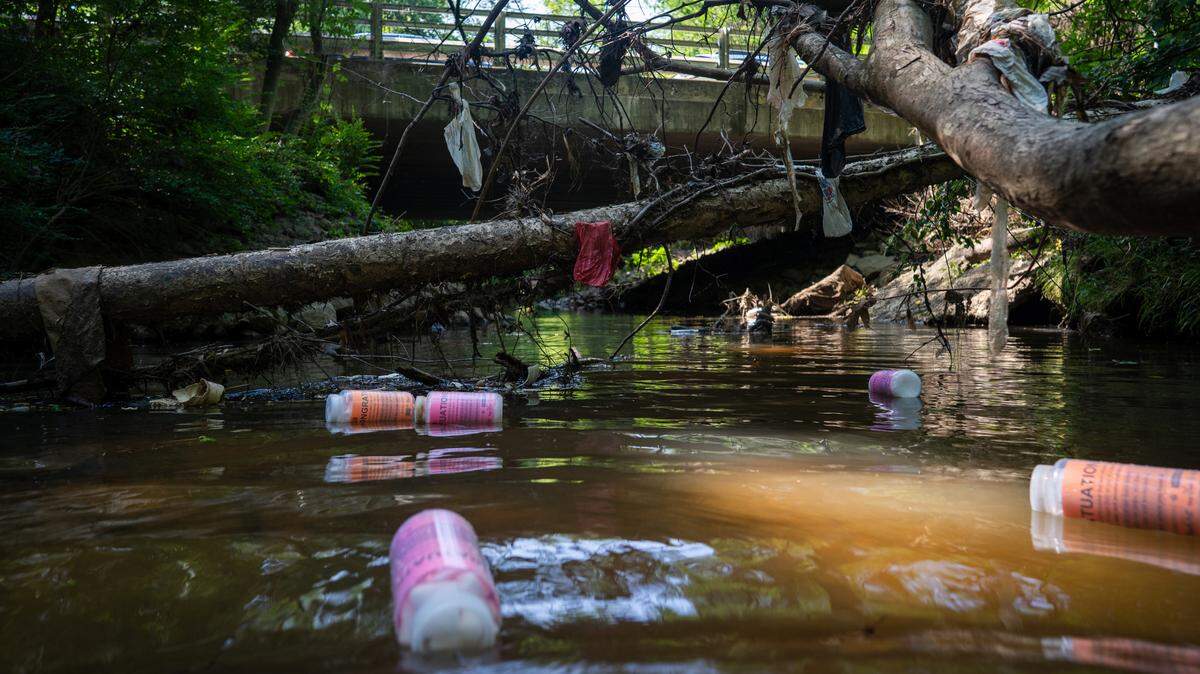
Dozens of bright pink Nalgene-style plastic bottles are drifting through Marsh Creek, waiting to be found by visitors.
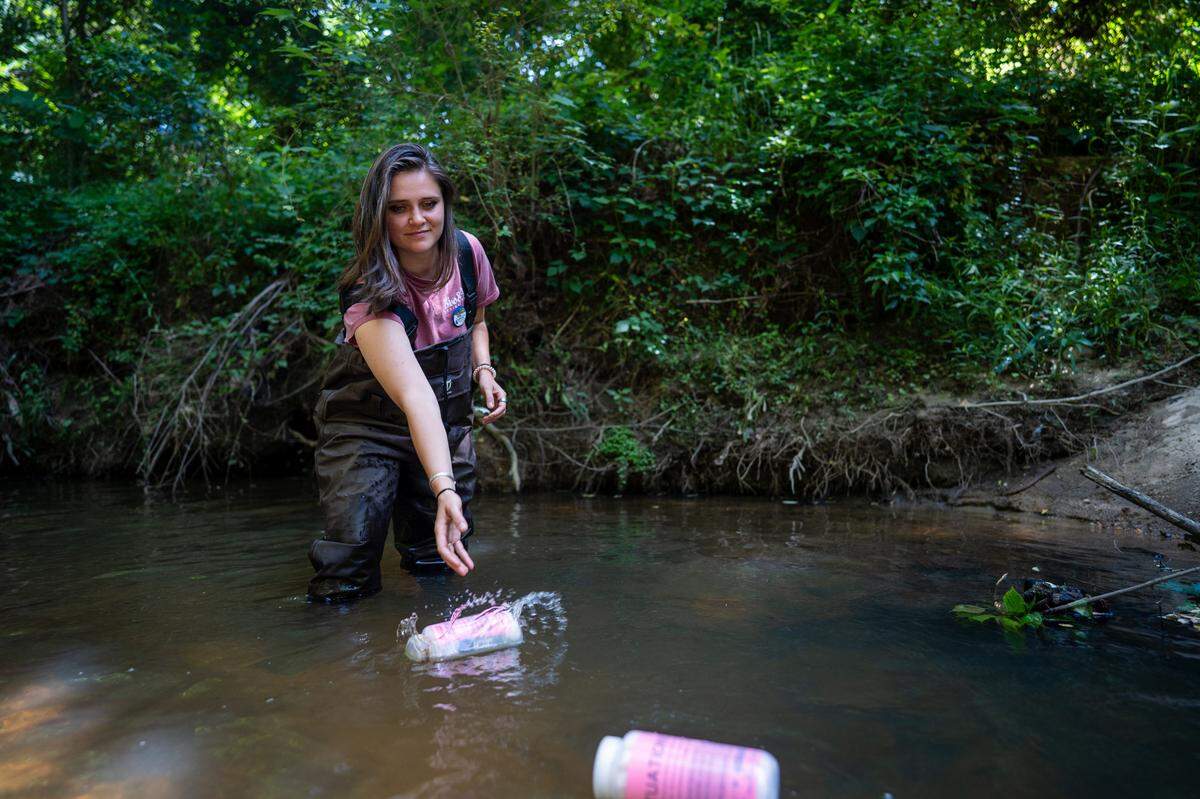
In April and May, Barbara Doll, a professor at N.C. State University and water protection and restoration specialist with the North Carolina Sea Grant, led a team of volunteers and researchers who dumped this litter into the creek — 40 bottles in total — for the sake of science. Doll is studying how litter moves through urban streams in North Carolina. The bottles will continually transmit their location, but feel free to pick one up should you find one.
“If they find the bottle, it’s got a message on it and it’s got a QR code that they can [scan to] log where they saw it and take a picture with the bottle,” Doll said.
The message also directs people to an interactive map where they can view the locations of all the bottles in real-time. The bottles are named after people involved in the project, such as Joyce the Junk and Nathan the Nuisance. Tatiana the Trash has traveled the farthest, over 70 miles from where it was released near Stonybrook shopping center in Raleigh to near Howell Woods, according to the map.
After finding the bottles and reporting them, the researchers want people to toss them back into the creek so they can continue collecting information. They plan on tracking the bottles for as long as possible.
“We’re going to try to see how far we can track their journey,” Doll said. She said they are curious whether any bottles will make it all the way to New Bern or even to Pamlico Sound at the Outer Banks.
This is a part of a larger project, funded by the National Oceanic and Atmospheric Administration’s Sea Grant program, to reduce litter in urban waterways such as rivers and creeks.
“It’s so powerful that we’re both doing this really fascinating science, but we’re also communicating with the public about it,” said Madison Haley, a leading team member and PhD student in the Department of Biological and Agricultural Engineering. “We’re able to translate environmental issues into something that’s a lot more tangible and local and something that you can do something about.”
Is litter actually a big deal?
Litter is trash, such as cigarette butts and plastic bottles, that is left lying around in public places. Wind and rain sweep litter into storm drains and waterways, which can carry it downstream, possibly into the ocean.
Animals can get trapped in litter and as litter breaks down, it releases chemicals into the water that can be toxic to plants and animals.
“Some people don’t realize that litter is truly an environmental contaminant,” said Haley.
Plastic is the most common type of marine debris found in the ocean, according to NOAA. It does not fully degrade like other materials, but breaks down into tiny pieces called microplastics.
“Litter breaks down into microplastics and leeches chemicals like PFAS and BPA that can then enter our drinking water sources or be ingested by aquatic life that will end up on our plates,” Doll said.
Scientists have found microplastics in commonly eaten fish, but more research is needed to fully understand the impact.
“These microplastics and their chemical additives have been found in nearly every part of the human body,” Doll said. “Scientists are starting to understand how these particulates may negatively affect our endocrine, reproductive and gastrointestinal systems.”
Microplastics are nearly impossible to get rid of, according to the Environmental Protection Agency.
“It’s very important that we try to keep this litter off the ground because this litter is going to wash into those storm drains, break down and it could end up on our plate,” Doll said.
The NC State researchers became interested in plastic litter after noticing an increase in news and research focused on the hazards associated with plastic in the environment, Doll said.
They use trash traps, three-sided cages that float in the water, to collect and categorize litter in 15 sites along waterways that flow into the Neuse River. They found plastic litter is also a big problem in these areas.
“Not all of the litter that we find in our trash traps is plastic, but about 95% is,” Haley said.
Marsh Creek, which sits north of the beltline just across from Capital Boulevard, is a hot spot for trash pollution, based on the trash traps and microplastics testing.
“This creek was one we did sample microplastics on and found the highest levels in,” Doll said. “We also did some capture of trash during storm flow and found very high levels of trash in this stream and our campus stream here at N.C. State.”
The researchers hope the plastic bottles in Marsh Creek will help them understand the ultimate fate of trash that enters waterways in Raleigh.
“A really important part of it is we’re both understanding the impact and the pervasiveness of plastic pollution in the city of Raleigh,” Haley said. “We’re also testing out interventions.
The scientists partner with many organizations to clean up trash and educate people about litter, but the best way to prevent harm from litter in waterways is to reduce litter in general. Littering is illegal, but Doll said people may litter if trash cans are full or far away. She said they also work with local officials , including the Wake County government, brainstorming ways to encourage people to stop.
For more information about the project, visit: https://ncseagrant.ncsu.edu/reducing-litter-in-urban-waterways/.
This story was originally published July 23, 2025 at 11:19 AM with the headline "NC State researchers dumped plastic bottles into Marsh Creek. They’re not litter.."