‘We do worry, and we live in fear.’ Immigrant moms reassure kids while making plans.
They haven’t seen immigration agents arresting people yet, but a group of moms in a Durham mobile home park say their families worry about running into “la migra” on the street and in their schools.
“We do worry, and we live in fear,” said Beatriz, who immigrated to the United States over 20 years ago from Guatemala and is a single mother of three. The News & Observer is not publishing her last name at her request.
Her family and others have been on edge since President Donald Trump won a second term in November. Unverified rumors about Immigration and Customs Enforcement checkpoints and raids, combined with news of recent arrests, have fanned the fears.
On Feb. 13, a Homeland Security Investigations team reported arresting 10 immigrants and a Venezuelan gang member in Raleigh. In Durham, three immigrants, identified by neighbors as natives of India, were arrested in the Northgate Park neighborhood.
U.S. Customs and Border Protection officials confirmed the three men were among 11 people arrested in Durham during a “targeted enforcement operation.” They are being held in a federal detention facility pending deportation hearings, officials said.
Meanwhile, Indian immigrants remain on edge in the Triangle, The News & Observer reported.
Durham Mayor Leonardo Williams addressed the arrests in his city at a recent City Council meeting, saying local police are charged with protecting and serving people in Durham — and will not be doing the federal government’s work.
“Once you walk in the borders of Durham, you are a Durhamite,” Williams said. “We are an embracing community, and we will continue to hold those values to be true, and we will continue to make sure that our law enforcement are doing the job that they are tasked and scoped to do for Durham, within Durham, by Durham, of Durham, for the people of Durham.”
Beatriz said her 10- and 13-year-old sons are afraid ICE might come to their school. They skipped a day earlier this month after hearing rumors, she said, and she also considered skipping work, but clocked in for her job at a Durham fast-food restaurant anyway.
“I am fearful, because my children worry that when they go to school and come back, I will not be home,” she said in Spanish. “We think school is going to be the safest place, but it’s not, which is very sad.”
Immigrants plan for children’s future
Many Hispanic families expressed similar fears during Trump’s first administration, when ICE officers swept up people with criminal records in workplaces, mobile home communities and parking lots, but also detained others who were in the wrong place at the wrong time.
The administration has pledged to arrest criminals first this time, but data shows many of those arrested do not have criminal records or pending charges.
Beatriz joined other moms recently in a neighbor’s kitchen to talk with The N&O. They spoke on the condition that their last names not be used because they fear being targeted for deportation.
More Americans need to understand their situation, said Reyna, who urged people “to put themselves in our shoes.”
“We’re working. We’re not stealing. We’re contributing to the community,” she said. “We take care of their children. We take care of things, and we don’t want our families to be separated.”
The neighborhood of several dozen older mobile homes is within walking distance of a park and just a short drive from schools, work and shopping. The families who live there, many of them Hispanic immigrants, own their homes and rent the land.
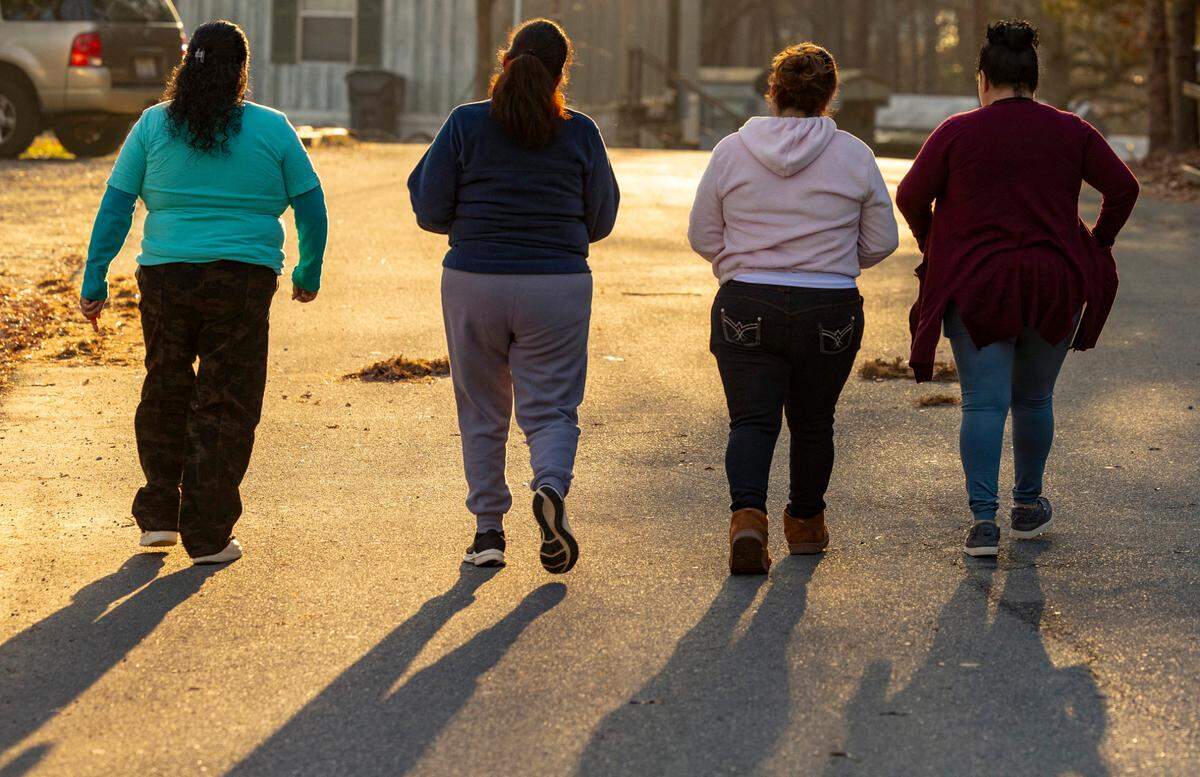
It’s a special place, with beautiful, tall pines, oaks and maples, where she can take a walk and relax, said Silvia, a 49-year-old mother of three.
“I can go outside, smoke my cigarette, drink my beer. Nobody is going to say a thing,” she said, smiling, as the women walked with a reporter on a short tour of the neighborhood.
ICE agents didn’t bother them during the first Trump administration, Reyna said, but she knew some people in Alamance County who were taken into custody. As a community organizer with Siembra NC, she has been urging her neighbors to learn their rights and create a family preparedness plan in case of an emergency.
The plans include having a designated caretaker for children; medical information, important authorizations, contacts and family documents; and instructions for handling the family’s belongings. Legal experts also recommend including passports for each child.
Many immigrant families “are hyper-focused on learning about their rights,” Reyna said. “Before, we really had to work for them to give us their permission to speak with them or to work with them or give us their number, but now they’re like, where do I sign (up), what do I need to do to get more information.”
Fighting fear about ICE in schools
Reyna traveled from Hidalgo, Mexico, to the United States in 2004 with her brother — looking for “adventure,” she said — and was married for 16 years before her divorce. Several years ago, she and her ex-husband made plans for their children if something happens to them.
She shared that plan with their four children, ages 7 to 17, when they started hearing rumors about ICE raids at school, Reyna said.
“I told them they shouldn’t worry about that, because they were born here,” she said. “They said, in that case, what are we going to do about it that you were not born here?”
She reminded them they are U.S. citizens and could stay with their aunt if necessary, she said. Someone has also agreed to bring them to her in Mexico if she can’t return, she said.
They are now waiting to see if the rumors become reality, she said.
“I focus on the main picture, but my kids are worried about me and also about themselves,” Reyna said. “I am not worried, because they have their status, and I have a plan already established for all of that.”
Children afraid for their parents
It’s not just children who are afraid, said Ana. She and her husband, who works as a landscaper, created a plan during Trump’s first term that still applies to their sons, ages 13 and 15. Their daughter is now 21.
“Everyone is afraid that they can come knock on their doors and then take us. Or when we are on the streets, they can pick us up,” including her youngest son, Ana said.
“Even though he was born here, he says what if they find me when I’m on my way somewhere and I have no documentation, what can I share with them? I tell him, don’t worry about it. Nothing will happen to you,” she said.
Looming in the background is Trump’s plan to end birthright citizenship for children born to parents who are in the country illegally. While the executive order says it would only apply to babies born after Feb. 19, 2025, there is still debate about whether it would be expanded to others born before this year.
The order is on hold while lawsuits filed by multiple states, including North Carolina, and immigrant-rights groups are heard.
Ana’s neighbor Silvia said she is “not going to be intimidated.”
Her childhood in Mexico was “very happy,” even though her family of 10 had only the basics, Silvia said. She worked in the fields to earn money for school until she got married.
About 25 years ago, she and her husband immigrated to the United States, struggling to make a good life for their three children, she said. If they are deported, their 10-year-old son could stay in the U.S. with his brother and sister, both of whom are in their 20s.
He is not happy about that possibility, Silvia said.
“He doesn’t want to be separated from us,” Silvia said. “He doesn’t want to be taken to a family that he might not like. I tell him that’s not going to happen. He says, ‘I don’t want to stay with my brother or my sister. ... I want my mom and dad to be with me.’”
In the Spotlight designates ongoing topics of high interest that are driven by The News & Observer’s focus on accountability reporting.
This story was originally published February 26, 2025 at 5:30 AM with the headline "‘We do worry, and we live in fear.’ Immigrant moms reassure kids while making plans.."