GoRaleigh will begin collecting fares again soon. Here’s how it will work.
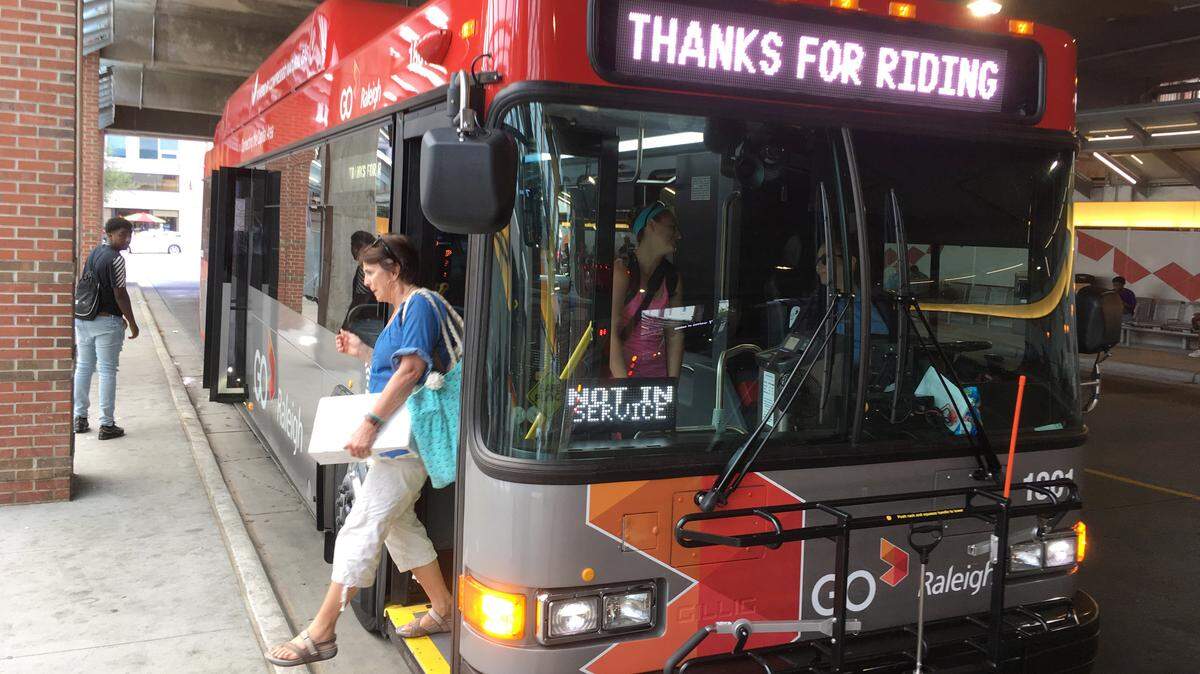
People have been able to ride GoRaleigh buses for free since the early days of the COVID-19 pandemic.
That ends Sept. 1.
That’s when the city’s bus system will resume charging riders, though many, such as teens and seniors, will qualify for free passes. You’ll again be able to pay with bills and change or a pre-paid pass, but for the first time GoRaleigh also has an app that lets people pay with their phones.
Here’s what you need to know about paying to ride the bus in Raleigh.
Why is GoRaleigh charging to ride again?
The short answer is it needs the money. Like transit agencies across the country, GoRaleigh stopped collecting fares in March 2020 to minimize interaction between drivers and passengers and reduce contact with frequently touched surfaces, namely the farebox. Congress soon passed a huge stimulus package that provided money for public transit agencies, allowing GoRaleigh and others to forgo the lost revenue.
Now the federal money has run out, and there’s no longer a strong public health reason to continue forgoing fares.
In addition, drivers and some passengers were concerned that allowing people to ride for free had turned buses into de facto shelters for people with mental illness or substance abuse problems who ride buses because they have no where else to go.
How much will it cost to ride the bus?
GoRaleigh will charge the pre-COVID fare of $1.25 per ride. Children 12 and under ride free, as do teens 13 to 18 with a GoPass and seniors 65 and older with a GoRaleigh ID card.
Is there a program for low-income riders?
Yes, as part of the return to fares, both GoRaleigh and GoTriangle created the Transit Assistance Pass. It provides free rides to adults who qualify for Medicaid or SNAP/EBT benefits or have a household income below $35,000.
What other discounts are available?
People who are disabled or have Medicare qualify for half-off discounts. And riders can get subsidized or discounted rides from their employers through the GoPass program. For more information about passes and discounts, go to goraleigh.org/discount-fare-options.
How do I pay my fare?
Cash is still an option, though you’ll need the exact amount. Bills and coins accepted.
A new option is the UMO app that you can download to your phone, create an account and pre-pay for your rides. Riders scan a QR code from the app when they board the bus. The app allows you to plan trips and track your bus, and won’t let you spend more than GoRaleigh’s fare caps of $2.50 a day, $12 a week or $40 a month.
If you don’t have a smart phone or don’t want to use the app, you can load money onto a GoPass UMO card that works the same way. Cards are available at GoRaleigh Station. The first card is free and can be reloaded over and over again; replacement cards are $2. The card also will not let you spend more than the caps.
Note that you can’t have an account on both an UMO card and the app at the same time, though you can convert a GoPass UMO card to a digital account at any time.
Do the GoRaleigh UMO app and GoPass UMO card work on GoTriangle buses?
Yes, whether you get your initial app or card through GoRaleigh or GoTriangle, it will work on both bus systems.
Does fare capping work across both bus systems?
Yes. For example, if you use your GoRaleigh card or app to buy a $2.50 fare on a GoTriangle bus, you will have reached your GoRaleigh cap for the day and can ride GoRaleigh buses for the rest of the day for free. The GoTriangle fare caps are $5 a day, $20 a week and $80 a month, and trips taken on GoRaleigh buses count toward those limits.
Do fares cover the cost of operating the bus?
No. Before the pandemic, fares generated about $3.5 million a year for GoRaleigh, or about 18% of operating expenses; the rest came from various federal, state and local government sources and advertising. With new discounts for low-income riders and with ridership not yet back to pre-pandemic levels, it’s not clear how much revenue the resumed fares will bring in.
Are other local transit agencies charging fares again?
GoTriangle resumed charging riders July 1, with its daily fare increasing by a quarter to $2.50.
GoCary and GoDurham will remain fare free at least through June 2025, after local governments decided to make up for the lost revenue. And Chapel Hill Transit buses have been free since 2002, thanks in large part to a subsidy provided by UNC Chapel Hill.
This story was originally published August 13, 2024 at 5:55 AM with the headline "GoRaleigh will begin collecting fares again soon. Here’s how it will work.."