
As massive luxury apartments go up, Raleigh retailers and eateries feel ‘squeezed out’
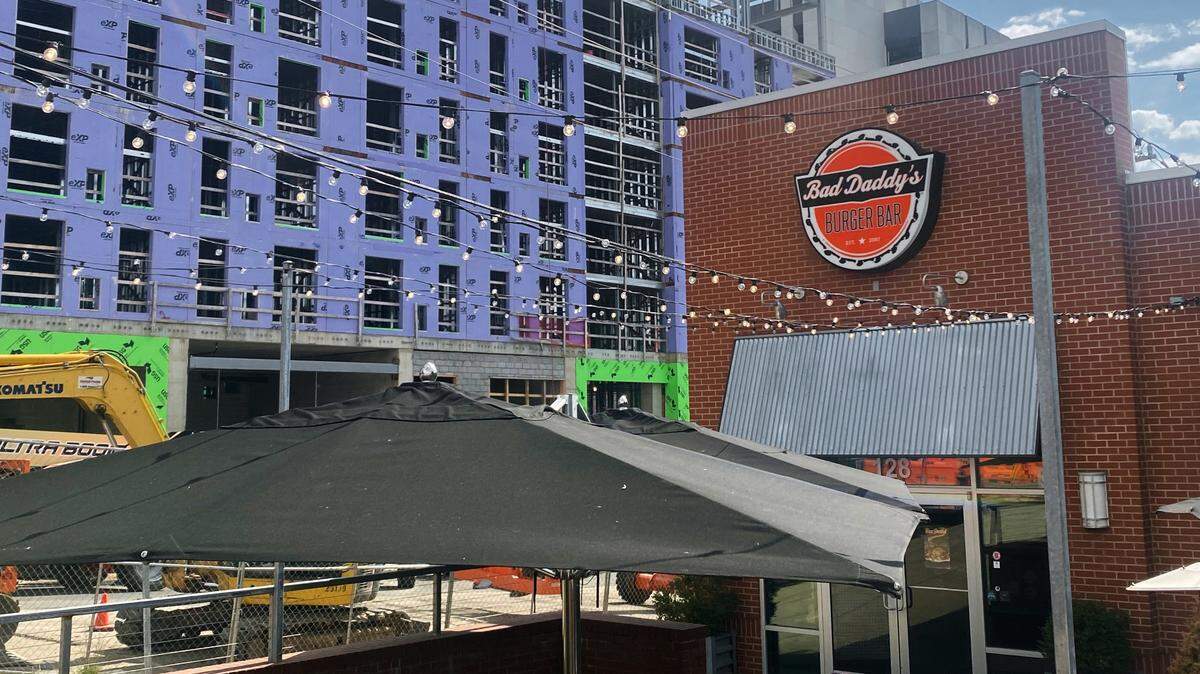
In a single block, a shopper at Raleigh ‘s Seaboard Station can grab a haircut at Sola Salon, sip an espresso at Mon Macaron, shove down a bacon cheeseburger on steroids at Bad Daddy’s then stop for a hard-to-find IPA at Hunky Dory — where the bartender also spins vintage vinyl.
It’s a business strip that thrives on reputation and foot traffic, tucked back off Peace Street along with the historic railroad station that became Logan’s garden shop.
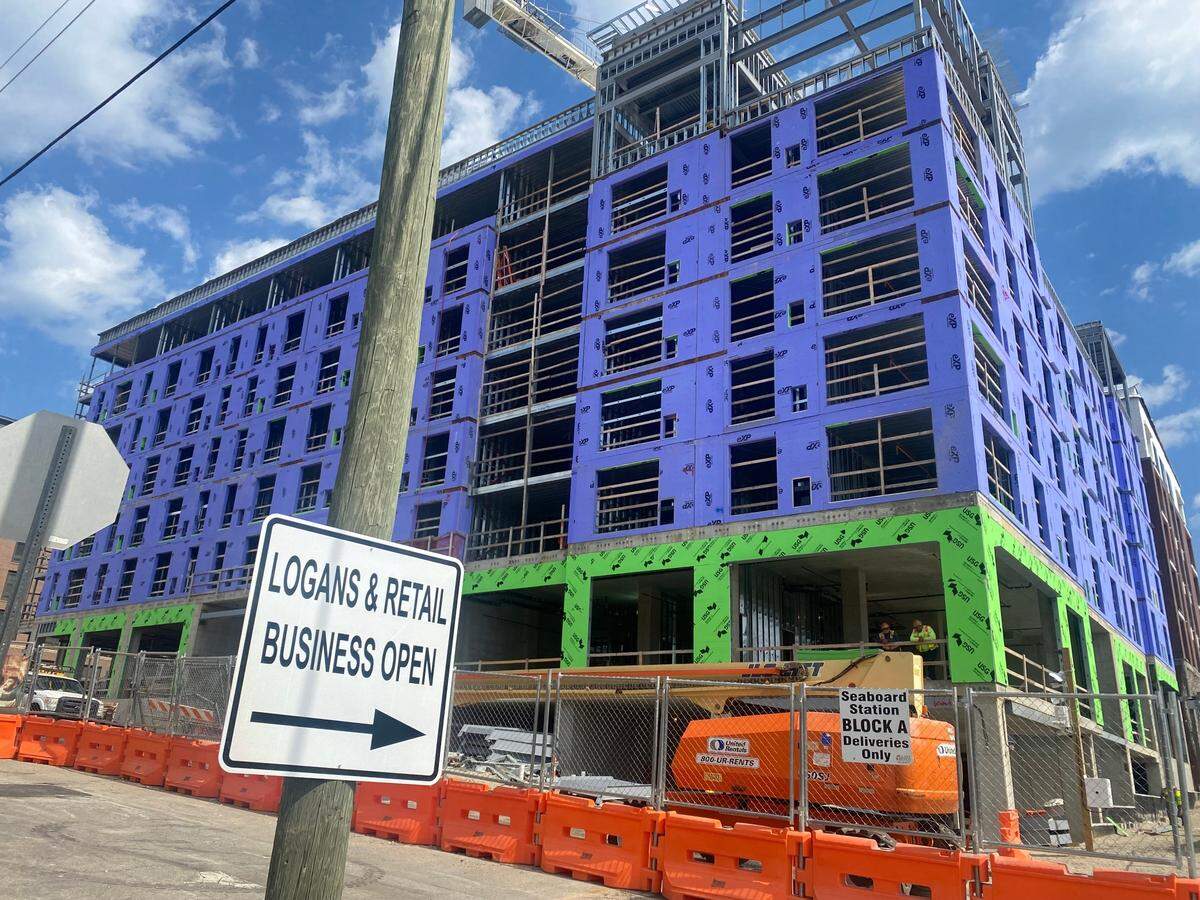
But that district at the north end of Raleigh’s is now dominated by a massive, seven-story apartment and retail development under construction. It’s consuming multiple blocks and all but halting the traffic through Seaboard, whether on foot or by car.
The businesses persisting through the construction are fighting blocked streets, lost parking and steep declines in business — conditions that could persist for at least another year. Raleigh has offered little help, they say, and some do not expect to survive to the construction’s finish.
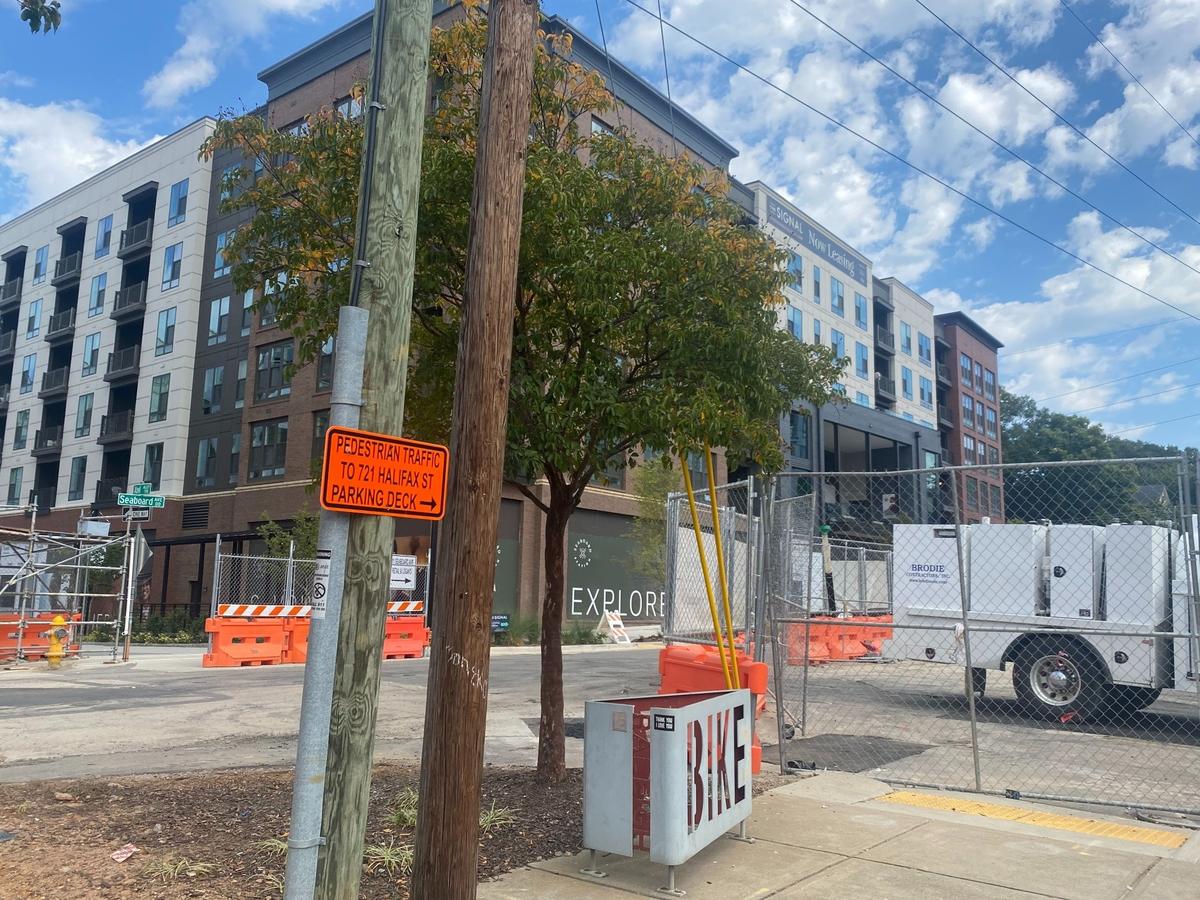
The downturn stings because shop owners feel their businesses made the north downtown district desirable in the first place, and it contributes to the impression that Raleigh’s new development is coming at the expense of everyone already there.
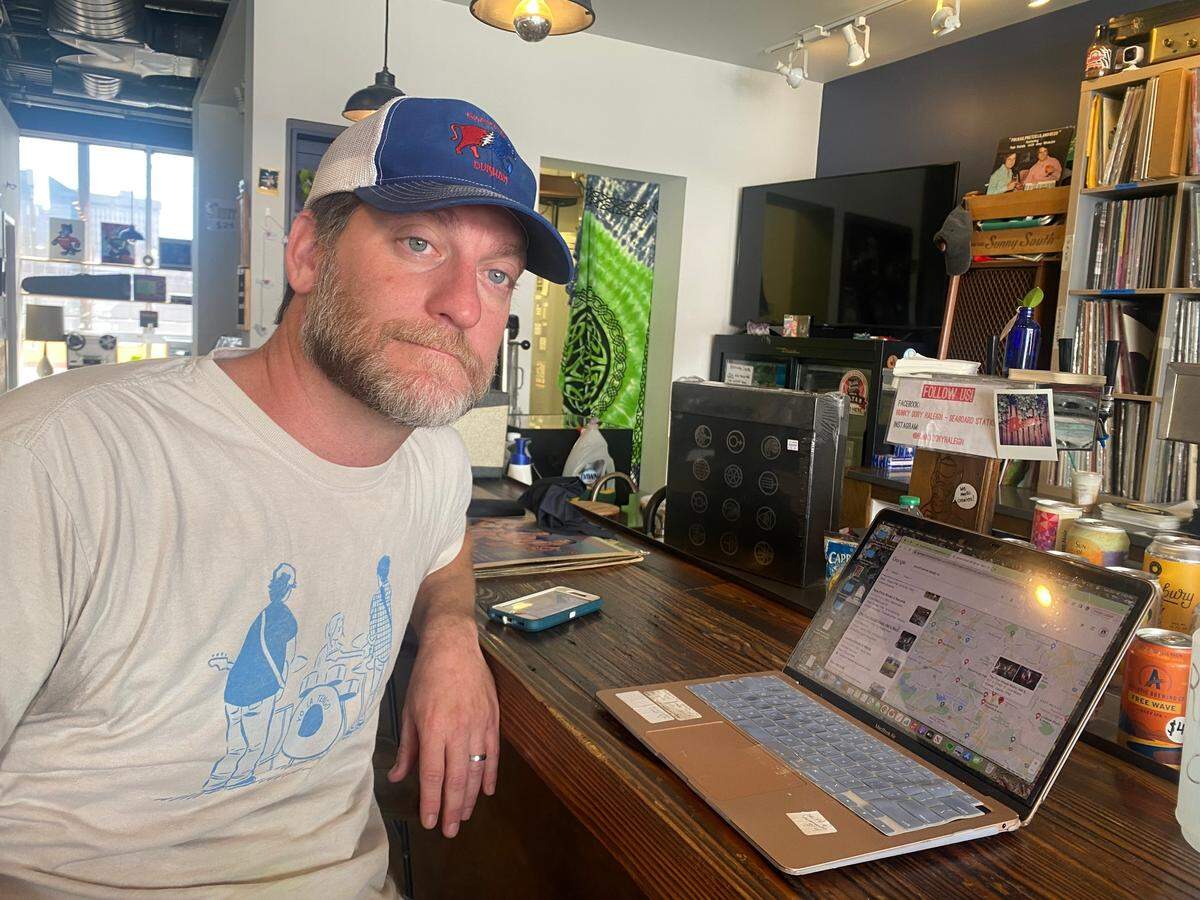
“We’re being squeezed out,” said Michael Bell, who owns Hunky Dory. “There’s been times when we couldn’t even open our businesses because we couldn’t find a place to park.”
Bell said he hopes that his business will be able to stick around.
“But at the rate we’re going now? Absolutely not.”
Apartments ‘where people can come together’
The first phase of Hoffman & Associates development at Seaboard started in 2021, including the 298-unit apartments and 30,000 square feet of retail. New residents started moving into The Signal early this year.
Construction on the second phase started in 2022, adding another 279 units in two seven-story buildings, a Hyatt House hotel with a rooftop bar and another 55,000 square feet of retail space scheduled for 2024. The project also calls for a third phase, details of which have not been released.
The new Seaboard Station advertises itself as a “lively central corridor where people can come together.” And while its neighbors agree the new development will bring thousands, they feel like they will be replaced by that lively central corridor, not absorbed into it.
Bell says a Friday night at Hunky Dory, when the shop plays newly released records, once brought in $1,500. Now that total stands closer to $200.
Next-door, the Mon Macaron dessert shop reports business down 50% over the past year. At times, customers have needed to complete a loop around several blocks of construction to dodge shut-down streets, and a Peace Street sign announcing retail businesses are open is only about the size of a speed limit posting — hard to see in the chaos of building.
“It think it was done quickly and large-scale,” said Autumn Hicks, Mon Macaron owner. “This wasn’t really done with plans to protect these businesses. Most people coming around here assume that we’re closed.”
Down the street on Seaboard Avenue, Ariane Erickson, stylist at Pin It Up in Sola Salons, cites a significant decline in business — especially since construction closed Abel Alley — a turn off Peace Street next to Bad Daddy’s.
‘Discombobulated and frazzled’
She said parking is so scarce that she is paying $80 a month to leave her car in the deck at The Signal, the new luxury apartments now being leased, so her customers might find a space. Meanwhile, a salon appointment can take several hours, and when customers come back out, they find themselves ticketed at metered spots.
“People are doing what they can do to survive in this dynamic,” she said, also citing a significant downturn. “Everyone is all discombobulated and frazzled by it.”
Asked about it Tuesday, City Councilman Corey Branch directed a city staffer to say Raleigh will look into what assistance it can provide. Mayor Mary-Ann Baldwin did not immediately reply to the N&O’s email seeking comment.
Hoffman & Associates sent the N&O a statement, calling the challenges with ongoing construction a top priority:
“During this work, we have provided free parking spaces available for 111 Seaboard Avenue customers in the 721 Halifax Street garage and have offered employees of the separately owned 111 Seaboard Avenue Shopping Center monthly parking in this garage for a rate of $80, comparable to city of Raleigh subsidized parking garages. We’ve worked diligently to expedite the construction timelines to ensure access as well as adding signage throughout the process to limit the inconveniences.”
Bell said he has been emailing back and forth with the city for more than a year, seeking some kind of relief with no success.
In July, he received an email from city staff describing an orange sign directing traffic on Peace Street as already “large,” and explaining that Raleigh cannot provide any custom-made signage without subsidizing private business — a no-no with taxpayers dollars.
Empty state parking lot no help
Bell had asked if the city could approach the state government about an empty lot across Peace Street, at least for his employees. He offered to sub-lease them.
The city’s email said while the state agreed many spots were being left empty, it was not willing to risk conflicts.
“I realize this does not resolve your concerns in contacting the City,” read the city’s email, “however I do believe that resolution is best addressed within the private sector between yourself as a tenant, your landlord, and the private business that is conducting the disruptive construction activity.”
Meanwhile, the businesses struggle to adjust to a situation in constant flux.
The businesses on Seaboard Avenue say they get fliers with announcements about closures, and they try to alert their customers via social media. But the closures change so often that as soon as a regular patron learns a workaround, it no longer works.
Many of the businesses endured COVID-19 restrictions, serving people in masks, and emerged from that challenge to find themselves surrounded by new buildings too tall to see past.
None of them deny Raleigh growth. But they ask, “Who is it for?“
This story was originally published October 11, 2023 at 11:12 AM with the headline "As massive luxury apartments go up, Raleigh retailers and eateries feel ‘squeezed out’."