Lawmakers relax driver license rules for teens. Critics say more of them will get hurt
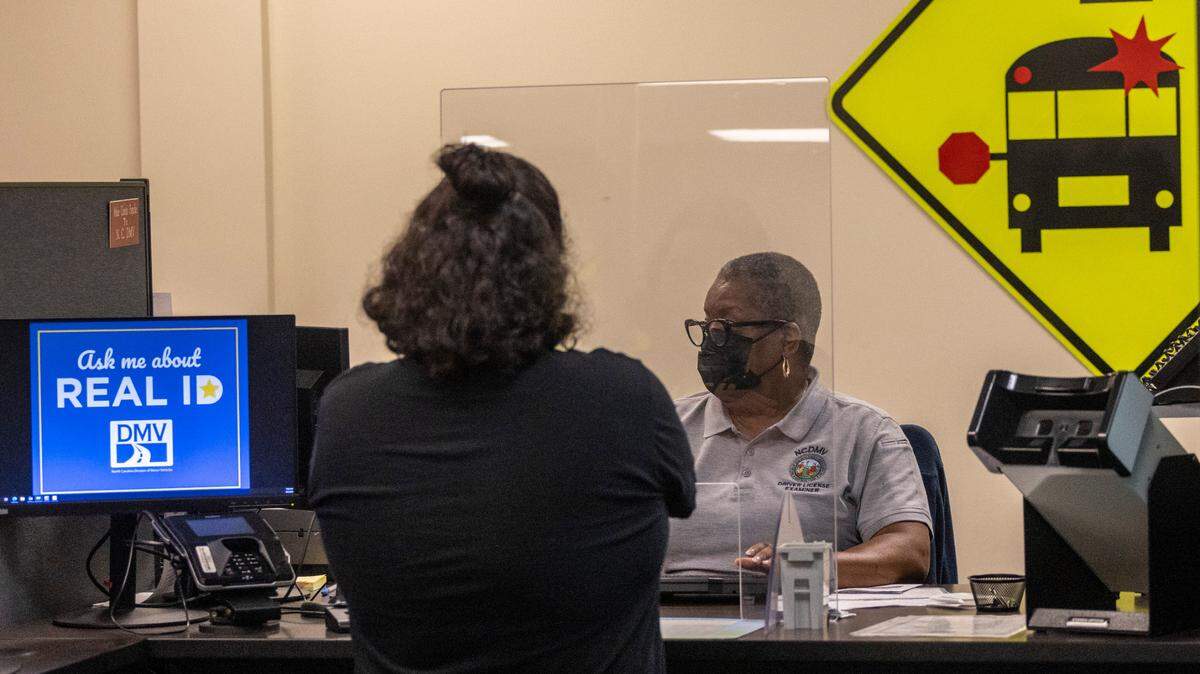
For 25 years, teens in North Carolina have received driver’s licenses gradually, under a system designed to give them more freedom as they get more experience behind the wheel.
Now the state is relaxing two requirements under that system, pleasing teens and parents but concerning some safety advocates.
The House and Senate passed a bill into law that reduces the amount of time a teen must drive under the supervision of a parent or guardian before gaining a provisional license. Except during the COVID-19 pandemic, North Carolina has required teens to have a so-called learner’s permit for 12 months before moving up to a provisional license with more freedom.
The new law changes the learner’s permit period to nine months starting Jan. 1, 2024.
Three months may not seem like much, but lawmakers are tinkering with a system that has helped prevent countless teen crashes, injuries and deaths, said Natalie O’Brien, a researcher at the UNC Highway Safety Research Center in Chapel Hill.
“We know that crashes are a leading cause of death for teens. And the reason teens crash is a lack of experience,” O’Brien said in an interview. “And so anything we do to provide them with less practice is detrimental.”
The main sponsor of Senate Bill 157, Republican Sen. Vickie Sawyer of Iredell County, says she was responding to requests from teens and their parents and that shortening the learner’s permit to nine months brings North Carolina more in line with places such as South Carolina and Virginia.
“Other states around us have a six-month or a nine-month waiting period, so I just feel like it’s really just an arbitrary number at this point,” Sawyer told WCNC-TV in Charlotte.
Senate Bill 157 also increases the number of young passengers a teen with a limited provisional license can carry if they are going to or from school. Previously, an unsupervised teen driver could have no more than one unrelated passenger under 21 years old; the new law doubles that to two, if the additional passenger “is a student being driven directly to or from school.”
The bill passed with bipartisan support, 38-5 in the Senate and 92-15 in the House. On May 5, Gov. Roy Cooper declined to sign it, but allowed it to become law without his signature.
“For years, NC’s graduated drivers license process has significantly improved safety for all motorists, however, this legislation passed by a large margin because it should help reduce the waiting time for young people wanting their license,” Cooper said in a statement. “I have concerns that this law could make our roads less safe and I encourage the Division of Motor Vehicles and the legislature to monitor its effects closely.”
Graduated license system is 25 years old
North Carolina established three-step graduated licensing for drivers under 18 in the late 1990s, starting with a learner’s permit for drivers who have passed an education course. After 12 months, teens who have logged more than 60 hours of supervised driving and passed a road test can get a limited provisional license, which allows them to drive unsupervised between 5 a.m. and 9 p.m. or when going directly to or from work or volunteer fire or EMS service.
After another six months and 12 more hours of supervised driving, a teen can obtain a full provisional license, which comes with fewer restrictions.
Diana Xavier, Sawyer’s legislative assistant, noted that while the bill would reduce the learner’s permit period, it would not change the number of hours of supervised driving teens must document.
When COVID-19 canceled driver’s education classes and shut Division of Motor Vehicles offices, lawmakers streamlined the licensing process for teens. That included shortening to six months the amount of time they had to hold a learner’s permit before moving up to a provisional license. That provision expired Dec. 31.
The bill would reinstate the 6-month period for learner’s permits through the end of this year, when the permanent 9-month period takes effect.
Shortening the permit requirement to six months contributed to a 12% increase in crashes for 16-year-olds statewide, says Robert Foss, retired director of the Center for the Study of Young Drivers at the UNC Highway Safety Research Center.
Foss opposes weakening the graduating license system even a little, saying that surveys have found overwhelming support for the 12-month learner’s permit among parents.
“There is no need whatsoever to permanently degrade a highly successful system, ignoring the wisdom and wishes of virtually all parents in the process,” Foss wrote in an op-ed in The News & Observer. “No state has ever taken such a retrograde step. North Carolina should not be the first.”
Parents still get the last word on granting driving privileges, said Joe Stewart, vice president for government affairs of the Independent Insurance Agents of North Carolina. Parents are free to extend their child’s time under a learner’s permit if they think their child needs the longer supervision.
Stewart said he thinks lawmakers tried to balance the clear scientific benefits of the graduated licensing system with the real-world needs and desires of families. After the state temporarily shortened the learner’s permit period to six months, he said in an interview, a majority of legislators determined something less than 12 months makes sense.
“You want to strike that balance,” he said. “Doing the things you know are beneficial and proven to be good at reducing the probability of a crash for a young driver, but also recognize that the privilege of driving is in many ways an essential part of young people being able to interact, work, be able to get to and from school, all of those sorts of things.”
This story was originally published April 26, 2023 at 5:45 AM with the headline "Lawmakers relax driver license rules for teens. Critics say more of them will get hurt."