Q&A: What we know about co-pilot’s mysterious mid-flight exit before RDU landing
A 23-year-old Raleigh man died July 29 after he exited a plane in flight that went on to make an emergency landing at Raleigh-Durham International Airport.
While many questions remain unanswered about the mysterious event, some basic information — such as the identity of the deceased co-pilot, the flight’s path, the type of plane involved and more — is available.
To help you better understand what happened, we’ve compiled answers to questions about the event, using information from The News & Observer’s previous reporting.
We’ll update this story with additional answers as we learn more about what happened.
Who was involved in the plane exit and crash landing?
Charles Hew Crooks, a 23-year-old Raleigh man, was the co-pilot who exited the plane mid-flight. He was identified by the Fuquay-Varina Police Department, according to a Facebook post by the department.
Crooks was a pilot and flight instructor, The N&O has reported. He was a pilot for Rampart Aviation, which offers pilot and aircraft training commercially and for the Department of Defense. The aircraft carrying Crooks and the other pilot was registered to Spore LTD, a company managed by Rampart, The N&O reported.
The name of the pilot who survived the event and made the emergency landing at RDU has not been released, The N&O has reported. The pilot was taken to a Duke University hospital with minor injuries after the event.
Why did Crooks exit the plane mid-flight?
Authorities have not explained why Crooks exited the plane that was at nearly 4,000 feet while en route to RDU.
In a 911 call released in early August, an unnamed Federal Aviation Administration official at RDU said the pilot who landed the plane said Crooks jumped from the plane. The 911 call does not indicate why.
“We have a pilot that was inbound to the field,” the official told the dispatcher during the call. “His co-pilot jumped out of the aircraft.”
The surviving pilot “literally said, ‘My [co-]pilot just jumped out,’” the FAA official told the dispatcher.
The FAA official said during the call that Crooks did not have a parachute. The 911 call does not indicate why or what preceded Crooks exiting the plane.
According to a preliminary report from the National Transportation Safety Board (NTSB) released on Aug. 16, Crooks became “visibly upset” about the plane’s previous hard landing in Raeford. Crooks opened the side cockpit window and “may have gotten sick,” the surviving pilot said.
The pilot told the NTSB that Crooks then lowered the ramp in the back of the airplane, indicating that he felt like he was going to be sick and needed air. The pilot said he took over radio communication as Crooks “got up from his seat, removed his headset, apologized, and departed the airplane via the aft ramp door.”
The report noted that there was a hand bar within reach of the ramp. However, the pilot did not see Crooks reach for this bar during his departure, according to the report.
Recordings of the plane’s exchange with air traffic control contains no mention of someone falling or jumping from the aircraft.
Why were they flying to RDU?
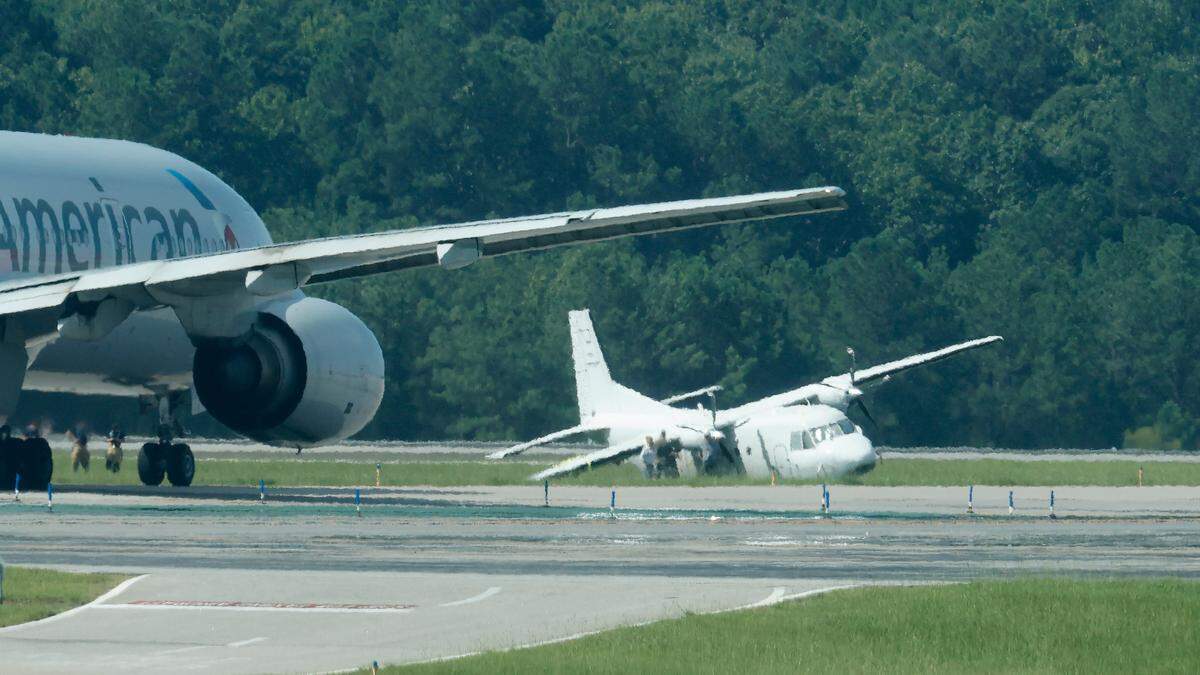
The plane had previously attempted to land near a private airport in Raeford earlier Friday afternoon, when the right wheel of their turboprop plane fell off.
According to the NTSB’s preliminary report, the CASA 212 that Crooks was copiloting had conducted two skydiving runs and was returning to Raeford West Airport to pick up a third group when it lost its right main landing gear during a hard landing.
The surviving pilot told the NTSB that Crooks was piloting the plane at the time, but that the pilot retook control and got the plane back into the air. The pilot then directed Crooks to declare an emergency and request a diversion to Raleigh-Durham International Airport for landing.
The pilots called air traffic control about the emergency. It’s not known whether Crooks or the pilot, whose name has not been released, was speaking but the caller confirmed there were two people aboard the plane, The N&O reported.
“We were attempting to land, made contact with the ground, had a hard landing and decided to go around and at that point we lost the wheel,” one of the pilots said to air traffic control, according to a recording of the exchange.
During the call to air traffic control, the pilots requested an emergency landing at RDU. But when the plane arrived to RDU Runway 5R-23L and veered onto the grass at 2:50 p.m., only one pilot was in the plane.
Authorities received a report about the missing man around 2:30 or 2:45 p.m., Darshan Patel, operations manager for Wake County emergency management, said at a news briefing Friday evening.
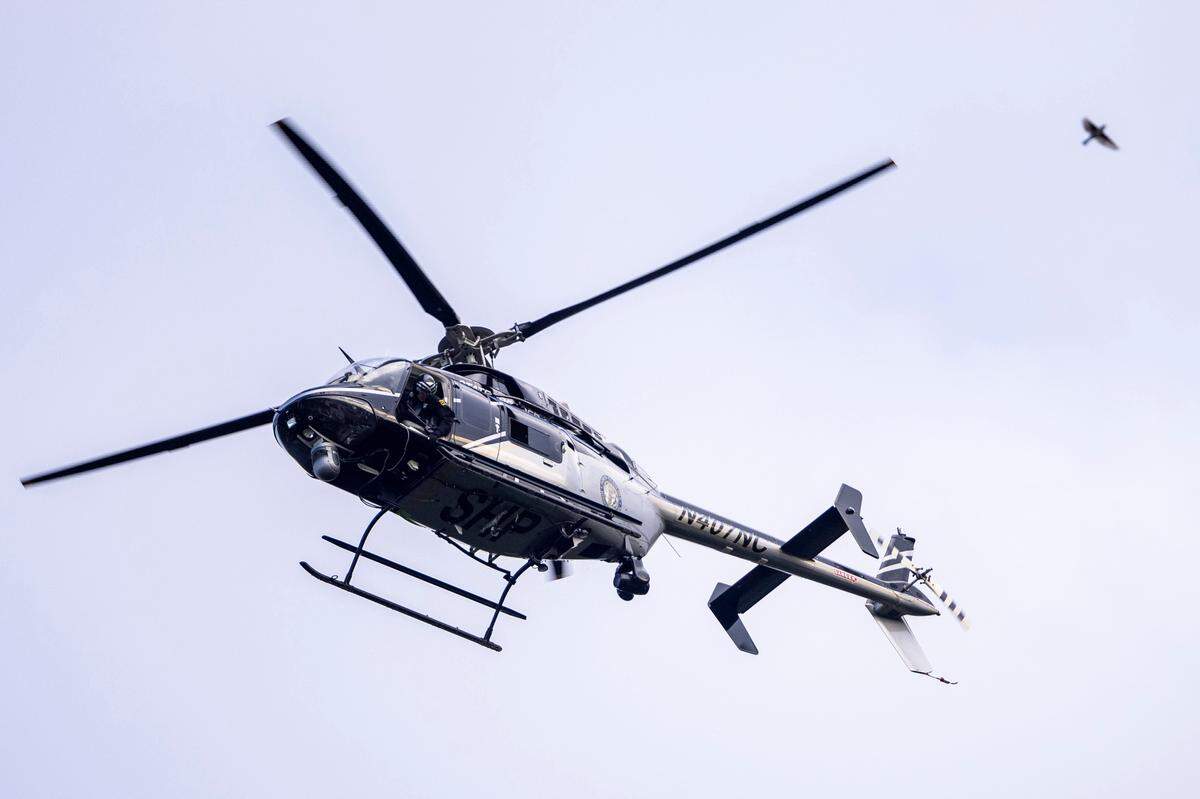
The search took about four hours, ultimately ending with search crews finding Crooks dead in a Fuquay-Varina neighborhood around 7 p.m. Friday, July 29.
Where did search crews find the pilot?
Crooks was found dead behind a house near Sunset Lake and Hilltop Needmore roads in the Sonoma Springs subdivision of Fuquay-Varina, 20 miles from the airport.
The plane carrying Crooks and the other pilot passed over Fuquay-Varina around 2:30 p.m., at about 3,850 feet, The N&O reported.
The search for Crooks took about four hours after the emergency landing at RDU and involved several municipal, county and federal agencies, The N&O previously reported.
What kind of plane was involved?
The men were flying a CASA C-212 Aviocar, a twin-engine cargo plane made in Spain. The plane has a loading ramp at the rear that can be opened in flight, making it ideal for parachute training, The N&O previously reported.
The aircraft was registered to Spore LTD, a company managed by Rampart Aviation, which has contracts with the military to provide parachute training, tests and evaluation activities for U.S. Army airborne units and U.S. special operations forces, according to The Drive, which covers military aviation and other topics.
A recently uploaded photo of the aircraft shows a Rampart logo on the tail of the plane.
Crooks, the deceased co-pilot, was a pilot for Rampart.
Who is investigating?
The NTSB released a preliminary report about the incident on Aug. 16, after it previously announced on Twitter that it has opened an investigation into the incident.
The NTSB previously told The N&O in an email statement that the board did not send an investigator to the scene of the incident, but it is “working with the FAA collecting information, evaluating the damage of the aircraft and circumstances to determine the extent of an NTSB investigation.”
The NTSB said that it’s typical for the board not to send an investigator to the scene when “it is not known the severity of the damage of the aircraft and/or no fatalities as a direct result from the crash of an aircraft.”
“However, as in most cases, NTSB will work with the FAA who can document the scene and examine the aircraft on NTSB’s behalf,” the board told The N&O. “The findings from that examination and documentation will be given to the NTSB to determine to what extent an NTSB investigation will take place.”
News & Observer reporters Teddy Rosenbluth, Kristen Johnson and Colleen Hammond and editor Jessica Banov contributed to this report.
This story was originally published August 1, 2022 at 11:29 AM with the headline "Q&A: What we know about co-pilot’s mysterious mid-flight exit before RDU landing."