How to keep your pets safe in extreme heat + laws protecting animals kept outdoors
We all expect it to be hot — it’s summer and we live in the South, after all.
But July often brings heat advisories, and this month is no different. As we turn our attention this week to trying to keep ourselves relatively cool, with temperatures reaching the mid-90s to near 100, let’s not forget our furry friends.
They are often at our mercy, so let’s show a little.
The sidewalk is lava: Protect tender paw pads
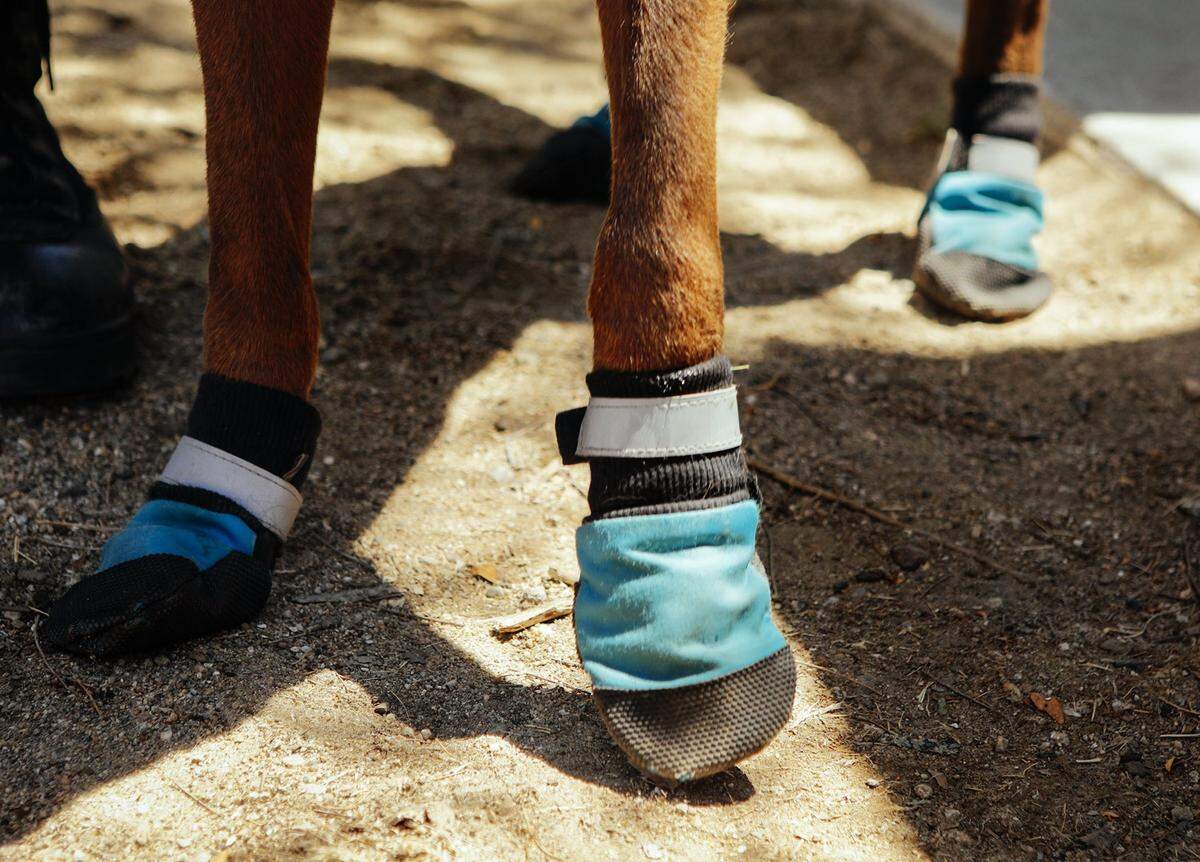
A dog’s tender paw pads can blister and burn on pavement, metal, sand — even artificial grass — when the temps get above 85 degrees, according to the American Kennel Club.
Puppies have especially sensitive paw pads.
(FYI: When the air temperature is 86 degrees, asphalt temperature registers at 135 degrees, according to the American Medical Association.)
Is the ground too hot? AKC experts recommend you stand barefoot on a surface, or place your hand on a surface, for 10 seconds to see how it feels for you. If it’s uncomfortable for you, it’s uncomfortable for your dog’s paws.
What do you do? Here are some tips from AKC:
Get some dog booties. The dog will need some time to adjust to them (you want a snug fit but not too tight) but they will acclimate. Choose a “wrap-around closure” style with full foot grips on the bottom.
Pick a cooler time of day. Walk your dog early in the morning or in the evening, sticking to grassy or shady areas.
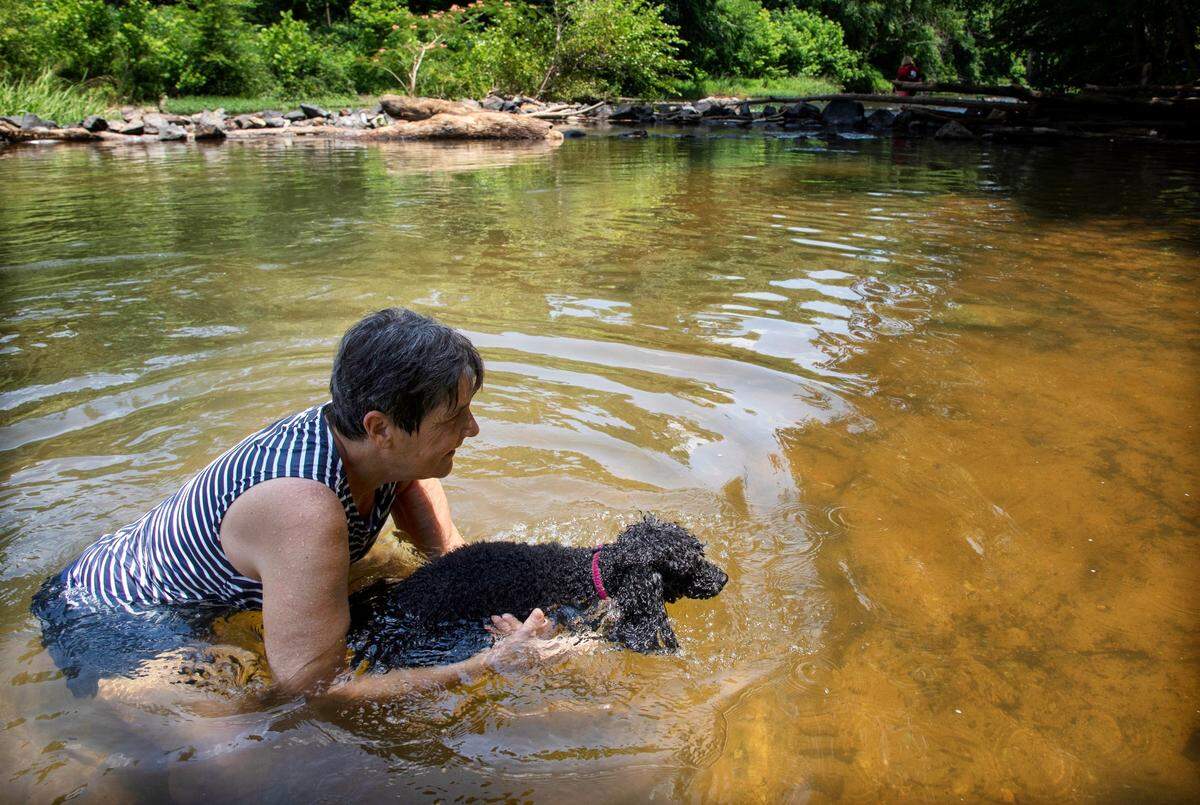
Splash! If your dog needs exercise but can’t go with you on long runs when it’s super hot, you can set up a hard plastic outdoor wading pool for it to splash around in. For swimming in an adult-sized pool, AKC recommends adding a canine life vest for safety.
Get doggie sunscreen. Just as with people, dogs can get sunburn and can develop cancer from too much sun exposure, says AKC. There are special sunscreens formulated for pets.
Do. Not. Leave. Pets. In. Parked. Cars.
At this point in the history of man (and beast) it should go without saying that you shouldn’t leave your pets in a car — even with windows “cracked” — for any amount of time during extreme heat. And yet, some people still do it.
In many places it’s illegal to do so — it’s either banned outright or there are laws offering protection to those who break out windows to save a pet.
According to the AKC, the temps inside a parked car on a very hot day can exceed 140 degrees in less than an hour (and dangerous in as few as 10 minutes), and American Veterinary Medical Association (AVMA) studies have shown that cracking a window changes the scenario very little: “a parked car with the windows cracked heats up at almost the exact same rate as a car with the windows rolled up, putting pets in serious danger,” says AVMA.
If you see a pet inside a parked car the Humane Society recommends you do the following:
- Take down the car’s make, model, license plate number.
- Notify any nearby business — find a manager or security guard — and ask them to make an announcement.
- If the owner can’t be found, call the local non-emergency police line and wait for an officer to arrive. BUT if the law in your area allows, you may be able to legally remove the pet from the car yourself.
Shade and water: it’s the law
It can’t be said enough: if you’re going to leave your dogs and cats outside during record- breaking heat, you must provide them adequate shade and plenty of fresh, clean water. It’s literally the least we can do. In fact, it’s the law.
Remember that shade moves: If your dog is in a pen, enclosed in fencing or tied/chained to something, it must be able to access shade, particularly in the afternoon when it’s hottest. Remember that shade moves depending on the time of day, so a spot of shade in the morning isn’t good enough.
Ordinances vary county to county (and city to city) about care for outdoor pets, particularly when it comes to tethering dogs outside, so know what’s required where you live (and know that caring neighbors may report you if you don’t follow the rules).
▪ In Wake County, for example, pet owners must provide “adequate feed, water and shelter” to dogs and cats. It is against the law in Wake County to fail to provide adequate shelter for an animal so that it is protected from the extremes of weather (heat, cold, rain, sun). Shelter is not considered to be underneath vehicles, decks or steps; inside metal or plastic barrels or cardboard boxes; or inside rooms or sheds without windows or proper ventilation.
▪ Additionally, Raleigh has an ordinance that prohibits tethering a dog for more than three hours total in any 24-hour period. One reason for the ordinance is to prevent dogs from being “left exposed to harsh weather conditions without access to shelter and being unable to reach a supply of food and water.”
▪ In Durham County, it is also against the law to:
- leave pets unsupervised in an open yard or space while tethered.
- leave animals without food for more than 24 hours.
- not give an animal water at least twice in a 24-hour period.
- leave animals without adequate shelter from the weather.
▪ In Orange County, it is unlawful to “deprive or cause to be deprived any animal of adequate food and water” (domesticated animals or wild animals in captivity). It is also unlawful to cause animals to be deprived of adequate shelter or veterinary care. It is also unlawful to tether a dog in the OC for more than a total of three hours in a 24-hour period OR in such a way that prevents it from accessing food, water or shelter. There are also strict rules regulating the type of tethering device used.
▪ Laws in Johnston County also say that you must provide adequate shelter, adequate shade or adequate food, water, air, space or necessary veterinary care for your animals. Adequate shelter does not mean the following: metal barrels, underneath steps, decks or vehicles; inside vehicles; inside metal containers; or inside rooms or sheds without windows or proper ventilation. There is no set time period to tethering rules (that may be up to the animal control officer, if one is called), but in addition to rules about the length, weight or type of chain used, JoCo rules also explicitly say that the animal can’t be chained in a way that it can’t access “adequate food, adequate water, adequate shade, or adequate shelter.”
This story was originally published June 13, 2022 at 12:47 PM with the headline "How to keep your pets safe in extreme heat + laws protecting animals kept outdoors."