‘We are in a surge’: COVID cases are undercounted, but up. Should we be worried?
By official counts, current COVID-19 case numbers in North Carolina and across the country seem to be fairly low, but case numbers likely aren’t as low as official data suggests.
In fact, the state is experiencing a surge of cases right now, says Dr. David Wohl, an infectious disease specialist with UNC Health, with hospitalizations and deaths beginning to increase within the past week.
The most recent data available from the N.C. Department of Health and Human Services, which is current through the week ending April 30, shows that about 12,500 COVID cases were reported in the state that week. That’s drastically lower than case numbers in January of this year, when there were more than 234,500 cases reported in a single week.
Official case numbers at the state and national level are likely undercounted, though, meaning case numbers are actually much higher than what’s being reported.
The lower official numbers may give the impression that COVID-19 cases are dwindling, or that the virus isn’t spreading as much as it once did, perhaps making us feel more comfortable attending events such as graduations, proms or large sporting events.
Why are cases so undercounted now? Should we be concerned? And how can we stay safe with the virus continuing to spread?
For answers to those questions and more, The News & Observer consulted Wohl for more information.
Here’s what we learned.
Why are COVID cases being undercounted?
The undercounting of COVID cases isn’t new. Since the start of the pandemic, COVID-19 case numbers have been “dependent on testing availability and utilization,” Wohl said, so official case numbers “have always under-reported actual infection rates.”
▪ Essentially, COVID case numbers have always had some sort of undercounting associated with them, as official counts are generally dependent on someone getting tested for COVID if they have symptoms or were exposed to the virus.
▪ For instance, if someone had symptoms but never got tested — either because testing was not available to them or for any other reason — they would not be included in official case counts.
But, with the increased availability of at-home COVID tests, especially through the free tests made available through the U.S. Postal Service and private insurance, the amount of cases that have gone unreported to official data sources has increased.
▪ Most at-home test results are not reported to state health departments or other official COVID data sources, such as the Centers for Disease Control (CDC), an NBC News report from mid-April says.
▪ “It is clear that home testing has led to an under-reporting of absolute numbers of cases of COVID-19 and this should be considered when looking at case counts,” Wohl said.
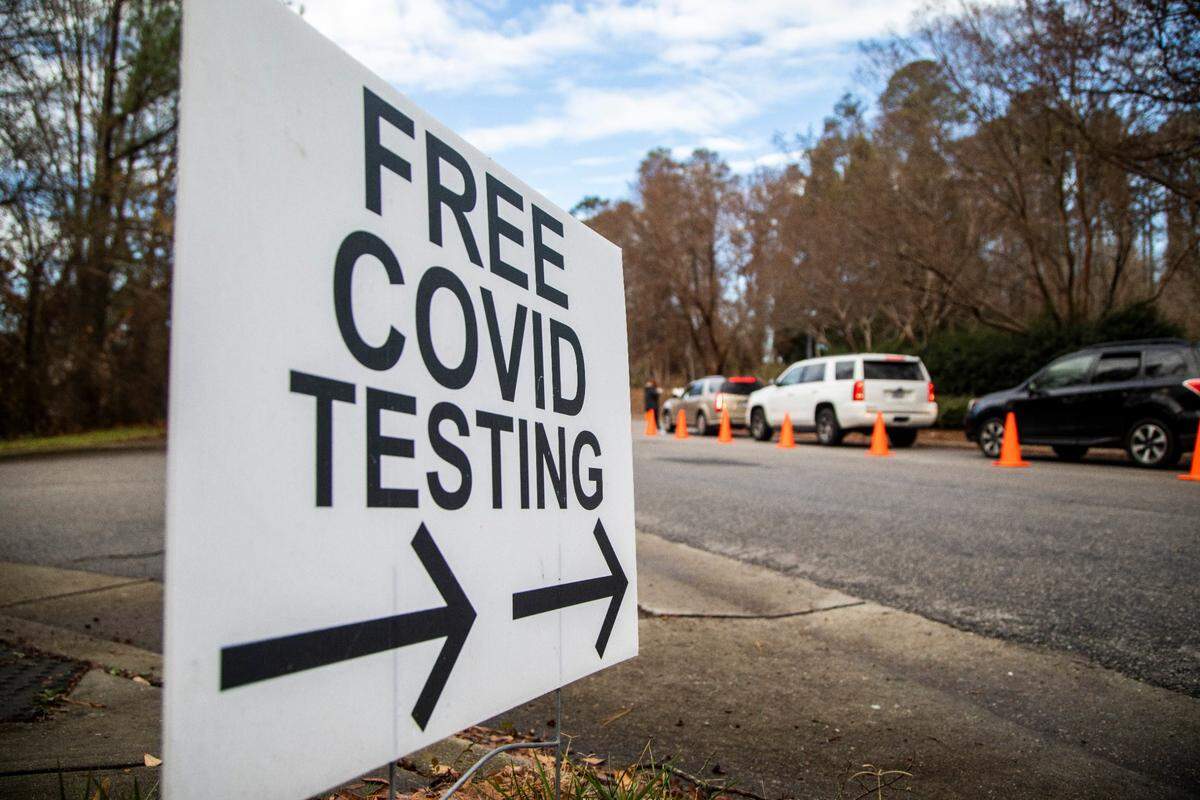
Case numbers could also be impacted by a lack of testing outside of the home, according to the NBC News report.
▪ Data from the CDC shows that about 320,000 COVID tests were performed across the U.S. on May 6. That’s down from the more than 2 million tests performed nationwide on January 10, when the omicron variant of the virus was at its peak. With less tests being administered, fewer cases are reported.
People might also be less likely to seek out testing if they have mild symptoms, such as those associated with omicron variants of the virus, further contributing to undercounting.
What is the state of COVID-19 cases in NC now?
So, with COVID cases being undercounted overall, what’s the reality of how prevalent the virus is in North Carolina right now?
“We are in a surge now,” Wohl said. “Cases are dramatically increasing and over the last week we have seen hospitalizations and deaths start to climb.”
▪ That surge is evident from looking at case data from NCDHHS, which shows case numbers hovering around 2,800 cases at the end of March, but up to more than 12,500 in the last week of April. Hospitalizations in the state are also trending up.
Looking at those trends is key to understanding how prevalent the virus is in our communities and around the state, Wohl said.
“Increases in the proportion testing positive is an important indicator of transmission,” Wohl said. “Hospitalization rates are also less susceptible to vagaries in testing and are an important indicator not only of community transmission but of the consequences of infection in that community.”
Should we be concerned about undercounted COVID case numbers?
Wohl said the undercounting and under-reporting of COVID cases, along with the trends of increased cases and hopsitalizations, is concerning — especially for vulnerable populations and those most at-risk.
Wohl said that, even though the numbers are lower than they likely really are, the trend of increased transmission over the past few weeks could suggest a few worrisome scenarios:
▪ Immunity from prior infection and/or vaccination against the virus could be waning in the most vulnerable populations, meaning they are increasingly likely to become infected with the virus as it continues to spread.
▪ The continued rise in transmission, particularly of more contagious subvariants of the omicron variant, and the abandonment of mitigation strategies, such as masking in public, “have allowed the virus to reach appreciable numbers of those still at risk for bad COVID-19 outcomes.”
How can we stay safe as COVID remains present, but under-reported?
While mask mandates are no longer in place, as COVID cases rise and trends show an increase in transmission, it’s important to assess the mitigation strategies you’re using in your day-to-day life.
Additionally, the spring and summer seasons bring lots of large gatherings, from graduations to proms to sporting events — and with COVID cases being undercounted, you should be aware of the risks of attending such events, as well as precautions you can take to stay safe.
Wohl recommended the following strategies to prevent the spread of the virus and keep yourself safe:
▪ Wear a mask — over your mouth and nose — when you’re inside public spaces.
▪ Get at least one vaccine booster dose.
▪ Prior to small gatherings, make sure everyone takes a rapid test right before the gathering.
▪ If you are at high risk of not responding to vaccination, get Evusheld injections, “which provide antibodies that can fight the virus if infection occurs,” Wohl said.
If you get infected with COVID and are at risk for severe disease, Wohl recommended you “demand access to Paxlovid and other COVID-19 treatments.”
▪ Those at risk for severe COVID include anyone 65 and older, those who are overweight, anyone with chronic medical conditions such as heart, lung, kidney diseases or diabetes, and immunocompromised individuals.
“We have the tools, but we just have to use them,” Wohl said.
This story was originally published May 10, 2022 at 4:20 PM with the headline "‘We are in a surge’: COVID cases are undercounted, but up. Should we be worried?."