Duke professor and NYT alum Frank Bruni on loss, identity and Chapel Hill living
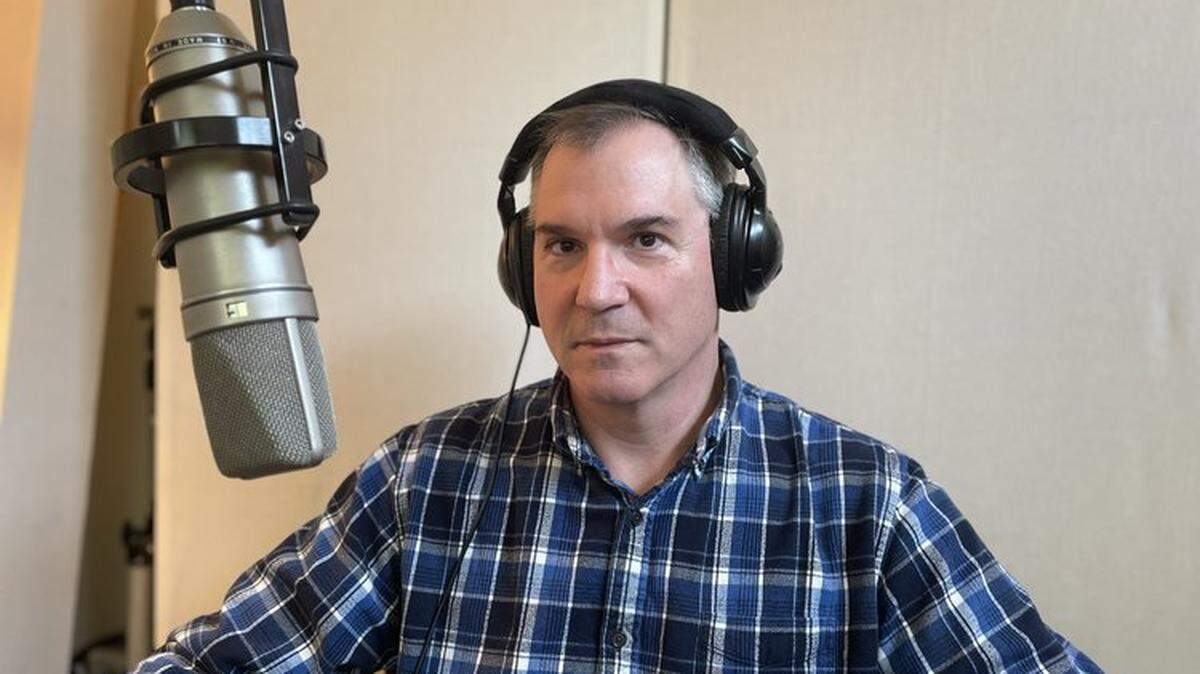
Something was wrong when Frank Bruni woke up one morning in October 2017. He couldn’t see clearly.
“It turned out that I’d had a kind of stroke,” Bruni said. “I would never see correctly out of my right eye again.”
He tussled with that fact — and the 20% chance of also losing vision in his left eye, too. There was shock, fear and attempts to make sense of it all, Bruni said in an interview with The News & Observer.
In that process, he found himself actively learning about the kind of grief he was experiencing by journaling and asking questions from people who had already gone through what he was experiencing.
A seasoned journalist, most recently as a columnist at The New York Times, Bruni came to a conclusion about this exploration of loss.
“I realized that it was a story worth telling,” he said about his new book, “The Beauty of Dusk: On Vision Lost and Found,” that came out earlier this year.
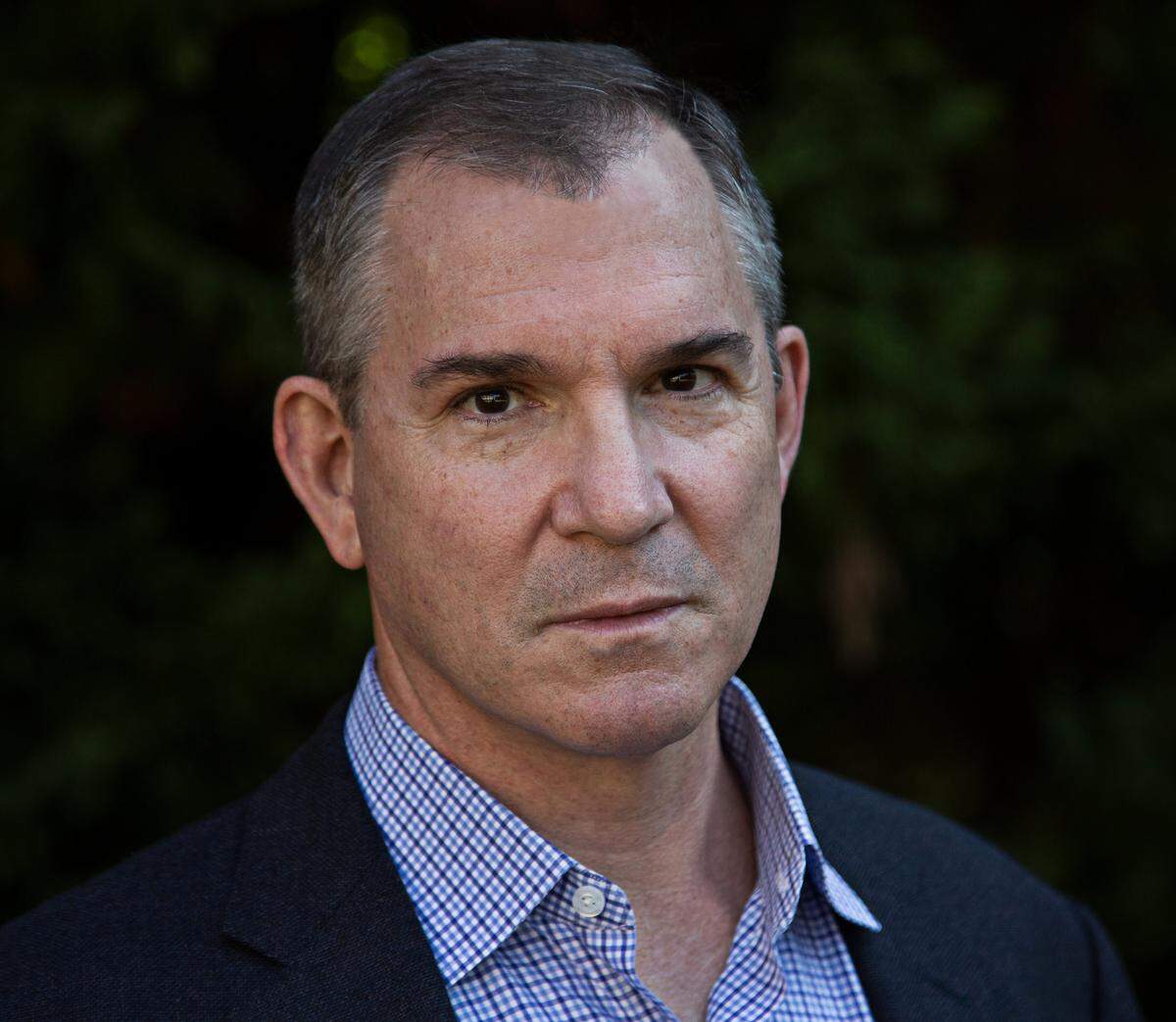
In this new chapter in his life, Bruni works at Duke University’s Sanford School of Public Policy as a journalism professor and lives in Chapel Hill with his dog, Regan.
On Sunday, the 1986 UNC-Chapel Hill alum will deliver the 2022 commencement speech at his alma mater.
He spoke with The News & Observer about writing and publishing his best-selling “The Beauty of Dusk,” how his vision loss has changed his life and his return to Chapel Hill. The interview has been lightly edited for clarity.
Q: This book is a very personal take on this part of your life. Why write it?
Bruni: I’m someone who’s written my whole career. I had written a prior memoir (“Born Round”) about my strange relationship with food and eating disorders when I was younger. And, you know, as I struggled through this, and, you know, processed the shock of it, and then the kind of fear of “Oh, God. What if I go blind?” And, you know, just trying to make sense of it all, I realized that it was a story worth telling.
In my case, it was vision. For other people, it’s a different disease. For other people, it’s, you know, the loss of a loved one. I mean, everybody in their lives has these moments of extreme hardship, or trauma, or fear that they have to figure out how to get past. And as I figured out how to get past mine, I sort of reflexively took notes. Because that’s what I do for a living.
In the process of doing that, I thought, “Well, this has become, organically, a kind of journalistic endeavor. And what I’m going through, and what I’m learning, and the sense I’m making out of it with words on a computer screen for my own benefit, all of that very much has the makings of a book. So that’s why I ended up writing at the length I did about it.
Q: Do you think there’s an intersection in your identities: Being a gay man, dealing with eating disorders, being a journalist and then becoming disabled later in your life?
Bruni: That’s hard to describe. I’m not sure how to answer it. It’s not something I explore specifically in the book. But, you know, I wouldn’t say that there’s any particular way in which they intersect, but I think these things can be additive. I think that growing up and knowing from a very, very young age that I was gay in a country that was much less accepting of that when I was younger than it is now — and it’s still not fully accepting of gay people, and certainly not trans people — that sensitized me, I think, to struggle and to and to people who have a tougher road to walk. I think it I think it made me aware of that.
These things — you kind of need reminders as you go along in life. And while I don’t think I ever became an unsympathetic or an insensitive person, I do feel like when when the partial blindness thing happened to me later — you can call it a disability. I don’t think of that as disability just because it’s subtle and manageable. And I would never compare myself to someone dealing with a much graver disability that puts much different kinds of limits on their lives. But disability certainly does exist across the spectrum.
And the kind of central transcendent fact of it is, you have to learn to come at life in a different way. There’s certain roads that are closed off to you. And you need to kind of figure out what other roads are open, or maybe even if there are roads that are open to you in certain ways, because of this unique perspective you have on life. So I just think all of these things added together have, I hope, made me a more empathetic person. I’m sure they’ve made me a more enlightened person. I think they’ve made me a more soulful person.
Q: Are you incorporating into your teaching, in this new chapter in your life as a professor, these experiences that have also shaped who you are as a journalist?
Bruni: I think these experiences have just shaped me as a human being, from the moment I get out of bed in the morning to the moment my head hits the pillow at night, you know? I think it infuses everything. I think it infuses the way I deal with people, the degree of humility as a teacher.
The main connection is: I don’t think I would be teaching right now, if what happened to me hadn’t happened to me.
I had in my head that I didn’t want to continue doing The New York Times journalism that I was doing full-time for a long time to come. I had it in my mind that like, you know, in the near-ish future, I would like to kind of change strokes, just because that can be stimulating and refreshing.
And when this (stroke) happened to me, in a very cliché but real way, when this sort of totally unexpected physical setback happens, you then have a heightened awareness that you don’t have enormous control over the future... That you are getting older. It puts you in closer touch with your aging, and makes you say to yourself, “Is it really wise to say, ‘Oh, that’s something that might be great to do in three years,’ ‘That’s something might be great to do in five years.’”
I now feel like if there’s something that I’m thinking that I’m kind of really interested in doing at some point, I should think about making that point as soon as possible. This has shown me I have no idea what next year is going to bring, I have no idea what the year after, I have no idea if I’ll have the same range of abilities. So do the things you want to do. Or do the things you’re curious about when you want to do them and when you’re curious about them.
Q: What kind of feedback have you gotten so far from your book since it’s release?
Bruni: I get good feedback. It was very nicely reviewed.
On a given day, I get three to four emails from people who have read the book because they have experienced some hardship in their life recently, because they are struggling with something, to tell me how much the book strongly resonated for them. It’s lovely to know that the precise message I was putting out to the world was received — that it was received in the way that it was intended. And if I have given people, you know, even a brief moment of emotional solace, I mean, that’s just such a lovely thing to have been able to do.
Q: What’s it been like being back in the Triangle? And when was the last time you visited before moving?
Bruni: I was coming back pretty much every year. After I graduated from Chapel Hill, I don’t think I came back maybe for 10 years. But in the last in the last seven to 10 years, pretty much every year there would be some invitation from some school, or a group at UNC, to come back and give a speech, or something like that.
Now, obviously, it’s my home. I had lived in New York continuously for the last, I think, 14 prior years. And I was really itching for a slightly less frenzied lifestyle, a slightly less frenzied locale. I spend at least 10 hours a week walking woodland trails with my dog. And we spent probably 20 hours a week in Central Park if not more... This is not the same, you know? (Chapel Hill) is much more complimentary to where my kind of thoughts and spirit are right now.
I like restaurants near me that have outdoor areas that are abundantly dog friendly. Because my dog is a very, very lovely and well-behaved dining companion.
Q: You’re a UNC grad and you’re teaching at Duke. What has that been like?
Bruni: I have enormous respect and affection for both schools, I keep my mouth shut when they play each other and basketball. I do not take sides. I do not get involved.
I‘ve had people, you know, make it like the Hatfields and the McCoys, or the Montagues and the Capulets, or whatever.
I think the rivalry is intense when it comes to basketball. I think, otherwise, it’s largely a kind of performative thing that people do. Certainly, the people at UNC did not nullify me from making the commencement speech because I teach at Duke, and the people at Duke think it’s just the neatest thing in the world that one of their professors is giving the commencement speech there.
So there is hope for bipartisanship in this country, because I am an example of the ability to move back and forth between two supposedly hostile environments, and to have each of those environments treat me in a lovely fashion.
This story was originally published May 7, 2022 at 10:21 AM with the headline "Duke professor and NYT alum Frank Bruni on loss, identity and Chapel Hill living."