NC is seeing a spike in black bear sightings. Here’s how to safely coexist with them.
The North Carolina Wildlife Resources Commission (NCWRC) says it’s seeing a spike in black bear reports and sightings this spring, and is offering advice for humans in the state to safely coexist with the animals.
NCWRC said in a April 21 release that the increase in sightings “comes as no surprise since the state’s bear population has grown over the past 50 years and the residential footprint has grown.”
As humans move closer to bear habitats, NCWRC said, it creates increased opportunities for bears to approach their properties — especially when humans leave food sources out.
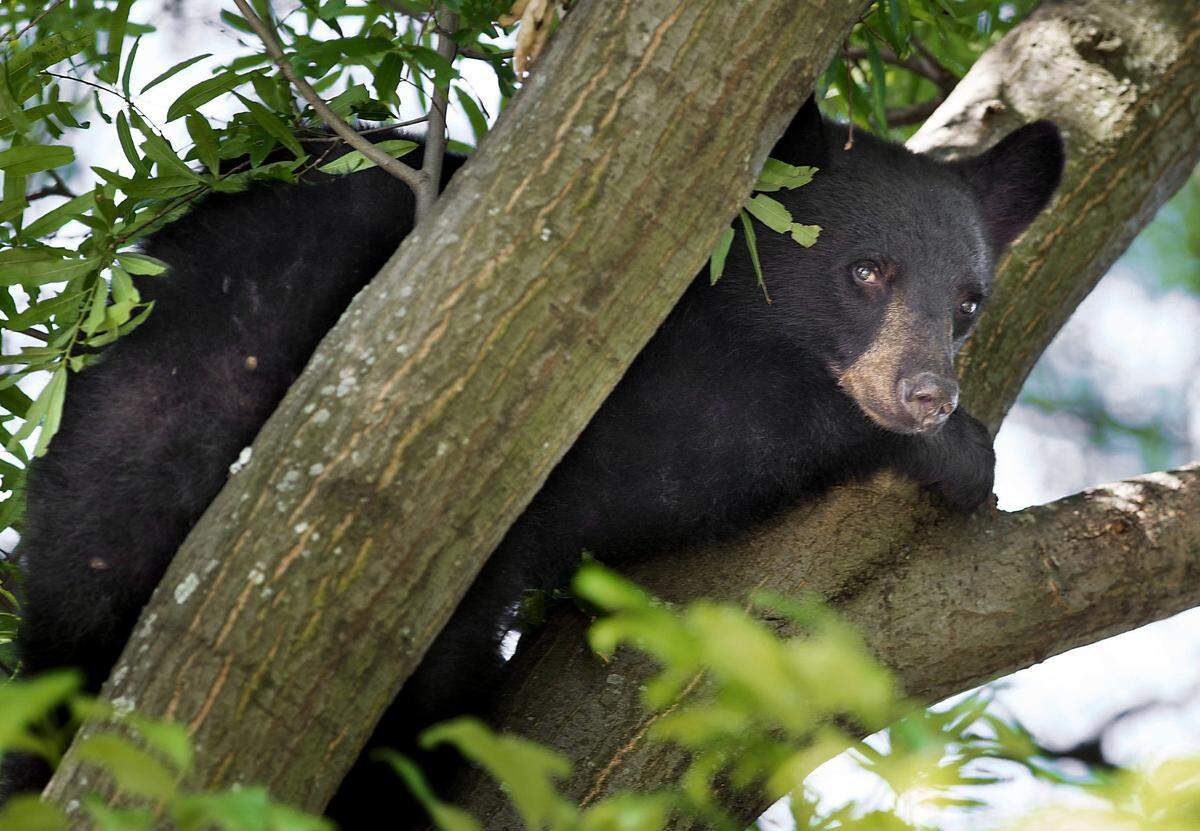
This information likely sounds familiar to some Triangle residents, especially those who work at Rex Hospital in Raleigh, where a young black bear spent a day up a tree last July.
But there’s good news, even as black bear sightings increase: “Black bears, by nature, are not aggressive animals,” the NCWRC website reads. “They peacefully coexist in close proximity to humans year-round throughout North Carolina. The presence of bears in these new areas should not be immediately viewed as cause for alarm or fear.”
So, as black bear sightings and encounters become increasingly common for North Carolina residents, how can you safely coexist with the animals?
Here are some tips from NCWRC to keep you — and the bears — safe.
Where do black bears live in North Carolina?
Black bears are found across approximately 60% of the total land area of North Carolina, according to NCWRC.
▪ NCWRC says the state’s bear populations are concentrated in the mountains and coastal plain regions, but the population is expanding into central North Carolina — making sightings increasingly common in all areas of North Carolina, especially in May, June and July (that’s when young bears are looking for a new home after being pushed away by the adult female as she begins breeding again).
▪ Bears prefer large expanses of uninhabited woodland or swampland with dense cover, NCWRC says. In the eastern parts of the state, lowland hardwoods, swamps and pocosins provide good habitats for bears.
▪ Some bears, though, have adapted to living near developed and more urban areas of the state.
Note: The black bear is the only bear species found in North Carolina or anywhere in the eastern United States, according to NCWRC.
Why are black bear sightings becoming more common in NC?
NCWRC says “black bears have been dispersing through central North Carolina for decades.”
But as more people have come to live in this part of the state — essentially encroaching on areas where bears have traditionally lived — there have been more opportunities created for bears to cross paths with humans, either at their homes or in more crowded areas.
Encounters are especially likely when humans leave food or other attractive items out where bears might smell or see them.
“Bears have adapted to living near people,” NCWRC says. “Now it’s up to us to adapt to living near bears.”
Tips for safely coexisting with black bears in NC
NCWRC uses BearWise, a national educational program developed by bear biologists, to educate and inform the public about how to safely coexist with black bears.
BearWise offers six key tips to prevent potential conflicts and live responsibly with bears:
▪ Never feed or approach a bear. If you intentionally feed a bear, such as by leaving food out for them, you’re essentially encouraging bears to approach homes and people to look for more. Avoid leaving out food, or anything that smells or tastes like food, in an area where a bear might find it. If you do see a bear, either at your home or elsewhere, don’t approach it. Bears will defend themselves if a person gets too close, so it’s best for your safety and theirs to leave them alone.
▪ Secure food, garbage and recycling. Don’t “reward” bears with easily available food, garbage or recycling. Store any bags of trash that you take out inside trashcans and inside a garage or other covered structure, such as a shed, if possible. You can also use trash cans with a secure latching system or that are bear resistant. When it’s time for your scheduled trash collection, place your trash outside as late as possible on the morning of trash pick-up — not the night before.
▪ Remove bird feeders when bears are active. Birdseed, other grains and hummingbird feeders have high calorie contents, making them very attractive to bears. “Removing feeders is the best way to avoid creating conflicts with bears,” NCWRC says.
▪ Never leave pet food outdoors. Feed your pets inside whenever possible. If you have to feed your pets outdoors, feed them in single-serving portions, and remove the food and bowls after feeding. Avoid storing pet food outdoors or where bears would have easy access to it.
▪ Clean and store grills. The weather is warming up, so you might be firing up your grill more often. Make sure you clean your grill after each use, making sure any grease, fat and food particles are removed, including drip trays. You should store your clean grills and smokers in a secure area, such as a garage or shed.
▪ Alert neighbors to bear activity. If you see a bear near your home or see evidence of bear activity nearby, you should tell your neighbors — and share with them information, such as the tips provided here, about how to avoid bear conflicts.
What to do if you see a black bear in NC
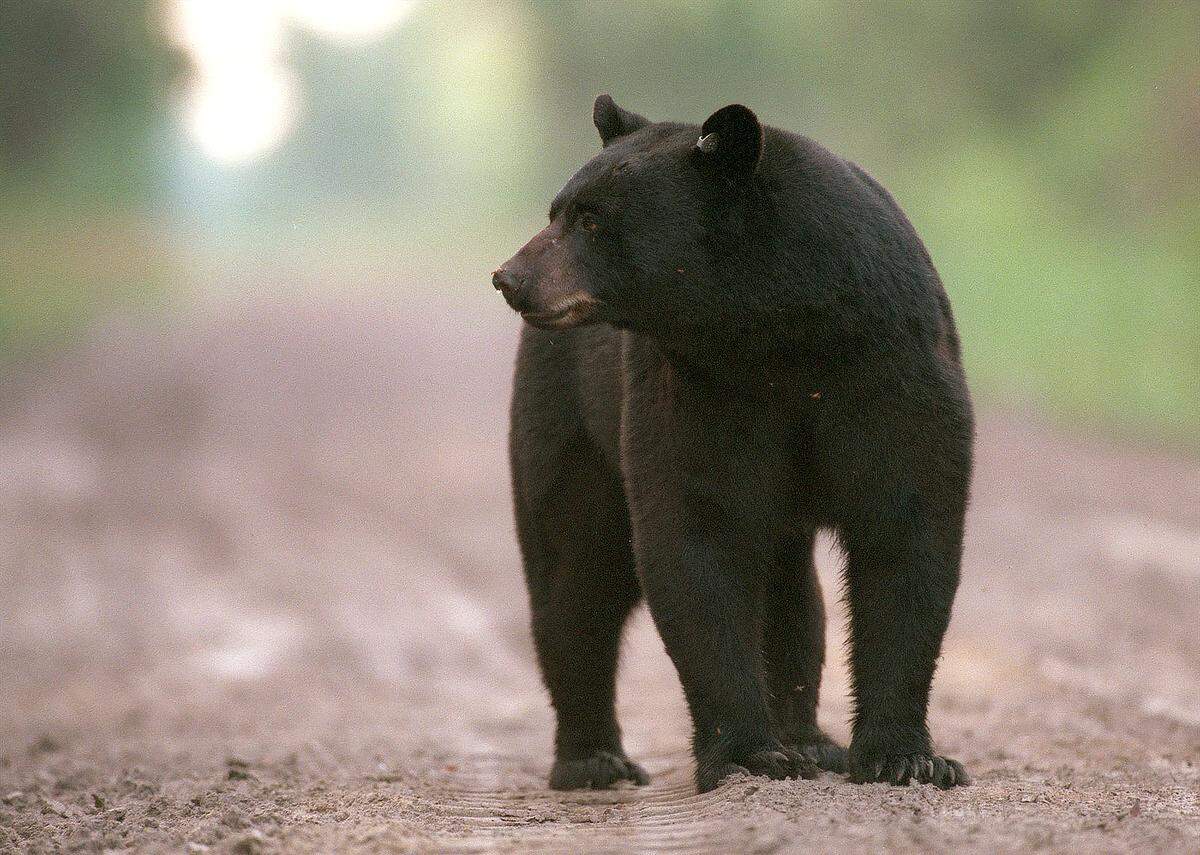
If you see or encounter a bear, in almost all cases, NCWRC advises that the best option is a hands-off approach, allowing the bear to leave the area on its own.
▪ NCWRC does not typically trap and relocate bears, unless there is a direct threat to human safety.
▪ The commission says it has “no remote places left to relocate bears where they will not come into contact with humans,” and removing the bear would simply “simply move the problem, rather than solve it.”
▪ In most cases, NCWRC says, people are the cause of bears encroaching on their property, and the best long-term solution is to use the tips provided here, such as the removal of possible attractants, rather than destruction or removal of the bear.
BearWise offers these additional tips for bear encounters, depending on where you are when you see the bear.
If you see a bear in a building, by a dumpster or around the corner:
▪ Give the bear a clear escape route. Do not corner the bear.
▪ Leave any doors open as you back away from the bear.
▪ Do not lock the bear in a room.
If you see a bear in your backyard:
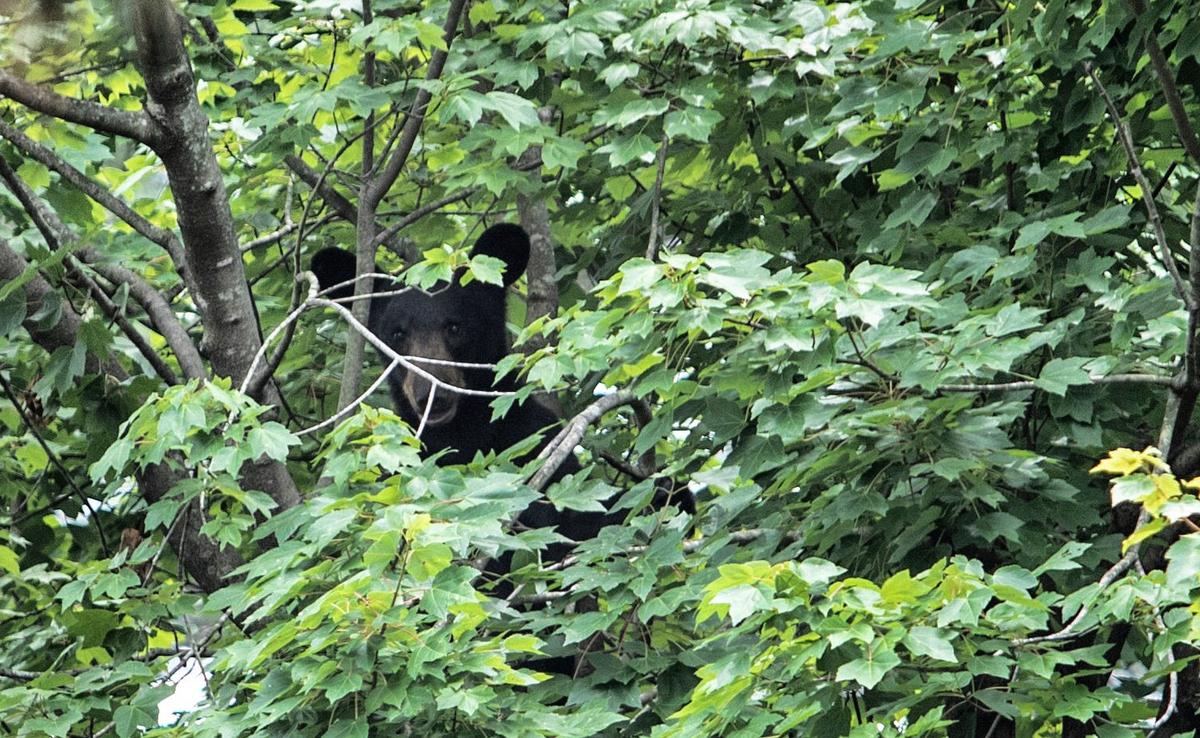
▪ From a safe distance, make loud noises, shout or bang pots and pans together to scare away the bear. Note: Do not taunt a bear if it fails to respond to your efforts to frighten it.
▪ When the bear leaves, remove potential attractants such as garbage, bird seed or pet food.
▪ Ask your neighbors to remove attractants on their property.
▪ Check your yard for bears before letting out your dog or other animals.
If you see a bear in the woods:
▪ If you see a bear before it notices you, stand still. Don’t approach the bear. Then, move away quietly in the opposite direction.
▪ If you encounter a bear that’s aware of you, don’t run. Running may trigger a chase response from the bear. Back away slowly in the opposite direction and wait for the bear to leave.
Note: If you’re going to be in the woods or somewhere else that a bear encounter is likely, BearWise says it’s a good idea to carry bear spray — and know how to use it. Bear spray is proven to be the easiest and most effective way to deter a bear that threatens you. Keep it accessible, and don’t treat it like bug spray (spraying your tent, campsite or belongings won’t keep them away).
What to do if a black bear becomes aggressive
If you encounter a bear and it becomes aggressive, BearWise offers safety tips for how to handle the situation, depending on what exactly happens during the encounter.
If the bear approaches you:
▪ Stand your ground.
▪ Back away only when the bear stops its approach.
▪ Make yourself look bigger by raising your arms and jacket, and/or standing on a rock or stump.
▪ Yell “Hey bear!” loudly.
▪ Get your bear spray — remember, you should keep some on hand if you’ll be in the woods — out of the holster and into your hand. Remove the safety latch.
If the bear follows you:
▪ Stand your ground.
▪ Try to appear large by holding up your arms and jacket, and/or standing on a rock or stump.
▪ Try to intimidate the bear by making noise, waving your arms, shouting, clapping or banging a stick.
▪ Back away only when the bear stops its approach.
▪ Stay together with anyone in your group.
▪ If the bear continues to follow you after using these tactics, prepare to fight or use bear spray.
If the bear charges you:
▪ Stand your ground.
▪ Remain calm.
▪ If you have bear spray, spray it directly at the bear.
If the bear makes contact with you:
▪ Fight back with anything you have on hand, including a knife, sticks, rocks, binoculars or a backpack, or by kicking.
▪ Do not play dead.
Additional resources
▪ For more information about living responsibly with black bears, visit BearWise.org.
▪ If you have questions regarding bears and other human-wildlife interactions, you can contact the NCWRC’s NC Wildlife Helpline at 866-318-2401. The helpline is open Monday through Friday, 8 a.m.–5 p.m. You can also email HWI@ncwildlife.org.
This story was originally published April 28, 2022 at 9:15 AM with the headline "NC is seeing a spike in black bear sightings. Here’s how to safely coexist with them.."