Think you saw a Joro in NC? It’s probably one of two similar-looking spiders instead.
Many in North Carolina believe they’ve been seeing the headline-grabbing Joro spider every summer for years, but experts say that’s not likely.
After The News & Observer reported last week that the Joro is likely on its way to North Carolina (and bringing many, many of its friends), readers called to tell us that they’ve found the Joro in their gardens or on their farms every summer since they were children.
Here’s the thing: The Joro spider has two doppelgängers that have been a part of North Carolina’s ecosystem for a long time. So if you think you’ve spotted the Joro before, entomology experts believe that you either encountered the golden silk spider or the black and yellow garden spider.
Here’s what to know about all three.
These two NC spiders look very similar to the Joro spider.
One of the defining characteristics of the Joro spider is its size. The female spiders get pretty big, while the males stay relatively small.
“Adult females will have legs around three inches long, so if you flatten them out, their leg span is around 6-to-8 inches, the average size of an adult human palm,” USA Today reported.
Both full-grown female black and yellow garden spiders and golden silk spiders can be similar in size.
The N&O talked to Matt Bertone, the director of NC State Extension’s Plant Disease and Insect Clinic, to learn more about how all three look.
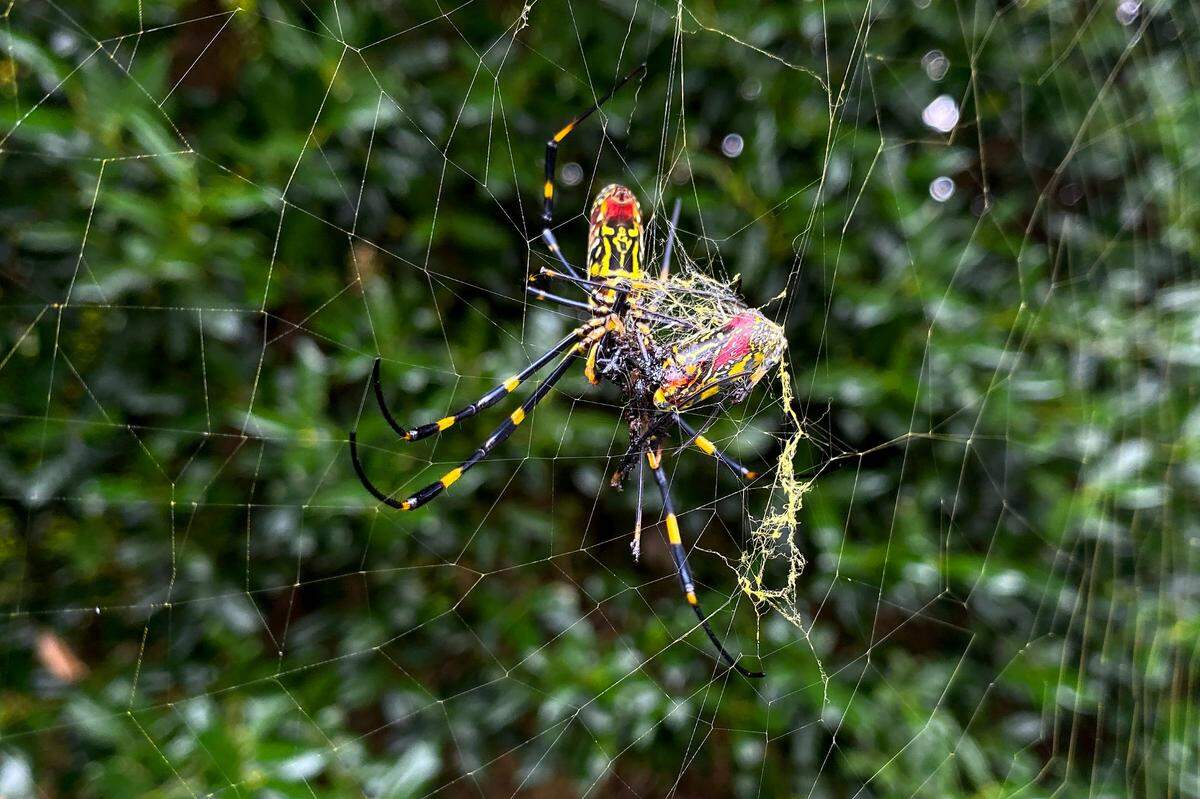
▪ Joro spiders: “Joro spiders have a blue/gray and yellow striped abdomen (the stripes being fairly uniform and even) that’s somewhat thin with a pointed tip. They also have legs that are black with a couple thin yellow bands,” Bertone said.
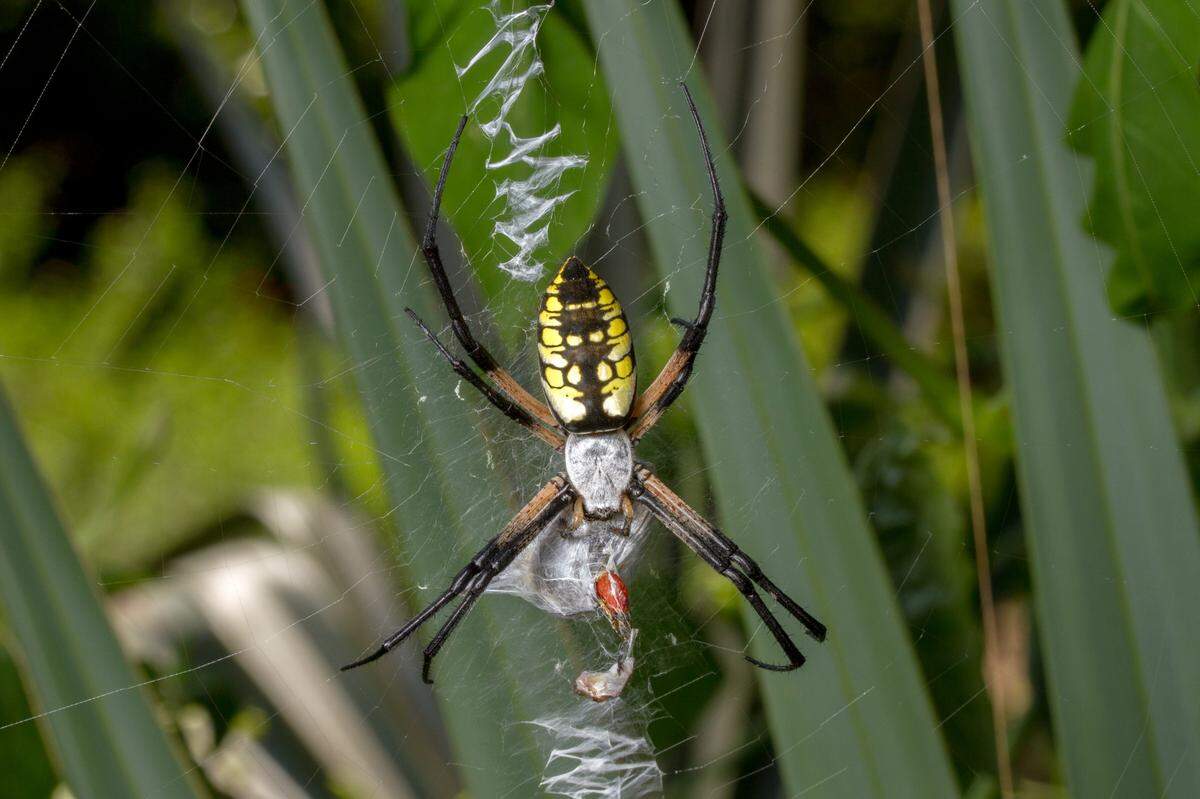
▪ Black and yellow garden spiders: “Black and yellow garden spiders have a wider abdomen that is only yellow and black with a pattern that is not quite as distinctly banded. They have legs with orange bases, but no bands of yellow,” Bertone said.
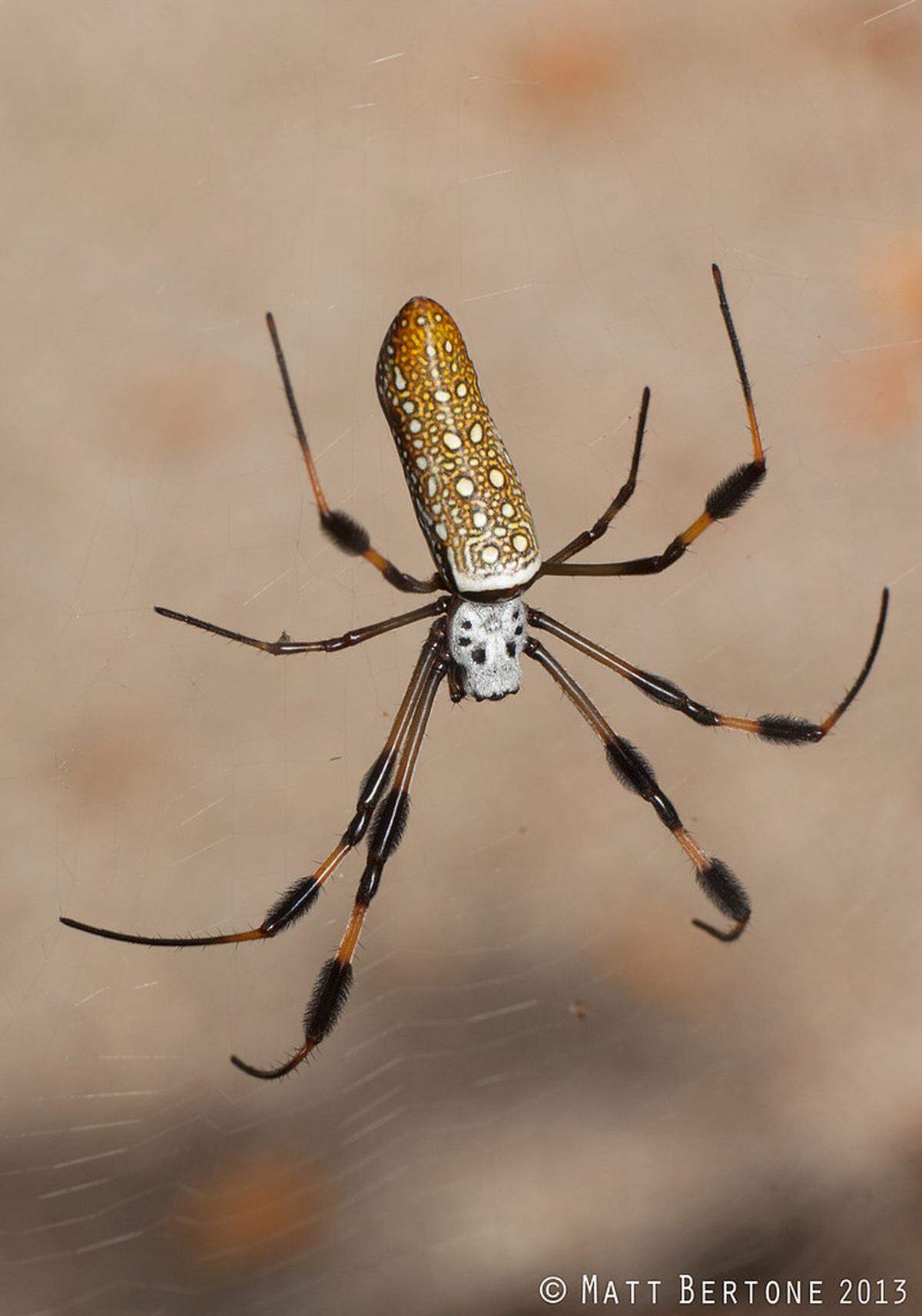
▪ Golden silk spiders: “They have a largely reddish yellow abdomen with circular patterns as well as tufts of hairs on their legs (like leg warmers),” Bertone said.
Donald Zepp, an entomologist and researcher with the North Carolina Biodiversity Project, told The N&O that you can also identify different genera (plural for “genus”) of spiders by the way some rest on their webs. The golden silk spider and the Joro spider are in the same genus (Trichonephila), while the black and yellow garden spider has a different genus (Argiope).
“For the faint of heart who would never get close enough to notice small differences between the appearances of the two genera, Argiope typically rests with its four foremost and its four hindmost legs in pairs, apparently not done by Trichonephila,” Zepp said.
Check out the spider’s web
If you’re still not sure if the spider you’re seeing is a Joro, black and yellow garden spider or a golden silk spider (and you don’t feel like getting too close), you can check out the spider’s web.
“Another difference between garden spiders and its golden silk spider relatives is that garden spiders often create thick, zig-zag patterns in their webs,” Bertone said. “They are sometimes called ‘writing spiders’ because of this. The structure is called a ‘stabilimentum’ and is thought to reflect UV in order for birds and animals not to run into the web, destroying it.
Trichonephila spiders’ webs are significantly larger than Argiope spiders’, and they will contain distinctly yellow silk, Zepp said. “Whence clavipes’ common name, the golden silk orbweaver.”
These spiders perform similar functions, too.
It makes sense that longtime North Carolinians have confused these native spiders for the Joro newcomer. They’re just about as big, and lots of their colors are the same.
Plus, their action plans are the same.
“Functionally, these large web spiders are pretty similar,” Bertone said. “They wait in their web for insects (sometimes larger prey!) to get trapped and are very good at wrapping them up in silk and eating them.”
But have no fear — none of these spiders are out to eat people.
“They are basically blind and cannot run or jump after people,” Bertone said. “They prefer to stay in their web and are not aggressive. I hope people can learn to live with these large spiders, because despite how scary they may look, they are not out to get us.”
Have these spiders always been in NC?
The black and yellow garden spiders and the golden silk spiders have been in North Carolina for a while, Bertone said. The Joro spider, on the other hand, is likely a brand new addition.
▪ Joro spiders: “There is definitive photographic evidence of the Joro spider being in the Western part of the state in 2021,” Bertone said. “Being such a large and showy spider, we assume that folks would have seen the species as soon as it began showing up in NC. Thus, 2021 appears to be the first year they were recorded, so it’s likely they only recently got here. They have been known in the US (Georgia) since 2013.”
▪ Black and yellow garden spiders: “This is a well-known, native orb-weaver species,” Bertone said. “They are similar looking and somewhat closely related to Joro spiders. These spiders develop from young individuals over the course of the year and are often only noticed in the summer and fall when they become adults and attain a large size. We also have a few other species in the genus in NC.”
▪ Golden silk spiders: “These large orb-weavers are found in the warmer Southeastern portions of the state, and are about as large as Joro spiders,” Bertone said. “Because of their large and yellow abdomen they are sometimes called banana spiders (not to be confused with spiders that arrive on store-bought bananas).”
This story was originally published March 23, 2022 at 11:33 AM with the headline "Think you saw a Joro in NC? It’s probably one of two similar-looking spiders instead.."