Black farmers say Raleigh Convention Center’s ‘inclusive’ campaign misrepresented them
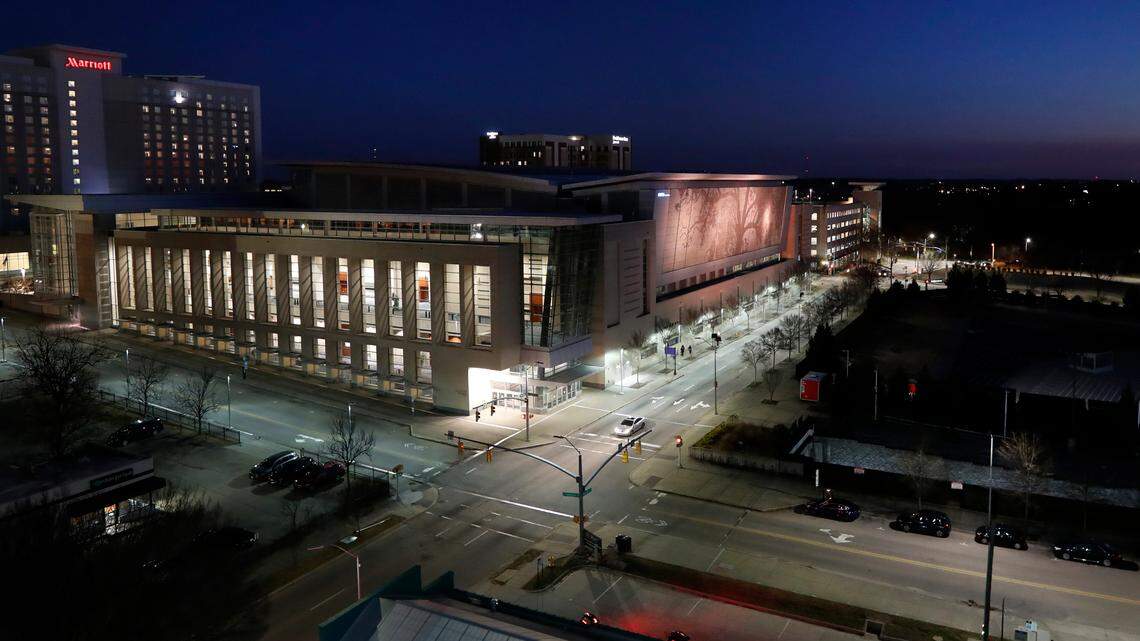
After a “fantastic” Thanksgiving dinner, the mood quickly changed for Paige Jackson when a friend sent a text message congratulating her for partnering with the Raleigh Convention Center on its new menu concept called “A Seat At The Table.”
Jackson, co-owner of Grass Grazed Farm in northern Durham, had no idea what her friend was talking about.
So she went online to find out.
In the middle of the “A Seat At The Table” page, a photo gallery showed Jackson’s family, with her husband and four children. It implied they were among the partner farms.
“Southern Fried Chicken and Krispy Kreme ‘Waffle’ with champagne mustard aioli,” one of the menu items read, with the chicken described as coming from Grass Grazed.
“I was like, ‘Man ...’ Like, ‘This ... this is not accurate information,” Jackson said in an interview with The News & Observer.
‘Inclusion’ gone wrong
The initiative, launched last summer, was created by Sodexo Live!, the food and beverage partner for the Raleigh Convention Center. “A Seat At The Table” included a curated menu featuring products sourced from nine local women- and minority-owned and run farms, including that of the Jacksons, who are Black.
In a now deleted video on the center’s website, Chef Phil Evans stated he had met with each of the farmers to discuss the concept and its goals.
The campaign was meant to spotlight farms and “to help attain equitable representation of North Carolina’s diverse culture,” said Paul Pettas, public relations and communications director for Sodexo Live!, in an emailed statement. It’s why it won a 2021 VenuesNow Excellence in Concessions Award for “Best Sustainability Initiative.” Several local news organizations, including ABC 11, a news partner of The N&O, reported about the initiative.
Jackson then realized this had been going on longer than she’d imagined.
She spent hours calling and emailing Raleigh Convention Center staff with her husband Derrick, an Army veteran, to find out why they were in the campaign without their consent. No one responded, they said, likely due to the Thanksgiving holiday.
Jackson says she even called Centerplate, the center’s caterer, posing as a potential customer interested in the A Seat At The Table menu for a made-up event.
“They’re like, ‘Yeah!’” Jackson said about the employee on the other line. “Like, ‘We’re super proud of this.’ ‘It’s a really popular menu that we published.’”
That’s when Jackson, who runs the farm’s social media accounts, decided to post their concerns in an Instagram Live video to Grass Grazed’s 12,000 followers.
“We take this very, very seriously because we’ve invested a lot in our branding,” Derrick Jackson said in the video. “And for someone to take advantage of what we’ve created, to me, is stealing.”
A handful of their followers tagged the Convention Center in the video’s comments. Others shared their sympathy and outrage for how the family’s business had been misrepresented.
Jackson says the team behind The Black Farmers Market of Durham and Raleigh and other local Black farming leaders offered their support while she and her husband figured out how they could hold the center accountable.
“It happens way more often than people want to realize or recognize,” said Gerald Harris, co-creator of Tall Grass Food Box, a local Black-farmed produce delivery service. Harris says his organization’s goal is to help Black farmers get “their just due.” It’s why making sure they’re represented accurately is essential, he said.
Due diligence
The Jacksons said the convention center promptly reached out to the couple to explain what had happened after their video was published.
Of the nine farms originally featured in “A Seat At The Table” publicity, Pettas says only six had been formally invited to partner and confirmed their participation.
“We regret and are embarrassed that enthusiasm for the program concept outpaced finalizing all the details,” Pettas said. “We have since extended invitations to all and hope they will join us.”
It’s not clear where communication broke down between those planning and those promoting the campaign.
The Jacksons learned that the other farms featured without consent were the African-American owned Pine Knot Farms and Native American (Lumbee) owned MG3 Farms.
Roderick Mcmillan, the owner of MG3 Farms, said he has never worked with the convention center directly. But one of his distributors might have contacted the center’s chef and culinary team, he said. Sodexo did not identify the “local purveyor” who helped them develop the menu.
Of the farms that did confirm, Sue Stovall of Paradox Farm Creamery and Brenda Sutton of Fogwood Food reached out to The N&O via email. Both shared their positive experience working with Evans and the rest of the team behind A Seat At The Table since earlier this year, when he visited their farms.
“(Evans) presented a wonderful picture of bringing diversity to the meals they produce, through different local producers,” Stovall said in her email.
In a conference call the morning of Dec. 1, Evans, the center’s general manager and Pettas apologized to the Jacksons for what had happened.
“He said that it just it took off and it just kind of, that stone just was left unturned,” Derrick Jackson said.
They told the Jacksons they actually hadn’t made any sales from the menu. Pettas said that it’s because COVID-19 restrictions have discouraged people from hosting large events that would require catering.
“Zero dollars have been made from any of this,” he said.
But Moses Ochola, director of Creative Strategy and Vision for The Black Farmer’s Market, challenges that notion. While “A Seat At The Table” may have not had any direct sales, the publicity it received could have indirectly driven more patronage. For example, he said, the friend who called Jackson to congratulate her was actually his sister, who was looking at catering options from the center for an event.
“The convention center requires that anyone using their convention center make sure that they order from their menu,” Ochola said. “So when my sister saw that ‘Oh, my friend’s produce has been sourced here!’ she was excited. And, you know, rightfully so, wanted to purchase from that particular menu.”
The Jacksons declined the center’s formal invitation to be part of “A Seat At The Table.” They asked the center to consider a framework or system for staff to avoid mistakes like this one from happening in the future, especially involving historically marginalized groups.
“If they really do mean well with this initiative — this whole, like, bringing awareness or access for farmers and minority farmers,” Paige Jackson said, “I think that, baseline, they need an education (in food systems and equity.)“
This story was originally published December 10, 2021 at 1:34 PM with the headline "Black farmers say Raleigh Convention Center’s ‘inclusive’ campaign misrepresented them."