A Downtown South without a stadium? Raleigh isn’t ready to help, say developers.
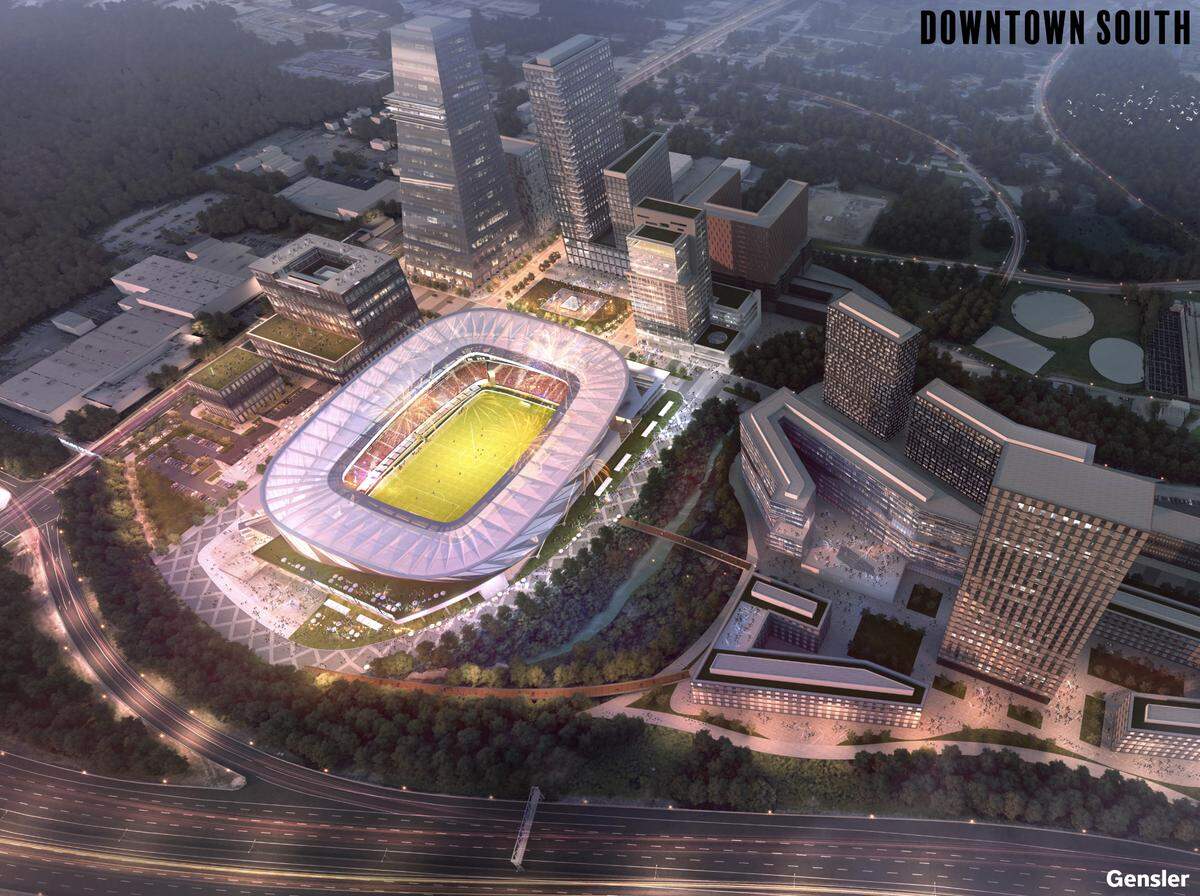
Developers of the Downtown South project say they have no ”clear pathway” to pay for a 20,000 seat, open-air stadium.
“The stadium is in our long-term plans,” Bonner Gaylord, chief operating officer of Kane Realty Corp., said during a community meeting Thursday night. “We don’t have a clear pathway to get there. However, it’s absolutely our long-term goal.”
The city of Raleigh and the community have not shown “a deep interest” in a type of financing called a tax increment grant, or TIG, that would allow the developers to pay for the stadium and other parts of the project through its future tax revenue, Gaylord said.
“We have acknowledged that reality and we’re not having that discussion of pursuing a TIG for that reason,” he said, adding that the Downtown South development will continue even with the grant.
The stadium was supposed to anchor the sports and entertainment district and become the future home of the North Carolina Courage and North Carolina FC, both owned by Steve Malik, one of the developers.
In addition to the stadium, the 140 acres located near South Saunders Street and Interstate 40 is slated to include hotels, retail, office and apartments.
“This is still in our long-term vision, to create this 20,000 seat stadium,” said Josie Reeves, Kane Realty’s director of design. “But we honestly feel like it’s just very clear that right now is not the right time to be discussing this. ... Our city has been through this unprecedented time these last almost two years now, and there’s just not an appetite to discuss this level of public-private partnership at this time.”
Kane Realty still feels ‘strongly that Raleigh deserves” a stadium for professional sports, concerts and other events downtown, Reeves said.
Funding troubles
In October 2020, Kane Realty asked the city to consider a tax increment grant. The financing method, which has been used in Charlotte, would be a first for Raleigh.
At the time Gaylord said, without it, Downtown South likely would not happen.
“We started this whole thing with an entertainment and sports venue creating an entertainment district,” Gaylord said in a previous interview with The News & Observer. “Without that entertainment and sports venue, everything else withers away. So the (grant) is necessary to do the project we envision and it’s necessary for the community to receive the community benefits (they) are asking for. So it’s in our best interest and it’s really necessary for us to have that (grant) to fulfill the vision of the project.”
Thursday night Gaylord said developers could “absolutely” move forward without a TIG but would have to forgo some community benefits like additional affordable housing and stream protections.
The city created a tax increment grant policy this year but hasn’t had any applications from developers who want to us it.
A TIG was the developers’ second attempt at a public-private partnership, after first seeking tourism money from Raleigh and Wake County. The stadium didn’t make a list of projects getting money, which is now in short supply due to the COVID-19 pandemic.
The developers’ decision could have political implications.
Some people criticized the idea of using such grants to fund the stadium, as well as John Kane’s campaign contributions to some council members. Supporting a TIG likely would have become a campaign issue for city council members who supported it and are seeking re-election next year.
In an interview Friday, Mayor Mary-Ann Baldwin said she didn’t ask the developers to hold off on pursuing a grant and didn’t know of any council members asking them to wait until after the election.
It’s a timing issue, she said, that has more to do with the impact of COVID-19.
The council has approved a TIG policy and it’s there for “members of the development community who want to apply for grants,” she said.
“I will say I am committed to a stadium in Downtown South,” Baldwin said. “I think that will support soccer. It will support Shaw University. Right now it’s a challenging time.”
This story was originally published November 19, 2021 at 8:14 AM with the headline "A Downtown South without a stadium? Raleigh isn’t ready to help, say developers.."