How Durham Tech and NCCU played a major role in ‘Genius Grant’ recipient’s success
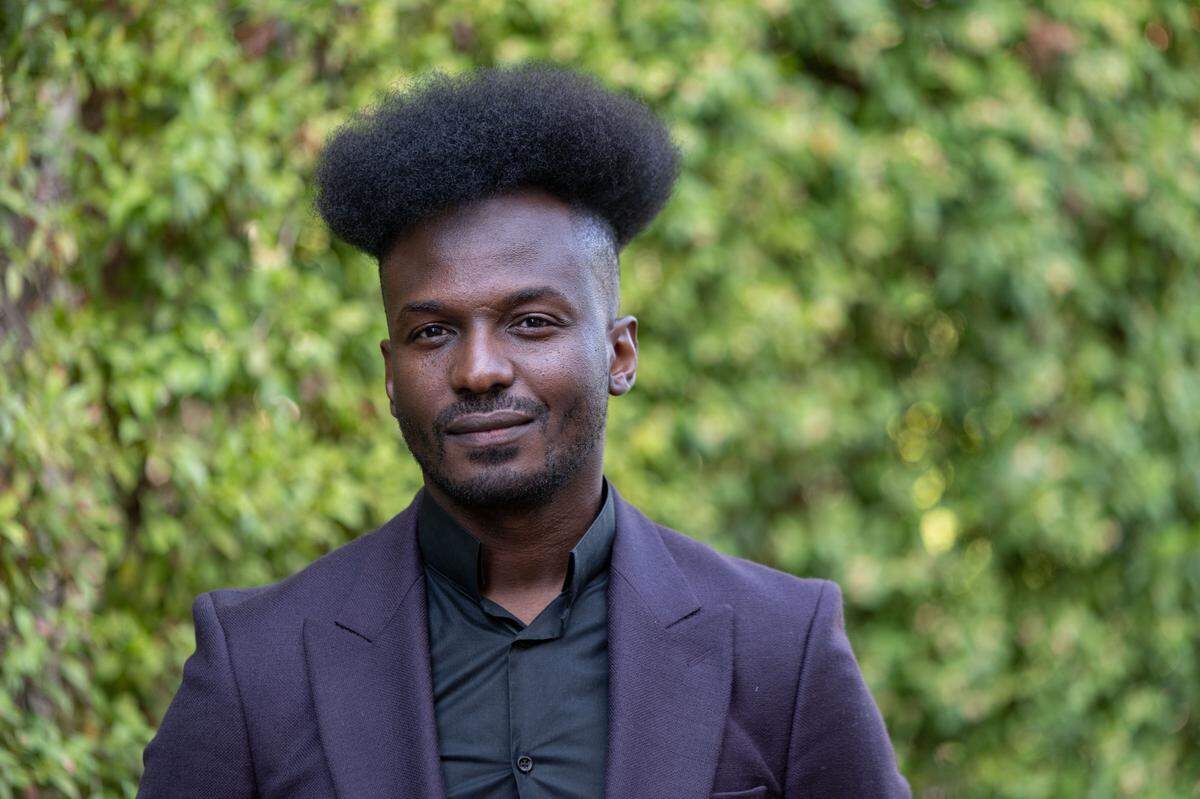
When the MacArthur Foundation publicly announced its 2021 MacArthur Fellows class on Tuesday, Ibrahim Cissé said he felt relieved. He’d been keeping the secret for several weeks.
“Now I can talk about it and I can tell people why I have this huge smile and grin on my Zoom meetings for the past few weeks,” Cissé told The News & Observer in an interview Wednesday from Freiburg, Germany, where he directs the Max Planck Institute.
Cissé, a graduate of North Carolina Central University, is one of 25 new MacArthur Fellows, also known as “Genius Grant” winners. Winners receive a $625,000 no-strings-attached stipend, paid in quarterly installments over five years, from the John D. and Catherine T. MacArthur Foundation.
“It’s been incredible,” said Cissé, 38, of the prestigious grant. “It’s truly humbling.”
While Cissé’s work as a biological physicist has taken him all over the world, he spent considerable time after high school in North Carolina, particularly the Triangle.
He was born and raised in Niger and moved to the United States after high school. He lived with a host family, the Nails, in Morrisville. He enrolled in an English as a Second Language program at UNC-Wilmington, according to MIT News, to sharpen up his English language speaking skills.
He attended Durham Technical Community College before transferring to N.C. Central, where he graduated in 2004 with bachelor’s degree in physics.
The MacArthur Foundation says Cissé “continues to push the limits of quantitative microscopy (a microscopic study that uses algorithmic analysis of digital images).” His research “may be critical to understanding neurodegenerative diseases such as Parkinson’s,” the Foundation says.
Cissé said his achievements show that a former community college student and graduate of an Historically Black College and University can have great success. He hopes administrators and people in power will invest more in students’ advancement.
“People may not think of a community college or HBCUs as being a place where, you know, the next generation of the great scientists will come from,” he said. “But they absolutely will.”
Durham Tech to NCCU
Cissé enrolled at Durham Tech shortly after completing his ESL program. He was an active member of the student body and was involved in the student senate and the International Students’ Club.
“The one thing that I really appreciated there was the leadership skills that I really learned,” he said. “It really helped me develop abilities for public speaking and just general leadership skills that one may not have expected, for example, for a scientist.”
Durham Tech President J.B. Buxton released a statement congratulating Cissé on his MacArthur Fellowship.
“His story is an example of the many success stories that result from the partnership between community colleges like Durham Tech and the state’s four-year universities,” Buxton said in the statement. “We are proud to have been part of Dr. Cissé’s educational journey and to continue to serve our community as the first step for many university-bound students.”
One of his advisers at Durham Tech was Karin Abell, who was the faculty co-adviser for the International Students Club. She now leads the ESL program for the college.
“To see Ibrahim’s name there, and knowing him when he was 18 or 19, it’s really very overwhelming,” Abell said in an interview Wednesday. “It’s got to be one of these top moments of feeling really proud of a student you have known.”
After a year and a half, he transferred to N.C. Central University after a professor, Kinney Kim, recruited him. He attributes his passion for research and physics to his mentors there, including Kim, Branislav Vlahovic and Benjamin Crowe.
It’s not common for undergraduates to be so hands-on in physics research, but his professors always got him involved.
“They created a research environment, which was quite, I would say, atypical,” he said. “To involve undergraduate students in basic research in physics, they were able to create that environment that got me excited about research in the first place and being a physics major.”
Outside of physics, Cissé remembers other mentors at NCCU like Constance Roberson, the Student Union and Activities director, who encouraged him to take on leadership positions in the international student organization and student government.
“These are people who were who were there looking after me,” he said.
In a statement, NCCU Chancellor Johnson O. Akinleye said having an alumnus become a MacArthur Foundation “Genius” Fellow “speaks to Dr. Cissé’s commitment to excellence in research and education and also showcases the academic acumen of NCCU graduates.”
Cissé said he encourages students in other countries who want to study in the United States to consider colleges and universities beyond “top tier” schools, especially if they aren’t able to afford them.
“For many people, especially immigrants, the cost of education is a huge concern,” he said. “I hope that those students picking universities to go to will consider the amazing opportunities and resources that community colleges and HBCUs will provide them in their formative years.”
Specializing in physics
Cissé’s academic achievements at NCCU led to a summer research opportunity at Princeton University, where he studied condensed matter physics. He later earned his Ph.D. from the University of Illinois at Urbana-Champaign in 2009.
Cissé is currently developing microscopy tools that can show how the genetic information people inherit from their parents is decoded in their own system, and how it ultimately translates into our own cells’ behavior.
Among his achievements, Cissé’s tools have facilitated the study of transient, loosely joined groups of biomolecules by capturing images of them with extraordinary detail and with very little time between each image captured.
“His investigations deepen our understanding of how gene regulation and expression produce proteins in cells,” his biography on the MacArthur Foundation site explains.
Cissé modified an existing high-resolution imaging method called Photo-Activated Localization Microscopy, or PALM, to record the fast dynamics of single molecules during transcription over time. Transcription is the process where the genetic information in a segment of DNA is copied into RNA molecules.
With the discovery, he challenged a previous notion that RNA polymerase clusters were static and pre-assembled, which allowed researchers to further their understanding of polymerase clustering.
“This clustering may provide insights into chromatin architecture (the 3D structure of genetic material inside the cell) and how that architecture is involved in packing distant DNA sequences close together for the dynamic regulation of gene expression,” his bio explains.
As the tools being used in biology, physics and other fields inch toward “the ultimate boundary of what we can see and what we can analyze, it is so important that we know how to look at images of any object” and analyze them using algorithms, said Mohammad Ahmed, the interim associate dean for the College of Health and Sciences at NCCU.
Most people might come across this kind of technology when they use the facial recognition feature to unlock their smartphones, Ahmed said. But the work Cissé is doing involves algorithms that can analyze millions of images at a much smaller scale, he said.
Among other uses, algorithmic analysis can allow researchers to examine instances when proteins fail to develop correctly, and group together. A deeper understanding of how protein misfolding occurs could help answer why it may lead to neurodegenerative diseases like Parkinson’s, Ahmed said.
Genius Grant winners from NC
The five-year fellowship has been awarded every year since 1981 to individuals “who show exceptional creativity in their work and the prospect for still more in the future.”
There is no open application for the MacArthur Fellowship and individuals must be nominated to be considered.
North Carolina has had several Genius Grant recipients over the years. That includes two other NCCU graduates: UNC sociologist, writer and scholar Tressie McMillan Cottom and the Rev. William J. Barber II, pastor of a Goldsboro church and cofounder of the National Poor People’s Campaign.
Other recent recipients include Rhiannon Giddens, a singer, songwriter and instrumentalist; UNC Chancellor Kevin Guskiewiscz, for his research on brain injuries in athletes; and Journalist Nikole Hannah-Jones, a former reporter for The News & Observer, who went on to create the 1619 Project at The New York Times.
The recipients continue pursuing their individual work without specific obligations or reporting requirements. There are no limits on age or area of activity.
Cissé plans to use his funds to continue his research work at the Max Planck Institute, where he is leading the development of the new Department of Biological Physics lab.
While it’s been some time since Cissé lived in North Carolina — he has worked everywhere from Boston to Paris and California to Germany — he fondly recalls the state’s geographic diversity. His mother still talks about it being “one of the most beautiful places she has been,” after visiting Durham for his graduation in 2004.
“I must say, you know, the other places that I’ve lived — without putting down those places — do not have the beauty of North Carolina,” he said.
This story was originally published September 29, 2021 at 12:23 PM with the headline "How Durham Tech and NCCU played a major role in ‘Genius Grant’ recipient’s success."