In one NC ICU, optimism about COVID replaced by sadness, dismay: ‘It was preventable’
In the first six months of the year, the intensive care unit that Loc Culp manages at UNC Medical Center went from being full of COVID-19 patients to having none.
Doctors, nurses and therapists lined the hallway and clapped as the last COVID-19 patient left the ICU on June 1. There was a shared feeling of optimism and relief that the pandemic that had pushed the ICU, and the health care system as a whole, to their limits was finally easing, with the help of vaccines against the coronavirus.
That optimism is gone, both at UNC and at hospitals across North Carolina. With the more contagious delta variant of the virus spreading across the country, the number of people hospitalized with COVID-19 statewide has ballooned from fewer than 400 in early July to 2,489 on Friday.
There were 21 COVID-19 patients in Culp’s medical ICU on Sunday morning, and another 35 elsewhere in UNC Medical Center. The resurgence of the respiratory disease, and the contrast with that day in early June, weighs on Culp and her staff of 120.
“We had 36 hours without a COVID patient. That was it. And the numbers started creeping up again,” she said. “And then here we are. I honestly didn’t think we would be back here. Not like this. Not in August.”
The dismay hospital workers feel about being thrust back in to the COVID-19 pandemic is complicated by the availability of vaccines. More than 90% of UNC patients with COVID-19 are not vaccinated, including almost everyone sick enough to need intensive care.
“They are suffering because of that, and indirectly it’s putting a huge strain on the health care system,” said Dr. Jennifer Maguire, a pulmonologist who is treating COVID-19 patients full-time in the ICU. “It’s challenging just to take care of all of these patients, physically, but also very mentally challenging to see the heartache and to know in the back of your mind that it was preventable.”
The presence of free, widely available vaccines makes this stage of the pandemic feel different to many heath care workers, says Shay Greene, UNC’s director of pastoral care, who counsels staff and patients and their families.
“We have so much science that has informed us of how to protect ourselves and others,” Greene said. “So the fact that the numbers are going up is daunting and frustrating.”
But Greene said those feelings are mixed with compassion for patients and their families. Culp says her staff tries not to judge people about being unvaccinated, any more than they would look critically on heart patients for the diet and lack of exercise that might have contributed to their condition.
“Regardless of what people do outside of this building, we are going to take care of them,” she said. “Whatever choices they make, we’re still going to take care of them.”
PPE is in demand again
The medical ICU that Culp manages has 30 beds, normally used for all sorts of patients who need special care in the hospital. As the coronavirus pandemic eased this spring, more of those beds became available for non-COVID patients.
Because the virus is so contagious, COVID-19 patients are kept separate from others; signs, stanchions and tape on the floor mark the boundaries between the “high-risk” COVID zone and the rest of the ICU. Staff refer to “moving the line” as the zone shrinks and grows along with the number of coronavirus patients.
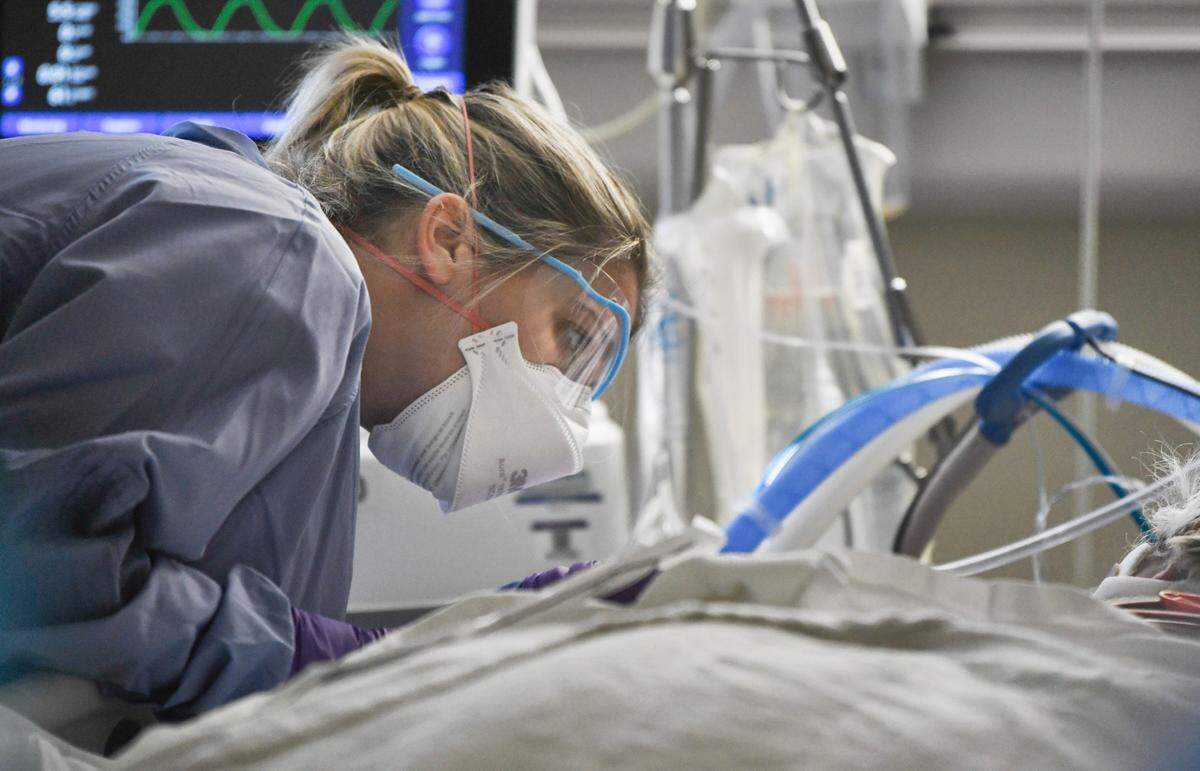
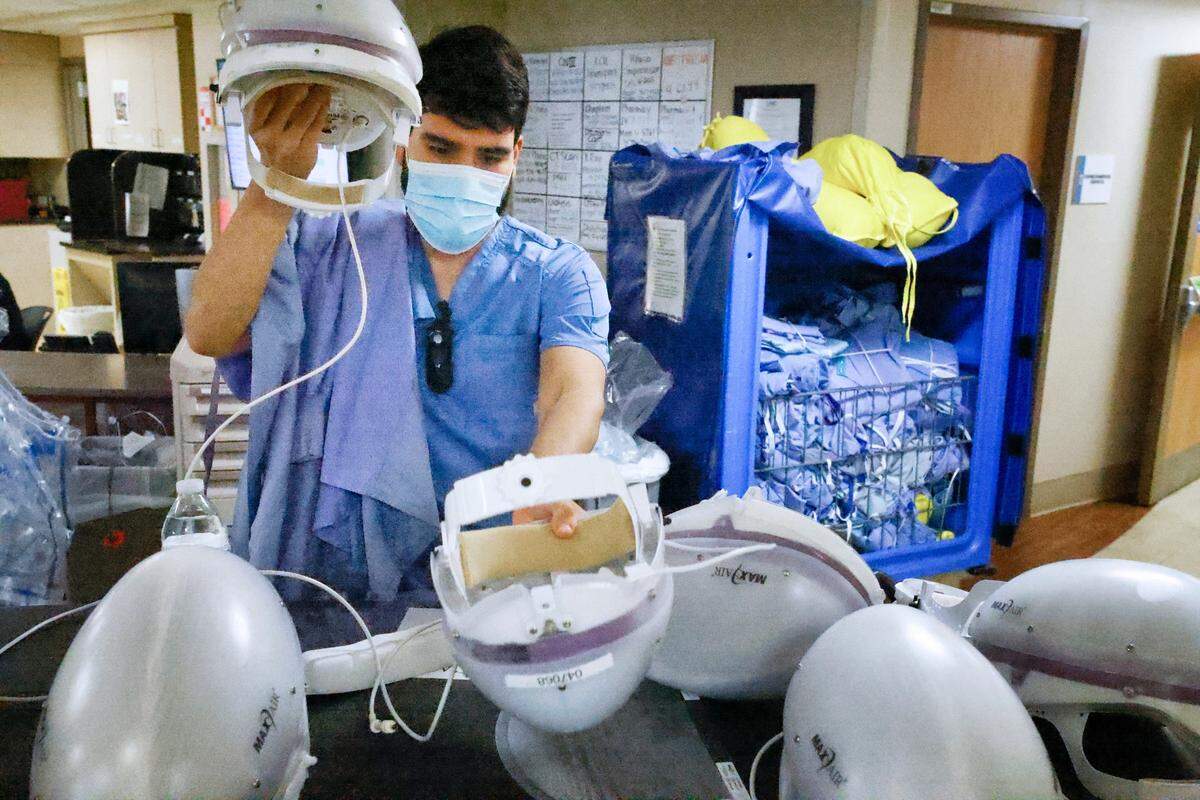
Doctors, nurses and other staff who enter the zone must wear gloves, gowns, face shields and N95 respirator masks and remove them when they come out. Going back to wearing this personal protective equipment or PPE for hours on end is draining on hospital workers, says Tracy Carroll, director of nursing for medicine, oncology and heart and vascular at UNC.
“You miss that personal touch, and being able to communicate clearly and see facial expressions,” Carroll said. “So much of your communication is non-verbal, but our patients and staff don’t have that opportunity because of the PPE.”
The sickest COVID-19 patients have the same problems this summer as they did at the pandemic’s peak last winter: difficulty breathing and absorbing enough oxygen in the lungs, to the point where some need mechanical ventilators to breathe for them.
“The severity of this respiratory failure is so much higher with COVID than with any other illness,” Maguire said.
But one change this time around is that patients are much younger than they were earlier in the pandemic. In January, those age 60 and older accounted for about 70% of people hospitalized with COVID-19 in North Carolina; now it’s less than 50%, according to the state Department of Health and Human Services.
Infectious disease experts say that’s mostly because young people are less likely to have been vaccinated. About 84% of people 65 and older are fully vaccinated in North Carolina, compared to about 58% of adults 18 and older overall, according to DHHS.
More than half of the COVID-19 patients in the UNC ICU are under age 50, Culp said, with some as young as their late teens. Many were healthy before COVID, without underlying health conditions that would aggravate their illness.
“When you’re admitting people who are younger than you, and seeing what they’re going through, it is hard,” she said.
Hospitals facing capacity problems
UNC’s internal forecasts show that the number of COVID-19 patients needing hospitalization will continue to rise until early October, given current trends. That could change, of course, depending on factors such as vaccination and measures to prevent spread of the virus.
But UNC Health is already facing capacity challenges. Culp said her ICU has stopped taking any COVID-19 transfers from other hospitals.
“We get a lot of referrals from other hospitals, smaller hospitals, and we’re unable to take them right now because we don’t have the capacity,” she said.
UNC is not alone. Duke University Hospital in Durham also has waiting lists for COVID-19 and non-COVID-19 patients from other hospitals, said Dr. Lisa Pickett, the chief medical officer. The increase in COVID-19 patients has meant fewer people accepted from those lists, Pickett said.
“There are patients who want our care who we cannot help,” she said.
Pickett occasionally works in an ICU at Duke caring for people with COVID-19. Like others, she’s frustrated by the sudden surge in the virus and fervently hopes more people get vaccinated.
“We thought that once we got to the point of having vaccines available, it was like the finish line,” she said. “And in many ways we’re right back where we were. It’s just sad to us to go back to all of those terribly ill people, especially at a time when there is a vaccine available.”
This story was originally published August 16, 2021 at 8:37 AM with the headline "In one NC ICU, optimism about COVID replaced by sadness, dismay: ‘It was preventable’."