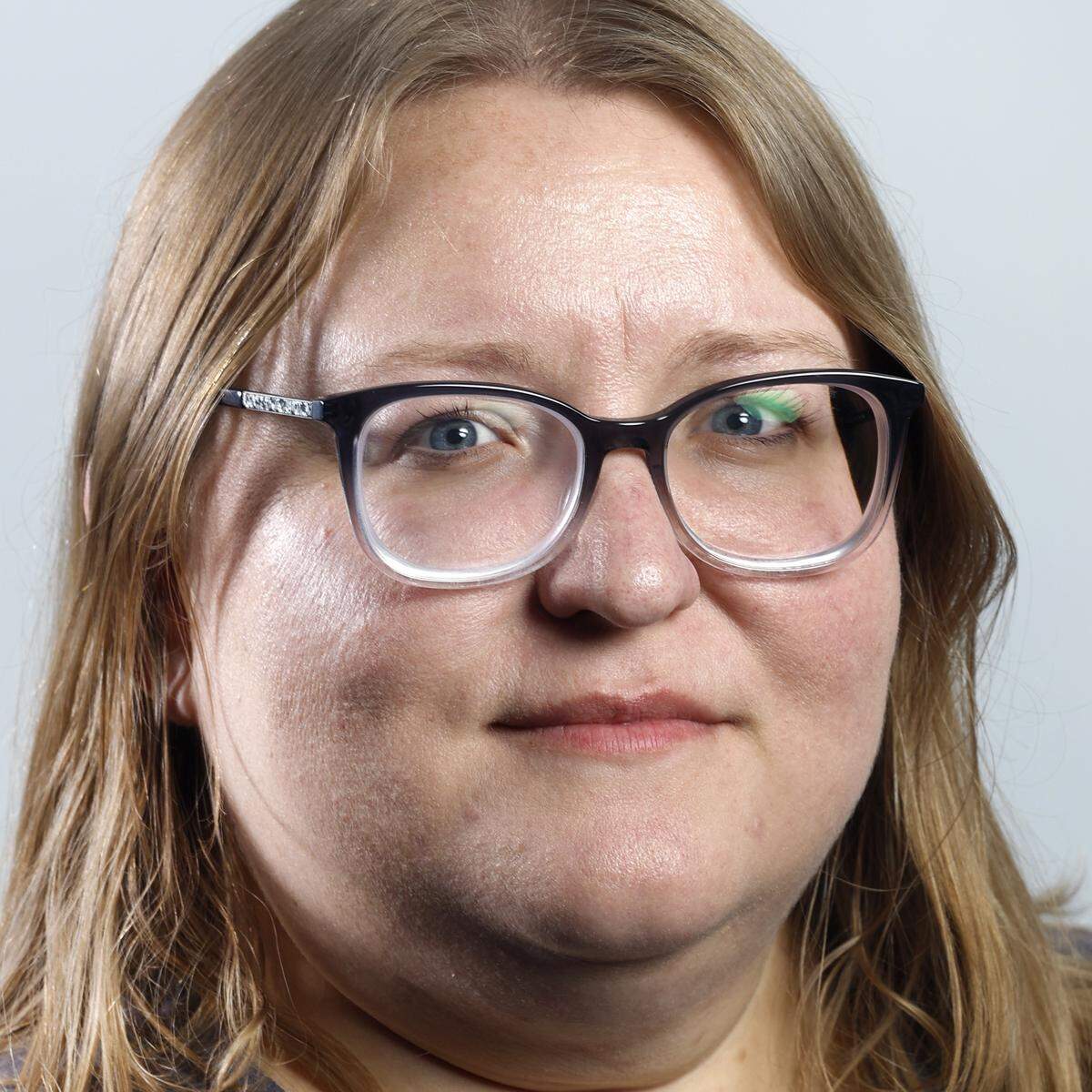
We asked what questions you had for Raleigh’s new police chief. And then we asked them.
Estella Patterson was sworn in Thursday as Raleigh’s 30th police chief, succeeding Cassandra Deck-Brown, who retired after 33 years with the police department.
Patterson, 49, was previously deputy chief of the Charlotte-Mecklenburg Police Department. Raleigh City Manager Marchell Adams-David chose her from among 31 people who applied for the high-profile job.
The News & Observer asked a diverse group of community leaders and organizations what questions they had for the new chief. We then asked Patterson some of their questions during a brief interview Friday.
Some of the questions and answers have been edited for length and clarity.
Community engagement
N&O: Christina Jones, chair of the Raleigh Citizens Advisory Council, and others want to ask about community engagement. What does community outreach look like for the police department?
Patterson: Community engagement, to me, is RPD officers fully embedded in the community. And by embedded I mean that every officer is what I call a neighborhood officer ... checking in with different members of the community to see how they are doing. Connecting a name with a face. Building a rapport with the community.
One of the things I talked about yesterday, in my ceremony, was that I want to make sure that we are building strong trust and partnerships with the community. So, for me, community engagement is being in the field, being out in the community, connecting with the community. And then being at those events with the community.
It is also having the conversations, those hard conversations with our community leaders about what we are seeing in our underserved communities and communities of color.
Over-policing
N&O: Kristin Beller, president of the Wake County chapter of the North Carolina Association of Educators asked what’s your vision for creating safe communities in Raleigh and eliminating the over-policing of majority Black and brown neighborhoods, particularly in areas surrounding our public schools?
Patterson: We have seen in history that there is over-policing in some parts of our community. And over-policing, to me, is defined as enforcement actions. Stopping someone. Stop and frisk. A police officer indicating ‘You look like a suspect.’ That kind of thing.
I feel like we have to get away from that. I think the better approach is to just be engaged with the community. Again ‘Hello, I’m officer so and so. This is the area I work. This is the area I patrol. I want you to know who I am so when there is an incident in the community you can call me. And you can reach out to me and I will make the necessary connections I need to get you the resources you need.’
As it relates to schools, I think officers in schools and around schools is so important. I know there have been conversations about whether we should have (school resource officers). I think it’s critical because that presence of the officer allows the students to humanize the officer but also provide information about what is happening.
It is key that the community feels comfortable speaking to police officers about what is happening in the community, rather than taking an approach of ‘us versus them.’
Transparency
N&O: Rolanda Byrd, executive director of Raleigh Police Accountability Community Taskforce, got involved with the organization after her son was shot and killed by a Raleigh police officer. She asked about transparency in the police department. What are two or three things you plan to do in the next six months to increase transparency?
Patterson: One of the things is for me to go and meet community members. Explain to them who I am, what my goals are for the organization and also for the city of Raleigh. Making sure we’re a safe city. Making sure our violent crime is really addressed and starting to be reduced. I think that if people know who I am. If they see me, that’s the first step in transparency.
(Another) way that I feel we can be transparent is by ensuring our body-worn camera footage is released as soon as we can release it. We have to go through court mandates for that, but I would be in favor of any legislation that would allow footage to be released sooner. That the chief of police would have that authority sooner, rather than going through the court process. I think that builds trust, and I think it helps us be more transparent when things occur.
Black Lives Matter
N&O: Dawn Blagrove, executive director of Emancipate NC, asked if you believe Black Lives Matter? And will you say publicly that Black Lives Matter?
Patterson: As far as I am concerned, all lives matter. In our community, it is so diverse. It consists of so many different people. I want to make sure, as your chief, that I am addressing all aspects of our community. Our Latinx community. Our Asian community. Our LGBTQ community. Our Black community. Our Caucasian community. Our complete community. I won’t single out a just particular community. I want to make sure I am inclusive of all communities.
Misdemeanors vs. citations
N&O: Kerwin Pittman, a member of the N.C. Taskforce for Racial Equity in Criminal Justice, asks about encouraging citations in lieu of arrests or misdemeanors. Will you personally encourage citations over misdemeanor arrests, including for marijuana charges?
Patterson: That’s an area I’d have to explore once I am in the seat. Once I have more data. Once I have more analytics to see where we are going. And also to see where legislation is going in the state. Right now, officers have that discretion. I don’t want to take away discretion. I would have to research a little bit more to see exactly where I lie with that.
N&O: Did the Charlotte-Mecklenburg Police Department have a policy on that particular issue?
Patterson: In Charlotte, officers had that discretion. It wasn’t mandatory that you would issue a citation in lieu of an arrest of a particular offense. Some misdemeanors traffic offenses, that was the direction we went, and there were some regulatory offenses as well. But in terms of marijuana in Charlotte, there wasn’t anything definitive.
Youth programs
N&O: Amirah Saintyl, operations coordinator of Haven House Services, wants to know how the police department can bridge the gap with youth-serving nonprofits. Her specific question: What programming and policies do you hope to implement within the department that will address the complex needs of youth in Wake County?
Patterson: One of the things is looking at a youth diversion program. I think if we can find a way (to help) when young people commit offenses, first-time offenses — and there might be some nonprofits in Raleigh already working on that; I need to learn more about that — but if there is an opportunity for the police department to partner with nonprofits and youth groups to try and build a diversion program that is systemic throughout Wake County, I think that would be a great thing for minor offenses.
And then, secondly, have our nonprofits be part of the police department. In the sense of as we have advisory boards, as we start to build community boards, that they would be a part of that. To provide input on programming, things we can do that ... can help our young people have more activities and have more things to do in the community.
It is disappointing and distressing when I see the number of our youth in shooting incidents. Not sure in this area but across the nation. Very concerning to me. So if we can find from when our youth are very young, talking to them, mentoring them, pushing them to another direction, I think that is going to pay dividends to us, for us in the future of the community.
Officer recruitment
N&O: This is one of the questions we got the most, including from Wake County District Attorney Lorrin Freeman and from Rick Armstrong, a former Raleigh police officer speaking on behalf of the Raleigh Police Protective Association. What steps will you take to improve the morale, recruitment and retention within the police department?
Patterson: First and foremost, our personnel, not just our police officers, but our personnel at RPD need to feel appreciated. They need to know, as their chief, I support them. And I back them. And when they do things properly, right, within the law, I am supporting them. Completely. That is huge.
Aside from that, the biggest thing right now is we have to hire. We have to get more police officers.
I want to make it clear that hiring more police officers doesn’t mean we are enforcing more. It’s the presence of our officers being out in the field. Being out in the community. Individuals feeling comfortable with the police. Rebuilding those relationships that have been broken down. That is so important for us to do.
But morale really starts to suffer when officers are working around the clock. Long shifts. Overtime. Then they have to go to court. They have to go to training. That really starts to wear on individuals. I am fully aware of that. So that is why it is so important to me that, if we’re going to build morale, we have got to hire more police officers. We are going to do a very aggressive recruitment campaign to really try to hire individuals.
Internally, I am looking at structures. I am looking at how we can better use the assets that we have within the organization. And if that means we have to move around some units in order to do that, I am willing to take a look at that as well. But morale is a big thing, and it’s not just at RPD. In Charlotte, we were 200 officers short there. In Raleigh, we are 100 officers short. So we really need to work on that. And I am fully, fully committed. It’s the biggest thing I’ll tackle I think within my first 100 days.
This story was originally published August 15, 2021 at 8:00 AM with the headline "We asked what questions you had for Raleigh’s new police chief. And then we asked them.."