‘A good plan’: Raleigh physician who assisted in zebra cobra capture shares details
Nearly a week after a spitting zebra cobra was spotted on a porch in a northwest Raleigh neighborhood, there are still few details from Raleigh police about how or when the venomous snake escaped its home.
But we’re slowly learning a little more about how the snake was captured.
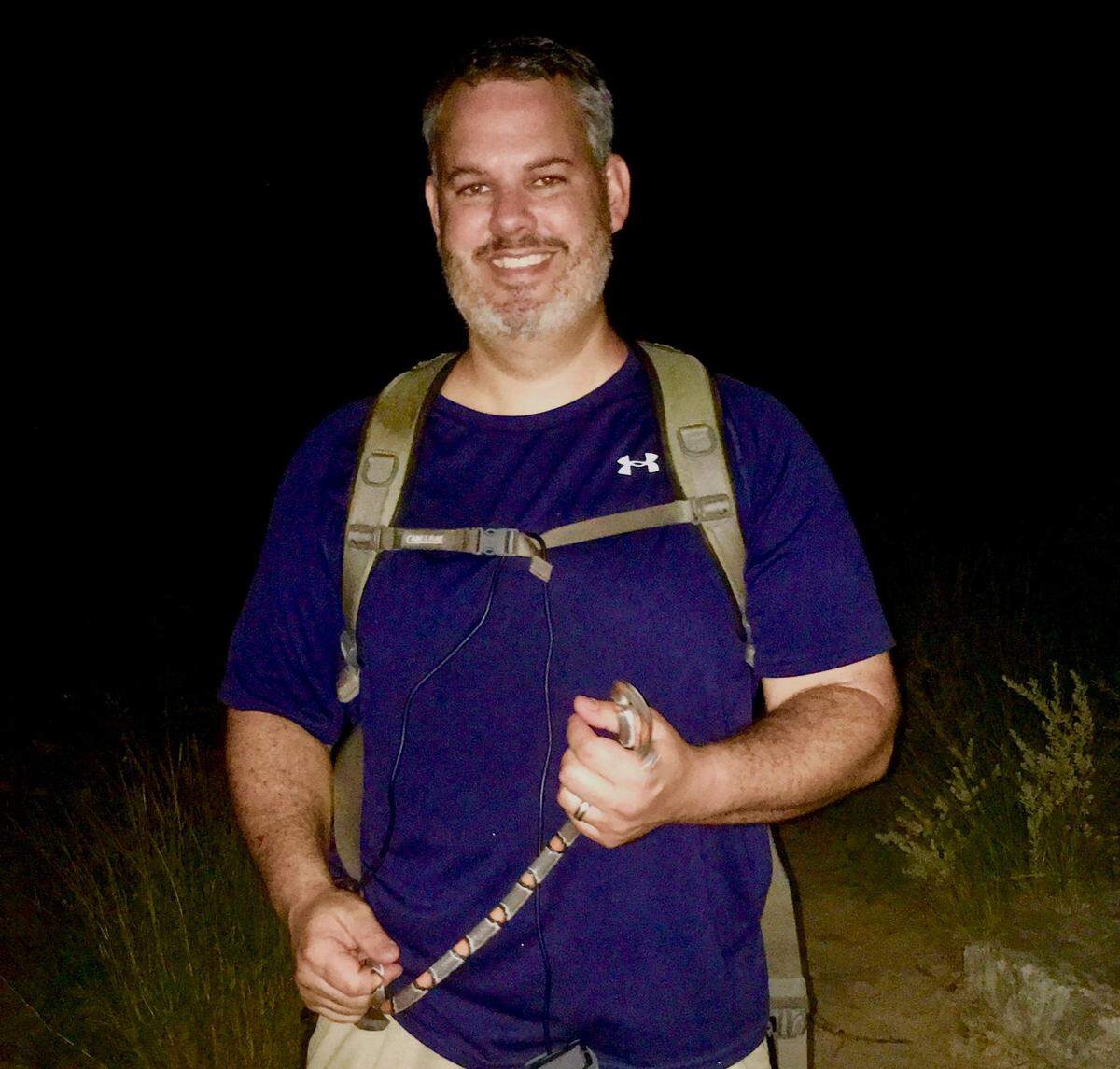
Dr. Ben German, an Emergency Department physician at WakeMed, assisted in Wednesday’s capture and talked to The News & Observer about what happened.
The cobra, which belonged to Christopher Gifford of Raleigh, had been spotted on the porch of another home about a half-mile away and reported on Monday, June 28, prompting a search for the snake. On Wednesday, June 30, the snake was spotted again, at the same home, and the city’s animal control staff and other snake catching experts moved into action.
German’s presence on Wednesday proved valuable, not just because he is an emergency medicine physician who has studied snakes and dealt with lots of venomous bites in the ER, but also because he has traveled to Asia and captured cobras there.
When German found out about the missing cobra on Monday, he figured someone would either catch it quickly, or maybe never catch it at all. When he heard on Wednesday that the snake had been spotted again, and that Wake EMS was on the scene, he offered his medical support services.
“When I got there, it kinda became apparent that I was one of the only people there who had experience with cobras in the wild,” he said.
A waiting game
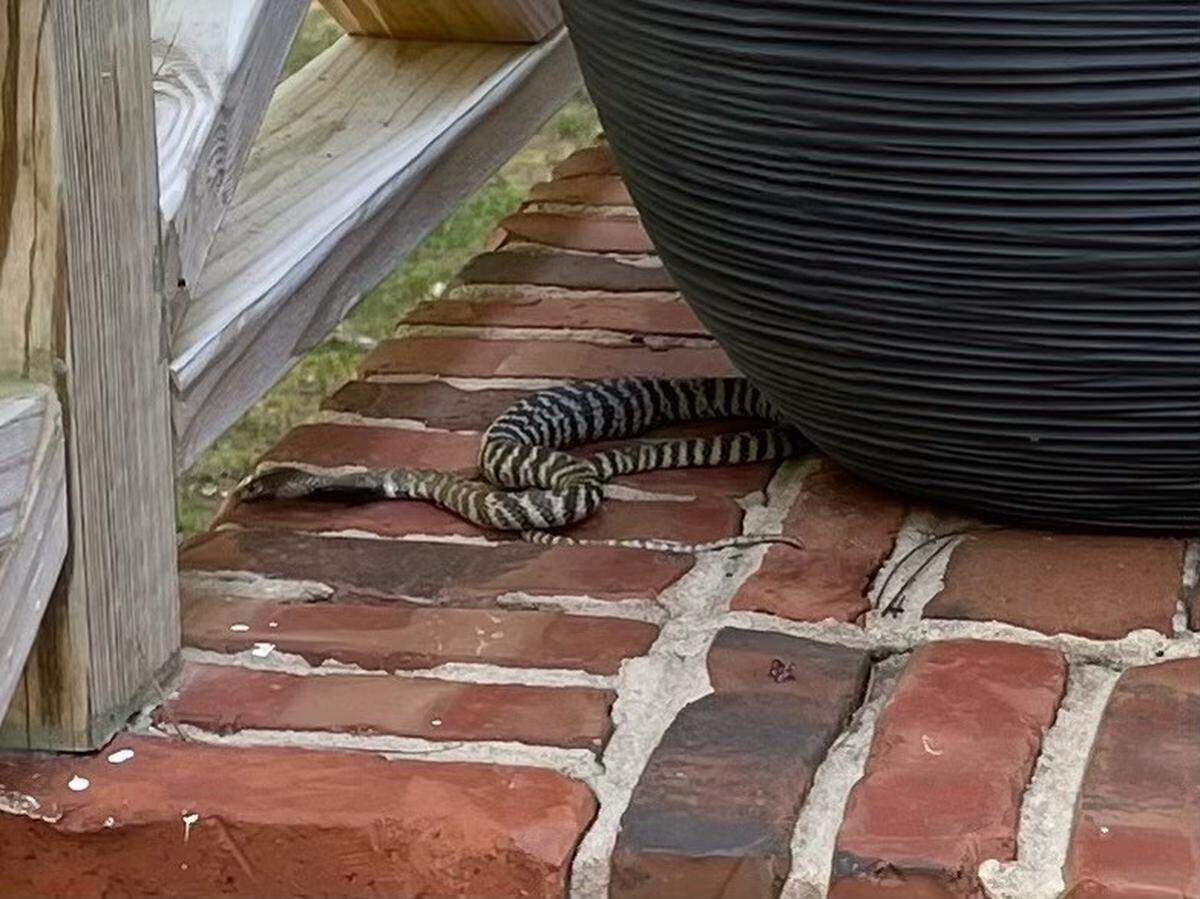
When he arrived on scene, German said the snake was “holed up in a really inaccessible area behind a brick porch.” It would sometimes go deep into the network of crevices it had found, he said, so deep that you couldn’t even see it with a flashlight.
But luckily, the snake had displayed a predictable behavioral pattern of periodically emerging, German said, and thus began the waiting game.
“I know a lot of people were frustrated because it looked like people were just standing around and watching the snake, but it was in a very inaccessible area where you couldn’t see it,” German said.
“The plan that the animal control and other professional snake persons on scene came up with, was to wait for the snake to reemerge and then they had a plan to capture it.”
The person in charge of the capture was Jen Davis, who German said “has a ton of experience with venomous animals,” plus an EMS and animal control background.
Davis and the other animal control people had a good plan in place, German said. But the plan relied on patience.
“I know that is kinda frustrating to people sometimes, but sometimes patience is the best plan,” he said.
A sticky capture
It was Davis’ idea to set up glue traps around the foundation of the home, German said, because there were so many places where the snake could enter and leave through the access point it had found. The glue traps were there to keep the snake from getting back into its deep network of crevices once it emerged.
Around 8:30 p.m., right around sundown, when snakes become more active, the snake came out, got stuck on the glue trap, and was caught.
“We used snake tongs to take the glue trap with snake and get it into a bucket,” German said. “Then it became a matter of getting the snake off the glue trap.”
Many people are familiar with glue traps that catch small rodents around their homes, and those stories usually have very sad endings.
German said the glue traps used for the zebra cobra were very similar to the kinds homeowners and exterminators use, with the difference being that the snake was removed from the trap safely and right away (mineral oil is the best method, he said), and that’s why it’s OK now.
“We really didn’t want to hurt the snake,” German said. “I know a lot of people think that the snake should have just been killed, but that’s a last resort. If you can capture the animal without harming it and get it to a secure place and no one gets hurt, that’s the best possible outcome.
“Luckily, it all worked out. It was a good plan that Jen had in place,” he said.
German said his role was basically to help hold the snake with the tongs while Davis “extricated it from the glue trap” — a job that not many would volunteer for, to be sure.
But they did all wear protective gear, German said.
“The other aspect to this is that it’s a spitting cobra, and I know a lot of people were excited about that,” German said. “So we all wore eye protection. And the snake didn’t spit — I think mostly because the glue trap had immobilized it and it wasn’t able to.”
German said that the last he heard, the snake was doing well.
“It’s in a secure facility,” he said. “It’s not in the Triangle area and hopefully it will go to a zoo or a venom lab, or something like that.”
Captured cobra was not a baby
As for the rumor circulating that there might be other escaped cobras on the loose, German said he must defer to authorities to give an official response.
“But my impression was that they were very confident based on their investigation that there were no other venomous snakes that were loose in the neighborhood,” he said. (Not counting the area’s plethora of copperheads, of course.)
The captured cobra appears to be about a year old, according to Raleigh police, and that’s an estimate with which German agrees.
Upon seeing the relatively small size of the captured cobra — at least when compared to circulating videos and photos of a massive zebra cobra also owned by Gifford — many people theorized this escaped snake could be a baby.
But German said this snake was definitely not a baby, and that the snakes don’t reach full size at any particular age, the way most mammals do — they will continue to grow their entire lives.
Snakes are ‘master escape artists’
Though he’s loved and studied snakes his whole life, German said he doesn’t personally keep any venomous snakes — but it would be perfectly legal to do so in North Carolina, if he was so inclined.
Under North Carolina law, as long as a venomous snake is confined to a locked and clearly labeled cage, and a set of emergency instructions is kept handy, nothing prohibits anyone in Raleigh from keeping, buying and selling them at will.
Gifford has 467,000 followers on his TikTok account, where he has chronicled his large and deadly collection of rattlesnakes, Gaboon vipers and even a green mamba that bit him in March, requiring antivenom from a South Carolina zoo.
In some videos, Gifford is seen packing baby vipers into containers for transport, or unpacking fresh shipments of snakes on the backyard patio of the home where the 21-year-old lives with his parents.
Raleigh police have so far not answered questions from media about how or when Gifford’s zebra cobra escaped, but German said keeping venomous snakes safely contained is “a challenge.”
“When someone is keeping a large number of snakes, each snake you keep is an escape potential and snakes are just master escape artists and they’re good at fitting through tiny spaces,” German said.
In some states, such as Florida, venomous snakes must not only be kept in secure containers, they must also be kept in snake-proof rooms, German said.
“You should have multiple layers of security if you’re keeping venomous animals,” German said.
“I’m not into the captive husbandry of them,” German said.
“I’m not saying I completely disagree with it in certain cases,” German said. “But unless somebody is extremely responsible and does everything the right way, I think it’s probably a bad idea.”
This story was originally published July 3, 2021 at 2:42 PM with the headline "‘A good plan’: Raleigh physician who assisted in zebra cobra capture shares details."