As a landmark building comes down in RTP, its owner says it won’t be forgotten
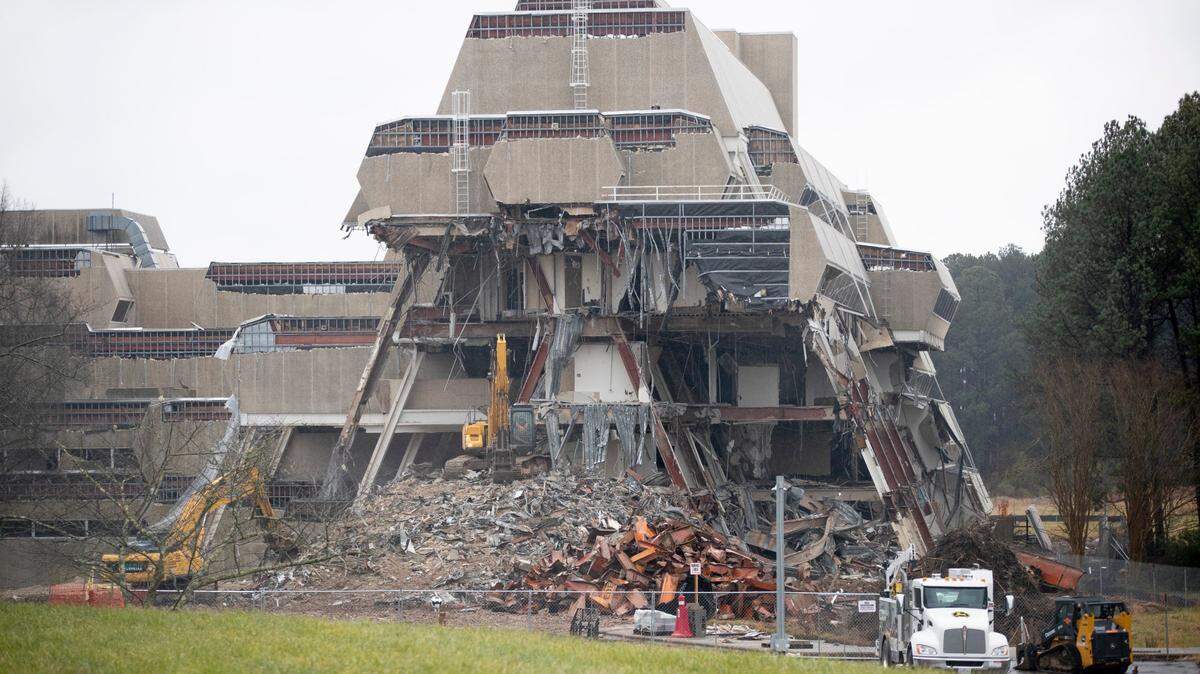
A landmark building that helped raise the profile of Research Triangle Park and where scientists pioneered the use of AZT to prolong the lives of countless people infected with HIV is coming down.
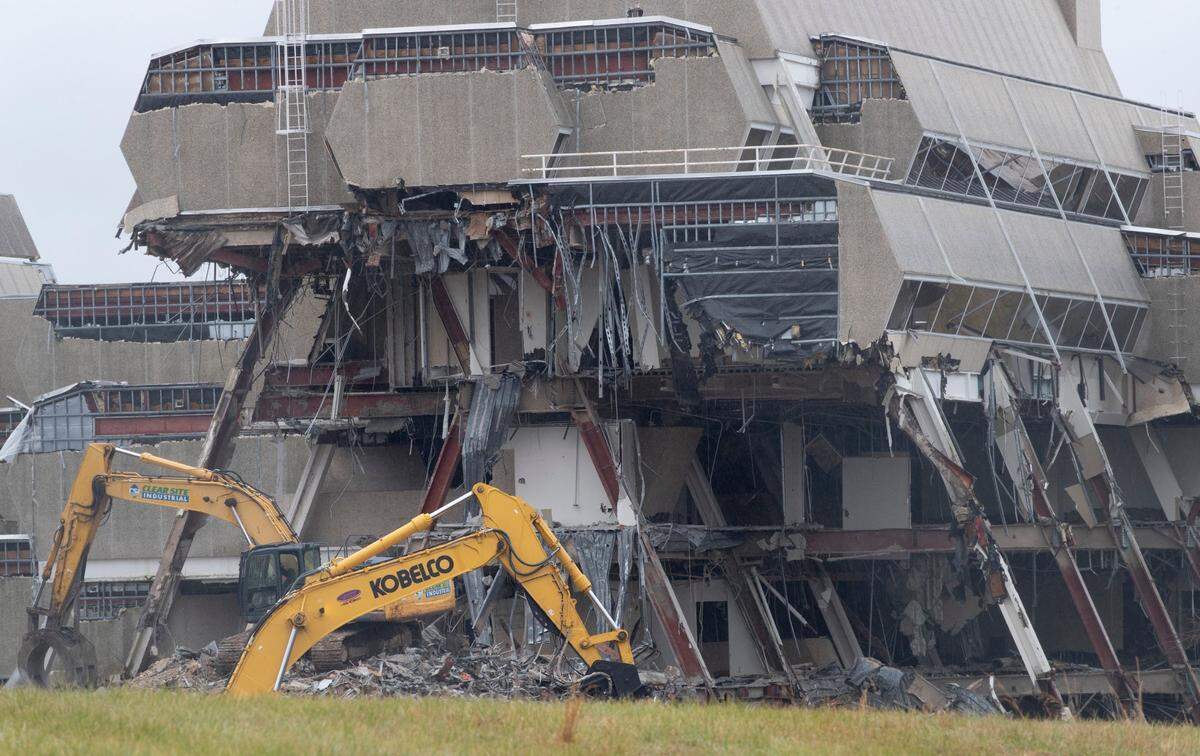
The dismantling of The Elion-Hitchings Building, near where Cornwallis Road meets the Durham Freeway, has been underway internally for several months. But now the demolition has reached the point where workers are pulling the building apart and hauling away pieces by the truckload.
Fans of the building and its architect, Paul Rudolph, had hoped to persuade its owner, United Therapeutics, to save it because of its architectural and historical significance. The Paul Rudolph Heritage Foundation, which works to preserve and protect the architect’s work, organized an online petition that was signed by more than 5,400 people.
But United Therapeutics, which acquired the building when it purchased 132 acres from GlaxoSmithKline in 2012, had already obtained a demolition permit when the petition was created. The company studied how it might reuse the building but concluded it is “unsafe, not environmentally sound, and functionally obsolete,” according to spokesman Dewey Steadman.
Steadman said the site will be cleared by April and that United Therapeutics is still planning how it will be used in the company’s growing RTP campus.
“What is so special about this site is the groundbreaking research and life-saving medicines that were developed here,” he wrote in an email. “That is a legacy that United Therapeutics looks forward to carrying on in the years to come.”
The pharmaceutical company Burroughs Wellcome hired Rudolph to design the building when it decided to move its headquarters from suburban New York to RTP in 1969. Rudolph was known for a style of architecture called Brutalism, which produced spare, sometimes hulking, structures often made of concrete.
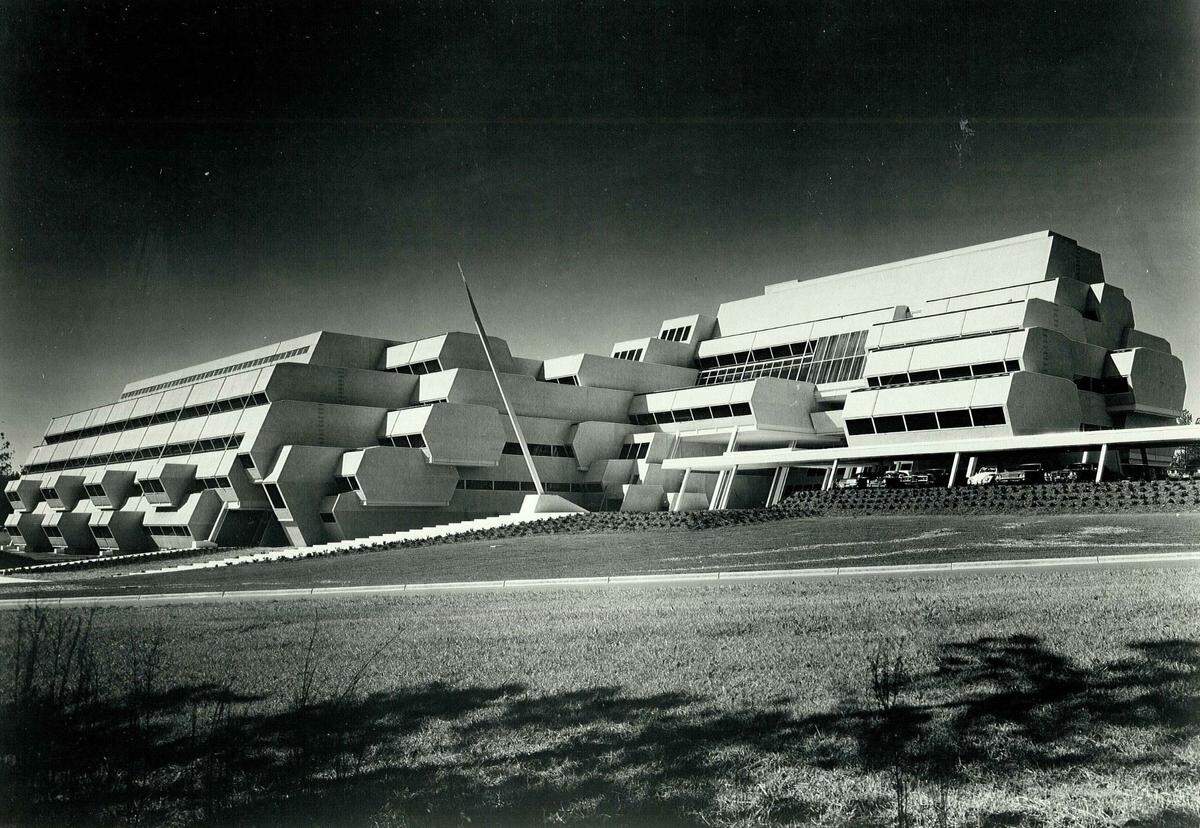
The building stood out in the Triangle when it opened in 1972. Perched on a small hill overlooking the Durham Freeway, the A-frame structure had terraced floors and angled walls and windows. Some called it innovative and futuristic; others simply found it ugly.
Burroughs Wellcome built several additions to the original structure in the 1970s and early 1980s. In 1988 it named the building for Gertrude Elion and George Hitchings, research chemists with the company who shared the Nobel Prize in Physiology or Medicine that year.
Elion and Hitchings pioneered the use of drugs to attack the DNA of cancer cells, bacteria and viruses to prevent them from growing and reproducing, starting with a type of leukemia in the early 1950s. Colleagues at Burroughs Wellcome used their approach to develop AZT in the 1960s to treat cancer (it didn’t work), then successfully applied the drug to HIV and AIDS two decades later.
Burroughs Wellcome merged with Glaxo and later with SmithKline Beecham to become GlaxoSmithKline. GSK built other buildings at RTP and put Elion-Hitchings on the market in 2010. The last GSK employees moved out in 2011, and United Therapeutics never moved anyone in.
Steadman said United Therapeutics plans to memorialize the legacies of Elion, Hitchings and Rudolph in whatever new building goes on the site. The new building also will be named for Elion and Hitchings, and there will be a Paul Rudolph Foyer inside, he said.
Steadman said United Therapeutics has been recycling and salvaging what it can from the building. He said the company recently offered to donate a couple of big light fixtures to NC Modernist, a nonprofit that works to document, preserve and promote the state’s residential Modernist architecture.
George Smart, the group’s founder and executive director, said he’s not sure yet it will be able to accept such large pieces. While he’s sad to see the Elion-Hitchings Building go, Smart said he believes United Therapeutics tried everything it could to save it.
Smart described the company as a strong advocate for good design and noted that its founder and CEO, Martine Rothblatt, owns a house designed by Rudolph in Florida. He says company officials have told him they intend to make good use of the site.
“The company has promised to put something architecturally significant back on that site,” he said in an interview. “So I’m very much looking forward to an iconic building for Research Triangle Park.”
The online petition to save The Elion-Hitchings Building remains active, drawing new signatures even as the building comes down. Clifford Pearson signed over the weekend and left a message explaining why.
“I’m signing this petition because great architecture inspires us to see the world in new ways,” he wrote, “something that is particularly important for the pharmaceutical industry and corporate America in general.”
This story was originally published January 12, 2021 at 2:37 PM with the headline "As a landmark building comes down in RTP, its owner says it won’t be forgotten."