Campus may be empty, but the music from Duke Chapel’s bells doesn’t stop
Every weekday afternoon, Joey Fala walks the 169 steps that take him two-thirds of the way up the tower at Duke University Chapel, high above the campus.
He opens two small windows, not to see, but to hear. He sits at a wooden keyboard unlike any other, with large wooden keys spaced inches apart. And at 5 p.m., he makes music with his fists and taps into almost a century of tradition.
Fala is Duke’s carilloneur, responsible for the daily playing of the 50-bell carillon that hangs 20 feet above him at the top of the tower. Even as the campus has largely shut down during the coronavirus pandemic, the end-of-workday concerts have continued: Fala, and his carillon, have been deemed essential.
One concession to current circumstances: the recitals are now broadcast live on Duke Chapel’s Facebook page.
“It’s been a huge benefit and blessing to the campus to have the bells continue to sound, even when the campus is a lot quieter than normal,” said Zebulon Highben, Duke’s director of chapel music.
The 5 p.m. concerts go back to the installation of the carillon, in 1932. For more than 50 years, that duty fell to Sam Hammond, for whom the carillon was named when he retired in 2018.
The ritual has not changed: a brief snippet of hymn known as a forestrike; the tolling of the carillon’s largest and deepest bell, the 5 ½-ton bourdon, five times to mark the hour; and then about 15 minutes of music that radiates out over the campus.
The selections are different every day and include everything from hymns to pieces written specifically for carillon to adaptations of classical and modern music. (Hammond kept a log of every piece of music he played over 53 years.)
Typically, the music matches the church season — at the moment, that’s Easter. But on May 4, also known as May the Fourth, Fala played a suite of music from a more recent mystical phenomenon, Star Wars.
There’s only one rule: The Friday recital ends with the playing of the alma mater, “Dear Old Duke,” often improvised in the style of the music that was played that day, somber during Lent, upbeat during more celebratory days.
“It’s always a surprise, other than the striking of the hour and ‘Dear Old Duke’ on Fridays,” Highben said. “You don’t know what he’s going to play. It can be fun for people with that kind of music trivia knowledge, to listen and guess what the selections are.”
Playing with fists and feet
Playing the carillon is unlike any other keyboard instrument. Duke’s is entirely mechanical and manual, with the keys — called batons — and pedals connected directly to the clappers inside the stationary bells with steel aircraft cabling.
Some carillons are electrical, and can be played with an electronic keyboard, or they’re even automated. Not this one. If Duke’s bells are ringing, someone is in the tower pounding on the batons to ring them. If the power went out, Fala could play in the dark.
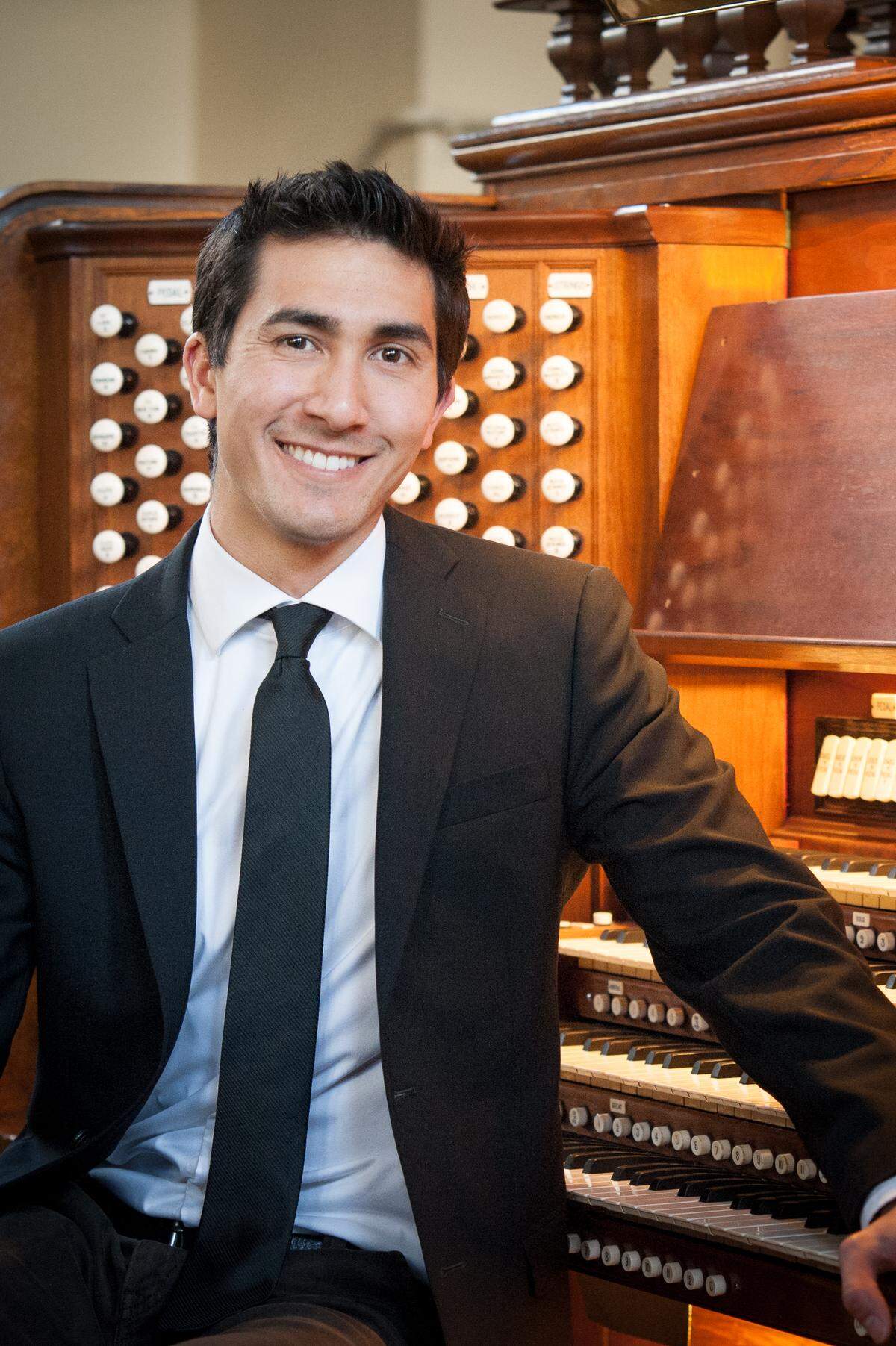
“It’s a very physical instrument,” Fala said. “You play the batons with a closed fist and with your feet on the pedals. The batons are several inches apart, so playing chords is very difficult. You have 10 fingers but only two fists. In the lower register, those are very heavy keys to be pressing.”
There’s also a practice keyboard in the playing cabin, identical to the real keyboard, except they ring tiny glockenspiel bars instead. Practice would otherwise be a bit public and awkward.
Fala grew up in Hawaii and came to Duke almost three years ago for a two-year organ fellowship, having previously dabbled in the carillon as a music student at Yale. When Hammond retired, Fala was pressed into interim service, along with a Duke administrator, Paul Bumbalough, who also plays the instrument.
Despite the differences between the carillon and organ, they share one thing in common: In both, the musician is disconnected from the instrument, played from a remote area without the physical bond to the resonant sound.
The purpose of Duke’s organ study program is largely vocational, designed to produce finely polished church organists. Fala has been playing at Chapel of the Cross, an Episcopal church in Chapel Hill famous for its music program and state-of-the-art pipe organ, but he agreed to retain his carillon duties at Duke.
Fala has yet to go through the extensive process to become a guild-certified carillonneur, which requires a final, public recital for a jury.
But since the pandemic began, with no church services to accompany and necessary restrictions on access to Duke Chapel, Fala has been the lone carillonneur at Duke, every weekday and before and after Duke Chapel’s Sunday morning services.
“During this time of (the coronavirus) when the carillon has been getting a little more attention than usual because it’s one of the few offerings of the chapel at this time, it’s given me a deeper sense of responsibility,” Fala said. “Which in turn has encouraged me to invest myself a little more into learning it and bettering my artistry of it.”
Marking the time through the ages
The purpose of church music has always been spiritual in nature, designed to provoke a sense of awe or uplift the soul. The 5 p.m. playing of the Duke Chapel carillon also ties into a more mundane, earthbound pragmatism as well: the marking of time, the tolling of the hour. Church bells have always done that, out of necessity for centuries before clocks were commonplace.
In times of disruption like this, the carillon provides a similar kind of touchstone, the kind we now find we lack. The daily recital is a musical Rubicon between work and leisure.
“It’s about marking the rhythm of the day,” Highben said. “Even now, when most of us are not hearing it in person. We’re hearing it through the livestream. But that’s what people are doing: They’re stopping what they’re doing, opening up the chapel’s page and listening to the livestream of Joey’s playing to mark the traditional end of the workday and movement into evening.”
“Even over technology, over the internet, the carillon at the chapel is still doing what carillons have always done,” Highben said, “which is helping people mark time.”
On a sunny Thursday afternoon in May, Duke students denied their graduation ceremony took photos in front of the chapel wearing their caps and gowns. Above them, Fala played the Processional and Whimsy from “Serenade I” by Ronald Barnes, a 20th-century carillonneur and composer, and a selection from “Let All Things Now Living” by Geert D’hollander.
At 5:15, the final note was played. Silence descended just as the deep resonant chime of the carillon had sounded moments before. Birds chirped and leaves rustled in the breeze. A car door slammed on the otherwise deserted campus. In the quiet, it was almost as if the bells still echoed, if only in the mind.
Moments later, Fala, in shorts and a blue Duke polo shirt, walked across the chapel grounds and disappeared into the sparse collection of unaware passers-by who only minutes ago had been his audience.
The sun was still high in the sky, but another evening had begun.
This story was originally published May 21, 2020 at 1:37 PM with the headline "Campus may be empty, but the music from Duke Chapel’s bells doesn’t stop."