Coronavirus already made travel uncertain; then came Trump’s European travel ban
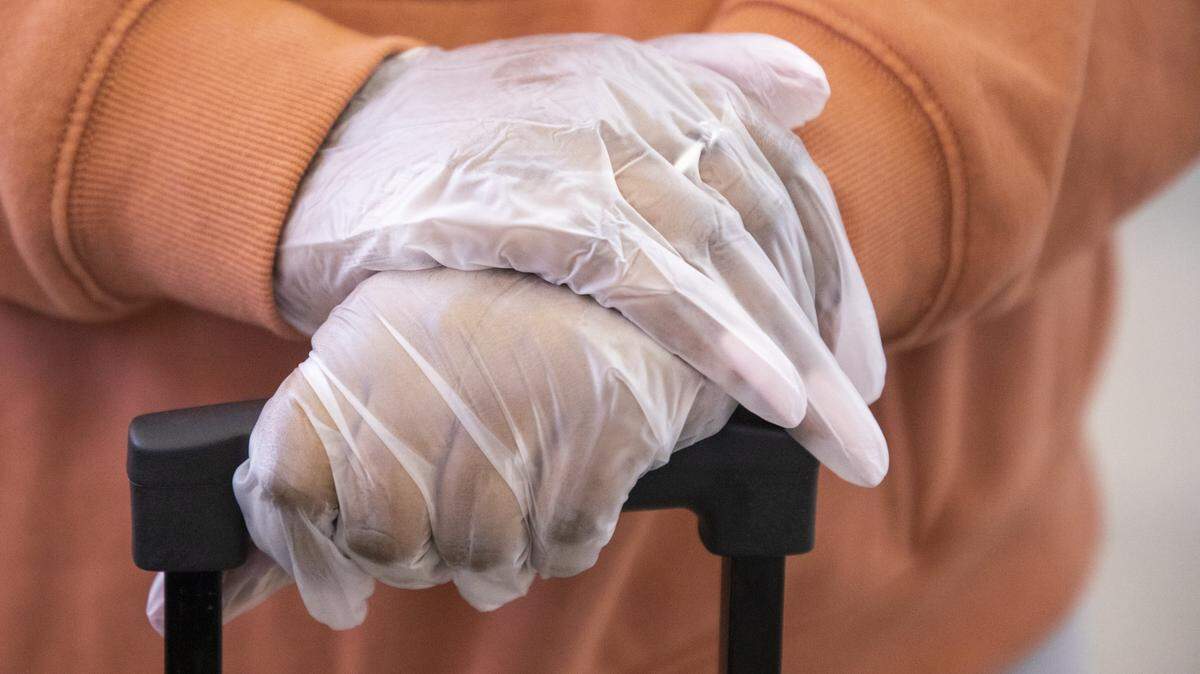
For weeks, the coronavirus has created doubts for travelers, who wonder about the risk of contracting COVID-19 or whether they’ll be prevented from coming home or quarantined when they get there.
The new restrictions on travel from Europe, announced by President Trump Wednesday night, only added to that uncertainty for many people.
Alina Karpenko, who owns a real estate firm in Raleigh, suddenly wasn’t sure if her sister Svetlana would be able to visit this week as planned. Was Russia covered by the ban? Would Svetlana be stopped in London where she is to change planes?
“All of this is so stressful,” Karpenko said Thursday.
The new travel restrictions went into effect at midnight Friday and will remain in place for 30 days, Trump said. They bar foreign nationals from entering the United States if they have been in one of 26 European countries in the previous 14 days. It turns out Russia is not one of them, and the ban also didn’t apply to the United Kingdom.
That will soon change. On Saturday, the Trump administration announced that the restrictions would be expanded to include the UK and Ireland starting at midnight Monday.
Trump said Americans could return from the continent with “appropriate screenings.” The meaning of that wasn’t immediately clear, and when he announced the ban shortly after 9 p.m. Wednesday, Krista Levy of Charlotte began hearing from friends and relatives.
“Within a minute, I had 10 calls or text messages,” Levy said.
Levy’s husband, Reed, was at a ski resort in France, one of the affected countries, with a group of MBA students from Duke University, and they weren’t scheduled to return until Sunday. Krista got in touch with him, and, at 1 a.m. local time in France, he immediately mobilized the students to try to book new flights home and arrange for someone to drive them two hours to the airport in Geneva, Switzerland.
Six hours later, they were on their way, and Reed arrived home in Charlotte, via London and Chicago, around midnight Thursday.
“It’s been a crazy 24 hours,” Krista said.
Travel already down before latest restrictions
Coronavirus began disrupting travel in early February, when demand for flights to and from mainland China, where COVID-19 emerged, fell off. The government’s first travel restrictions, still in effect, forbid foreign nationals from entering the U.S. if they have been in China or Iran the previous 14 days.
The Centers for Disease Control and Prevention also recommended travelers avoid nonessential travel to South Korea and Italy, which also had serious outbreaks. Those warnings and restrictions have now been extended to European countries.
The CDC has not advised against moving around the United States, where more than 1,400 people have tested positive for coronavirus in 45 states and the District of Columbia. But it has published a webpage, www.cdc.gov/coronavirus/2019-ncov/travelers/travel-in-the-us.html, with things you should consider before traveling, including whether you might spread the virus to someone who is older or has a chronic health condition.
Even without any urging from the government, many individuals, universities and companies have cut back on travel. Software maker SAS, for example, decided two weeks ago to restrict all nonessential business travel through April 30.
“Our top priority is the health and well-being of our employees, customers, partners and guests,” said company spokeswoman Shannon Heath. “We have implemented these temporary travel restrictions in an effort to be as preventive as possible.”
The result has been a sharp decline in air travel. Nearly 964,000 travelers passed through RDU in February, up 9.4% from the same month a year earlier, airport president Michael Landguth said Thursday.
But in the first week of March, Landguth said, the number of people going through security checkpoints to board planes at RDU declined 8.3%, according to the Transportation Security Administration.
He said airlines will soon let the airport know how many RDU flights they are cutting from their schedules because of falling demand, but as of Thursday the airport expects traffic will be down 10% in March.
“That is our best forecast,” Landguth said. “I will tell you, this is extremely fluid, almost a minute-by-minute basis.”
Two flights that have already disappeared are RDU’s nonstop flights to Europe. American Airlines announced late Thursday that it was suspending its nonstop flights between Raleigh-Durham International Airport and London from March 19 through May 6. The move is part of a broader reduction in international service in response to falling demand caused by coronavirus, the airline said.
American has not said yet whether it will end the flight earlier in light of the updated travel restrictions announced Saturday.
Meanwhile, the travel restrictions forced Delta to suspend its daily nonstop to Paris last week. The rules allow U.S. citizens to return from Europe, but only through one of 11 major airports where they can be screened for coronavirus. Because RDU is not one of those airports, Delta ended its daily RDU service to Paris after the incoming flight on Friday afternoon.
Delta had already announced earlier last week that it would cut flights in the U.S. and abroad because of lower demand caused by concerns over COVID-19. The company said it would cut domestic capacity up to 15%, and Landguth expects to learn as soon as Friday how that will affect RDU. Delta is RDU’s busiest airline, accounting for about a third of all passengers flying in and out of the Triangle.
Hoping the virus runs its course quickly
These are busy times for travel agents like Shari Marsh of Raleigh, not in booking new business but in helping customers with the trips they’ve already planned. Marsh said even though the travel ban wouldn’t prevent Americans from returning from Europe, it made it easier for some people to decide not to embark on an overseas trip.
“I think there’s a value in having a known versus an unknown,” Marsh said. “We now know, you’re not going to Europe for 30 days. Before it was ‘If,’ ‘Maybe,’ ‘We’ll see.’ And now we know, ‘You’re not.’”
Marsh said many of her clients are now on Caribbean cruises. She expects those will eventually be affected by coronavirus (Viking Cruises announced Wednesday that it would suspend operations until May 1, followed by Princess Cruises which said Thursday that it was docking its ships for 60 days), but for now her cruise passengers are mostly worried about being quarantined when they get home.
Marsh has spent a lot of time recently helping clients decide whether to cancel or delay a planned trip. For those who aren’t scheduled to leave until late spring or summer, she advises they sit tight and see how airlines, tour companies and cruise lines adjust their policies on refunds or rebooking or whether the viral outbreak subsides, as it has begun to do in China.
“Do we think that it’s going to be okay in July?” Marsh said. “Well, if you look at how things have changed in China, then you believe that, yes.”
Landguth at RDU is also looking to China for signs that the effects of coronavirus will not last for months, particularly as governments, sports leagues and other institutions in the U.S. cancel events to try to stem its spread.
“That cycle looks like it’s about 60 days, if you believe the information coming out of China,” Landguth told members of the airport’s governing board Thursday. “You also have Italy that’s already done a quarantine as well. They’re going to do that for 30 days. We’ll see at the end of that if they feel like they’ve got their hands around it. If they do, then you have two different countries that are starting to show that this could be kind of a tight window.”
This story was originally published March 12, 2020 at 7:31 PM with the headline "Coronavirus already made travel uncertain; then came Trump’s European travel ban."