
Sobriety no longer required for homeless people seeking shelter in downtown Durham
Changes are coming to Durham’s largest downtown homeless shelter.
Urban Ministries of Durham offers food and shelter to the city’s homeless population. The nonprofit receives public and private support. In the last fiscal year, 729 people received shelter.
Now those who seek shelter won’t be turned away just because they are under the influence of drugs or alcohol. Instead, admission will depend on people’s behavior, not their sobriety.
Executive Director Sheldon Mitchell told the Durham County Board of Commissioners on Monday that at one point, everyone in the shelter got a breathalyzer test, and if it was beyond a certain level, they would be told to leave.
However now, if someone is not aggressive, not causing problems and just going to their bed, “we’re not addressing that because we know it’s going to be a challenge for some folks with us,” Mitchell said.
Instead, staff members may talk with the person later about helping connect them with resources.
“I think that’s had a large impact on individuals for one, being able to work toward being [permanently] housed,” he said. Otherwise, Mitchell said, people seeking shelter are just sent back out on the street.
Also, some staff positions have also been renamed: from monitors to client engagement advocates.
Mitchell said the agency is looking at other ways to reduce barriers to helping people as well.
Cafeteria upgrade
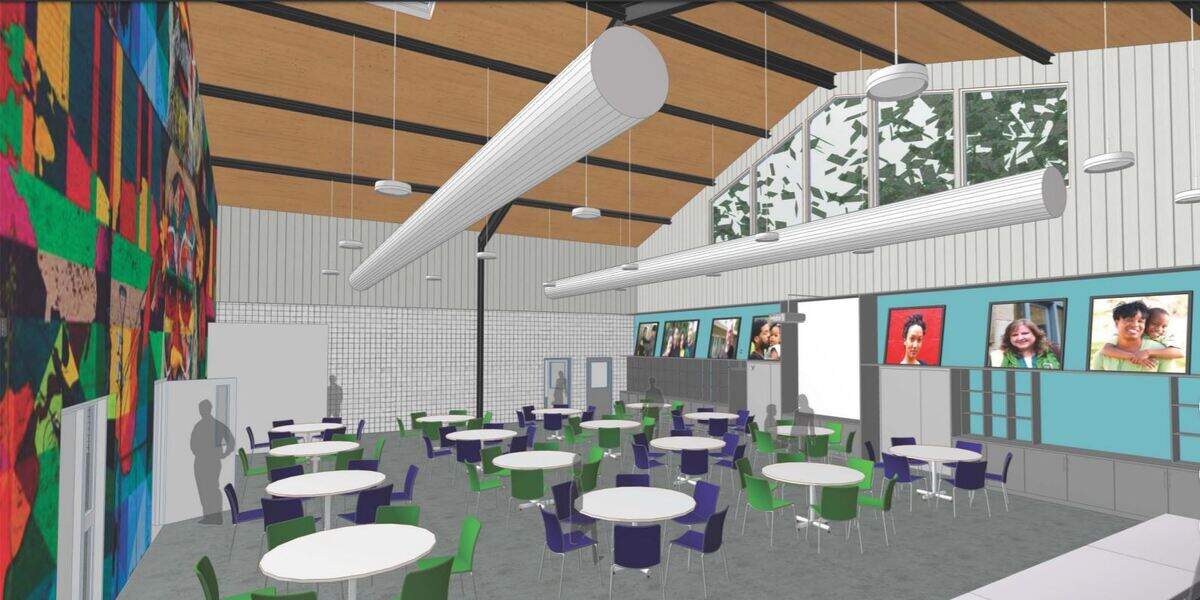
Urban Ministries is asking the county for $58,000 toward the nearly $200,000 it will cost to upgrade the shelter’s cafeteria, known as the Community Cafe.
Last year, 248,028 meals were served in the cafe. More than 4,000 people volunteered last year, too. Some volunteer groups bring food to serve and others serve food funded by UMD. The shelter also has a food pantry and clothes closet to serve people in need.
Upgrades to the cafe include:
▪ Replacing the gym floor with polished concrete
▪ Installing energy-efficient lighting
▪ Adding a projection screen and built-in wall unit for training and storage
▪ Adding natural light
Some groups have already funded the project: the Jenny Lillian Semans Koortbojian estate, Duke University Health System, Westminster Presbyterian Church and First Presbyterian Church. Other groups and individuals have also donated toward the upgrade.
Safety and day programs
Commissioners Chair Wendy Jacobs asked about violence at the shelter.
Mitchell said it remains a challenge because people from outside the shelter “know we have a vulnerable population” and only bags are searched, not people.
“The Dillard Street bus stop is a shop for people to do a little bit of everything there,” he said. Mitchell said people will come to the shelter to make “transactions.”
The only day programs offered to shelter residents are job-related. Volunteers offer a jewelry-making class, also. Mitchell said the shelter would like to offer more options.
“I really want to challenge you and your staff with coming up with a scenario for what people can be doing with their time,” Jacobs said.
The commissioners did not yet tell Urban Ministries if they will provide the $58,000 for the cafe upgrades. They wanted to know what the city gives the agency.
“Most medium cities do contribute to their own [shelter],” Commissioner Ellen Reckhow said.
Mitchell said that $90,000 comes from the city through Community Development Block Grant funds and $52,000 in rapid re-housing money, both federal dollars funneled through the city.
“Oh. OK. Interesting to hear that,” Jacobs said.
This story was originally published April 1, 2019 at 6:11 PM with the headline "Sobriety no longer required for homeless people seeking shelter in downtown Durham."