
In Durham, black neighborhoods have fewer trees. Now there’s a plan to change that.
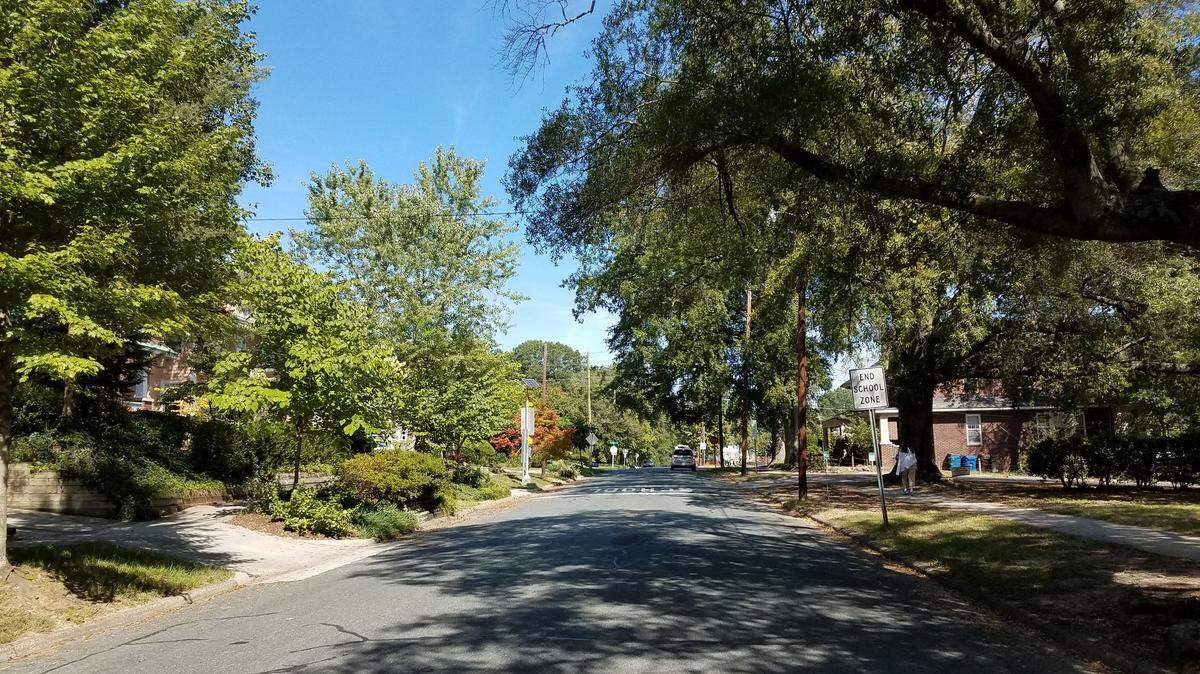
Durham’s aging tree canopy needs to be preserved and replaced, city leaders say, and this time trees will be planted everywhere, not just in predominantly white, wealthy neighborhoods.
Eight neighborhoods would get priority for new trees under a city plan.
For the past year, Durham leaders have talked about how to better improve the tree canopy and distribute it more equitably. A new nonprofit, TreesDurham, was formed last year to help. And Mayor Steve Schewel made trees a priority during his first year in office.
Durham’s urban forest management plan was revealed Thursday to the City Council. In addition to tree preservation, the plan calls for 85 percent of trees to be planted by the city’s General Services Department within historically under-served neighborhoods.
Of 1,500 new city trees, 1,275 will be planted in these neighborhoods:
▪ Old East Durham, including Wellons Village, Hoover Road and Eastway/Albright
▪ Southside/St. Teresa and College View
▪ Walltown and northern sections of Trinity Park
▪ Lyon Park and Lakewood Park
▪ Downtown areas including Edgemont, Cleveland-Holloway, Old North Durham and Golden Belt
▪ Stratford Lakes and area near Cook Road Park
▪ Old West Durham
▪ Weaver, including Crown Point and area near Red Maple Park
“I grew up in an inner-city neighborhood where there weren’t a lot of trees,” said City Council member Mark-Anthony Middleton. “This is a justice issue.”
The overall Durham tree canopy is 36,000 acres, as measured in 2015, with 114 acres of street trees. The city’s plan to plant 1,500 trees a year through 2040 would increase the street tree canopy to 240 acres.
The City Council still needs to adopt the urban forestry plan, after it goes before the Durham Planning Commission in April.
This story was originally published February 22, 2019 at 2:50 PM with the headline "In Durham, black neighborhoods have fewer trees. Now there’s a plan to change that.."
.jpg)