Greek life is at the center of some of the COVID clusters at UNC and NC State
As hundreds of college students in North Carolina have been infected with COVID-19 since returning to campuses this year, fraternities and sororities have played a part in the spread.
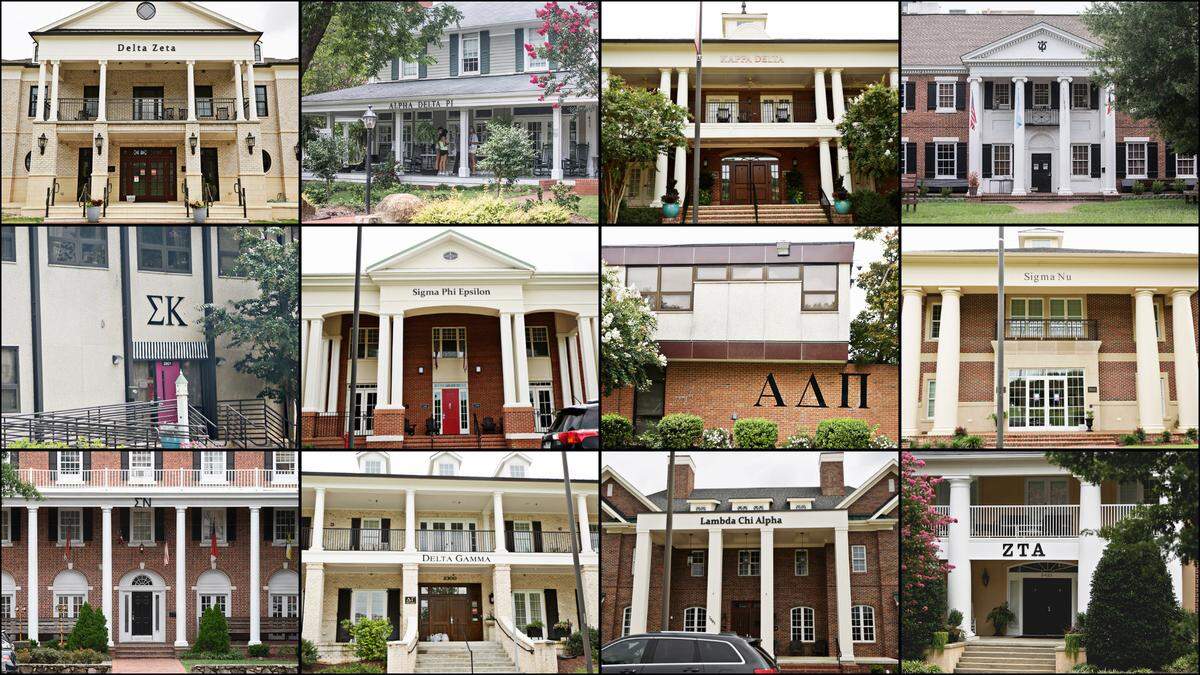
Of the 21 coronavirus clusters reported by N.C. State University since the start of the fall semester, nine are connected to a fraternity or sorority at the school. At UNC Chapel Hill, three of 11 reported clusters have been at fraternity and sorority houses. The other clusters are in dorms and off-campus housing complexes.
As universities spent time and money preparing classrooms for in-person teaching, there were fears about Greek organizations throwing house parties and students going out to bars and living together while ignoring social distancing and face mask requirements.
When, after a week and a half of classes, N.C. State announced that the rest of the fall semester would be remote-only for undergraduates, Chancellor Randy Woodson singled out parties at the Greek Village as responsible for a significant number of infections.
“What I would say is that the behavior of the few has jeopardized the ability for us to go forward for all of our students in a way that many of our students wanted us to,” Woodson said during a press briefing last week.
Spikes in cases
UNC and N.C. State announced the move to remote instruction for all undergraduate classes about a week after seeing spikes in COVID-19 cases and clusters on campus.
Wake County’s COVID data shows a dramatic spike in cases among the 18- to 24-year-old age group. On Aug. 10 when N.C. State started classes, Wake reported 17 positive cases among 18-24 year olds. In the past two weeks that daily figure has soared, reaching 127 new cases on Aug. 22. No other age group in Wake County has reported a daily count of more than 73.
Wake County’s human services department says it’s finding that young people are meeting in large groups, ignoring social distancing rules and not wearing masks.
“Contact tracing shows mass gatherings without masks and social distancing are the biggest factors fueling spread of COVID-19 among this group,” a Wake County spokesperson said in an email. “It’s when people choose to get together and disregard the three Ws — wearing a mask, washing hands and waiting six feet apart — that we most often see the virus spread.”
Orange County had 2,025 positive cases Tuesday, following an 88-case spike Thursday that marked the county’s highest one-day total reported since March, according to the N.C. Department of Health and Human Services.
About 42% of the cases have been reported among people ages 18 to 24 — up from 22% on Aug. 12.
UNC began updating its COVID-19 dashboard for student and employee cases daily last week, following a call for the change from both Carrboro and Chapel Hill leaders.
On Tuesday, UNC’s dashboard showed 832 positive student cases since February — nearly 700 of those were added since the first day of classes — and 51 positive employee cases.
Health officials have warned, however, that data provided for UNC students may not be complete, since there is a delay of up to a week for results when students are tested off campus and do not self-report their results to UNC and when students provide an out-of-county address on their testing form.
While the university is working with the health department to trace who potentially had contact with infected people, Ion Outterbridge, UNC’s director of fraternity and sorority life, said he has not received any information about whether COVID-19 infections originating in Greek houses had spread to on-campus dorms via parties, or from the dorms to the Greek houses.
Planning for Greek life
UNC fraternities and sororities were required to submit plans by Aug. 1 to the Orange County Health Department for how each chapter would try to avoid spreading COVID-19 among residents and members.
The plans were shared with the Office of Fraternity and Sorority Life, which has been in contact with Greek executive boards, chapter presidents, advisers, the owners of local Greek houses and Greek regional and national offices.
“I think we did a very good job of being very proactive with our students and with our housing corporations,” Outterbridge said. “We went virtual (with recruitment) at the beginning of June. We made that decision and we stuck with it and we are sticking with that for the fall semester.”
In the plans, fraternities and sororities outlined steps that the chapters would take to safeguard against the spread of COVID-19, handle positive tests among guests or members, guidelines for house staff, and what would happen if the university moved to remote-only classes. The chapters also agreed to maintain screening logs and guest rosters that could be used for contact tracing.
Maximum occupancy limits were set for each chapter. Each house hires its own cleaning staff.
Outterbridge noted that some had reduced the number of members living in the Greek houses, in order to leave space for quarantining or isolating students exposed to the virus. Other plans reviewed indicated that house members exposed to the virus would have to isolate or quarantine in the dorms that UNC set aside for students.
The Health Department is still reviewing those plans, he said.
“We had tremendous communications over the summer with our student leaders, along with the housing corporations and advisers, especially the ones for fraternity and sorority houses ... talking about the CDC guidelines, Orange County guidelines, the governor’s guidelines,” Outterbridge said. “We’re very straightforward and candid with all our organizations.”
Wake County did not require a COVID protection plan from any fraternity or sorority, but did share guidance and holds a regular conference call with Raleigh’s colleges.
“We have been working closely with all of the universities and colleges in the area to provide guidance on the best ways to prevent the spread of COVID-19 and protect their students, faculty, staff and others,” a Wake County spokesperson said in an email.
Calls and questions to N.C. State’s Department of Fraternity and Sorority Life were referred to the university’s communications office.
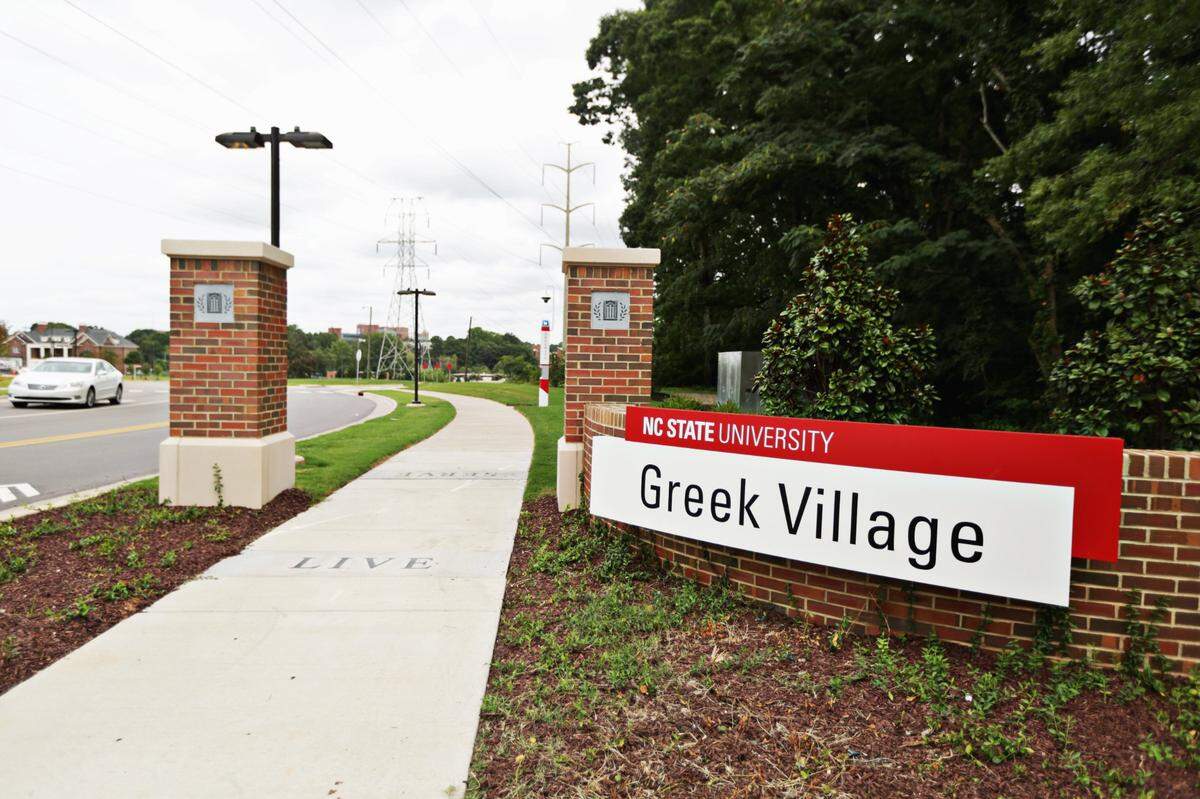
There were no specific entrance requirements, such as testing, for students moving into N.C. State’s Greek Village beyond a commitment to the university’s COVID-related policies on social distancing, mask wearing and gatherings, the school said.
“All students were required to attest that they read and understood the community standards prior to returning to campus,” university spokesperson Mick Kulikowski said in an email. “Whether they live in a residence hall, an off-campus apartment or in Greek Village, all N.C. State students are expected to be socially responsible and do their part to help keep the community safe, including mask wearing, physical distancing, hand washing and more as outlined on our Protect the Pack website.”
Enforcement and violations
UNC has 29 Greek houses, belonging to fraternities, sororities and social organizations, Outterbridge said. Because all of the houses are privately owned and off campus, the town traditionally has been responsible for enforcing rules and laws.
Chapel Hill Police Chief Chris Blue said last week that UNC Police have joined local police patrols a few times a week and, depending on their staffing needs, could become more involved in the future.
Orange County health officials, police, fire and UNC administrators meet with Outterbridge’s office Aug. 19. At that meeting, they focused on how the Greek members should be community leaders in following the COVID-19 rules and guidelines.
“We’re in this pandemic, so we wanted to reiterate the importance of them stepping up and being leaders in this situation,” Outterbridge said. “It was a good conversation with our student leaders within the fraternity and sorority community.”
Chapel Hill police have been called to more than two dozen loud music or loud party reports in the last three weeks, police department reports showed. Warnings were issued to seven off-campus houses and apartments for large gatherings, including violations of the state gathering limits at a house affiliated with Chi Omega sorority on Aug. 4, at Zeta Psi fraternity on Aug. 8 and at Phi Delta Theta fraternity on Aug. 20.
Each police visit to Greek houses or off-campus rentals is followed by a visit from the town-gown task force that includes Chapel Hill and UNC police, the fire department, health officials and UNC’s Office of Greek Life, Blue has said. The group provides information about what’s expected with the residents and warns them that a second or more egregious violation will bring a citation for a Class 2 criminal misdemeanor.
There have not been any repeat violations yet, Blue said in an interview last week. He noted that the protocol of issuing warnings for parties and violations is no different than how police respond to the beginning of UNC’s fall semester every year.
The Interfraternity Council also amended its judicial policy this year to add additional penalties for violating local and state rules, including written warnings, fines, recruitment restrictions, social probation and the possibility that the chapter could lose university recognition. The penalties that could be imposed are based on the severity of the violation and the risk to public safety that the violation may pose, the IFC wrote on its website.
That includes violations of the state limits on gatherings, the IFC stated, as well as the failure to wear masks or practice physical distancing. Brandon Wacaser, president of the IFC Executive Board, did not return a call seeking additional information.
Calls and emails to the national headquarters for Zeta Psi Fraternity and to the National Panhellenic Council also were not returned.
Drew Logsdon, spokesman for Sigma Nu Fraternity’s national headquarters, did not agree to an interview but sent an email statement.
“We are very pleased with the immediate and comprehensive response taken by county, university, student, and alumni leaders in Chapel Hill in reaction to confirmed cases among student members of the UNC Chapel Hill collegiate chapter,” Logsdon said. “This response is in keeping with the expectation that all members be familiar with and observe local, institutional, and CDC guidelines and policies regarding the COVID-19 pandemic. Most importantly, we wish those students impacted the very best in their recovery.”
Last week, when asked during the press briefing about potential punishments for any students or Greek houses, Woodson said any issues would be reviewed.
“You know I am not able to talk about penalties before penalties have happened, but I can assure you that any issues that we view as requiring review by the Office of Student Conduct will be reviewed,” Woodson said.
While so many of N.C. State’s clusters are associated with the school’s Greek Village, Kulikowski said the university can’t just close the houses.
“While many of the Greek houses are on university property, NC State does not have the authority to close them, as they are owned and operated by the respective Greek organizations,” Kulikowski said. “Currently, the majority of Greek Village houses are under quarantine or isolation, and residents cannot leave or accept visitors. The university is providing testing for all residents to accurately determine how to proceed.”
Currently there is only one fraternity at N.C. State facing any sanctions. The national organization of Sigma Nu suspended social events at the N.C. State chapter last week after a cluster of 26 cases were connected to an Aug. 13 party at that house. The national Sigma Nu organization released a statement saying social activity at the N.C. State chapter house would be suspended until an investigation into the party is completed.
“Sigma Nu Fraternity is aware of a recent social activity at the chapter house of the Beta Tau Chapter of Sigma Nu Fraternity at North Carolina State University that was reportedly not in compliance with the University’s COVID-19 restrictions,” the national office of Sigma Nu said in a statement. “The fraternity is working closely with NC State officials to investigate this matter. The chapter’s social activities have been suspended pending the completion of that investigation. The fraternity appreciates the support being provided by NC State to all students impacted by the ongoing pandemic. The fraternity expects all members to be aware of and observant of all COVID19 related policies and expectations of their college or university.”
N.C. State’s Greek Village currently has 505 residents assigned to houses this year.
Greek houses with clusters
N.C. State | UNC Chapel Hill |
|
|
|
|
|
|
| |
| |
| |
| |
| |
|
This story was originally published August 25, 2020 at 3:38 PM with the headline "Greek life is at the center of some of the COVID clusters at UNC and NC State."