Trump administration is canceling government leases. What it means for the Triangle
AI-generated summary reviewed by our newsroom.
- DOGE ended 20 GSA leases in North Carolina, shrinking federal office space.
- Triangle region faces limited fallout, with 190,000 square feet in "soft term."
- Rising vacancies and soft leases could depress property values.
In less than six months, the so-called Department of Government Efficiency, initially created under Elon Musk, has radically shrunk the footprint of federal agencies across the country.
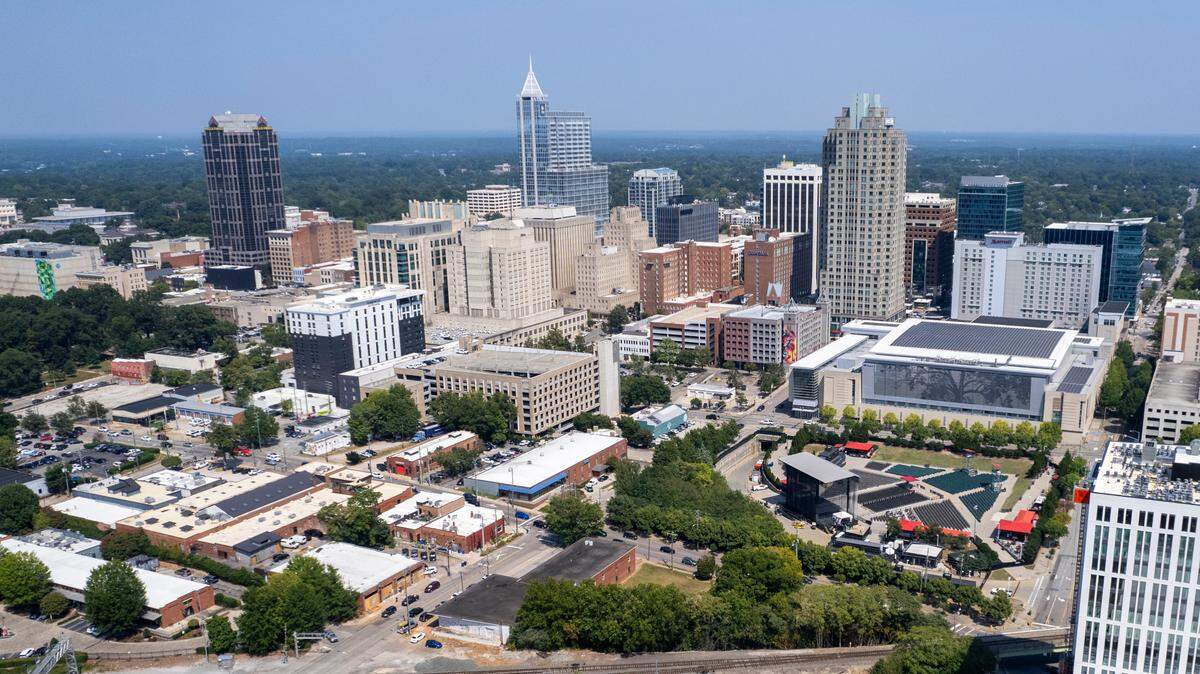
In North Carolina alone, 20 General Service Administration building leases have been terminated, including the Equal Employment Opportunity Commission’s 10,397-square-foot office space in Raleigh’s Truist building on Fayetteville Street.
Experts warn further cuts are coming.
Even before President Donald Trump entered office, the federal government had been actively working to reduce GSA’s holdings. But it’s accelerated under the current administration, they say, potentially flooding the market with inventory at a time when office vacancies are already at record highs.
Nationally, some 12 million square feet of GSA-leased space could be easily cut by the government by the end of 2026, according to Avison Young’s new Federal Property Pulse, which tracks government leases, both office and industrial.
Technically, these leases will be in “soft term.” In other words, the non-cancellable lease period has expired, but the lease expiration date has not yet arrived. A soft-term lease is riskier than a firm-term lease because the government can walk away at any time with notice, possibly impacting financing or lease renewal planning, explained Avison Young senior analyst Grant Hayes.
“As agencies continue to change and evolve, it’s a wait-and-see-what-happens,” he said.
Among the hardest hit markets so far: Washington, D.C., North Virginia and Maryland, with roughly 1.9 million square feet of leases already canceled and hundreds more leases at risk.
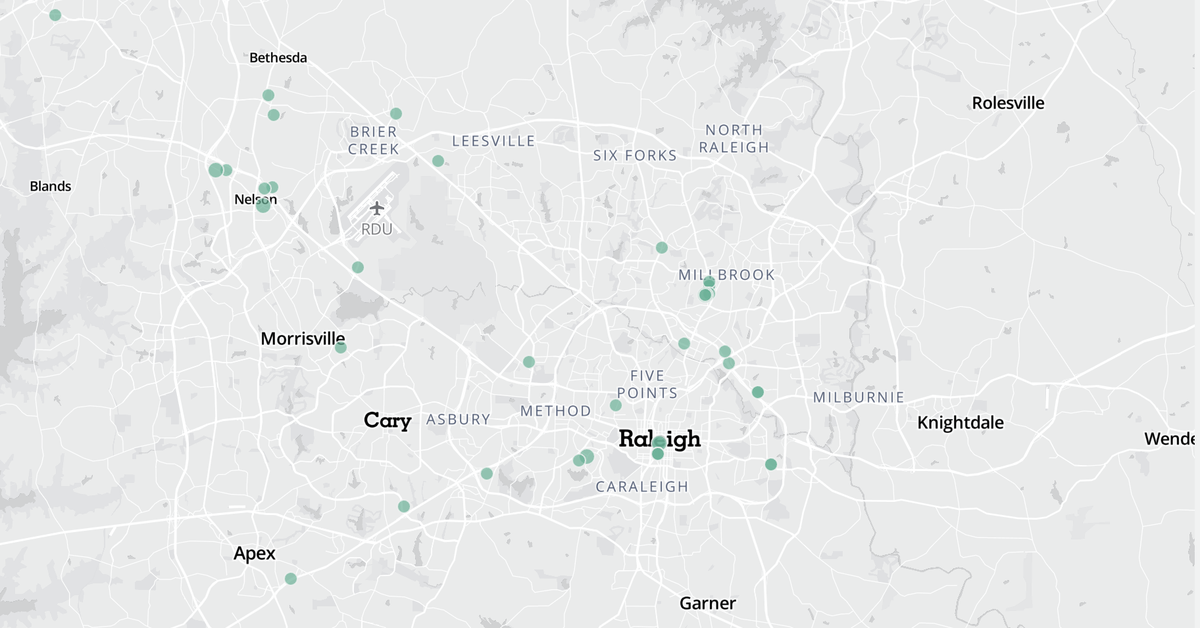
Comparatively, North Carolina, and the Raleigh-Durham area in particular, face “limited exposure,” Hayes said, with some 190,000 square feet of GSA-leased space currently in, or entering soft term, by the end of 2026. Compare that to Atlanta with over 2 million square feet and Nashville with 411,235 square feet.
Among the largest Triangle spaces: a 39,000-square-foot lease at 800 Park Drive in Durham, and a 16,000-square-foot lease at 140 Centrewest Court in Cary.
Most are relatively small leases, evenly scattered across the region. “If all of these were canceled at once, it wouldn’t be the biggest impact in the world,” Hayes said, adding it’s unlikely to happen given the changes at DOGE since Musk’s split with Trump. “They’re looking to be more strategic.”
Sarah Dickerson, research economist at UNC’s Kenan Institute of Private Enterprise, is more skeptical.
“We’re already seeing higher vacancies. This type of loss would deepen the impact,” she said in an email. “Landlords are unlikely to find new, suitable tenants anytime soon.”
The exodus could also translate into declining property values. “It impacts not just the landlords, but also surrounding businesses, like neighborhood cafes and restaurants,” she said.
Has the market bottomed out yet?
In recent years, the rise of hybrid work, high interest rates, and now tariff fears, have pummeled the office market.
The nation’s office vacancy rate stood at 20.4% this first quarter — the highest since at least 1979, when Moody’s Analytics began tracking.
In the Triangle, it crept even higher, to 21.3% — up from 21% in the previous quarter and from 19.3% a year ago, according to CBRE’s 2025 first-quarter market report, breaking records set in 1986 and 1991.
Across the region, office buildings, new and old, are sitting empty.
However, some analysts believe the market could slowly be turning a corner. Class B and Class C properties, underutilized and decades-old, still face challenges. But newer Class A buildings have likely bottomed out, they say.
“We’re starting to see a lot of green shoots,” especially in the life sciences sector, said Kathy Gigac, managing director of Avison Young’s Raleigh-Durham office.
Among recent signings: Massachusetts-based developer King Street Properties leased about 70,000 square feet of “turn-key” biomanufactuing space inside Building One at 1000 Science Drive in Morrisville to Liquidia Corp.
“Things are happening. This is probably the busiest I’ve been since COVID,” Gigac said. “That’s a good sign.”
This story was originally published July 17, 2025 at 11:51 AM with the headline "Trump administration is canceling government leases. What it means for the Triangle."