Does insurance cover damage from Chantal and similar storms? It depends.
AI-generated summary reviewed by our newsroom.
- "If it rains where you live, you probably need flood insurance.”
- Less than 1.5% of households in some NC counties carry federal flood insurance.
- Outdated FEMA maps underestimate risk, leaving many exposed to storm damage.
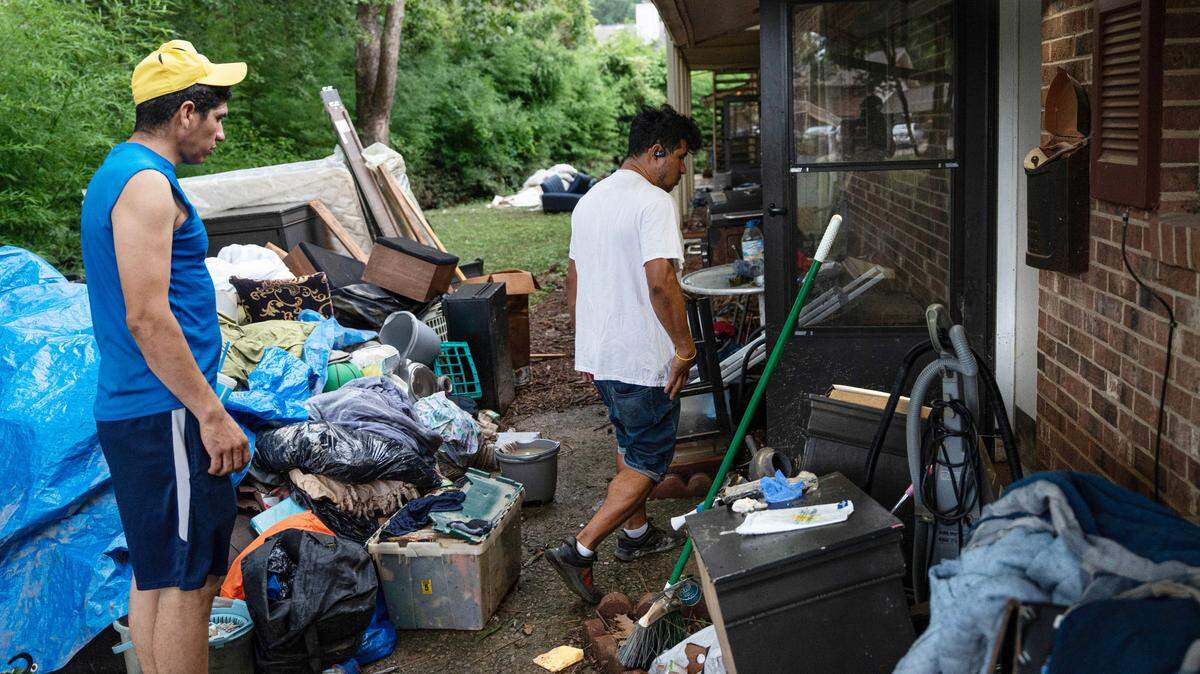
Vanessa Byrd was among dozens forced to evacuate from Camelot Apartments in Chapel Hill when flash flooding from Tropical Storm Chantal hit on Sunday night.
When she returned, she found her home and belongings covered in a thick, muddy sludge.
“Year after year after year, floods want to come in and destroy everything we got,” she told The N&O, sifting through the remnants.
In other parts of town, including Durham’s Old Farm area, rushing water entered homes, apartments and businesses.
But will their insurance policies cover the damage?
It depends, said Jason Tyson, a spokesman for the state’s Department of Insurance (NCDOI).
Here’s what you need to know.
Who needs flood insurance?
Standard homeowners’ insurance policies typically don’t cover flood damage, Tyson said. That’s usually an add-on.
Customers can buy protection in a separate private flood policy, or through the National Flood Insurance Program (NFIP), which is managed by the Federal Emergency Management Agency and accounts for more than 95% of the nation’s flood insurance policies.
Some lenders require flood insurance for homes in high-risk zones. Outside those areas, it’s optional but often wise. Especially as severe climate change-related events become more common, Tyson said.
“We’re seeing these micro-storms, like Chantal, come out of seemingly nowhere,” he said. “Just because your home isn’t in a floodplain, doesn’t mean you won’t incur flood damage. If it rains where you live, you probably need flood insurance.”
For renters, a landlord’s insurance only covers the building, according to NCDOI, so you’d need to buy a renters’ policy to make sure personal belongings are protected.
Policies must be in place for 30 days before coverage takes effect.
NFIP’s future
NFIP coverage remains available today, but concerns are growing over its future. In June, President Donald Trump said he’d like to dismantle FEMA by the end of this year’s hurricane season.
NFIP is set to expire on Sept. 30. FEMA said it will continue to pay claims on active policies, as long as funds are available.
Congress is considering legislation to extend the program through 2026. The National Association of Realtors is also calling for regulatory reforms to expand private market options.
“We’re monitoring closely. What happens remains to be seen,” Tyson said.
NC’s flood insurance gap
Less than 1% of households in Wake, Durham and Chatham counties are covered by the NFIP, according to an N&O analysis of Census Bureau and NFIP data.
In Orange County, it’s only slightly better at 1.5%.
The result: Many people living in the areas impacted by Chantal’s downpour likely don’t have protection for the damage they’ve suffered.
Across the state, the lack of flood insurance is “a huge problem,” Insurance Commissioner Mike Causey told the N&O last December after Hurricane Helene. “We had flood education classes around the state in 2019. That education effort increased the number of flood policies by 25% but we’re still just scratching the surface.”
Why do so few people have flood insurance in NC?
Even as extreme weather events become more frequent, many homeowners underestimate the risk, Georgina Sanchez, a research associate at NC State’s Center for Geospatial Analytics, said.
She faults FEMA’s existing flood maps that show where people are required to buy flood insurance. “Many of these maps are outdated, created when cities were smaller,” she said in an email.
They also fail to account for intense rain events and sea-level rise and are not quickly updated, she said.
In a new study, she estimates that about 24% of current development in the U.S. — including homes, schools, businesses and places of worship — is located within just two city blocks of designated high-risk flood zones.
These areas are often excluded from preparedness efforts, insurance requirements and infrastructure planning, “despite events like Helene, Chantal and others clearly demonstrating their vulnerability,” she said.
“For many, the risk comes as a complete surprise.”
How much does flood insurance cost in NC?
If you live in a high-risk flood zone, you may pay steeper rates than someone in a lower-risk zone.
To find out what zone you live in, look at FEMA’s flood zone map. Zones B, C, and X are moderate-to-low-risk flood areas, while zones A and V are for high-risk areas.
Other variables include flood frequency, flood types (river overflow, storm surge, coastal erosion and heavy rainfall) and distance to a water source. Property characteristics, such as elevation, age and the cost to rebuild, also affect prices.
In North Carolina, on average, the rate for flood insurance is $802 per year through NFIP, according to the latest LendingTree data.
NFIP policies offer up to $250,000 of building coverage and $100,000 of contents coverage.
Homeowners can also purchase private flood insurance. The average cost nationally is $98 a month, data showed.
How to be prepared
According to the DOI’s website, here are some things you should do immediately after a storm:
- Contact your homeowners’ insurance agent or company to report the loss. Even if you have a separate windstorm or hail policy in addition to your homeowners’ policy, your primary homeowners’ insurer will investigate and adjust the claim.
- Make a list of the damages and take clear pictures or videos to document the damage.
- Do what you can to stop further damage from happening and keep receipts.
- Do not make permanent repairs until your insurance company has inspected the damage.
- If your home is uninhabitable, check with your insurance company to determine which expenses will be reimbursed.
- Beware of fraud. Avoid roofing and contractor scams by only working with licensed and insured contractors. (NCDOI Criminal Investigations Division investigates insurance fraud daily.)
For more information on how to be prepared before, during and after any storm, visit www.ncdoi.gov/disaster or contact the NCDOI Consumer Services Division at 1-855-408-1212.
This story was originally published July 11, 2025 at 7:15 AM with the headline "Does insurance cover damage from Chantal and similar storms? It depends.."