How baby boomers are boxing out millennials in a Triangle housing showdown
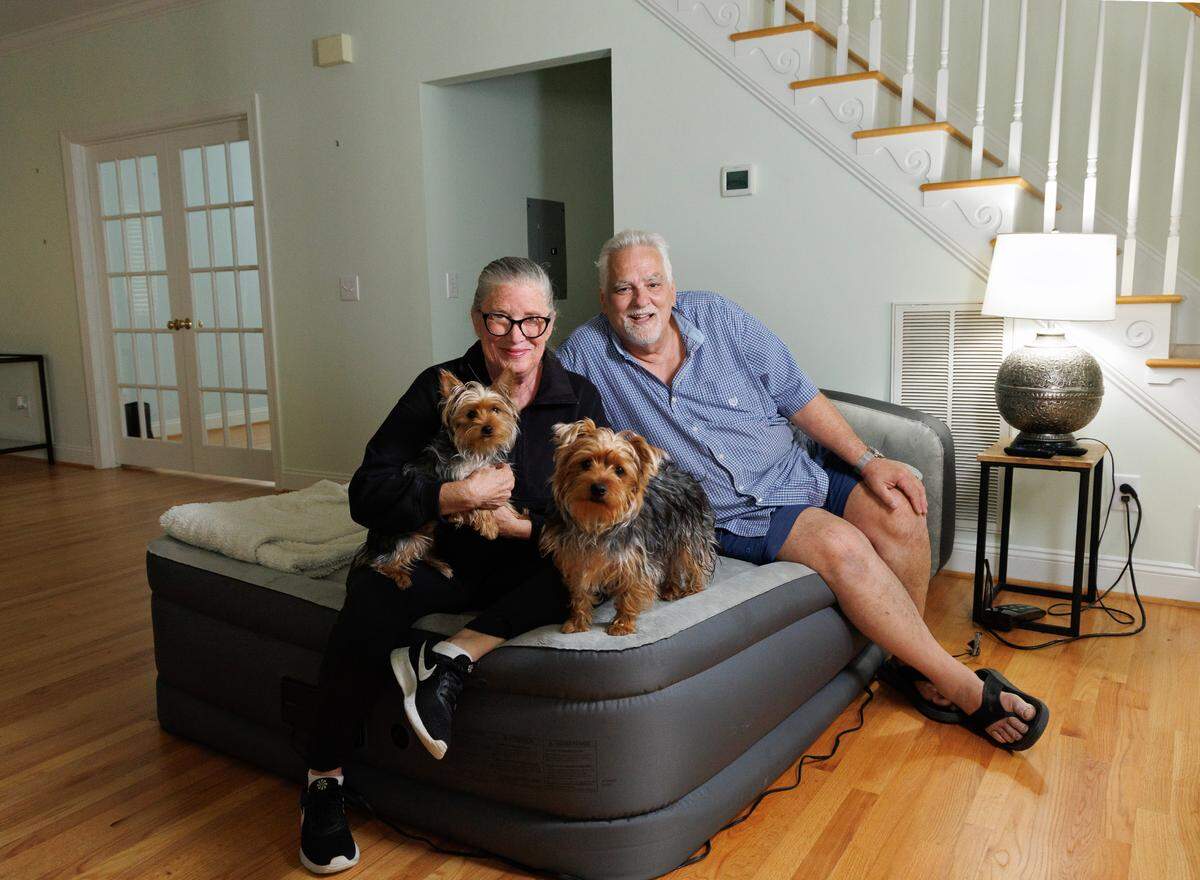
Annabella and Larry Vagonis may be empty-nesters, but they’ve been living like college kids since moving to Chapel Hill’s Governors Park in April.
In the living room of their new 2,613-square-foot Craftsman-style home, a king-sized blowup mattress doubles as a couch and bed. Unpacked boxes line the walls of empty rooms.
It’s far from downsizing, they admit, but they’re giddy. In a three-way bidding war, these baby boomers (she’s 68, he’s 67) offered $710,000 — $10,000 above asking price — and won.
“I’ve never had a kitchen with so many bells and whistles,” said Annabella Vagonis, stationed behind the island, marveling at her new soft-touch doors and custom floor-to-ceiling cabinetry.
“It’s the size we wanted. It suits our lifestyle. We wanted a place where everybody could gather — our kids, future grandkids, in-laws.”
In a housing showdown, the Vagonises are among those cash-rich boomers, aged 61 to 78, dominating today’s Triangle housing market.
Between 2020 and 2023, the number of residents aged 65 and over jumped by 18.3% in the Raleigh-Cary metro area, making it one of the fastest-growing areas for this demographic in the country, according to new data from the U.S. Census Bureau.
That influx is driving up demand for housing. Features like main-floor living, walk-in showers, and proximity to town are increasingly “must haves” for buyers, say Realtors.
It’s also reshaping the market and deepening a generational divide amid a chronic housing shortage, high mortgage rates and now recession fears, experts say.
Many older buyers are scooping up dream homes or second homes outright. Others are using their equity to downsize — selling high and using the profits to buy smaller homes, while pocketing the difference for retirement, they say. Often, they’re making all-cash offers, locking out first-time buyers — mostly millennials, now in their nesting years.
In the Vagonises’ case, they’d lived in Reston, Virginia, just outside Washington, D.C., for 40 years, then decided to sell and move closer to family. Annabella Vagonis’ brother has lived in Chapel Hill for almost a decade.
They also craved change. Larry Vagonis just retired as a physical therapist; Annabella Vagonis works remotely as an executive for a global nonprofit.
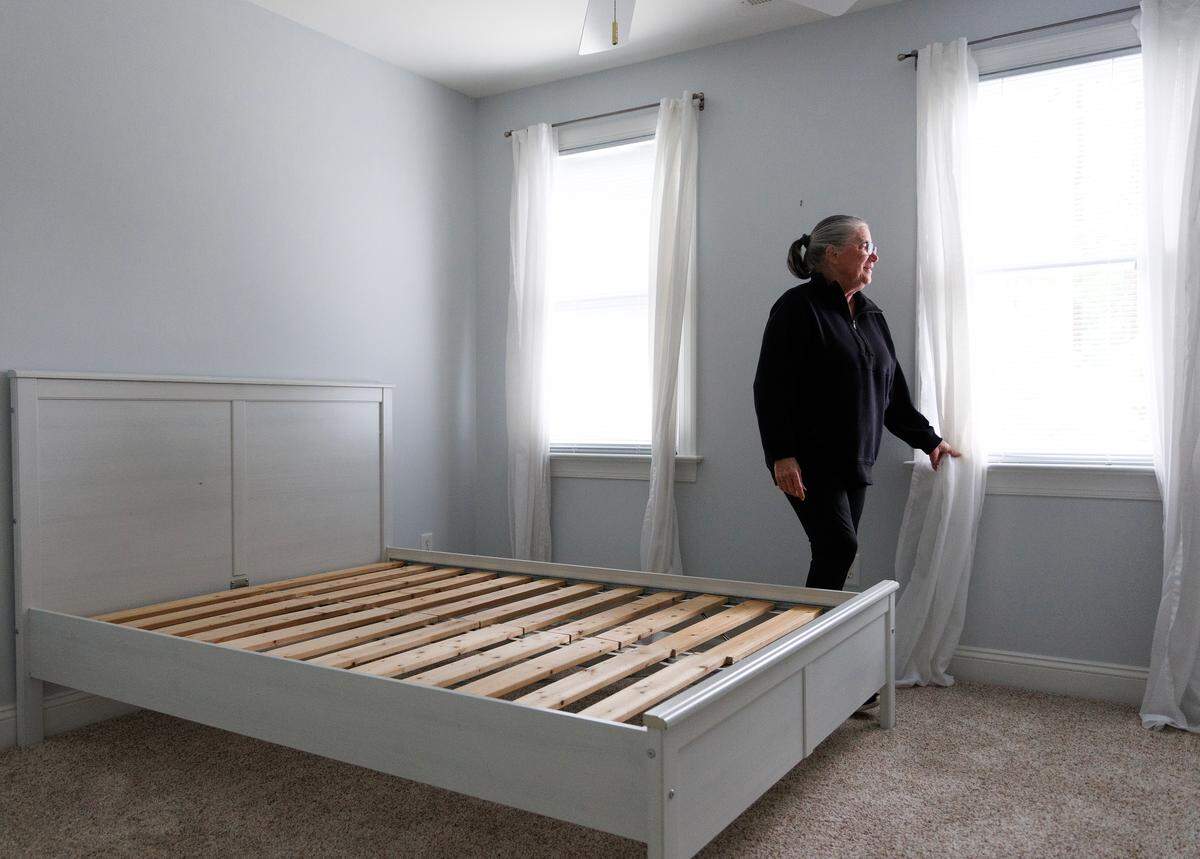
“We looked outside of D.C. We looked in Charlotte, Wilmington and Richmond, where our daughter lives. But it just didn’t feel right,” Larry Vagonis said. “This place checked all the boxes.”
Built in 1999, the four-bedroom, three-bathroom home sits on a quarter-acre lot. It’s at the end of a cul-de-sac and boasts a wrap-around front porch large enough to fit four rocking chairs. The subdivision offers loads of amenities: pool, tennis and basketball courts and playground. Homeowners’ association fees are $110 per month.
To edge out the competition, they offered above asking price. As an additional sweetener, they covered half with cash and financed the remainder through a mortgage.
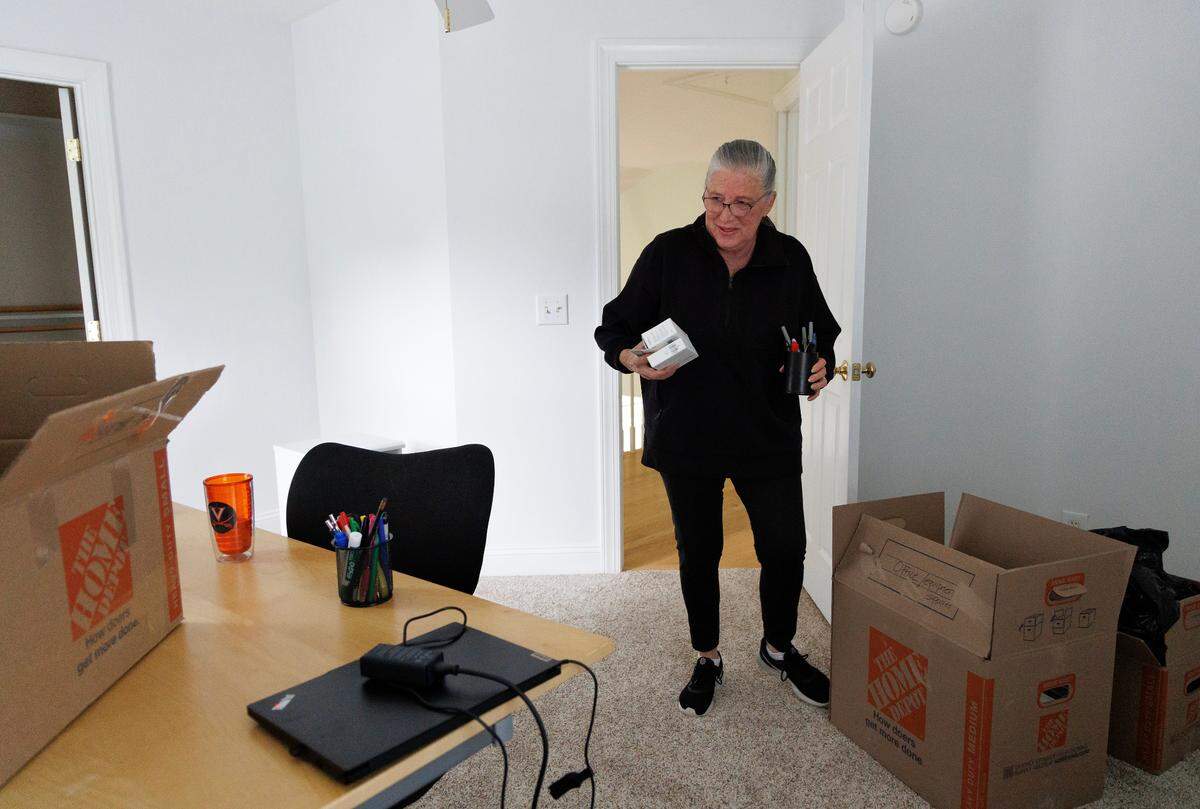
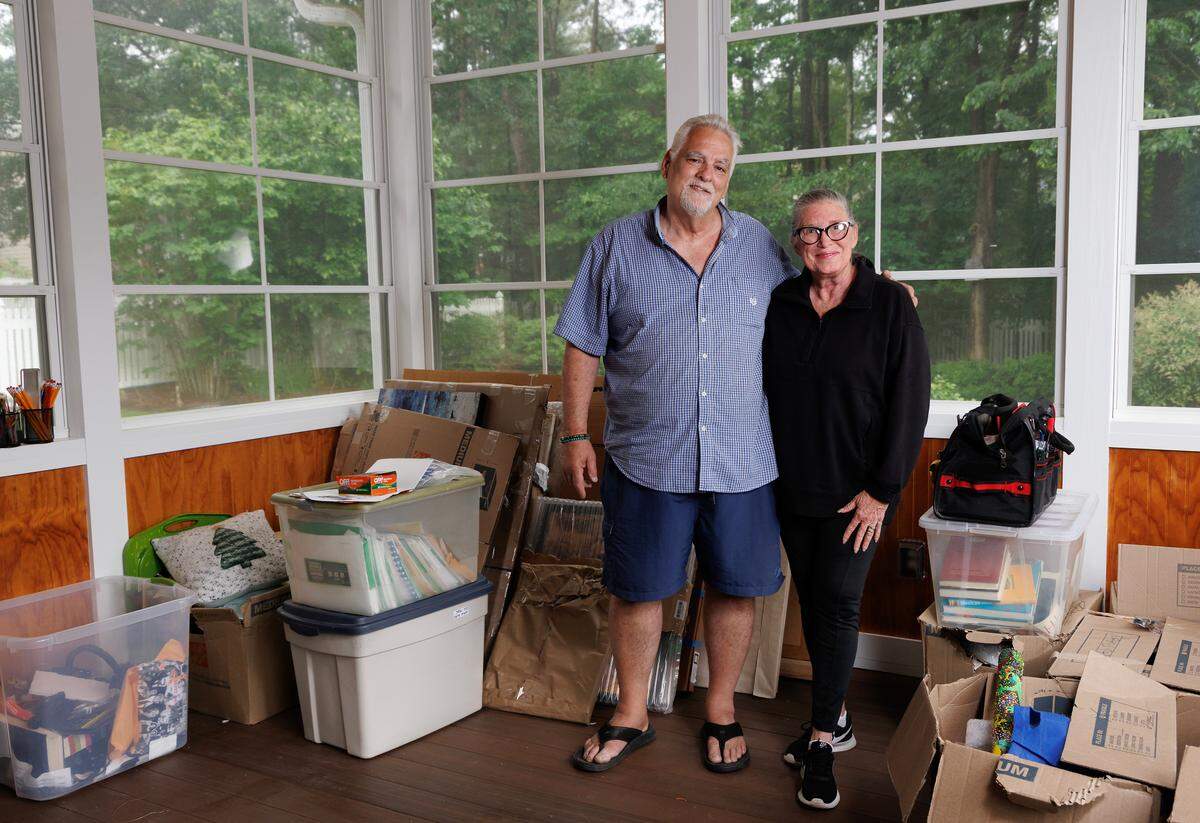
They sold most of their furniture when they left Northern Virginia, so they’re starting over, Annabella Vagonis said. “It’s fun, exciting. We couldn’t have a picked a better place.”
Another perk: It’s technically in Chatham County, “so we’re not paying Orange County prices,” she said.
Why more boomers are buying homes
Over the past decade, millennials — ages 27 to 45 — had been the generational group making the most home purchases.
Not in 2024.
In a shift that underscores the changing dynamics, boomers have been boxing them out, accounting for 42% of U.S. home sales between July 2023 and July 2024, according to the National Association of Realtors’ 2025 Home Buyers and Sellers Generational Trends Report.
“In a plot twist, baby boomers have overtaken millennials — the largest U.S. population — to become the top generation of home buyers,” said Jessica Lautz, NAR deputy chief economist and vice president of research, in a release.
It’s only the second year since 2013 that boomers have rallied to retake the lead.
Millennials dropped to 29% of all buyers — down from 38% a year ago. Generation X — ages 45–59 — held steady at 24%, while Gen Z-ers (14 to 25) made up just 3% of buyers.
What’s even more striking: Half of older boomers (ages 71 to 79) and two out of five younger boomers (ages 61 to 70) are purchasing homes entirely with cash, “bypassing financing altogether,” Lautz said.
How did boomers stage this comeback?
One explanation is that the share of buyers who are purchasing their first homes has dropped to a record low. In 2024, first-timers made up 24% of all buyers in the U.S., down from 32% the year before. That’s the lowest share since NAR began collecting the data in 1981. Prior to 2008, the historical norm was 40%.
“Millennials today face a different reality,” said Roberto Quercia, a professor at UNC-Chapel Hill’s department of city and regional planning. “They’re more likely to delay or forgo marriage — traditionally a key driver of homebuying — and are burdened by high living costs, student debt and stagnant wages.“
Mortgage rates have also doubled in recent years. The 30-year fixed-rate mortgage now hovers around 6.76%, according to Freddie Mac, “requiring higher incomes to qualify,” Quercia said.
A mismatch in supply and a long-running housing shortage further complicate the picture. Since 2008, rising construction and land costs, along with regulatory hurdles, have pushed builders to construct higher-end homes, Quercia said.
Inventory at all price points, from “condos to luxury homes,” is critically low. Small, detached “starter homes” priced under $300,000 are even scarcer. “The COVID-19 pandemic only deepened this imbalance,” he said.
In Raleigh, the median sale price for all home types (single-family homes, townhouses and condos) stood at $439,500 in April, up 3.4% year over year, according to Redfin data. In Durham, it was $430,000, up .9% year over year. In Chapel Hill, it was $600,750, up 13.9% year over year.
Added all up, it’s pushed a generation of buyers to stay on the sidelines for longer. It’s also had a ripple effect.
In 2024, the typical first-time buyer was 38 years old, up from 35 the year before. The typical repeat buyer was 61 years old, up from 58 the year before, NAR found. Meanwhile, the median age for all home buyers — the number at which half are younger and half older — jumped to 56, up from 49 last year. These ages are all record highs.
Tim Burrell, a Raleigh-based Realtor with RE/MAX who has been working in the industry since 1979, said he sees this on the ground.
“My average client is getting older and older. Unfortunately, it’s taking longer for people to get the assets together to buy a property,” he said.
Boomers, meanwhile, have had decades to build wealth. According to Freddie Mac, boomers now hold 50% of the nation’s home equity, amounting to $17.3 trillion as of the second quarter of 2024. Much of this wealth is expected to be passed down to their children in what some call the “silver tsunami” of generational wealth transfer.
“That’s a powerful buffer in an uncertain market,” said Tana Widdows, a Compass agent at Terra Nova real estate services in Chapel Hill. “Regardless of where the cash comes from, it gives boomers a major edge. It also adds a layer of insulation to the real estate market.”
A ‘landing pad’
For Marianne and Brian McDonald, both 59, re-entering the housing market this spring started with a question from their financial adviser: “If you could do anything, what would you do?”
Based in Greensboro, these empty-nesters had already downsized into a 1,300-square-foot single-family home, but weren’t ready to retire. (She’s a finance director for a real estate company; he’s a cybersecurity analyst.) They’d amassed a small fortune after acquiring their first home in 1991. And in recent years, they’d also become die-hard Hurricanes fans and season ticket holders, commuting once a week from Greensboro during the season.
“We thought, ‘Let’s get a landing pad,’” Marianne McDonald said.

Initially, they rented an apartment close to downtown Cary. But in March, they purchased a 1,300-square-foot condo with three bedrooms and two baths for $353,500, also in the same neighborhood. They put down a 20% deposit and financed using a 30-year mortgage. It’s a five-minute walk into town and a 10-minute drive to the arena.
After closing in April, they plan to move in June and undertake minor renovations, including painting and replacing floors. They also plan to keep their home in Greensboro.
“We have a life there; we’re just not ready to give it up,” Marianne McDonald said, though they admit they’re spending more time at their landing pad these days than in Greensboro.
“It’s been an adventure, for sure,” she said. “We’ve enjoyed the friends we’ve made.” Looking ahead, “we just want more of the same.”
This story was originally published May 22, 2025 at 5:00 AM with the headline "How baby boomers are boxing out millennials in a Triangle housing showdown."