Here’s NC’s projected housing deficit over the next 5 years — and a silver lining
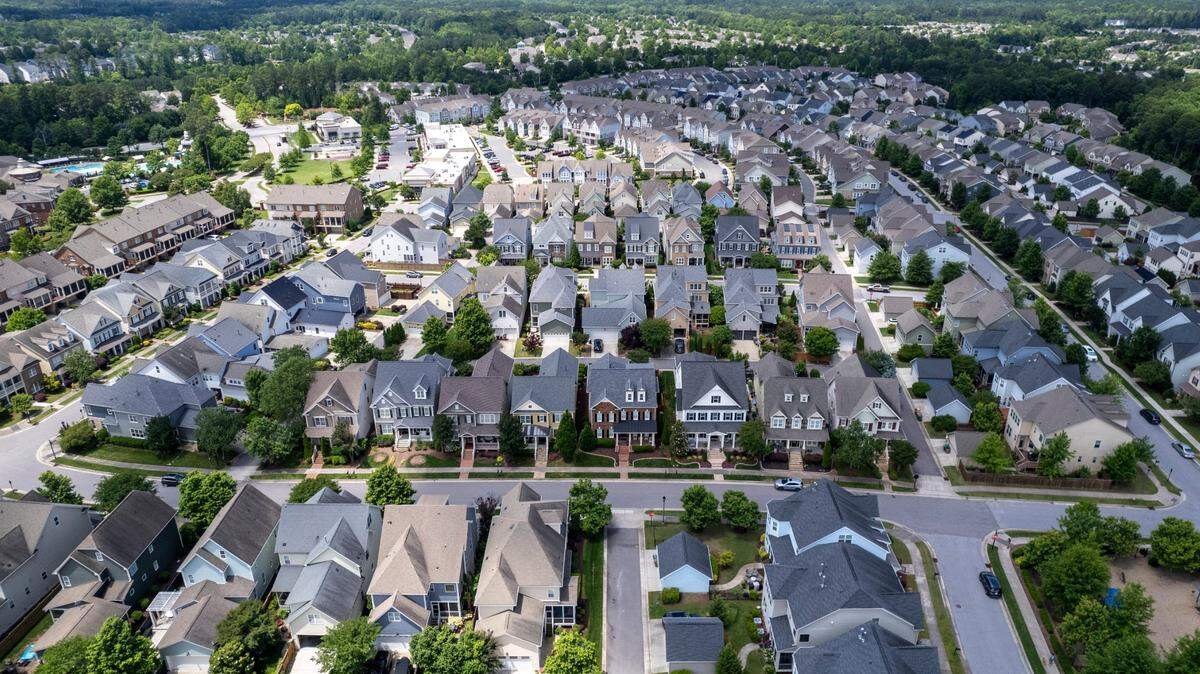
Even with a post-pandemic construction boom, North Carolina is struggling to build enough houses for its surging population, new data shows.
The number of households in the state is projected to increase by 5% (218,160 households) between 2024 and 2029, according to analysis by Bowen National Research.
The result: an estimated housing gap that will grow to 764,478 units — 322,360 rental units and 442,118 for-sale units, the report found.
The findings highlight “the barriers and gaps” in housing across the state, said Meredith Archie, president of the N.C. Chamber Foundation, who unveiled the report at N.C. Chamber’s west Raleigh office earlier this week. It should be used “to inform both local and statewide policy discussions and solutions,” she said.
The report — commissioned by N.C. Chamber, North Carolina Home Builders Association, and NC Realtors — examined rental and for-sale housing supply inventory and demand in each of the 100 counties for a five-year projection period.
Among other key findings:
- The state has an overall for-sale availability rate of .8%. — “well below the 2% to 3% range of a healthy market.”
- Only nine counties, representing less than 10% of the state’s counties, have a median list price under $200,000.
- The statewide vacancy rate for multifamily rental units is 5% — within the “healthy market” range of 4%-6%.
- Affordable rental programs show “near-zero” vacancies.
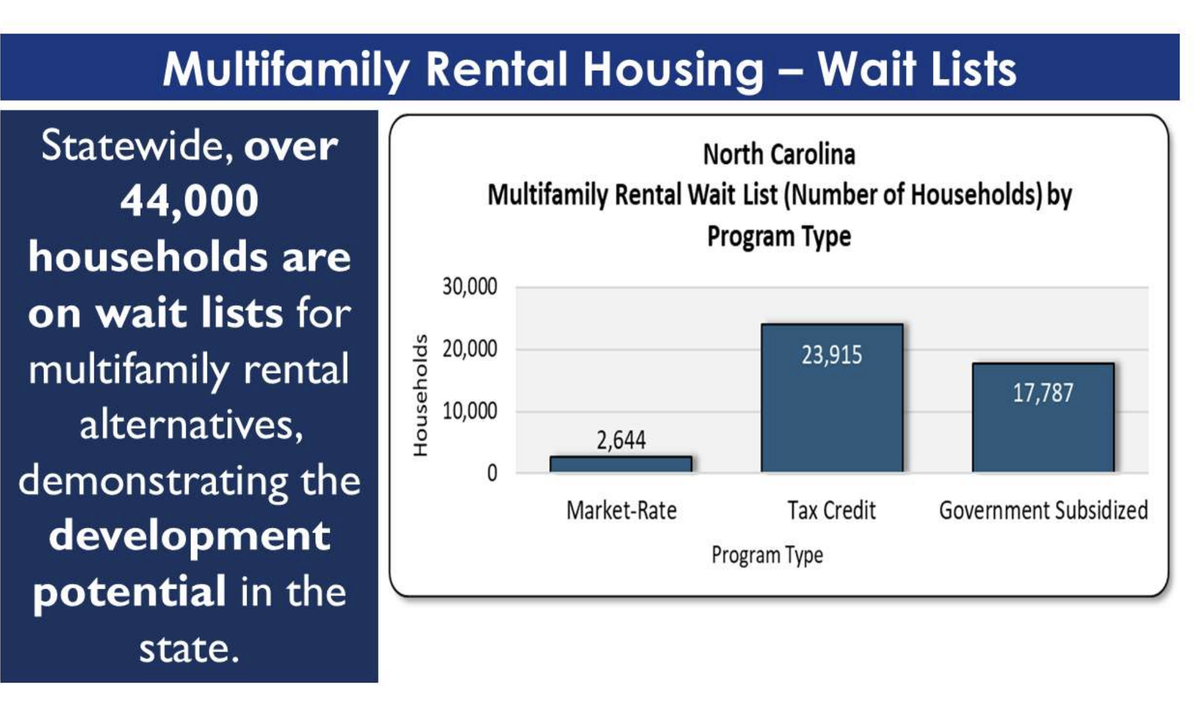
- Over 44,000 households are on waitlists for affordable rental housing.
What’s the silver lining?
The report’s analysis offered a silver lining.
Mike Walden, a distinguished professor and extension economist with NC State University, examined the economic impact of closing the housing gap in North Carolina. Constructing these units (both rental and for-sale) would generate an estimated $489 billion in “aggregate economic impact,” or gross domestic product (GDP), he said. It would also create nearly 2.2 million jobs in the state.
That’s a staggering figure when compared to the annual GDP of the entire North Carolina economy, which was $788 billion in 2023, he said.
“Of course, the construction required to close the state housing gap would require several years of activity,” Walden said.
Ultimately, it will require a collaborative approach, said NC Realtors president John McPherson. “One that brings together business, community, state and local elected officials,” he said.
It may also require land-use policy changes at the state level to allow for higher-density building, said North Carolina Home Builders Association executive vice president Tim Minto. “The numbers don’t lie. We need to do this,” he said. “This is a statewide crisis.”
To read North Carolina’s Housing Supply Analysis and Economic Impact Report, go to www.ncchamber.com
This story was originally published February 8, 2025 at 7:00 AM with the headline "Here’s NC’s projected housing deficit over the next 5 years — and a silver lining."