
Adult Gen Z-er still living at home? Why that’s not surprising if you live in Raleigh.
As Triangle housing costs remain high, millennials and Generation Z are taking longer to fly the coop compared to previous generations.
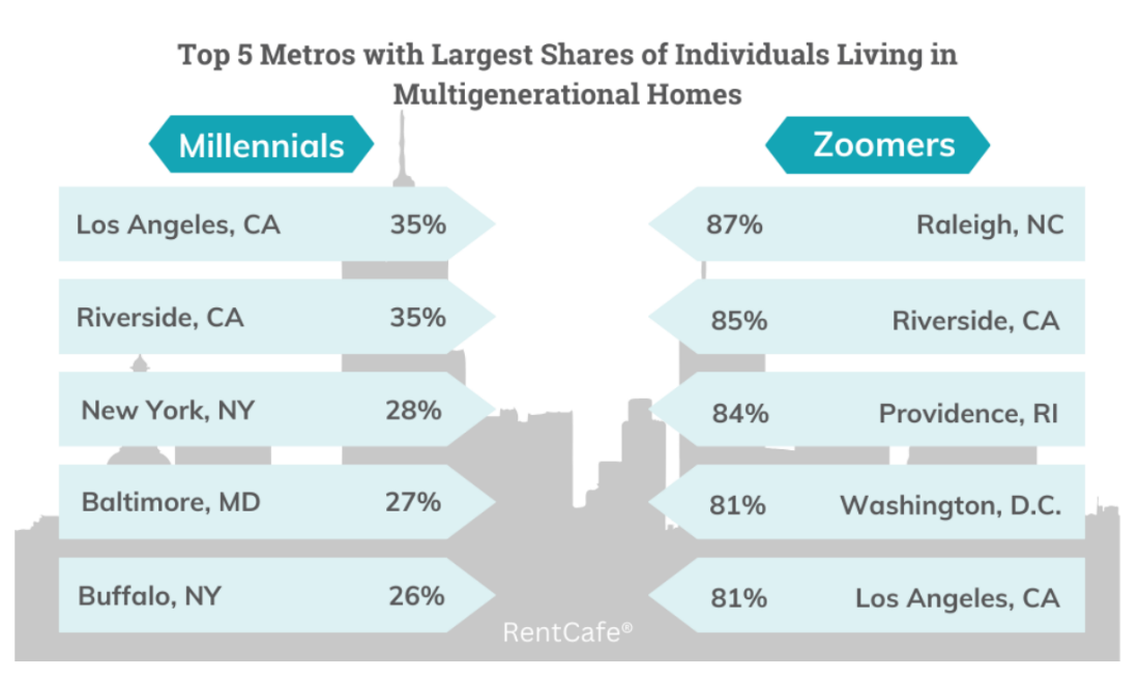
In particular, a whopping 87% of adult Gen Z-ers in Raleigh (aged 18 to 25), sometimes known as Zoomers, are still living at home with family members, earning the nation’s No. 1 spot for this age group in 2022, according to a new report from RentCafe.
That translates to roughly to 155,000 out of 178,000 Gen Z-ers either facing challenges leaving the family abode in a competitive housing market or consciously choosing to remain there.
In contrast, the metro’s millennials (aged 26 to 41) living with relatives make up only 11% of the total people of their generation — 41,279 out of 367,432. Compare that to the share in Los Angeles (35%) or New York (28%).
In the last five years, 62% of Raleigh’s millennials left their home to achieve independent living, the report said. That’s among the top in the nation and runs contrary to the belief that the pandemic has increased the number of adults living with their parents.
The state’s other metros followed similar trends.
Charlotte has the 10th highest share of Gen Z-ers who haven’t left the nest (76%), followed by Durham (73%) and Winston-Salem (71%). Among Charlotte’s millennials, 17% live with family members, compared to 9% in Greensboro and Durham, and 6% in Winston-Salem.
The typical millennial or Gen-Zer living with a family member is likely to be employed in food services, construction, education or retail.
RentCafe’s research team evaluated individuals living in multi-generational households across 260 U.S. metro areas. Using IPUMS data, it analyzed a number of variables: metro area, relationship to household head, generation breaks by Pew Research Center definitions, year, age, occupation, industry and personal income.
Why are millennials and Gen Z’ers taking longer?
Nationwide, 20% of millennials (about 14 million) and 68% (about 23 million) of Gen Z-ers still live in a shared household with at least one family member, taking longer to leave home compared to other generations.
Overall, millennials are slower when it comes to leaving the nest compared to previous generations: 18% of Baby Boomers and 17% of Gen X were living with their parents at the same age as today’s average millennial aged 34.
Zoomers also struggle: By 22 years old, 66% of millennials, 65% of Gen X and 61% of Baby Boomers were still at home, which was surpassed by a 68% share of Gen Z.
More to the point, they don’t see that changing anytime soon. According to a RentCafe survey, 47% of millennials and 41% of Gen Z-ers expect to continue sharing their home with someone else for at least another two years.
Surprisingly, 14% of millennials expect to live in a shared household for at least 10 years, while Gen Z-ers are somewhat more optimistic with only 6% envisioning the same arrangement into their adulthood.
So what’s the deal?
Among other factors, it mainly boils down to matters relating to finance or health, the report found.
Younger generations may find it more appealing to continue living in the parental home to save money on expenses, such as childcare costs, utility bills, rent or a future down payment.
Despite a national trend showing rents cooling in major markets, rents remain high across the Triangle.
In Raleigh, the median rent stands at $1,281 for a one-bedroom apartment and $1,457 for a two-bedroom in November, according to Apartment List. In Durham, the median rent currently stands at $1,175 for a one-bedroom apartment and $1,412 for a two-bedroom, the real estate website found.
Another factor could be more personal. “It’s likely that more and more millennials and Zoomers might choose to remain home to care for family members,” the report said.
This story was originally published November 8, 2023 at 11:50 AM with the headline "Adult Gen Z-er still living at home? Why that’s not surprising if you live in Raleigh.."
