It would cost Durham $17.4M to preserve its old police HQ. Is it worth it?
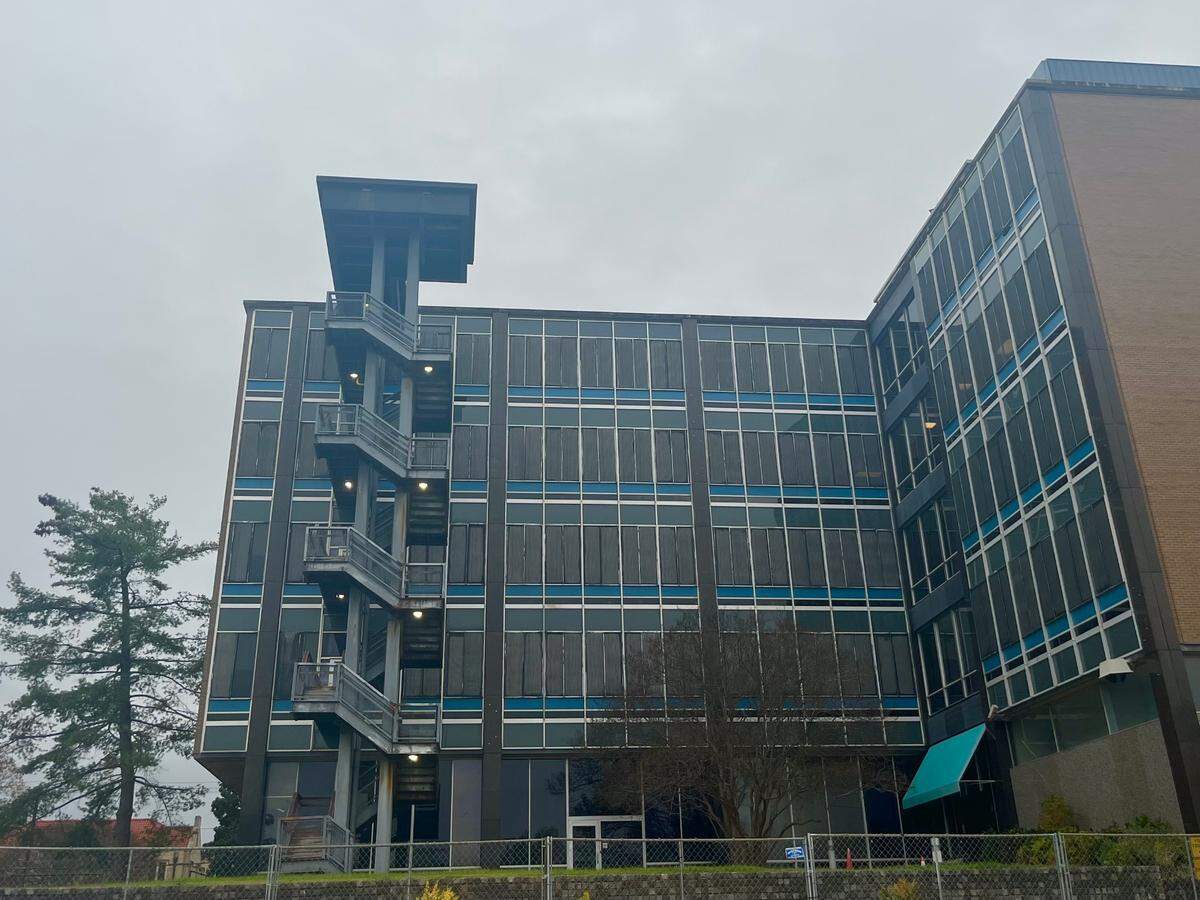
It could cost over $17 million to restore the rusting former headquarters of the Durham Police Department, and city leaders are torn over whether it’s worth it.
At a Thursday meeting of the Durham City Council, preservationists attempted to assure them it is.
“Adapting old buildings is what Durham does best,” Alice Sharpe told the council, reading the words of land planner Rob Emerson, former president of Preservation Durham’s board. “We have places like American Tobacco, West Village, Golden Belt, The Durham and Unscripted hotels, all character-defining places in Durham that were once slated for the wrecking ball.”
The structure was designed by modernist architect Milton Small in the 1950s for the Home Security Life Insurance Co.’s office at 505 W. Chapel Hill St.
The 4-acre site is owned by the city and served as police headquarters for a quarter century, beginning in 1992. It’s sat vacant since 2018.
Emerson interviewed Phil Freelon, the acclaimed local architect who designed the exterior stairway, before he died.
Freelon called the building “a noteworthy example of midcentury modern architecture, offering a counterpoint to its brutalist neighbor,” the Mutual Tower.
“I encourage the city to embrace this handsome structure as an important element of this site’s redevelopment plan as opposed to demolishing it,” Freelon was quoted as saying in 2018.
Tom Miller, who leads Preservation Durham today, said the consultants didn’t factor in a historic tax credit, which could return 30% of the development cost to the city.
“Once we knock these important architectural monuments down, the culture of the city is changed and we can’t replace them,” Miller said.
A private proposal to redevelop the land fell through in 2021, and two other ideas were rejected this summer.
‘Downtowns should be for everybody’
The price tag would cover gutting, repairing, modernizing and cleaning the aging building — making it into a shell ready for new use.
Mayor Pro Tem Mark-Anthony Middleton said he wouldn’t base his decision entirely on economics, but rather on values, calling it a “100-year decision.”
“This should be a signature corner; it should be a calling card for Durham,” Middleton said. “We’re really the only institution that is called upon to make decisions sometimes that may not appear profitable at first, because they’re in the interest of every single person.”
Mayor Elaine O’Neal said she agreed the site should be an iconic gateway to the city, but was torn on preserving the building.
“This comes from having grown up right around the corner from it,” she said. “I don’t remember it being a diverse building before it was the police department.”
Retired Herald-Sun editor Bob Ashley acknowledged its history as a symbol of policing is painful to many, but said it was important to tell the building’s story, “warts and all.”
“The malignancy that went on there in the eyes of many in our community, the pain that it caused for many in our community is very real,” Ashley said. “The building is more than any one tenant or set of tenants in its past.”
O’Neal, who was born in 1962, lamented a loss of diversity in downtown since her childhood.
“Downtown Durham is more segregated right now than it’s ever seen in my life. Downtowns should be for everybody,” she said. “As we talk about these renovations and we’re glad to see it renovated, but still, there are significant populations that are not included. And that’s what I’m concerned about.”
Council member Jillian Johnson said preserving the building was her lowest priority.
“I think $17 million is just an incredible amount of money to have to justify spending on a preservation project when we just have so many other critical and urgent needs in our city,” Johnson said.
“If it comes down to affordable housing versus preserving the building, I know where my vote is,” council member Javiera Caballero said. “I don’t actually think we’re going to get pitted against one another in that way.”
Mick Raynor spoke on behalf of Duke Memorial United Methodist, the church across the street.
“Frankly, we believe affordable housing needs are more vital to the culture of Durham than the historical preservation objectives,” Raynor said.
Is more office space needed downtown?
The council is expected to set development priorities for the site by the end of the year. A vote on how to proceed could happen in the spring.
“We do not expect the priorities to be identical. Too much time has passed, and too much change has occurred,” City Manager Wanda Page said.
Priorities for the site drafted in 2018 included any redevelopment having 80 affordable housing units, 250,000 square feet of commercial space, preservation, profit and a signature design.
Elizabeth Packer, a consultant with HR&A, told the council it may be wise to eliminate office space, or at least lower the square footage desired in 2018.
“Vacancy in downtown Durham was in the 2-5% range. It’s more than double today. That’s just one indicator that the market has not recovered and demand is not where it used to be,” Packer said. “Construction costs have more than doubled in the past four years for office. Rent has not kept up with that.”
Former Mayor and state Sen. Wib Gulley discouraged waiting for the market to improve.
“The problem you hit is that delay, for housing, only means two things: the cost will go up for the housing and the ability to provide a number of affordable units will shrink,” Gulley said.
Packer said if they don’t require any commercial space, a developer would likely build mostly residential.
“There is a very strong demand for apartments in Durham, and that demand is projected to continue to be robust,” she said.
Apartment occupancy rates topped 97% in the Raleigh-Durham area for the first time earlier this year, according to commercial real estate firm Avison Young.
This story was originally published November 11, 2022 at 1:45 PM with the headline "It would cost Durham $$17.4M to preserve its old police HQ. Is it worth it?."