New federal housing law aims to improve affordability. Will it help the Triangle?
AI-generated summary reviewed by our newsroom.
- The act became law on July 11 though the president refused to sign it.
- The law bars investors who own more than 350 single-family homes from buying more.
- The act permits FHA pilots for mortgages under $100,000 to expand financing options.
The 21st Century ROAD to Housing Act became law on July 11 — without the president’s signature — capping months of negotiations between the House and Senate. (President Donald Trump didn’t veto it, but he refused to sign it.)
The new law aims to address the national affordable housing shortage, especially in fast-growing regions like the Triangle.
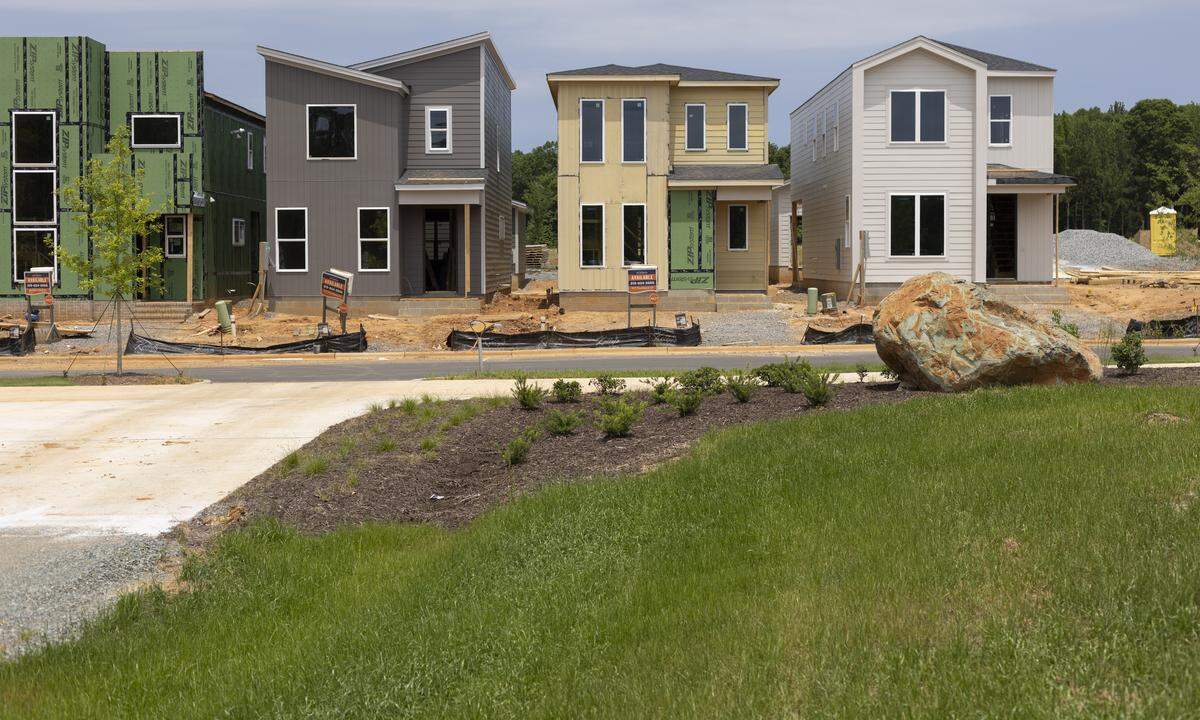
Raleigh, Durham and Chapel Hill have all pushed for more flexibility to build housing near transit and urban cores, but their efforts have been constrained by state-level rules. Experts say this package gives these metros new “federal tools” to build and preserve housing — but the impact will be gradual, and local governments will determine how much the region benefits.
Here’s what it does, and why it matters for the Triangle.
What the new federal law does
The 21st Century ROAD to Housing Act is a sweeping, bipartisan housing package that pulls together provisions from more than 60 bills.
It doesn’t override local zoning. Instead, it aims to streamline permitting, modernize environmental reviews, and coordinate infrastructure planning, so housing projects don’t get stuck in years-long delays, according to the Bipartisan Policy Center.
Eric Maribojoc, a UNC professor who focuses on affordable housing, warned against overestimating the impact.
“The ROAD Act provides new federal tools that can be used to accelerate reform and increase housing supply — but only if the local jurisdiction or state is willing to pass needed zoning and building-code reforms,” he told The N&O in an email.
Zoning, building codes and other housing regulations, which affect the supply of housing, remain controlled by local jurisdictions and states. “It won’t move the needle in jurisdictions that continue to strictly regulate the supply of less expensive housing,” Maribojoc said.
Why it matters for the Triangle
The law touches several pressure points that Raleigh, Durham and Chapel Hill have struggled with for years — from slow permitting and environmental-review delays to the shortage of “small-dollar” mortgages ($100,000 or less) in older neighborhoods.
It also targets the rise of institutional investors in Wake and Johnston counties, the need for more manufactured and modular housing options, and the “missing middle” zoning reforms already underway in cities like Raleigh and Durham.
The three provisions that matter most locally
Institutional investor limits
The law bars large investors — those owning more than 350 single family homes — from acquiring additional houses, with an exception for build-to-rent projects. The provision is aimed at curbing the rapid expansion of corporate landlords in markets where first-time buyers already struggle to compete.
Triangle relevance: Wake and Johnston counties have seen some of the fastest growth in investor purchases in the state, particularly in entry-level neighborhoods. The new limits could ease pressure on buyers who have been routinely outbid by national firms, experts say.
Small-dollar mortgage pilots
The act allows the Federal Housing Authority (FHA) to test mortgages under $100,000, a category long-underserved by traditional lenders. Many older homes — especially in legacy Black neighborhoods, rural counties, and parts of eastern North Carolina — fall below that threshold, leaving buyers with few financing options.
Triangle relevance: In Durham’s older neighborhoods and in lower-priced areas across the region, access to small-dollar mortgages could make it possible for residents to purchase homes that have historically been difficult to finance.
Manufactured housing modernization
The law removes the federal requirement that manufactured homes be built on a permanent chassis and raises FHA loan limits for these units. The changes are intended to modernize the sector and expand access to lower-cost housing.
Triangle relevance: Manufactured housing remains one of the region’s most important affordability tools, particularly in Chatham, Johnston and rural Wake. Modernizing the rules could make it easier to build and finance new units — and preserve an option that many households rely on as prices climb, experts say.
What Triangle experts say
Jenn Truman, an architect and founder of CITYBUILDER, said the most important shift in the new law is its recognition that “housing affordability begins with housing supply.” She added that the act could have meaningful local impact because it ties federal incentives to cities that are already advancing zoning reforms.
“Because Raleigh and Durham have made significant progress on housing production and reforming outdated land-use policies, our area is well positioned to take advantage of these incentives,” she said.
But she cautioned that the law’s ultimate impact will depend on the Department of Housing and Urban Development’s rulemaking in the coming months. Congress left many details to the agency, she said, and the outcome will hinge on whether HUD follows through on reforms that have proven effective — including reducing parking requirements, allowing more housing types, and streamlining permitting.
Eric Braun, a retired land-use attorney and founder of RaleighForward, highlighted reforms to the HOME and Community Development Block Grant (CDBG) programs, which Raleigh already relies on to finance affordable housing and neighborhood investment. Allowing CDBG funds to support new construction, he said, could immediately strengthen the city’s existing efforts.
He also pointed to the Whole Home Repairs pilot as a critical tool for aging housing stock. “Helping lower-income homeowners repair aging homes can prevent displacement, preserve naturally occurring affordable housing and allow longtime residents to remain in their neighborhoods,” he said.
On investor limits, John Wood, owner of Re/Max United in Cary, said he expects to see some “workarounds” for the institutional buyer. But he hopes this will “open the door to more properties available to a broader group of buyers.”
“Maybe this will slow those investors in the future,” he said.
But even with dozens of new tools, experts stress that relief will be slow.
Todd Hancock, a broker with Hodge & Kittrell Sotheby’s International Realty, noted that federal changes must filter through local rules, municipal decision-making, and market dynamics before residents see measurable results.
“Ultimately, the power lies in the hands of local municipalities so public involvement will be the catalyst for future changes,” he said.
This story was originally published July 18, 2026 at 8:34 AM with the headline "New federal housing law aims to improve affordability. Will it help the Triangle?."