Grass-powered NC startup from former SpaceX engineers dreams of a new HQ
AI-generated summary reviewed by our newsroom.
- Plantd turns 20-foot-tall grass stalks into housing panels in Oxford.
- CEO Nathan Silvernail says company's nine-figure valuation will double later this year.
- Plantd supplies D.R. Horton and announced its first furniture contract in April.
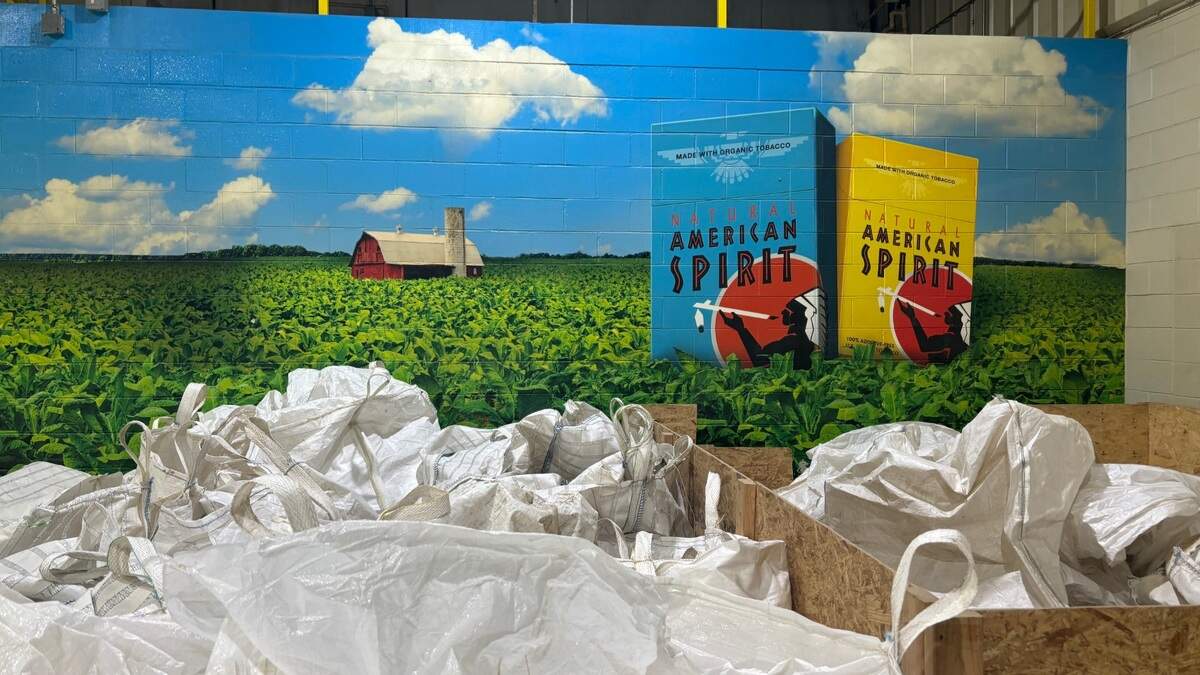
Picture less small green blades and more thick round stalks that stretch 20-feet high. That’s the type of grass Plantd makes into single- and multi-family housing panels from inside a former tobacco factory in Oxford, North Carolina.
After five years, CEO Nathan Silvernail says his startup today is at an inflection point. He expects investors will double its valuation, currently in the low nine-figures, in a funding round later this year. The company continues to supply the nation’s largest home builder, D.R. Horton, on North Carolina projects. And in April, Plantd announced its first furniture contract (with a Johnston County manufacturer).
But is it ready to produce more panels, faster? How does a startup that celebrates its “gratuitously carbon-negative” environmental impact react to reduced U.S. policy interest in sustainability? And how long will the 92-worker company keep its headquarters in Oxford, a town of 9,000 north of Raleigh?
“2026 is that critical year when we’re going from the R&D role to full-scale production,” Silvernail said in an interview last week with The News & Observer. “Then using that as that foundation to really kind of blast off.”
Blast off is apt phrasing. Silvernail met his Plantd cofounder Huade Tan while working at Elon Musk’s aerospace company SpaceX. Both men were miserable there, Silvernail has said, but he still took lessons from that experience over to North Carolina.
The N&O conversation with Silvernail, which follows, has been lightly edited for clarity and length.
N&O: What lessons did you learn from your time at SpaceX that you’re applying at Plantd?
Silvernail: I started on like the first launch vehicle, right? I think SpaceX has launched like 500 rockets or something at this point. I started on like the first one. So, I got that experience of how to develop hardware, here’s how you fly it once every two years, here’s how you go to scale. Getting it to where we were launching once a week was a crazy gnarly learning curve. In hardware development, building one-of-one thing is a very different skill set than building 100 of that same thing, but I got to get both ends of that spectrum.
That’s the experience I’m drawing on now. How we go from building one-of-one thing to, you know, a plan to build four or five, six or more every year of that same thing is the new challenge.
N&O: What production advantages does Plantd bring to this industry?
Silvernail: It’s the vertical integration aspect of it. I own my own machines; I don’t have to depend on anybody else. I can build them as fast as I want, I can distribute them as fast as I want. And then at the same time, I have my own biomass.
It’s just like SpaceX. You enter Elon and his idea on, ‘Hey, I’m going to make these (rockets) reusable, which is going to allow me to drive all these costs down, while at the same time, I’m going to vertically integrate. I’m going to be the only rocket company that makes my own engines. I don’t have to depend on all of these parts from other folks, that allows me to really, really aggressively control my prices.’
Reacting to the significant U.S. sustainability shift
N&O: U.S. policies toward sustainability have changed drastically from the previous administration to this one. Has that affected Plantd’s work?
Silvernail: It’s notable, absolutely. I would say climate was sellable on the venture capitalist market for a long time. I think we started our company right at the tail end of that window, lucked out a little bit on timing, but then it shifted. Even during that time period, you couldn’t charge for a green premium in a meaningful way. Nobody would rally behind them. Now it’s even more true today.
You look at the new administration, the global economy and how that’s impacting our economy here domestically, and we’ve had to kind of reshift our focus. We don’t change our ethos. Like our bread and butter is always around sustainability. It’s showing that we can create engineered lumber and building materials in an efficient way when it comes to emissions and finance.
N&O: Can you give an example of how the current administration’s approach to environmental sustainability manifests?
Silvernail: Where that kind of shows up is not necessarily in the fluctuations on perspective of sustainability, but horrible operations, where you have government shutdowns every month. We had that kind of mass firing event from DOGE. That slowed the process (for processing applications for federal financing programs) down.
The federal review phase that you have to go through was just constantly getting pushed out. And that’s really where it showed up to make it difficult. I’d say, for us, if we were starting in this market, and we were just now beginning, it would be a non-starter, most likely. Luckily, we’re not in that phase.
You know, the current administration and in the current climate, if you will, is very interested in American manufacturing and bringing jobs back to the country and bringing GDP back to the country, and so we fit really nicely into that category.
On future plans in North Carolina
N&O: Why did Plantd choose to launch in North Carolina?
Silvernail: I think the mix between agriculture and industry here is really, really advantageous for what we’re trying to do. When you’re bringing new technology plus a new supply chain and everything involved into the mix, being able to co-locate all of that as much as possible is ideal, and North Carolina and South Carolina, I’d say, are really more of the regions where that’s possible.
If you look at the kind of mega region of Charlotte, Raleigh and Greensboro being developed, all of our product for the next few years will be utilized directly in this region. So it also offered an advantage in that regard.
N&O: As you grow, do you see Oxford being your HQ going forward?
Silvernail: This is going to be our manufacturing hub. This won’t remain our HQ. For now, it’s kind of everything. It’s where we do our tissue culture cloning, it’s where we do our manufacturing, our engineering, our production, all of that. The future aspect of this will be a manufacturing hub for the lumber products, as well as the machines that produce them, and then we’ll be expanding out domestically and internationally with the machines that we produce here. But as far as where our HQ might live in the future, I don’t have any thoughts around that yet.
N&O: So long-term headquarters, probably not Oxford?
Silvernail: I think longer-term, especially as we look more into rapid high-level expansion, I need to start robustifying my administrative team, my executive team, and all of that. Oxford is fantastic for engineers, technicians, agriculturalists, and all of that, but when it comes to actually running the company, it’s a little bit shorthanded.
N&O: You mentioned your finished products are mostly in North Carolina. Where are they going?
Silvernail: I mean, they’re going right down the block, pretty much. They’re staying very local. The demand here is incredibly high.
This story was originally published June 11, 2026 at 5:40 AM with the headline "Grass-powered NC startup from former SpaceX engineers dreams of a new HQ."