Raleigh Midtown’s affordable housing disappears as luxury plans advance
AI-generated summary reviewed by our newsroom.
- Kane Realty will de‑lease the 365‑unit Pointe for a 28‑acre redevelopment.
- The redevelopment plan calls for more than 1,200 new homes plus office, trails and retail.
- In eight years, Raleigh lost roughly 35,000 naturally affordable units.
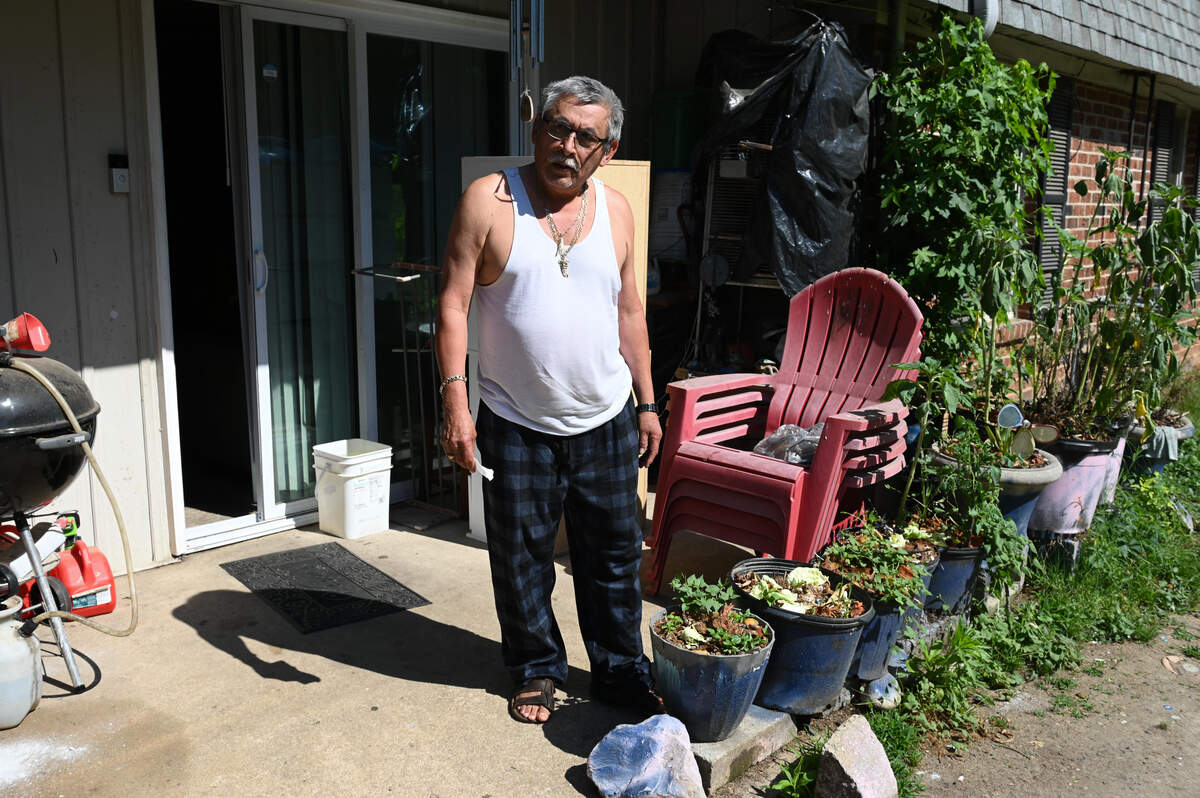
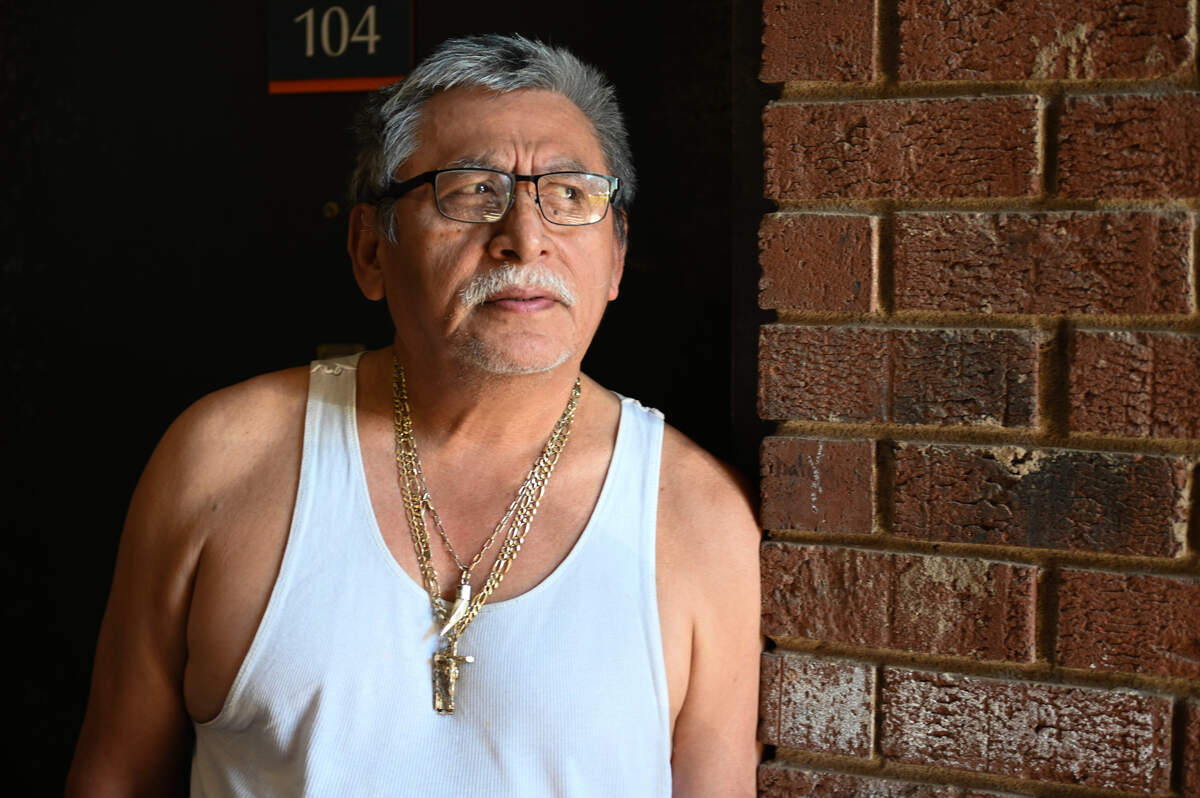
For 69‑year‑old Candelario Ocampo Fuentes, The Pointe at Midtown has been home for more than 15 years.
Tucked behind the glass towers of Raleigh’s North Hills, the 1960s garden‑style complex is where he raised four children, worked long shifts in the kitchen at Mami Nora’s, and built a life in a city that has grown around him.
Now he is quietly packing up. A nonrenewal notice arrived in February, giving him until next spring to leave — one of hundreds of residents who will be displaced as the 365‑unit complex at 835 Navaho Drive, known to neighbors as “Los Navaho,” is cleared for redevelopment.
Over the next few years, the property — one of Midtown’s last pockets of low‑cost housing — will be emptied and demolished to make way for a sweeping 28-acre expansion on Navaho Drive along I-440. The development is led by Kane Realty, which is behind much of North Hills’ recent transformation. Plans released in May call for more than 1,200 new homes, along with office towers, trails and retail, in what would be the largest addition yet to the North Hills Innovation District.
On a recent Tuesday morning, Ocampo Fuentes stood on the small stoop outside his three‑bedroom unit, where he tends potted sunflowers and keeps two blue‑feathered parakeets. He spoke calmly about the move he knows is coming.
“What can we do?” he said in Spanish. “The owners have their investments. The ones who have, have — and those of us who don’t, don’t. We find our place, little by little, wherever we can.”
The complex’s more than 40 buildings will be “de‑leased” in phases — allowing leases to expire without renewal, said Kane spokesperson Michaella Murphy. Residents were given more than a year’s notice, “exceeding the city’s 180‑day requirement.”
Leases may be extended through March 31, 2027, at current rates, and some residents may transfer to units with later end dates, depending on availability.
The first leases expire in less than a year.
“We recognize The Pointe is home to a community,” Murphy said, adding the firm has installed a support program to “ease the transition and minimize the disruption.” It’s offering one-on-one help for residents facing relocation, including a dedicated support manager, guidance on housing options, referrals to local agencies, and limited financial relief such as application‑fee assistance and waived early‑termination or short‑term lease fees.
“We’re committed to clear communication and supporting residents,” she said.
But the phased teardown of The Pointe underscores a broader tension in Raleigh’s housing landscape: Even as the city leans on upzoning, density bonuses and “missing middle” reforms to address a worsening shortage, older “naturally occurring affordable housing,” or NOAH, is disappearing far faster than it can be replaced. Housing advocates warn losing NOAH means higher rents, fewer options for working families, and more displacement.
It’s a Triangle-wide problem, though the pattern varies by city. Chapel Hill has already lost most of its NOAH, a result of decades of high land costs and limited supply. Durham still has older garden‑style apartments, but they’re rapidly being renovated, repriced or redeveloped as rents climb and demand surges.
Before de‑leasing began, rents at The Pointe typically ranged from the low $900s for a one‑bedroom to the mid‑$1,500s for a three‑bedroom — well below today’s market and firmly in the naturally affordable category.
Ocampo Fuentes knows it won’t be easy to find a new home. He’s focused on helping his 20‑year‑old son find somewhere to live and moving his wife into a trailer across town. After that, he plans to leave Raleigh — and the United States — for good, returning to his native Mexico.
“For me here, right now, there aren’t many opportunities,” he said. “I’m getting by with my savings and help from my children. I just want my youngest son to get settled and on his feet.”
A rapidly shrinking supply
Between 2017 and 2022, median rents in Raleigh climbed 37%, according to American Community Survey (ACS) data used in the city’s 2025 Affordable Housing Plan. Meanwhile, the share of rentals under $1,000 collapsed from 55% in 2016 to 10% in 2024.
In eight years, Raleigh lost roughly 35,000 naturally affordable units.
Intensifying pressure on the remaining stock: Raleigh adds 10,000 new residents a year, outpacing housing production. Older multifamily buildings are being demolished or repositioned, while most new units enter the market at $1,600 and above — far out of reach for many working families. Rents at Kane Realty’s North Hills apartments usually run from about $1,700 for a one‑bedroom to well over $4,000 for larger units, reflecting the district’s luxury, high‑amenity market.
The result is a structural affordability crisis that disproportionately affects Black and Latino households.
Raleigh Mayor Janet Cowell says she’s working for a better outcome but acknowledged the strain.
“Given the cost of housing, I understand the frustration at seeing NOAH units lost,” she said in an email. But the city and other metros like Durham and Chapel Hill have “limited tools to prevent the loss of these units, or to help those who are forced to move when the units are redeveloped,” she said.
Among the top reasons: North Carolina is a Dillon’s Rule state, meaning cities can exercise only powers explicitly granted by the state legislature. As a result, Triangle metros cannot require developers to include affordable units as a condition of rezoning — even when older affordable housing is being demolished.
Relocation assistance is available for residents in subsidized housing, such as Raleigh Housing Authority or DHIC communities. But for most renters, Cowell said, “that level of responsibility and obligation does not exist.”
Raleigh has invested in preservation efforts, including a home‑rehabilitation program for longtime owners and a $4 million contribution to the Wake County Affordable Housing Preservation Fund, part of a $62 million initiative to preserve 3,000 units over 15 years.
The city also recently approved placing a $203 million bond referendum on the November ballot — a package split evenly between affordable housing and transportation improvements.
City leaders stressed that the bond wouldn’t require a tax increase, a point chief financial officer Allison Bradsher called the city’s “steady state” approach.
‘These are real people’
But for many resident‑led opposition groups, these measures fall short.
“When [these residents] are evicted, who is going to help them find a new place to live?” asked Randy Jones, 69, a retired asset manager who founded Midtown Neighbors United, a group pushing back against rapid redevelopment.
“These blameless folks [will] be forced to scramble to find affordable housing in an increasingly unaffordable market. That’s cruel.”
Stef Mendell, founder of Livable Raleigh, an all‑volunteer advocacy group, argues that the city’s reliance on “supply‑side strategies” — the idea that adding more housing of any type will ease overall costs — has not delivered affordability.
“These speculative rezonings only drive up land prices and taxpayer assessments without adding units, much less filtering down affordable units,” she wrote in a recent blog post. She supports increased taxpayer funding and greater developer contributions.
“There are ways to do this with the right incentives,” she said in an N&O interview.
But for 28‑year‑old Fabian Ramirez, the clock is ticking.
Originally from Guatemala, he has lived at Los Navaho for nearly four years — long enough for his third‑grade daughter to learn to roller‑skate on the cracked basketball court and for the neighbors in Building 801 to feel, as he puts it, “like one big family.”
When the nonrenewal notice arrived, he stayed calm. Management told him he could move to another building across the courtyard, a temporary solution that would keep his daughter on the same bus route a little longer.
“They’re not abandoning their people,” he said in Spanish. “They’re trying to help us stay and have options.”
He’s unaware that those buildings will eventually be torn down, too. “No, supposedly they’re going to keep that area,” he said. “That’s why they’re relocating their tenants over there.”
Ramirez recently lost his construction job — “Layoffs, I think,” he said — and has been applying to new companies while trying to keep life steady for his daughter.
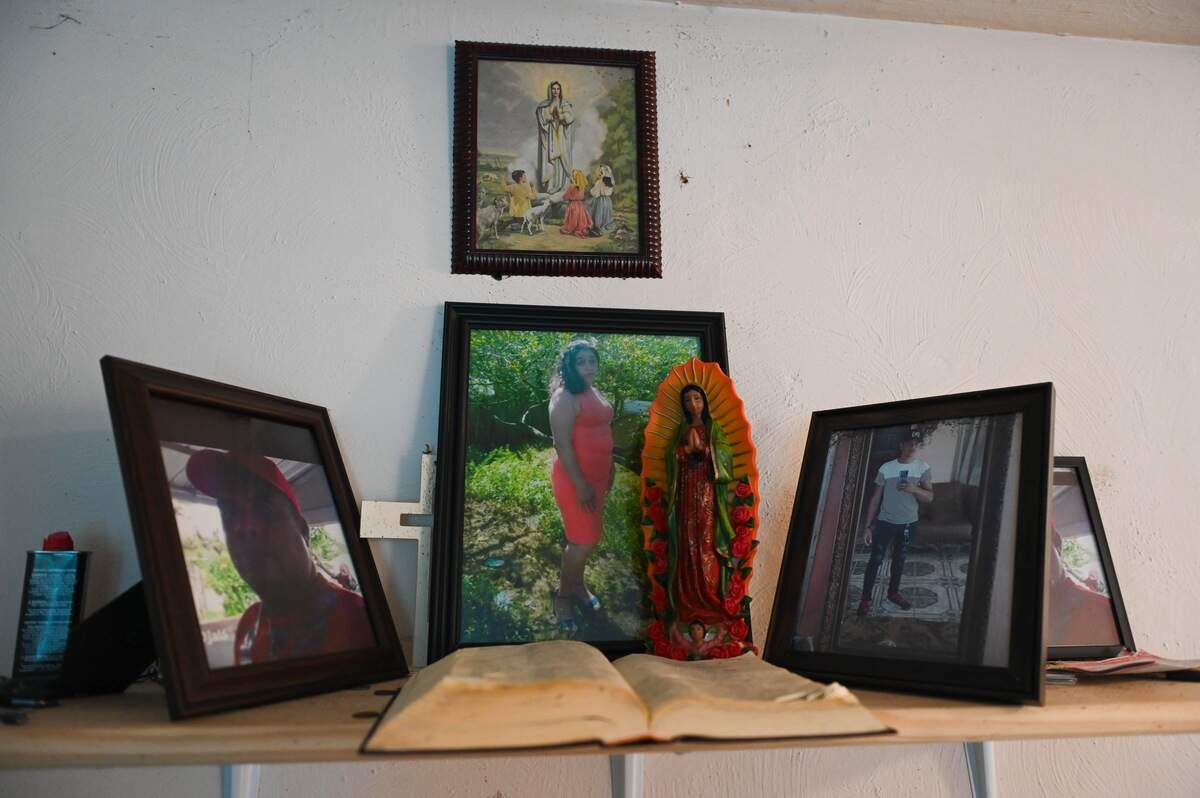
Inside his apartment, he keeps a small memorial altar to his parents and brother, who were killed in Petén, Guatemala, during a family land dispute two years ago. People say to him, “Just go back.” But he knows there’s nothing to go back to.
“I stayed here for my children. For their safety,” he said.
Now Ramirez is slowly packing up, waiting for January, hoping the next apartment materializes, and holding onto the final months of a place that offered peace, community and a sense of permanence — until the redevelopment plans arrived.
“We just want to stay together as long as we can,” he said. “This has been our home.”
BEHIND THE STORY
MOREThis story is part of a reporting partnership between The News & Observer and Enlace Latino NC to better cover the displacement of Latino and immigrant residents in Raleigh. Enlace Latino NC’s deep relationships in Spanish‑speaking communities, combined with the N&O’s housing and development reporting, allowed us to spend time inside “Los Navaho,” speak with residents in their preferred language, and document the human impact of redevelopment with greater care and accuracy. The collaboration ensured that residents’ voices — often overlooked in major land‑use decisions — shaped the story from the ground up.
This story was originally published July 15, 2026 at 5:15 AM with the headline "Raleigh Midtown’s affordable housing disappears as luxury plans advance."