North Carolina’s unraveling VinFast relationship detailed in new lawsuit
AI-generated summary reviewed by our newsroom.
- North Carolina sued VinFast in Wake County over VinFast's failures at Chatham campus.
- State claims VinFast missed construction and reporting deadlines and halted site work.
- VinFast says it expects work to resume.
I’m Brian Gordon, tech reporter for The News & Observer, and this is Open Source, a weekly newsletter on business, labor and technology in North Carolina.
North Carolina says it tried to do this the easy way.
On Dec. 11, state commerce officials met with a trio of top VinFast executives to communicate that North Carolina would purchase the carmaker’s dormant Chatham County campus. The state was willing to coordinate with VinFast on any public communications regarding this sale, an olive branch at the end of a doomed partnership.
But in their minds, relinquishing the land that once promised to house a multi-billion-dollar auto factory wasn’t something VinFast could legally resist.
That’s all according to a lawsuit the N.C. Department of Justice filed against VinFast in Wake County court Thursday. The fact there’s now litigation should clue you in on how that December meeting went.
“VinFast rejected this offer and reiterated its plan to construct a facility on the site,” the lawsuit reads, “without explaining how it planned to have an operational facility by its deadline in six months, given that it had yet to erect a single building or structure on the site.”
Yes, a key ingredient to starting a factory is having a factory. Even a semblance of a factory may have satisfied. Instead, the state wanted to recoup the megasite it had already invested millions of taxpayer dollars in. By late 2025, North Carolina had officially lost patience with VinFast.
For years, state commerce officials gave controlled public statements about VinFast’s lingering prospects in North Carolina. This week’s lawsuit details what was happening behind the scenes.
Bounced emails, past deadlines, and a nonpayment
Their marriage (though remarkably rushed) started off well. A ceremony in March 2022 marked VinFast’s arrival. The nascent EV maker would build a 7,500-worker car and battery plant 30 miles southwest of Raleigh. It was an answer to North Carolina’s decades-long pursuit of a major auto assembly facility. In exchange, the state offered VinFast incentives — both performance-based tax benefits and upfront funding to prepare the Chatham campus.
The following summer, North Carolina and VinFast officials convened on the site for a celebratory ribbon-cutting.
Then, nothing. According to the state lawsuit, the site’s general contractor Clayco terminated its VinFast contract in June 2024 over “failure to provide the required proof of financing or capital sufficient to complete construction of the project.”
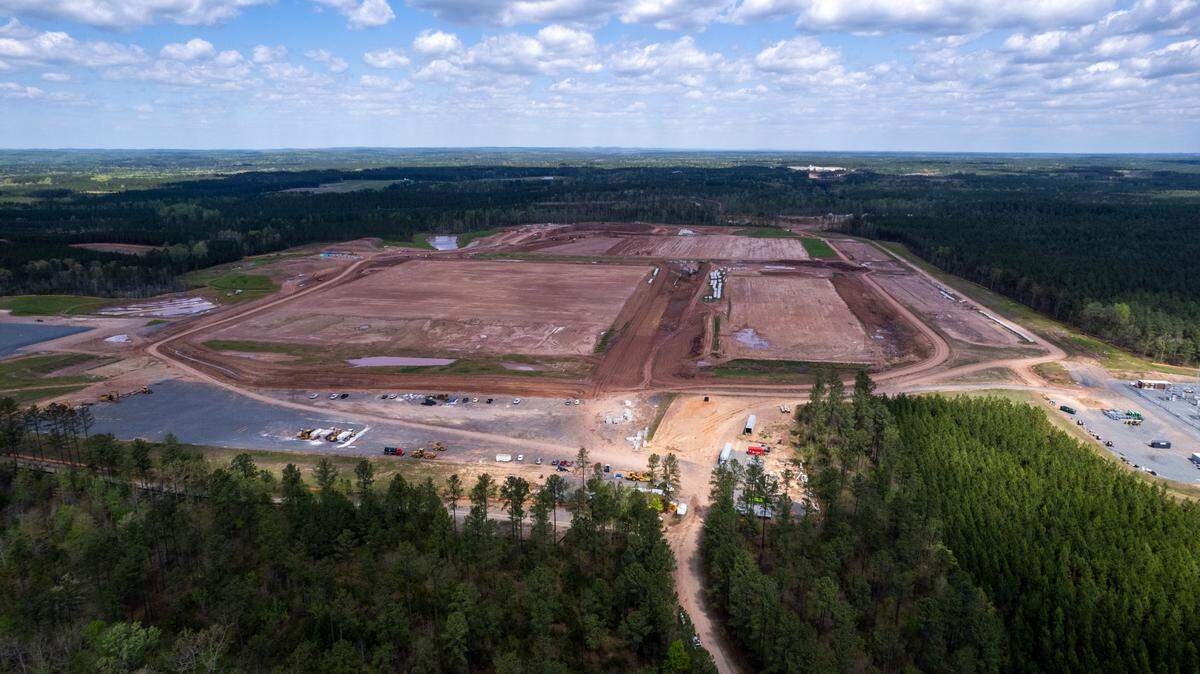
Wary of VinFast’s lack of progress, the state requested that the company send monthly project updates. However, VinFast only provided sporadic updates which lacked meaningful detail,” the lawsuit reads. In December 2024, VinFast ended its contract with the construction firm Barnhill, and its work in Chatham County effectively halted.
The next calendar year brought more communication issues and a fight over a $10,588 bill. In January 2025, the N.C. Department of Environmental Quality notified VinFast that the email address listed as the company’s main point of contact didn’t work. In May, NCDEQ again asked VinFast to update its contact form, the lawsuit states.
That same month, the department told VinFast it had an unpaid fee for an annual air quality permit. The state says it terminated this permit in October over nonpayment.
Such examples of uneven internal corporate organization did echo what former VinFast employees previously told me about the company’s first year in North America.
North Carolina’s lawsuit includes more developments, or the absence of developments. The upshot of the state case is that VinFast has clearly failed to comply with multiple deadlines, and this failure legally entitles North Carolina to take over the land and remarket it to another employer who wants a pad-ready site and proximity to the Triangle. For example, another requirement is that VinFast will have created 1,750 local jobs by the end of this year.
Late Thursday night, a VinFast spokesperson provided me this statement about the lawsuit and said construction is expected to resume. A timeline wasn’t provided.
“We have only become aware of the matter through public media reports and have not yet received any official documentation from the State of North Carolina. We will review and provide an official response once we receive all relevant materials from the State.
“Recent changes in U.S. policies related to the EV industry have impacted the project timeline, requiring additional time for us to evaluate appropriate implementation conditions. Contracts with contractors have already been signed, and construction activities are expected to commence shortly in accordance with the planned schedule.”
Clearing my cache
- Here’s a headline you wouldn’t have seen in 2025: Wolfspeed’s stock is surging, and there’s an intriguing argument for why the Durham chipmaker has brighter days ahead.
- In a defense that was one part fiery and one part folksy, WakeMed CEO Donald Gintzig addressed community members Tuesday night regarding his health system’s plan to merge with the larger Charlotte-based Atrium Health.
- Goodyear plans to close its 1,700-worker tire factory in Fayetteville next year. It will be the biggest plant closure statewide since QVC exited Rocky Mount in 2021 following a fatal facility fire.
- A bill advancing through the N.C. House would set state regulations on data centers, including noise impact assessments, no local incentives for hyperscale projects and closed-loop water cooling to lessen resource consumption.
- This legislation also prevents the retirement of baseload power facilities (which includes coal or natural gas plants) until a nuclear facility has been authorized to replace them.
- To protest Jeff Bezos, a video of Triangle-area Amazon worker and union organizer Mary Hill was projected onto a New York City apartment building during this month’s Met Gala
- Wilmington’s Live Oak Bank asked out of its 2022 state incentive to create 200 jobs at its coastal headquarters.
- Cisco, one of the largest Triangle employers, announced companywide layoffs last week affecting roughly 4,000 workers. The company declined to share how many of those cuts may be local.
- Federal Reserve Bank of Richmond President Tom Barkin spoke to reporters in Raleigh after a luncheon Thursday hosted by the Urban Land Institute. “And I’d say in almost every interview I do today, with the many businesses I talk to, and I probably talk to 30 this week alone, I’m asking them (about) AI,” he told a group of reporters after his speech. “What are you doing with it? How is it rolling out? What are the implications in headcount? Could that affect your pricing?”
National Tech Happenings
- The Trump administration plans to take equity stakes in nine quantum computing companies via a $2 billion investment. Half of this money would go to IBM, which partners with NC State on a quantum computing research center in Raleigh. Whether the U.S. government should take ownership in private businesses is another question.
- Minnesota is the first state to ban prediction markets, a move the federal Commodity Futures Trading Commission immediately sued to block. The CFTC currently only has one board member, Trump-appointee Chairman Michael Selig.
- Elon Musk’s SpaceX has disclosed its finances ahead of its anticipated IPO.
Thanks for reading!
Thank you for supporting local journalism. If you liked it, consider sharing it with a friend. If it was forwarded to you, sign up here to subscribe.
This story was originally published May 22, 2026 at 10:21 AM with the headline "North Carolina’s unraveling VinFast relationship detailed in new lawsuit."