Parking lot power plant: NC factory makes its own electricity from the sun
AI-generated summary reviewed by our newsroom.
- The plant can produce 100% of its operational electricity but stays tied to the grid.
- The “microgrid” uses photovoltaic panels and a large battery for storage.
- The system has prevented about 89 tons of CO2 pollution and saved $18,292 since March.
It was cloudy Monday morning, but the solar panels over the parking lot outside the Siemens factory in Wendell were producing more power than the building and all the machinery inside could use.
Nearly 800 people work in this 272,000-square-foot plant, hidden in the woods near Lizard Lick. Many of them make electrical switching gear and circuit breakers for the Siemens Electrification and Automation business, which has its U.S. headquarters here.
Earlier this year, the plant began drawing power from its own “microgrid” — the photovoltaic solar panels that generate electricity and a large battery that stores the excess for when the sun goes down.
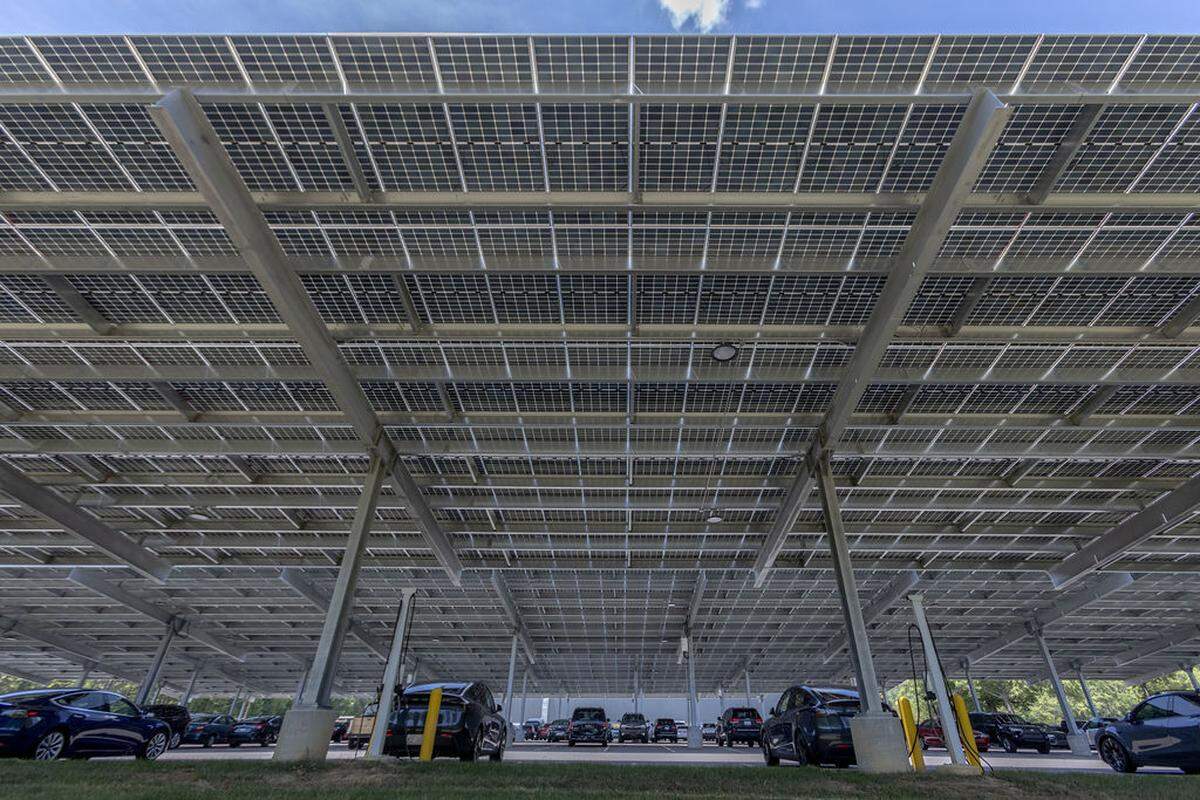
“Our site here can now produce 100% of the electricity required to power our operation,” Brian Dula, who heads the Siemens unit, said at an event Monday to celebrate the new system.
The Siemens plant remains attached to the grid. After a long night without sun, it sometimes needs electricity from Duke Energy, said David Simmons, a product trainer for Siemens. By the afternoon, the panels generate so much excess power that some goes back out on the grid, Simmons said.
“We don’t get money; we get credits for future bills,” he said. “So, like money.”
Simmons was standing in front of a large digital display that shows in real time how much power the system is generating and where it’s going. At 10:45 a.m., despite the clouds, the solar panels were creating 586 kilowatts of power, while the Siemens campus was using 423 kilowatts. The excess was going to recharge the battery.
The display also listed how many tons of carbon dioxide pollution the system had prevented, based on estimates provided by Duke Energy: nearly 89 tons since March. It also showed how much Siemens had saved on electricity during that time: $18,292.
That’s a small part of the financial benefit Siemens figures it gets from being essentially self-sufficient. In an area prone to hurricanes and other weather that can bring down power lines, preventing the plant from going idle is a bigger benefit than the energy savings.
“Losing production in the facility is more costly in many cases than the energy itself,” Dula said. “So it’s a combination of resiliency and power consumption.”
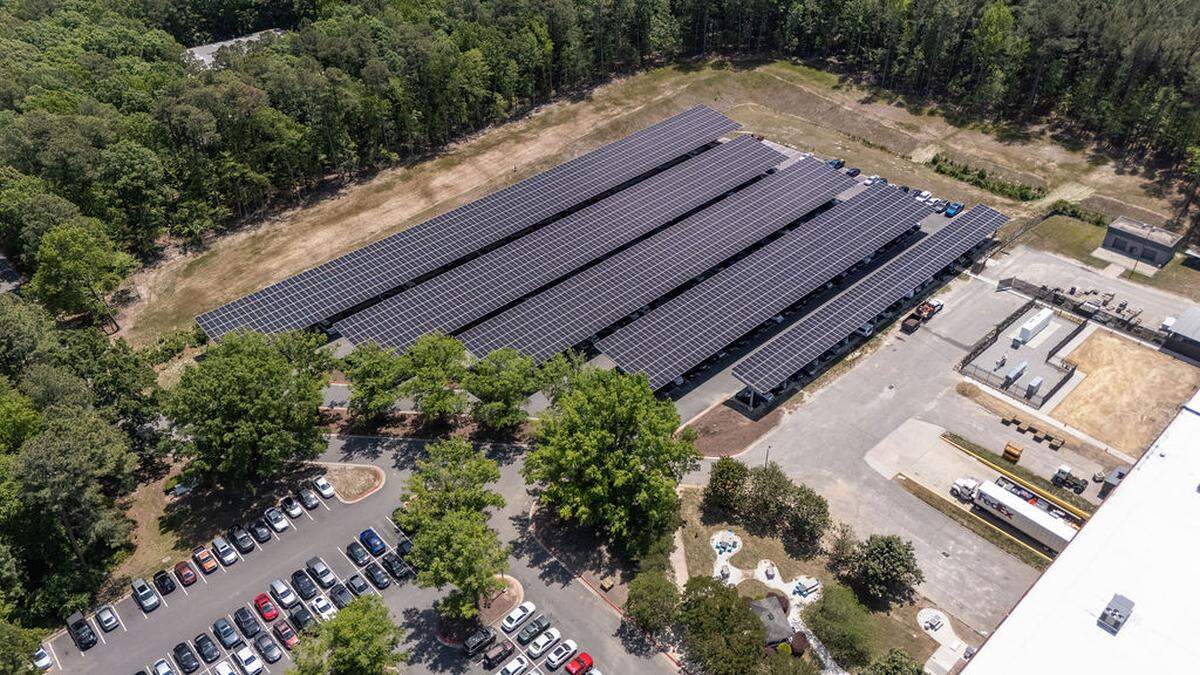
Siemens received a federal grant from the Inflation Reduction Act of 2022 that paid for about a quarter of its microgrid, Dula said.
Speaking at the plant Monday, U.S. Rep. Deborah Ross said the Trump administration is rolling back such support for clean energy. Economic growth and a healthy environment are closely linked, Ross said, but federal policies now pit the environment and the economy against each other.
“All while our energy sector is in turmoil due to global conflicts,” she said. “That’s why we need solutions like what we’re seeing today.”
Siemens makes many of the components that went into creating the microgrid. The Wendell building includes a showroom with all sorts of power equipment the company makes here and across the country. The microgrid itself is now something the company can show customers to demonstrate how their factories, hospitals or other facilities can reduce their dependence on power generated off-site.
This story was originally published May 12, 2026 at 6:30 AM with the headline "Parking lot power plant: NC factory makes its own electricity from the sun."