Raleigh leans on public–private partnerships to deliver hundreds of affordable homes
AI-generated summary reviewed by our newsroom.
- Two new Raleigh communities opened, adding nearly 300 income-restricted apartments.
- Both projects used Low Income Housing Tax Credits, tax-exempt bonds, and more.
- Oppidan developed the sites and is building a third Raleigh project called Barton Oaks.
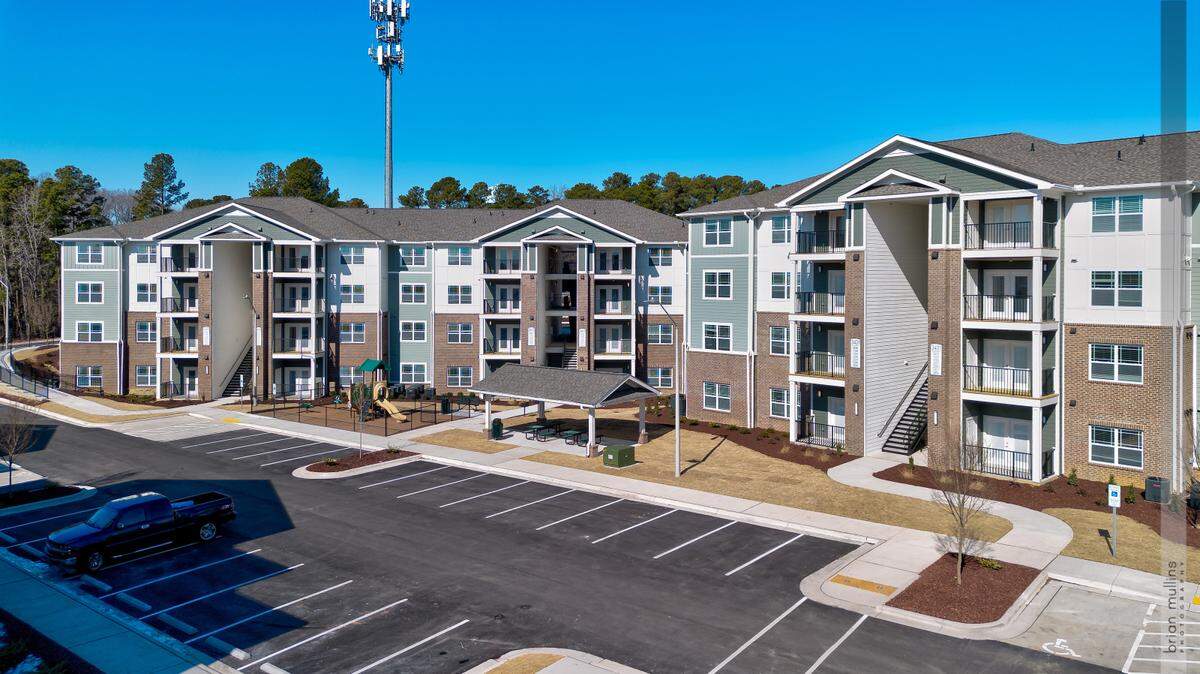
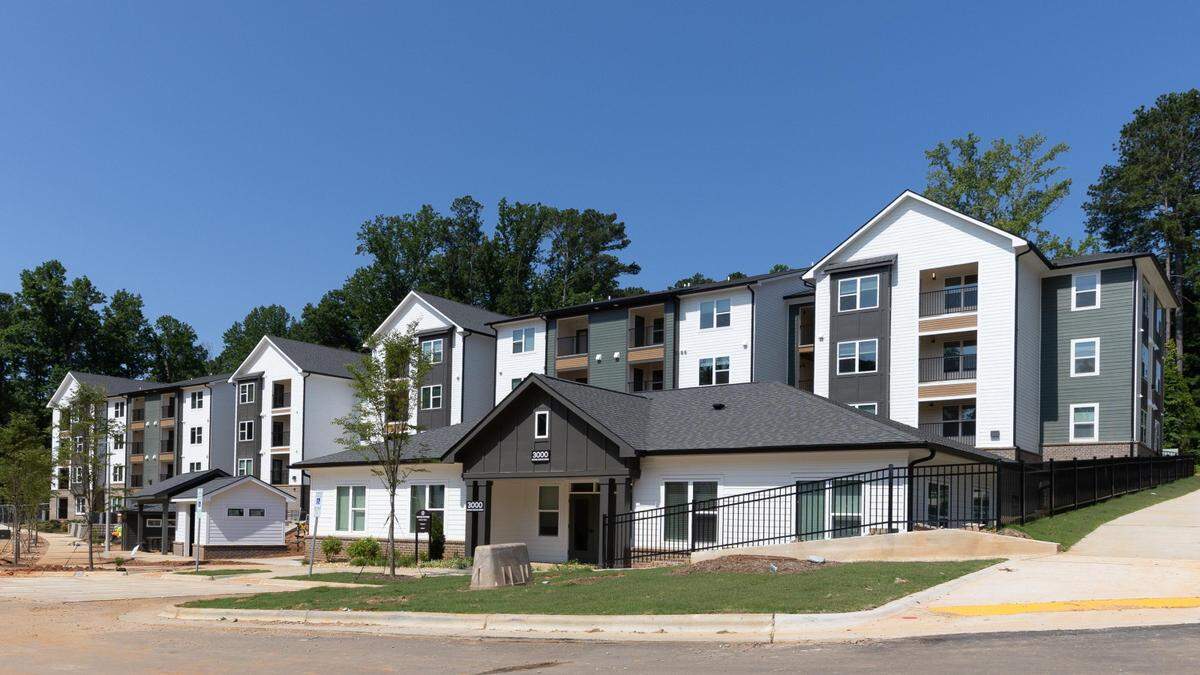
Two new affordable housing communities opened in Raleigh this week, the result of a complex mix of tax credits, city and county loans, and private investment that developers say is becoming essential to meeting the region’s housing needs.
The projects — Birch & Branch in North Raleigh and The Pines at Peach in South Raleigh — total over $83 million and add nearly 300 income-restricted apartments.
Minnesota-based Oppidan Investment Company is behind both developments.
The influx comes at a time when the Triangle’s rapid growth continues to push housing costs higher and squeeze out lower- and middle-income families.
Birch & Branch sits just off Overstory Circle in North Raleigh, tucked between Louisburg Road (U.S. 401) and the Forestville Road corridor. It’s part of a growing residential pocket near Wake Tech’s Northern Campus.
It has 180 one-, two- and three-bedroom units for households earning between 30% and 70% of the area median income (AMI). That’s between $27,900 and $65,030 a year for a single person, and $39,800 and $92,890 a year for a family of four, according to the U.S. Department of Housing and Urban Development.
Residents are within walking distance to nearby schools, a grocery store, a daycare center and other neighborhood services.
The Pines at Peach sits on Stone Grove Road in South Raleigh, just off Peach Road in a residential enclave between South Saunders Street and Tryon Road. It’s part of a rapidly changing stretch of South Raleigh where new housing, parks and transit investments are reshaping older neighborhoods.
It offers 119 units reserved for renters at 30% to 60% of AMI (similar to Birch & Branch’s range). It’s a short walk from the Peach Road Cultural Center and Peach Road Park, and also near the planned South Saunders Bus Rapid Transit corridor — an area the city has identified for higher density, transit connected growth.
Both projects relied heavily on Low-Income Housing Tax Credits allocated by the North Carolina Housing Finance Agency, along with tax-exempt bonds issued by the Raleigh Housing Authority. The City of Raleigh and Wake County provided additional gap financing.
In the case of The Pines at Peach, the city also entered into a ground lease and partnered on a new road extension to support the site.
Developers say these kinds of layered financing structures — once considered complicated exceptions — are now the norm for getting affordable housing built in high-growth regions like the Triangle.
“Affordable housing is one of the most pressing challenges facing communities today,” said Noah Wagner, Oppidan’s vice president of development, in a release.
“These developments reflect our commitment to being part of the solution, bringing together strong public private partnerships to create housing that is both attainable and thoughtfully designed.”
Oppidan is already working on a third Raleigh project, Barton Oaks, under construction on Strickland Road.
Several other major affordable housing projects in Raleigh, Durham and the broader Triangle have relied on public–private partnerships, combining city or county land, local loans, tax credits and private developers.
Among them: Raleigh’s 100-unit King’s Ridge, developed by CASA and 120-unit Beacon Ridge, developed DHIC; Durham’s 82-unit Willard Street Apartments developed by Self-Help; and Chapel Hill’s 87-unit Homestead Gardens, developed by Habitat for Humanity of Orange County.
This story was originally published May 6, 2026 at 7:30 AM with the headline "Raleigh leans on public–private partnerships to deliver hundreds of affordable homes."