Meet Claude, the viral vibe coding tool shaking up NC’s software scene

I’m Brian Gordon, tech reporter for The News & Observer, and this is Open Source, a weekly newsletter on business, labor and technology in North Carolina.
We’ll get to the existential dread soon. First, here’s a game I coded in about an hour while possessing as much coding experience as a doorknob. It’s a Jeopardy!-style trivia quiz on North Carolina. 10 questions of varying difficulty, with players able to wager their winnings on final questions à la the real show. Check it out! Prize money won’t be honored.
This was done with vibe coding, where humans instruct AI to create code rather than humans writing it themselves. And while “advancing artificial intelligence” may seem like a repeatable phrase to describe the past few years, only in the past few weeks has the vibe coding prowess of a specific AI tool jolted software executives, investors and jobseekers.
“I hired a lead engineer who told me seven months ago that based on our company’s growth, he would need a team of at least two, three, four (people) by now,” said Chip Kennedy, founder of the Raleigh AI voice startup CivicReach. “A month ago, because of the progression with Claude Code, because of how we’re using AI to assist in our product building, he said that was no longer necessary.”
Claude Code, from the AI giant Anthropic, has gone viral. “It’s the most advanced system I’ve used for any task, and for coding in particular,” Kennedy said. What separates Claude Code and its more user-friendly interface Claude Cowork is their agentic functions — they aren’t just chatbots that walk people step-by-step through coding (like normal Claude did for my Jeopardy! game) but an “agent” that accesses your files to complete tasks.
Create new Word documents, organize downloads, automate the tedium of unsubscribing from emails, and much more. “Because it’s long-running, it doesn’t ask me a ton of questions,” Pendo CEO Todd Olson said. “I can walk away from the computer, have a meeting, come back, and it’s like, done. That’s cool.”
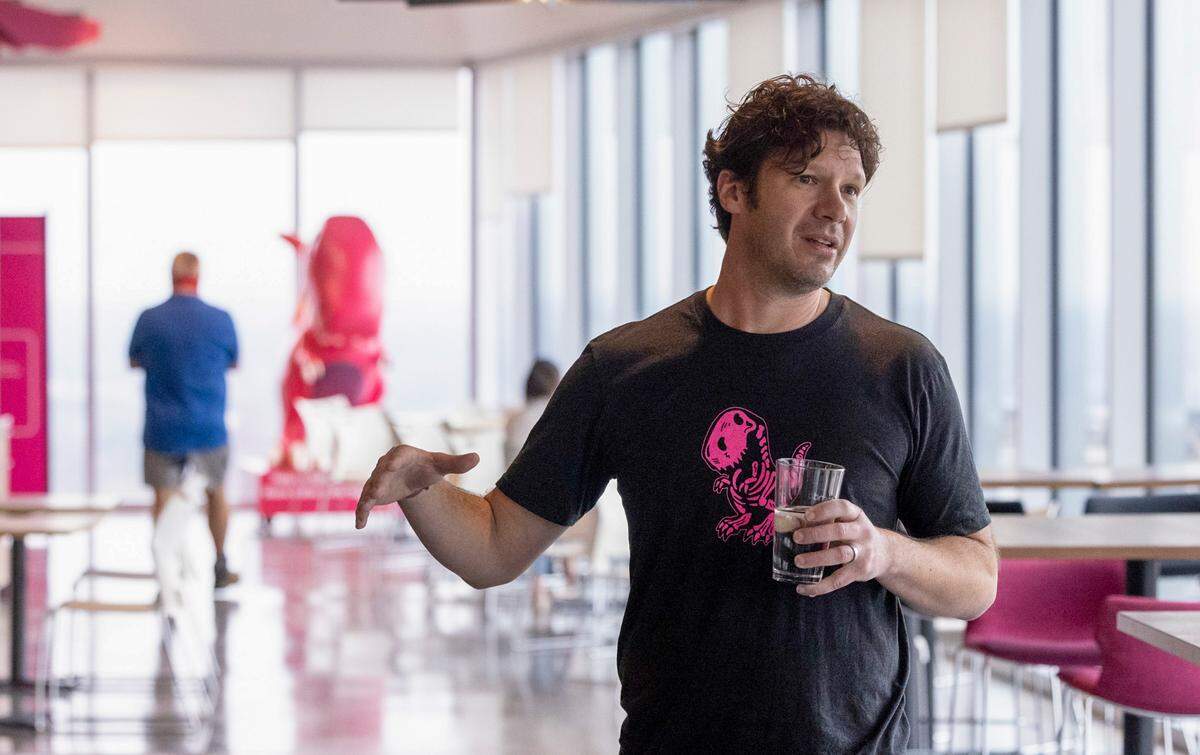
In December, Olson’s large Raleigh software company announced a deal with Anthropic that allows users to access Pendo product analytics through Claude. It was about going where the customers are, its CEO says.
“If Claude can have access to our data, do the research itself on behalf of the user, analyze it itself, and then come up with a good suggestion, and then the customer gets value out of Pendo data, like we’re happy,” he said. “I think this has the opportunity to make our products more accessible and easier to use.” Olson expects Pendo to eventually reach agreements with other agentic platforms too.
The accessibility of vibe coding has other Triangle and national companies on alert. Software stocks tumbled Thursday, with shares of the customer relationship management firm Salesforce dropping 6% on top of an already down month. ServiceNow, which develops software to automate workflows, fell 10% Thursday.
Don Shin, founder of the Durham software development firm CrossComm, said he’s pivoted his 28-year-old business toward consulting as a hedge against AI agents eroding future development sales. So, is it time to welcome our Claude overlords? Shin says we still have a place.
“Now, the reason why CrossComm is not out of business as a software development consultancy is because humans are not yet out of the loop,” he said. “What I mean by humans not yet out of the loop? You still need a human’s expertise. You got to have game to recognize game, skills in order to recognize skills.”
By moving humans earlier in the development chain — to advise clients on what software they want rather than just develop it — he hopes to keep pace. And while casual vibe coding is easier than ever, enterprise software needs to be airtight to safeguard private data or transact actual money (not just fake game show dollars). Companies can’t blame their regulatory violations on AI and get a pass.
But to mock up an app? “The market for someone else to build your software prototype is dead,” Shin said. For the final product, humans still need to be there. For now.
Clearing my cache
- Corning promises to grow its North Carolina workforce, including at the company’s optical cable facility in Hickory, after it entered a deal with Meta to supply data centers.
- IBM beat market expectations last quarter. The major Triangle employer and Red Hat owner also said it plans to introduce its first large-scale quantum computer within three years.
- Raleigh’s “walkie-talkie” communication software startup Relay says it has upped revenue by 461% over the past three years. “We aren’t just selling radios,” Relay CEO Chris Chuang was quoted in a statement. “We are building the Intelligent System of Action for the physical economy.”
- EPA animal adoption update: The federal agency told me that since last year, it has adopted off “eighty-nine animals, including two rabbits and 12 rats no longer needed for research purposes,” at its Research Triangle Park campus. Whether this decrease in research is a good thing depends on who you ask.
National Tech Happenings
- Amazon, the nation’s second-biggest private employer, has laid off around 16,000 employees. In an email, an Amazon spokesperson wouldn’t share if the cuts impacted the company’s large RDU1 fulfillment center in Garner but noted affected workers were all “corporate employees, not ops.”
- The Federal Reserve kept interest rates steady this week, a non-move that follows the Trump administration opening an investigation into Fed Chair Jerome Powell, which Powell has called a pretense for pressuring the Fed to lower rates.
- Microsoft’s stock fell 10% after the company beat revenue and profit expectations. How come? From the New York Times: “Investors remain concerned about the huge sums Microsoft is investing in data centers, while the growth of its A.I. business did not show big gains.”
Thanks for reading!
This story was originally published January 30, 2026 at 9:22 AM with the headline "Meet Claude, the viral vibe coding tool shaking up NC’s software scene."