In Chantal’s aftermath, ‘disaster investors’ flip Carrboro homes for big profits
AI-generated summary reviewed by our newsroom.
- Investors “wholesaled” flood-damaged homes, netting tens of thousands in quick profit.
- Storm victims sold under duress, losing equity amid gaps in FEMA flood maps.
- Lawmakers and regulators propose licensing, disclosures and cooling-off rights.
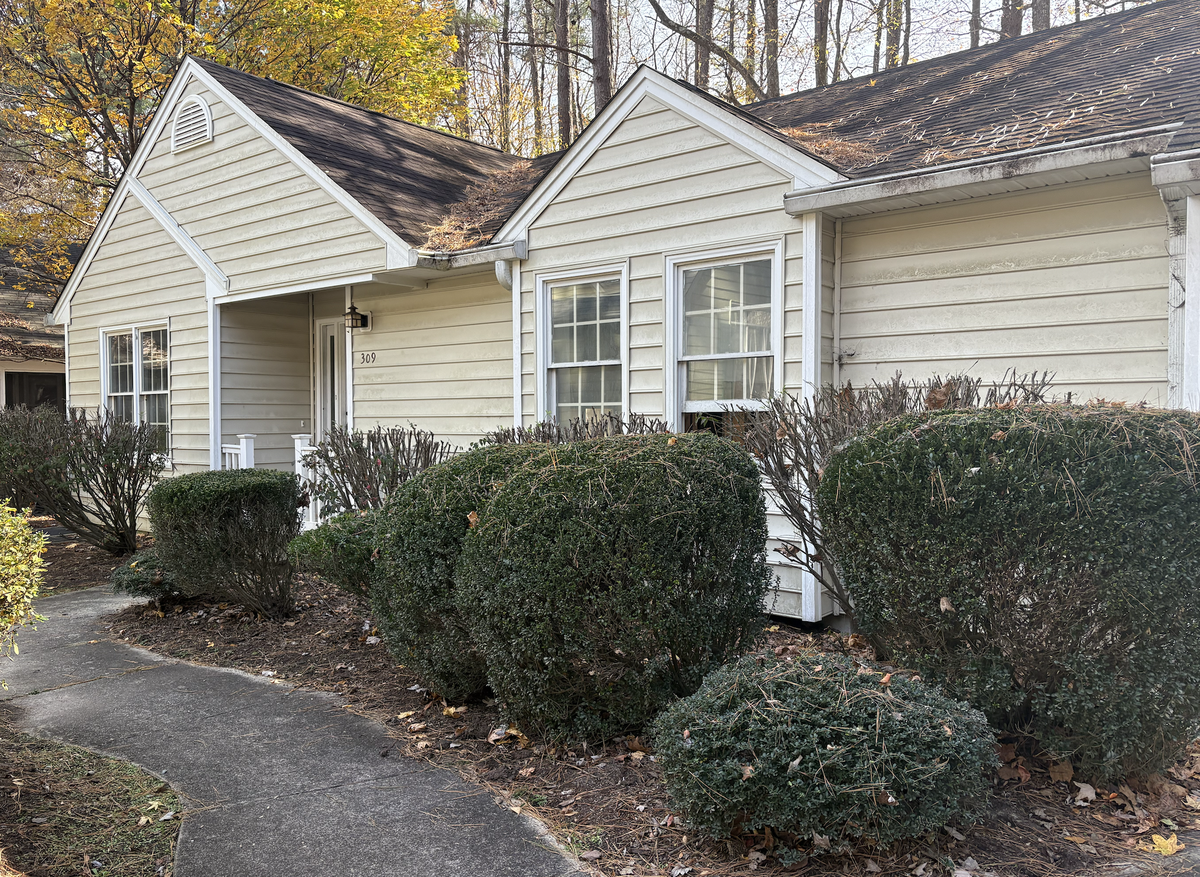
In a quiet cul-de-sac in Carrboro’s Weatherhill Pointe, the flood-ravaged home at 309 Berryhill Drive sits empty, gutted to the bones, and padlocked.
The woman who once lived there — who asked not to be named over privacy concerns — sold it fast to an investor at a steep discount, just weeks after flash floods from Tropical Storm Chantal hit this pocket neighborhood in early July. Near Morgan Creek, the overflow from University Lake’s dam pushed a torrent of water downstream, adding to the deluge. In less than four hours, it displaced dozens of people indefinitely.
“I lost everything,” said the 56-year-old resident, who had lived there since 2000. “I lost my equity, my furniture, my clothes, my photos. Everything.”
Like most in this 80-unit subdivision, she didn’t have flood insurance. In 2017, the Federal Emergency Management Agency (FEMA) re-validated Weatherhill Pointe’s flood maps, declaring most homes to be just outside its special flood hazard area, where it’s considered high risk and insurance is required.
Those actions, she says, left the neighborhood dangerously exposed and misled about the threat as climate-driven storms mount.
Facing financial ruin in Chantal’s aftermath, and under duress, she says she sold her 1,407-square-foot detached home for $165,000 on Sept. 19. That’s roughly 63% below market value ($450,500), according to property records. She didn’t use a broker to close the deal.
She knew that the buyer, Siler City-based LTD Investment Partners, would turn around and sell the property “as is” to another investor. What she didn’t know was for how much. As it turned out, LTD Investment’s founder, Shawn Rowell, resold her home that same day to Cary-based Best Investment Realty for $242,000, property records show — a $77,000 profit.
It’s just one of several so-called “flips” in Weatherhill Pointe in recent months, an N&O analysis of Orange County property records shows, part of a surge in post-disaster deal making called wholesaling.
A murky area of real estate currently not defined or regulated under North Carolina law, it’s where investors are allowed to flip contracts, not properties, at a markup — without ever owning or renovating the home. Because there’s no regulation, wholesalers are also not required to disclose information, operating largely off market and in the dark.
Experts warn the line between savvy investing and predatory behavior is thin, and often tested after disasters like Chantal. In the best-case scenario, homeowners get immediate cash relief and a fast exit from foreclosure or the burden of rebuilding. In the worst, it can lead to displacement, loss of equity, speculation, gentrification, lack of transparency and exploitation.
Critics say wholesalers often target vulnerable populations — elderly, low-income, non-English-speaking — hoping to lock-in deals before owners know their options. Local and federal aid is often delayed and complicated to access, adding further barriers.
“Selling to disaster investors is often a choice of last resort,” said Eric Maribojoc, a UNC professor who focuses on affordable housing. “Overwhelmed homeowners feel there is no other available alternative.”
Case in point: Weeks before closing, LTD Investment founder Rowell marketed 309 Berryhill Drive as an off-market sale on social media channels, without the owner’s knowledge or consent.
“HUGE MARGINS,” the digital flyer said under the brand, “Joe Homebuyer.” Starting offer price: $170,000.
In fine, blue-print at the bottom, he added: DO NOT CONTACT THE OWNER/SELLER without our explicit consent. Any attempts to renegotiate or make contact with the owner will result in legal action.”
The owner said she only found out about the markup months later, when contacted by The News & Observer.
“I lost my mind. It devastated me,” she said on Monday. “It’s taking advantage of the situation. I understand they’re in the business to make money, but $77,000? It’s heartbreaking.”
Due to gaps in FEMA’s flood modeling and limited regulatory enforcement, over 13 million properties nationwide are facing substantial flood risk without sufficient coverage, estimates First Street, a New York-based nonprofit that assesses flood risk in the U.S.
That unpriced flood risk is creating a “real estate bubble” that threatens the stability of the housing market, researchers warn. It estimates that flood-zone properties are overvalued by $121 billion to $237 billion — largely driven by those like Weatherhill Pointe, located outside of FEMA’s special flood hazard area.
“The risk is more extensive than expected — and that risk carries an enormous cost,” said Jesse Gourevitch, lead author of First Street’s study.
On July 6, Chantal pummeled Central North Carolina, dumping as much as 12 inches of rain and devastating neighborhoods like Carrboro’s Weatherhill Pointe, Chapel Hill’s Eastgate Mall and Camelot Village, and Pittsboro’s Settlement, all within miles of each other. It caused six deaths and over $42 million in public infrastructure damage.
Four months after the storm, the woman from 309 Berryhill Drive is still struggling to recover. After months spent displaced, living in temporary housing, she’s slowly starting to rebuild a life, with her family’s help. But it’s taken a toll.
“That money could have meant a down payment on a new house or replacing everything that I’ve lost,” she said. “At the very least, it’s unethical,” she added. “It should be illegal.”
A surge in post-disaster wholesaling
An N&O analysis of Orange County property records for Weatherhill Pointe shows that at least six homes have been sold in wholesale transactions over the last two months, totaling over $212,000 in profit for five investors.
Among them: LTD Investment Partners, Sun Brent and Manifest Investment Solutions from the Triangle; Onnix Investments from Arizona; and TriOaks Capital, under New Western, from Texas.
Some, but not all, are licensed brokers, according to North Carolina Real Estate Commission’s licensee database.
The N&O reached out to the investors. They either declined to comment or failed to respond to emails and phone calls. In addition to 309 Berryhill Dr., transactions included:
- Aug. 1: Onnix Investments purchased 110 Riverbirch Pointe, valued at $474,300, for $255,000; then resold to Sun Brent for $285,000, netting $30,000.
- Aug. 18: Onnix Investments purchased 124 Weatherhill Pointe, valued at $489,400, for $248,000; then resold to Best Investment Realty for $268,000, netting $20,000.
- Aug. 18: Onnix Investments purchased 115 Weatherhill Pointe, valued at $454,200, for $250,000; then resold that same day for $269,500, netting $19,500.
- Sept. 15: Manifest Investment Solutions purchased 301 Berryhill Dr., valued at $450,400, for $210,000; then resold that same day to Best Investment Realty for $275,000, netting $65,000.
- Sept. 30: Best Investment Realty purchased 109 Riverbirch Pointe, valued at $441,300, for $268,000. It has not yet been resold.
A closer look
Armand Lenchek, a broker with Chapel Hill-based EXP Realty, confirmed that he represented several sellers in the transactions. But he declined to disclose details because of “ongoing transactions that required confidentiality.”
In an email, he said: “In all cases, I’m trying to get them the best deal possible. I do NOT represent outside investors.”
He said he asked multiple investors to bid on the houses and presented all bids to the sellers for their evaluation, “not just of the purchase price, but also other terms that might be more favorable to the seller.”
That included 115 Weatherhill Pointe, valued at $454,200. On Aug. 18, Onnix Investments purchased the 1,389-square-foot home for $250,000; then resold it that same day for $269,500, netting $19,500.
Its former owner, a 75-year-old retiree, also declined to be named. But unlike his neighbor at 309 Berryhill Drive, he doesn’t feel angry or exploited. He bought the house 10 years ago for $235,000. At this stage in his life, he preferred to cut his losses and move on.
“It seemed like a reasonable offer. It was kind of a wash in terms of value.” That said, he was unaware of the investor’s wholesaling plans afterward.
“I had no idea that was going to happen,” he said. “If the Realtor knew, he didn’t tell me.” Still, he has no regrets.
“If a predatory investor is an alternative to people walking away if they didn’t have the money to fix it up, so be it. Maybe I’m naive or ignorant, but that’s sort of the way I see it.”
For the first time in 35 years, he’s now a renter. He pays $2,150 per month for a three-story townhome in Durham. “I don’t pay HOA fees anymore. Or homeowners’ insurance,” he said, looking on the bright side. “I’m just trying to get things to some new normal.”
A rising trend
But concerns are growing.
While wholesaling is still legal, “there’s a lack of regulation and bad actors have taken advantage of it,” said Janet Thoren, legal counsel for the North Carolina Real Estate Commission.
In recent months, the agency has seen an uptick in complaints, she said. But since wholesalers are not required to have a license, it has no authority to investigate unless they happen to be licensed brokers.
In recent years, the agency has released bulletins warning about unlicensed activity and “predatory practices,” and coordinated with other agencies, including FEMA and the state’s attorney general. But its jurisdiction is limited, she said.
Attorney General Jeff Jackson’s office did not respond to a request for comment.
In April, Rep. Kyle Hall (R-Stokes) introduced House Bill 797, the Residential Property Wholesaling Protection Act, seeking to regulate wholesaling by requiring licensure and granting homeowners new cancellation rights.
Thoren said mandatory disclosures, cooling-off periods, and licensing requirements could “reduce exploitation.”
The bill is pending.
Uncertain future
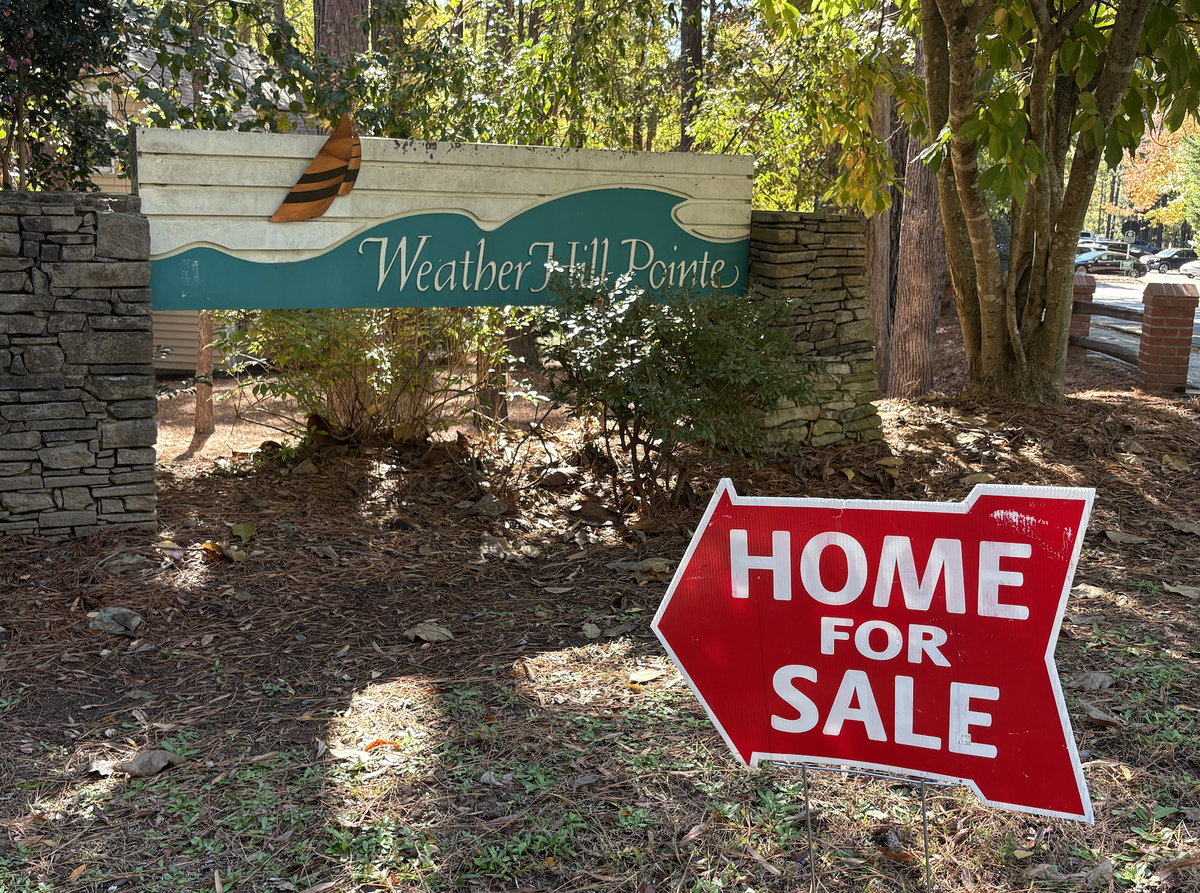
Back at Weatherhill Pointe, a “home for sale” sign, shaped like a giant arrow, greets visitors at the entrance.
Many longtime residents fear the subdivision is being quickly transformed from owner-occupied to rental properties. They’re also worried about plummeting house prices and the next major storm. They want to know what’s being done to mitigate the risks, including from University Lake and its aging dam.
On Nov. 20, residents met Carrboro Fire Chief Will Potter and officials from the Orange Water and Sewer Authority (OWASA), a public, non-for-profit utility that manages the dam. It’s part of ongoing talks to develop an “informed evacuation plan” for residents living nearby, OWASA spokesperson Katie Hall said.
In the meantime, it’s unclear what investors have planned. Most of the newly purchased homes remain vacant, with dumpsters parked out front. Waterlogged drywall and flooring have been removed. But on one recent Monday, work was at a standstill. Minutes from the Nov. 13 HOA meeting flagged five investor-owned properties as delinquent on dues — a potential early sign of financial strain.
Down the street, owners at 306 Berryhill Drive tried to sell their 1,625-square-foot home “as is” for $315,000 on Aug. 12, without much luck. After four price cuts, the listing was removed in early October. Others are staying put and rehabbing their properties. A few are said to be camping out on their second floor while work gets done.
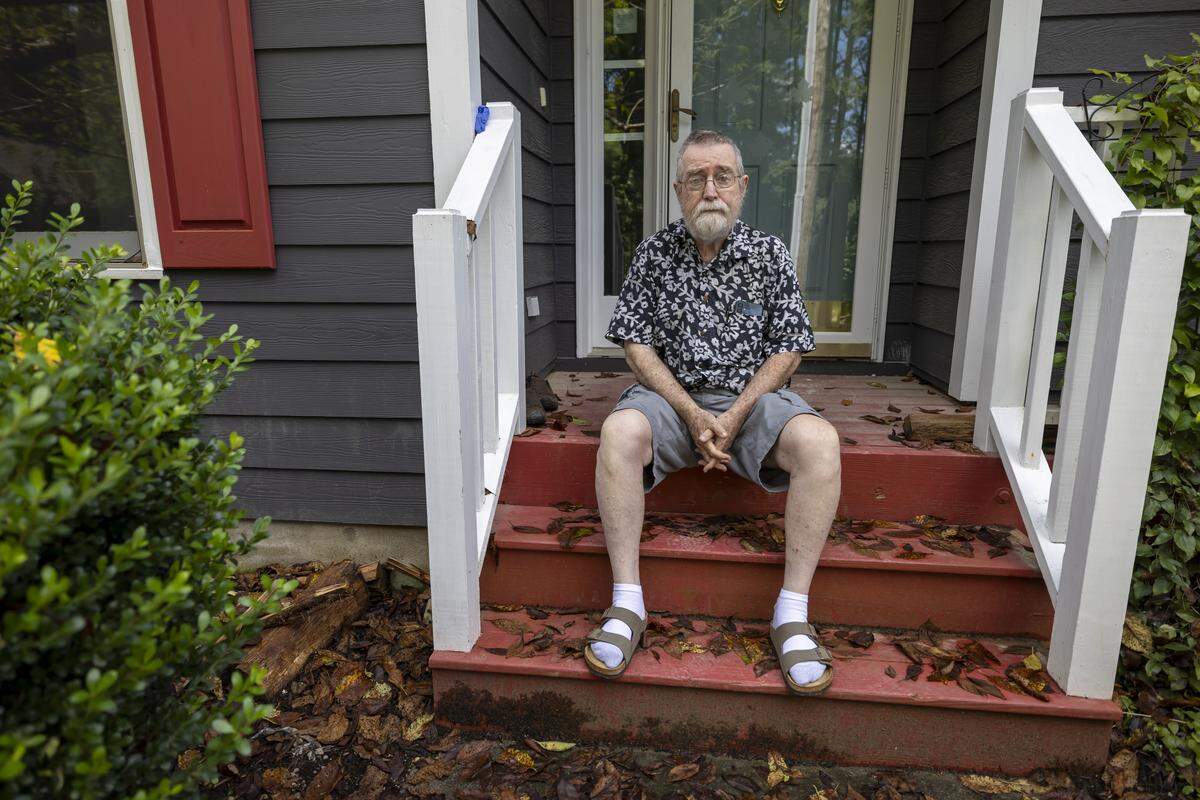
Some, like Peter Burke, 80, are coordinating with Habitat For Humanity to rebuild. For the last 14 years, he and his 80-year-old wife have lived here. During the storm, they took refuge in the attic and were among 57 water rescues from Weatherhill Pointe alone.
They’re now staying at a friend’s home near Southpoint Mall until it’s livable. “With luck, we’ll be back by Christmas,” he said. Even so, they’re uncertain about the future. Sooner or later, they want to move up north to be closer to family.
“Those of us who want to sell after renovation wonder whether we’ll actually be able to,” he said. He won’t rule out selling to investors. “We may have to go that route.”
NC Reality Check is an N&O series holding those in power accountable and shining a light on public issues that affect the Triangle or North Carolina. Have a suggestion for a future story? Email realitycheck@newsobserver.com.
This story was originally published November 24, 2025 at 5:30 AM with the headline "In Chantal’s aftermath, ‘disaster investors’ flip Carrboro homes for big profits."