U.S. government takes stake in Triangle rare earth magnets startup Vulcan
AI-generated summary reviewed by our newsroom.
- U.S. takes $50M equity and backs Vulcan with a $620M War Department loan
- Vulcan raised over $1B total, including $550M private and a $50M CHIPS grant
- Company plans a 10,000-metric-ton magnet factory with ReElement to reduce China’s share
Vulcan Elements, a young Triangle startup that aims to carve into China’s control of rare earth magnet production, will receive more than $1 billion between the U.S. government and private investors under an agreement to finance its first major factory.
The company is set to get a $620 million loan from the Department of Defense (which the White House also refers to as the Department of War) and said it is finalizing a $50 million grant through the CHIPS and Science Act. The U.S. Department of Commerce will take a $50 million equity stake in the North Carolina company through this deal, Vulcan announced, while the Pentagon will get “warrants” — or the ability to buy company stock in the future.
“Our investment in Vulcan Elements will accelerate U.S. production of rare earth magnets for American manufacturers,” Commerce Secretary Howard Lutnick said in a statement Monday.
Founded in 2023, Vulcan plans to operate a 10,000-metric-ton magnet factory and partner with the Indiana refiner ReElement Technologies to establish a U.S.-owned rare earth magnet supply chain. Vulcan intends to share the location of this facility “in the coming weeks,” company chief of staff Jonah Glick-Unterman told The News & Observer.
Vulcan opened its first manufacturing site this spring, in Research Triangle Park, though that building is only equipped to produce 10 metric tons of magnets, Glick-Unterman said. In August, Vulcan raised $65 million in Series A funding, a figure dwarfed by this week’s announcements, which the company says includes $550 million in private capital to pay for the new factory.
Countering China’s rare earths supply chain
Rare earth metals are a collection of 17 lesser-known elements with unique luminescent and magnetic traits crucial to modern technologies. Their applications range from wind turbines to rechargeable batteries and from refrigerators to advanced weapons systems.
The United States once led global rare earth magnet manufacturing, yet over decades, it ceded this position to China, which today dominates around 90% of the market. China has retaliated against Trump administration tariffs this year with export restrictions on materials containing rare earth elements like samarium, gadolinium, terbium, and dysprosium.
Vulcan would become one of several private companies the U.S. government has taken equity in under the Trump administration, joining Intel, Lithium Americas and the fellow rare earth metals company MP Materials.
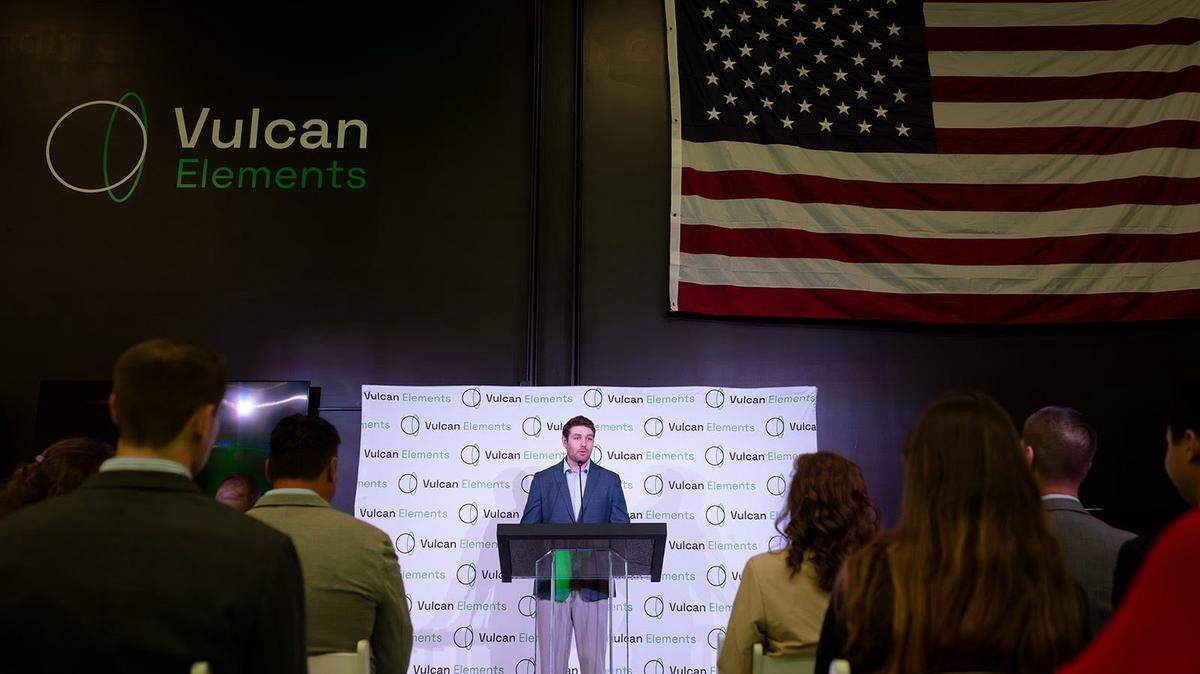
“Now more than ever, we remain focused on execution and performance, so that we can deliver a capability that the nation urgently needs,” Vulcan Elements CEO John Maslin said in a statement Monday. A U.S. Navy veteran in his early 30s, Maslin has said he brought his company to the Research Triangle for the area’s manufacturing-friendly climate and proximity to suppliers and customers, including the military.
Whether North Carolina will get Vulcan’s promised magnet facility should be known soon; Glick-Unterman said the company is in the “final stages of a multi-state search” for its location but did not share which states are candidates.
Breaking China’s grip on rare earth magnets won’t be easy, experts say.
“You may have done a few things in a lab or on a pilot scale, but it’s a very different challenge to meet the quality requirements at scale,” John Ormerod, a rare earths magnetic consultant based in Tennessee, told The N&O in April. “It’s a really difficult challenge to produce consistent results.”
This story was originally published November 3, 2025 at 10:27 AM with the headline "U.S. government takes stake in Triangle rare earth magnets startup Vulcan."